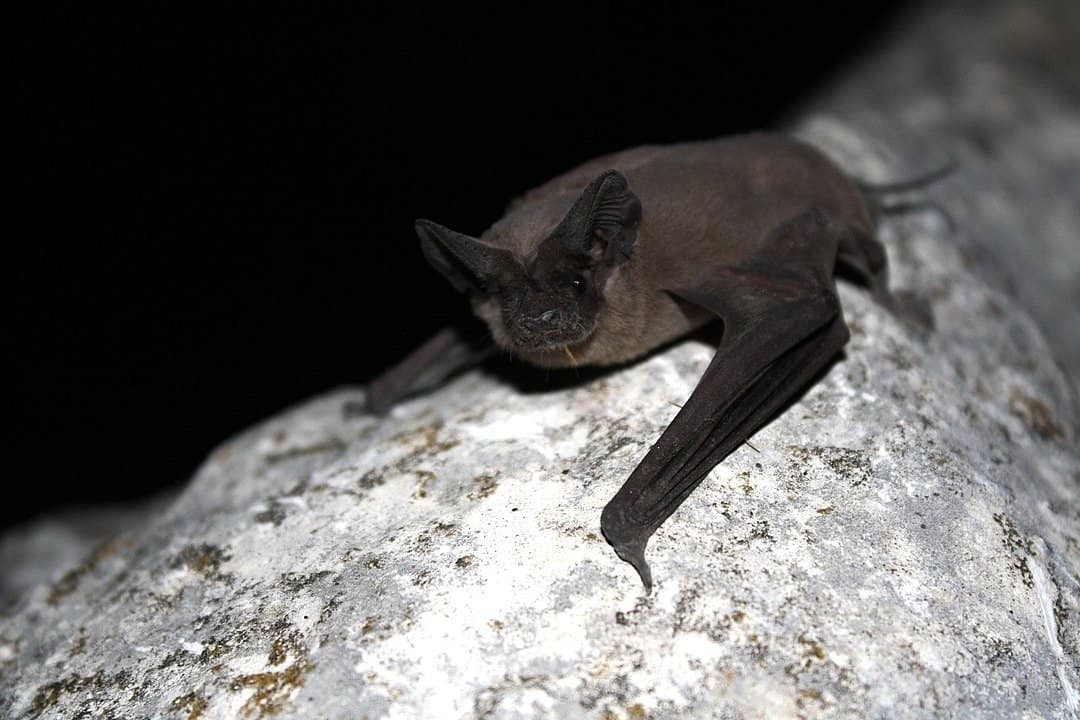

Bats have a wholly undeserved reputation as threatening and spooky creatures that behave just like vampires and get stuck in your hair! They actually should be respected as the very special and unique creatures they are. As the little Mexican free-tailed bat in this Instagram clip shows us, bats do not just hang upside down and fly. Some can also walk around on the ground. Here, we will examine walking behavior in bats, share which bat species exhibit this behavior, and explain the reasons behind it.
All About Mexican Free-Tailed Bats
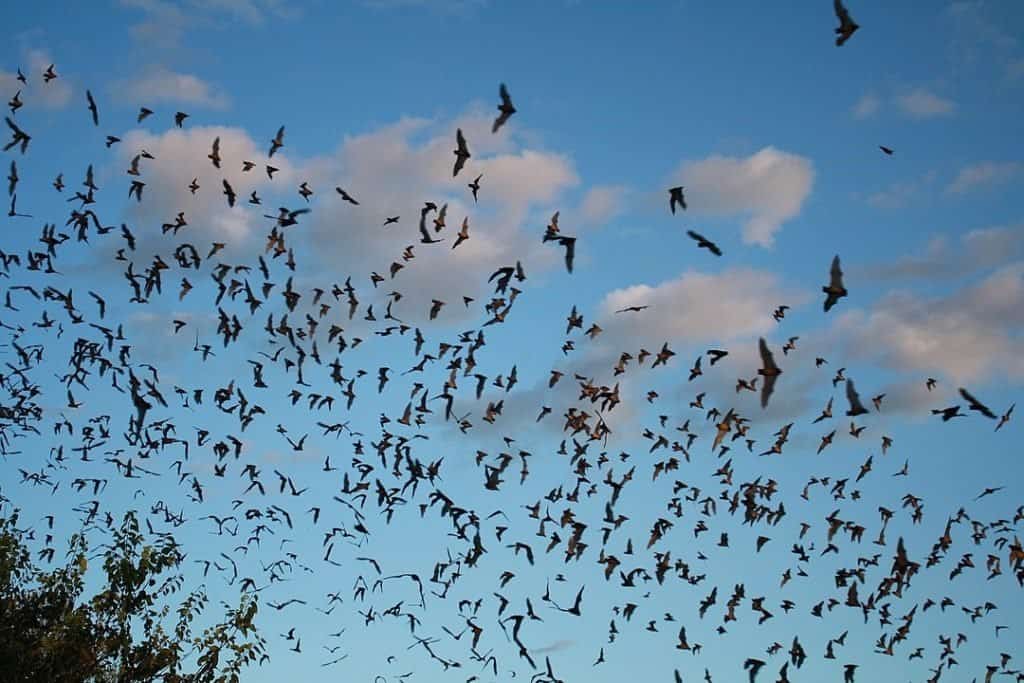
Mexican free-tailed bats live in large groups.
©U.S. Fish and Wildlife Service Headquarters / CC BY 2.0 – Original / License
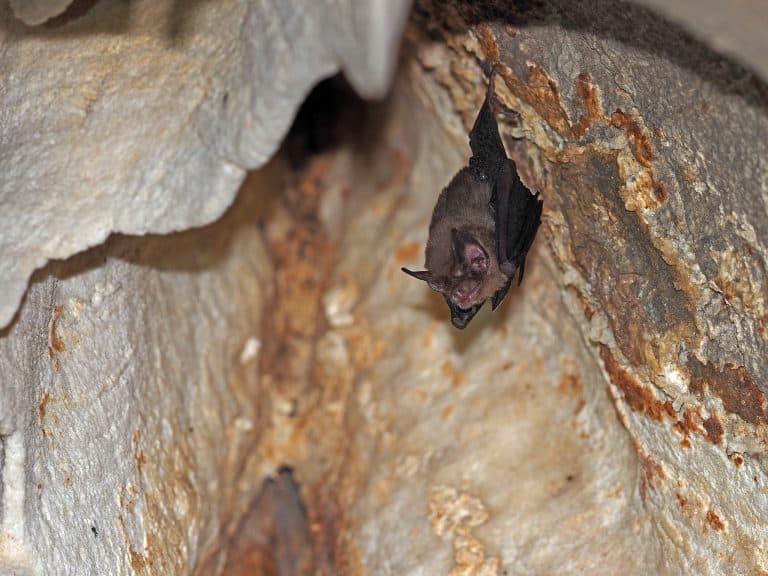
Mexican free-tailed bats (Tadarida brasiliensis)live in North, Central, and South America. In North America, however, they are migratory and move seasonally between the central and southern US and Mexico. The males and females roost separately in large colonies that can number hundreds of thousands of bats. Roosts are located in caves, abandoned mines, culverts, and bat houses.
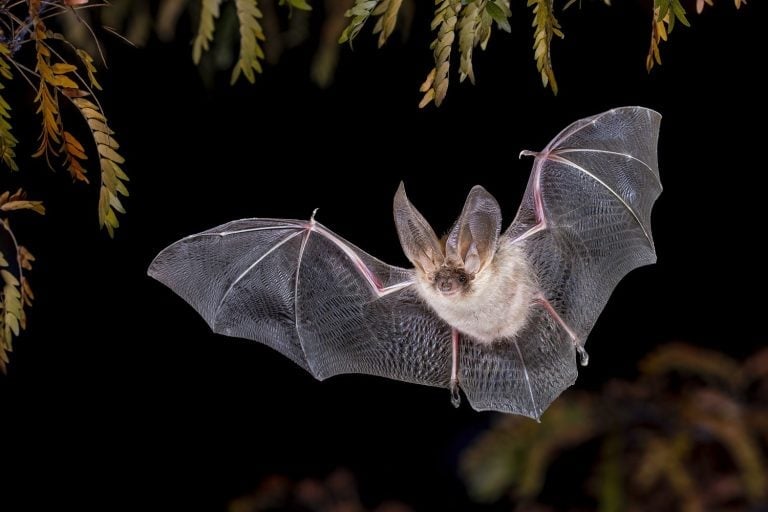
When it comes to flight, these guys are built for speed. They are a small to medium-sized species with short dark brown to gray fur that has little drag. Their wings are long and narrow, which power them forward but also allow them to maneuver quickly. They have been recorded traveling at speeds of up to 60 mph, making them among the fastest flying mammals. Mexican free-tailed bats can also reach altitudes of 10,000 feet! Using echolocation at night, they locate moths, beetles, flies, true bugs, and ants on which they feed.
Baby Bats and Flying
Female Mexican free-tailed bats give birth to one pup a year, and to begin with, they do not know how to fly. Some other species have up to four pups in a litter. Pups are born blind, naked, and completely helpless. The mother will feed the baby her milk until it is around four to seven weeks old, after which it can fly off to catch its own food.
If you find a Mexican free-tailed bat, whether a baby or an adult, on the ground, it should not be there. While this bat can walk, as shown in the clip, walking is not its natural way of moving. Most bats found on the ground are either sick or injured, or are babies that have fallen from the roost. Once bats are on the ground, it is very difficult for them to take off and fly again. It is much easier for them to launch into flight from their roost. Additionally, if bats are knocked from their roosts while they are fast asleep, they must wake up suddenly and are completely immobile on the ground, unable to fly for several minutes.
Walking Bats
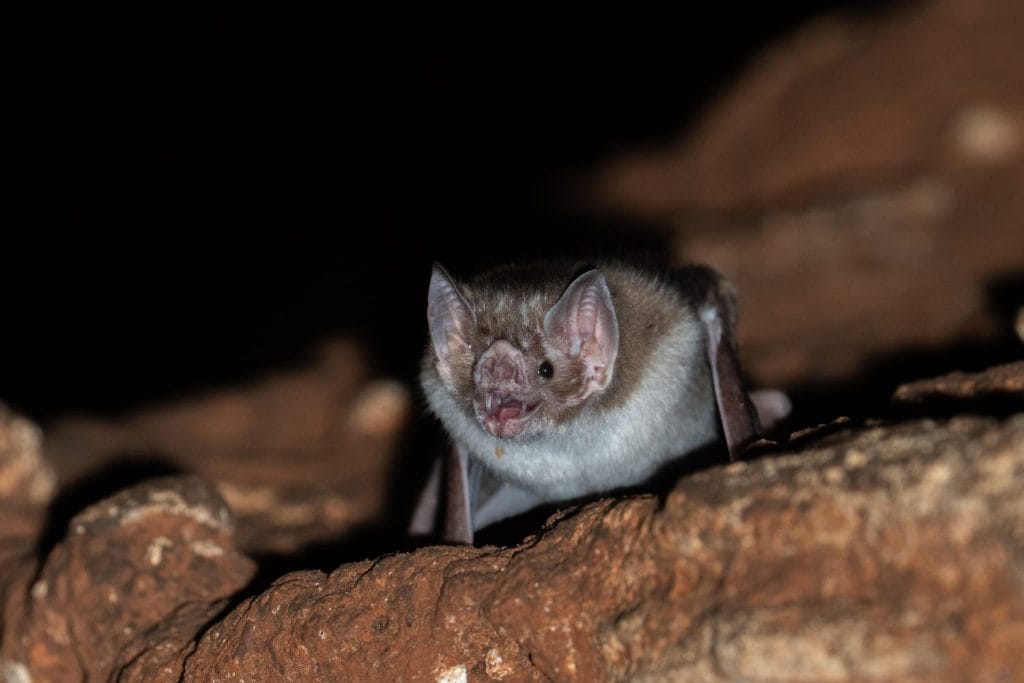
Vampire bats can walk fast!
©Griffin Gillespie/Shutterstock.com
The little Mexican free-tailed bat in the above clip is demonstrating their walking skills rather than speedy flying. This species of bat is not known for its walking abilities. However, there are a few other species that have adapted to life on the ground. These include the common vampire bat (Desmodus rotundus) and the New Zealand lesser short-tailed bat (Mystacina tuberculata).
Bats have highly modified hands and forearms that form their wings, as well as backward-facing knees. When walking at a low speed, vampire bats and New Zealand lesser short-tailed bats move with a gait that looks very cat-like. The scientific name for this is a lateral sequence gait. This means that the left front limb moves forward at the same time as the right hind limb. When vampire bats speed up, they change their running style to a bouncing gallop. This involves all four limbs leaving the ground at the same time. It is also a form of ‘front-wheel drive’ movement, as the leaps are initiated by the front limbs, unlike in rabbits and squirrels, which use their rear limbs.
Why Would Bats Need to Walk?
The New Zealand lesser short-tailed bat evolved to walk on the ground because it lives on islands with no native land-based predators. In the absence of animals such as snakes and felines, it was safe for them to look for food on the ground. This opened up new food sources that would not be available to them if they could not walk on the ground. They spend 30 to 40 percent of their time walking around the forest floor, looking for fruits, insects, and nectar.
Common vampire bats walk on the ground so that they can hunt terrestrial prey. They live off the blood of other animals and have sharp teeth to break the skin. Silently, they creep up on sleeping cows, horses, and pigs. They are also able to scuttle away if heavy hooves threaten to trample them. This is likely why they developed the ability to move quickly!