
Some mammals such as sugar gliders and flying squirrels are capable of gliding from place to place, thanks to a membrane called a patagium. The patagium is attached to their limbs and serves as a sort of parachute. Gliding can be gravitational or soaring. Mammals that glide do so gravitationally, which means they launch themselves at their target, and then let the wind help them get there.
Soaring is gliding for a long period of time without effort. It is unusual for mammals to actually soar, as they would need to find currents of thermal air that rise faster than they descend while gliding. True flight is achieved with the motion of wings giving the animal thrust and lift. So, can mammals actually fly? If so, which mammals can fly?
The Only Flying Mammals
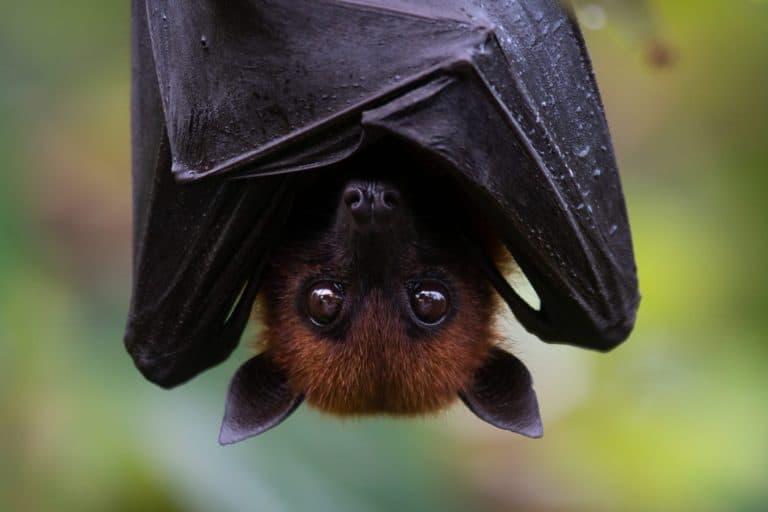
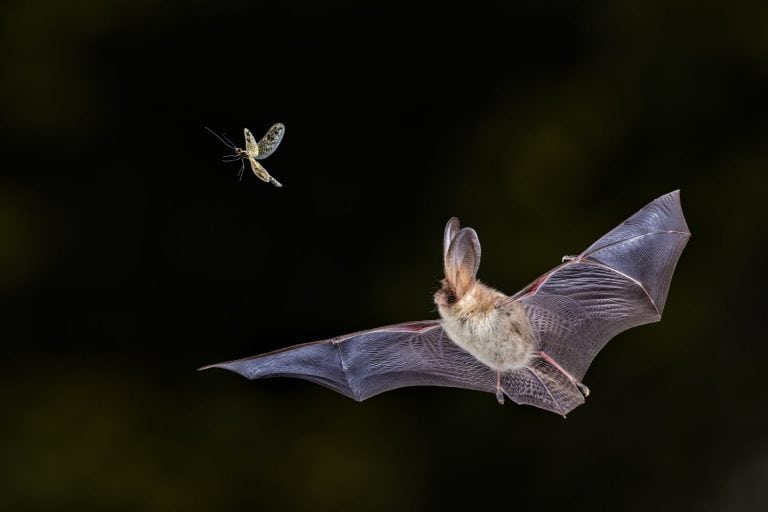
Although other mammals give the appearance of flying, bats are the only mammals that are capable of true flight. Bats are mammals because they are vertebrates, they have fur, they are warm-blooded, they breathe with their lungs, and they give birth to live babies that they nurse with milk.
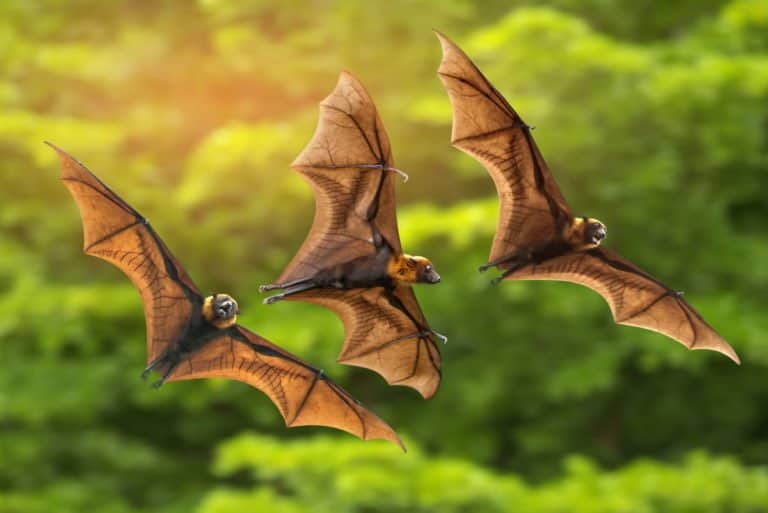
Bats’ forelegs and fingers have evolved into leathery wings. They belong to the order Chiroptera, which means “flying hand.” Bats can control their movement, ascending, descending, and changing direction at will. Unlike animals that glide or soar, bats are not dependent on air currents and updrafts to remain in motion. Bats may be the only mammals that can fly, but there are over 1,400 worldwide.
Microbats
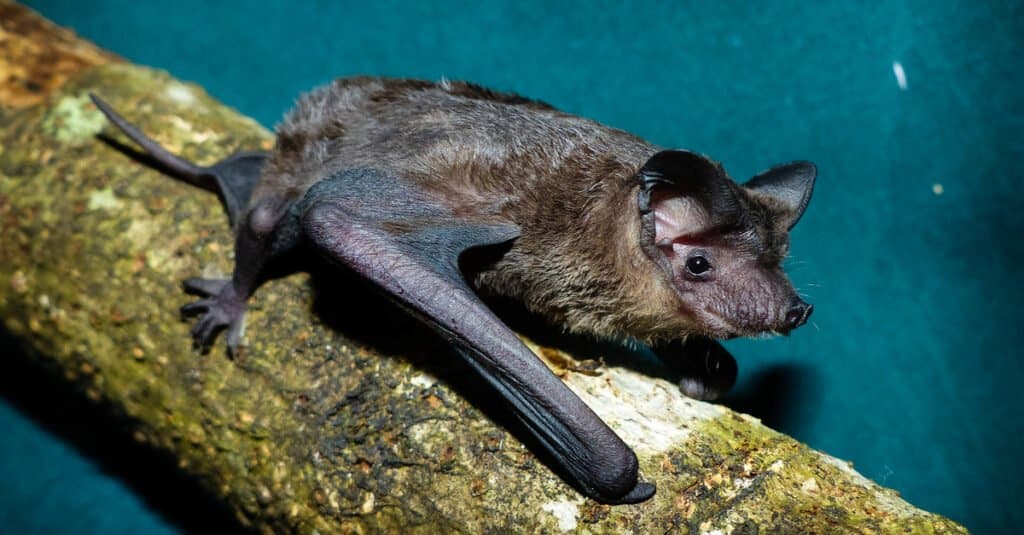
Unlike megabats, microbats utilize echolocation.
©Connie Kerr/Shutterstock.com
Microbats are small bats that are common in the U.S. They use echolocation to navigate through the night sky to find their prey. Most of these bats only grow between 1.6 and 6.3 inches long. They are mostly insectivores, though larger bats can also prey on animals as large as frogs or fish, and even smaller bats. Three species of vampire bats found in Central and South America actually do drink blood. Some species, such as Vieira’s nectar-feeding bat, eat nectar or fruit.
Microbats have smaller eyes than megabats. However, their ears are significantly larger relative to the size of their bodies. They also have a tragus, which is that little piece of flesh right next to the opening of the ear. In bats, the tragus helps them determine the direction of the sound source. Among these bats are the mouse-tailed bats, vesper bats, pipistrelles, ghost-faced bats, and smoky bats.
Megabats
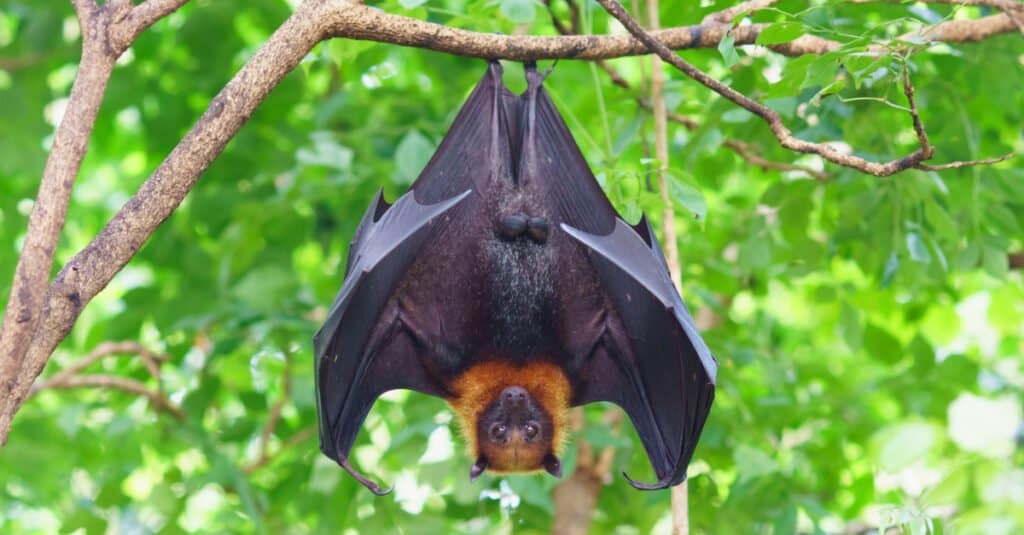
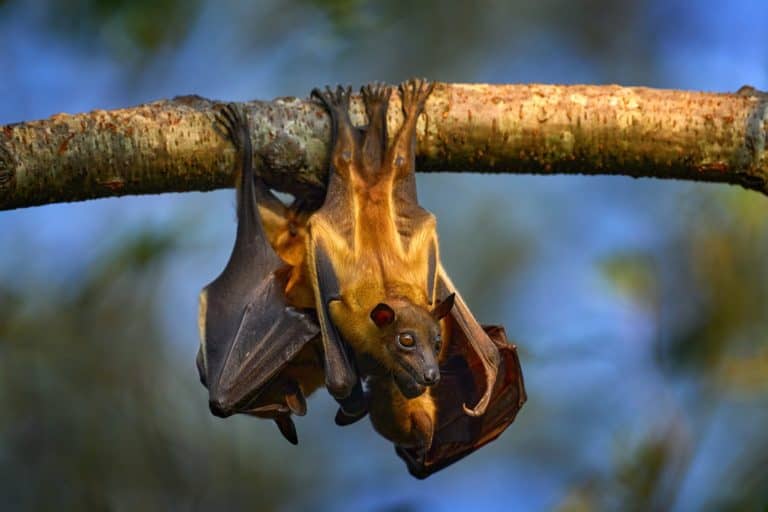
Megabats have a keen sense of smell and acute eyesight.
©jekjob/Shutterstock.com
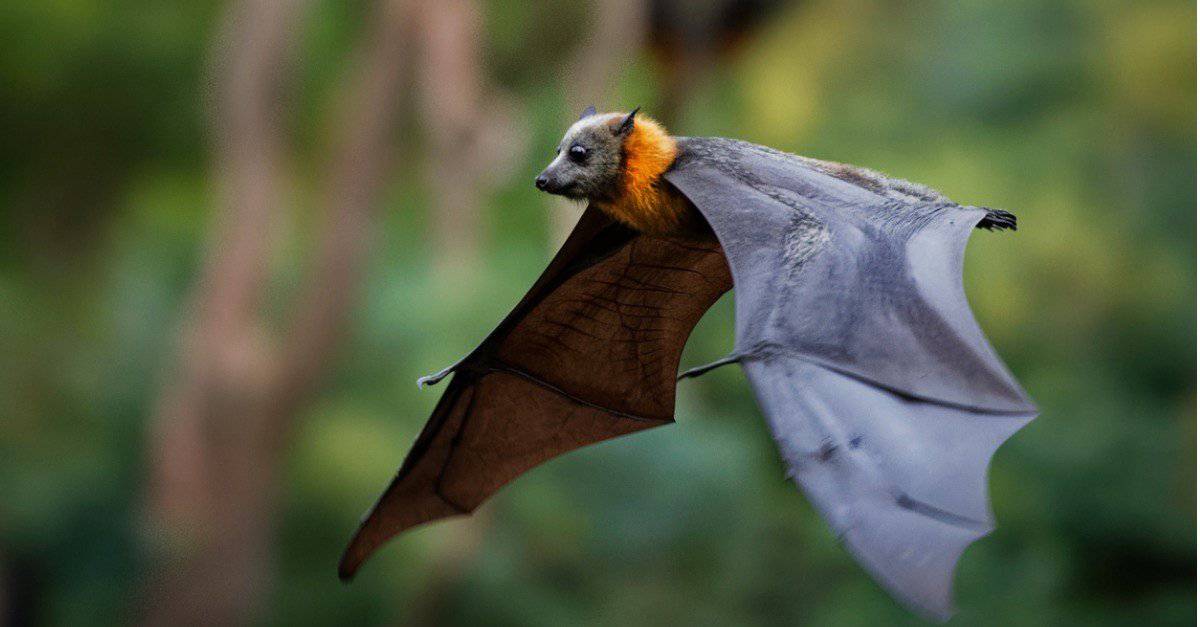
These are the largest bats on earth and are usually called flying foxes or fruit bats. There are about 200 species of megabats. They can be found in southern and southeast Asia, east Africa, and Oceania. Unlike smaller bats, they don’t use echolocation. However, they have acute eyesight and a keen sense of smell. The large flying fox native to Southeast Asia is one of the largest of these bats. It is an herbivore despite its scientific name Pteropus vampyrus. It weighs a little over two pounds and has a wingspan of nearly five feet. Their powerful wings let these mammals fly over 30 miles a night in search of food.
Even larger is the giant golden-crowned flying fox, whose wings stretch an impressive 5.5 feet. Like the large flying fox, they may fly over 30 miles a night to find food. Other megabats include the dog-faced fruit bats, the naked-backed fruit bats, the Fijian monkey-faced bat, the eastern tube-nosed bat, and the hammer-headed bat.