
Quick Take
- Achieving honest signaling is a mandatory survival requirement when facing a pursuing predator.
- Locking 4 legs during stotting creates a specific velocity deficit for ungulates.
- Performing stotting is counterintuitive as it appears to decrease the total escape speed of prey.
- The herd requires a stotting event to trigger a specific alarm response for survival.
There are many different names for animal behaviors. One example is stotting. While you may not have heard the word before, you’ve definitely seen it in person or online. Stotting is the behavior where a four-legged animal jumps into the air with all four legs stiff and straight. These strange jumps can be seen in the YouTube Short by @TheAnimalSounds. Read here to learn more about stotting and why animals do it in the first place.
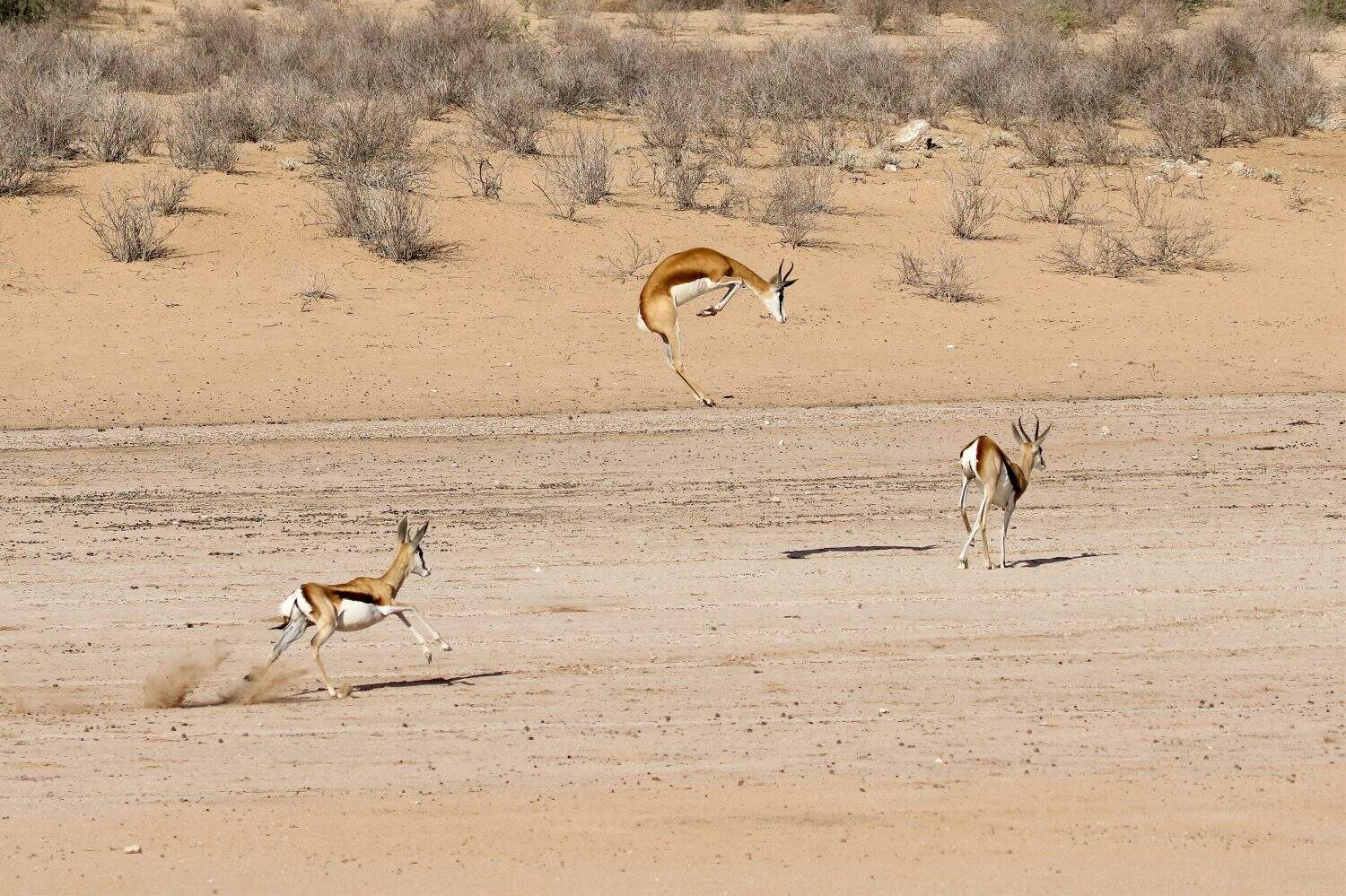
Stotting is a common behavior to show off energy and physical prowess.
©Peter Mullineux/Shutterstock.com
What Is Stotting?
Stotting is the term for when four-legged animals jump straight into the air with their legs straight and stiff. This behavior is most observed in ungulates. Ungulates are hoofed mammals, more specifically, those that live in open habitats. Some examples include gazelles, some deer species, and sometimes sheep and goats. If you have ever watched a nature documentary featuring gazelles, you have most likely seen them stotting. Gazelles are easily one of the most famous examples, as they jump high and quickly into the air. While this might look strange and silly, stotting is actually an important behavior.
While stotting may look like it slows the animals down, it actually shows the opposite. Stotting is a form of “honest signaling.” Honest signaling is the concept where a prey signals to the predator that they are fit and ready to escape. Animals such as gazelles stot to tell their predators that they are physically fit enough to escape. It also shows that they have the energy, making the behavior important to deter predators. It may also act like an alarm to other animals in the herd.
Because the jumping individual draws so much attention, other animals in the herd are likely to run away in response. There are a few other theories for this behavior. Some suggest it demonstrates strength for mating, helps the animal get a better view, or is simply a form of play. Some research has also explored these alternative explanations, though they are less commonly accepted. Although stotting may look silly, it is actually a practical way for animals to deter predators.