
A new process for counting animals not only provided researchers with more information about the endangered giant South American river turtle, but it may also help researchers obtain accurate counts of other threatened and endangered species around the world. With the help of drones combined with new research methods, researchers at the University of Florida uncovered the world’s largest turtle nesting site. Scientists estimated over 41,000 river turtles nesting near the Guaporé River in South America.
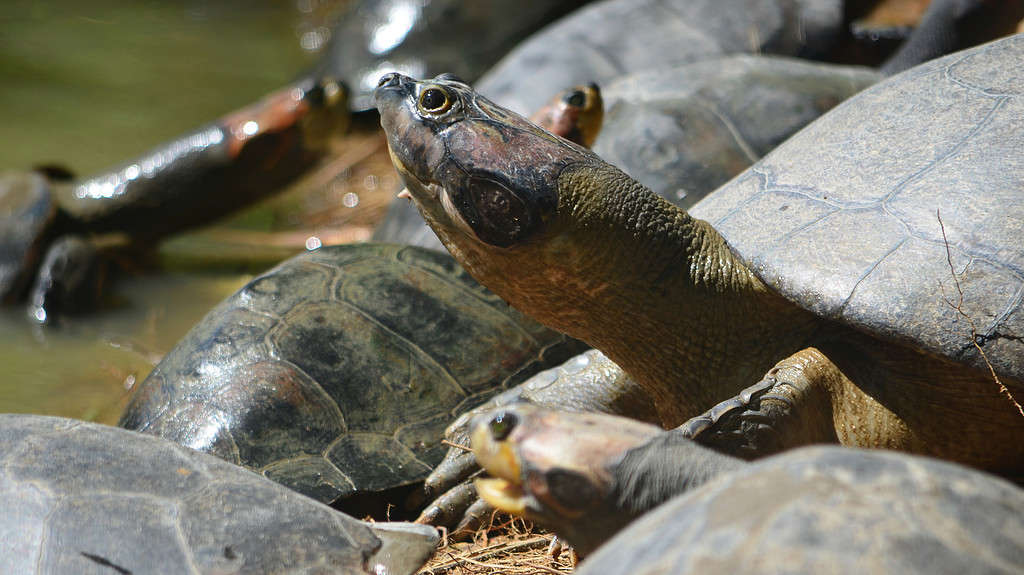
The giant South American river turtle is one of the largest freshwater turtles in the world.
©marktucan/iStock via Getty Images
About the Giant South American River Turtle
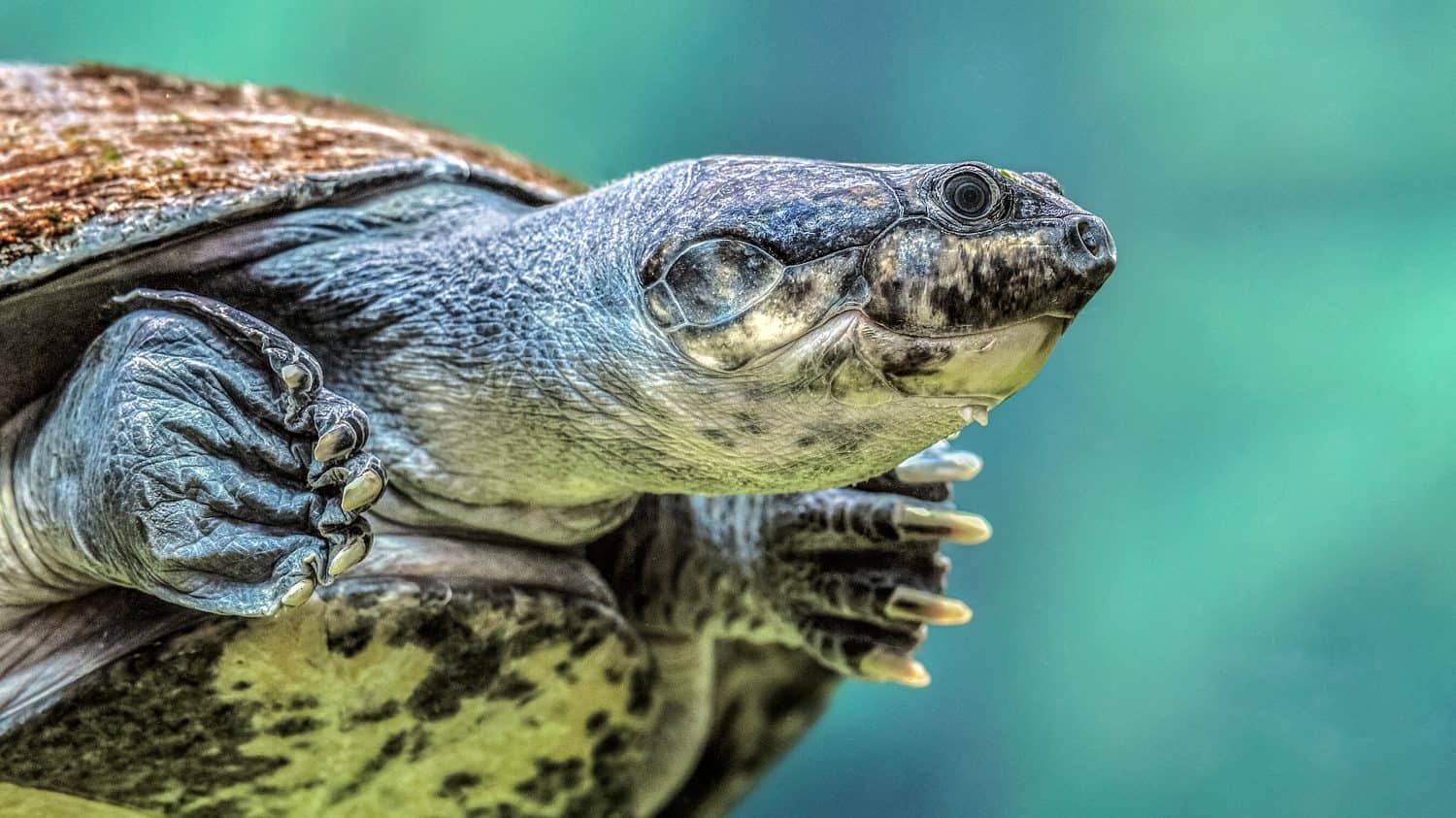
The giant South American river turtle (Podocnemis expansa), also known as the Arrau turtle, is a freshwater turtle that lives in the Orinoco and Amazon river systems. Males are smaller than the females, at about 19 inches long. The females can reach 30 inches and weigh up to 300 pounds.
Each year, female turtles gather in large groups along the riverbank to nest and lay their eggs. Sadly, their social behavior has made them vulnerable to poachers. Humans are the number one reason why the giant South American river turtle is endangered. During the mid-1800s, at the height of the poaching, people gathered 48 million eggs each year, exporting them to Europe. Today, the turtles are still poached for their eggs, and hatchlings are stolen to be sold illegally as pets.
A New Process for Counting Animals
To help with conservation efforts, scientists need an accurate count of the turtles. Scientists recently published a research article detailing a new way of obtaining accurate animal counts in the Journal of Applied Ecology. Ismael Brack, the lead author and a post-doctoral researcher within the UF Institute of Food and Agricultural Sciences’ (UF/IFAS) School of Forest, Fisheries, and Geomatics Sciences, explains in a press release, “We describe a novel way to more efficiently monitor animal populations. And although the method is used to count turtles, it could also be applied to other species.”
The process used drones to get thousands of images of the turtles as they congregated along the river at their nesting site. The turtles get together every summer at the edge of the Guaporé River between Brazil and Bolivia. These are highly social turtles, and they tend to stay close together during nesting. As you can imagine, getting an accurate count of tens of thousands of turtles meandering around and digging in the sand is a challenge.
Why Traditional Counting Methods Often Fail
Traditionally, researchers rely on ground counts or a method called orthomosaic stitching, which overlaps aerial photos for animal counts. Researchers then scan the stitched-together map and count the animals. However, both methods have been found to provide inaccurate results.
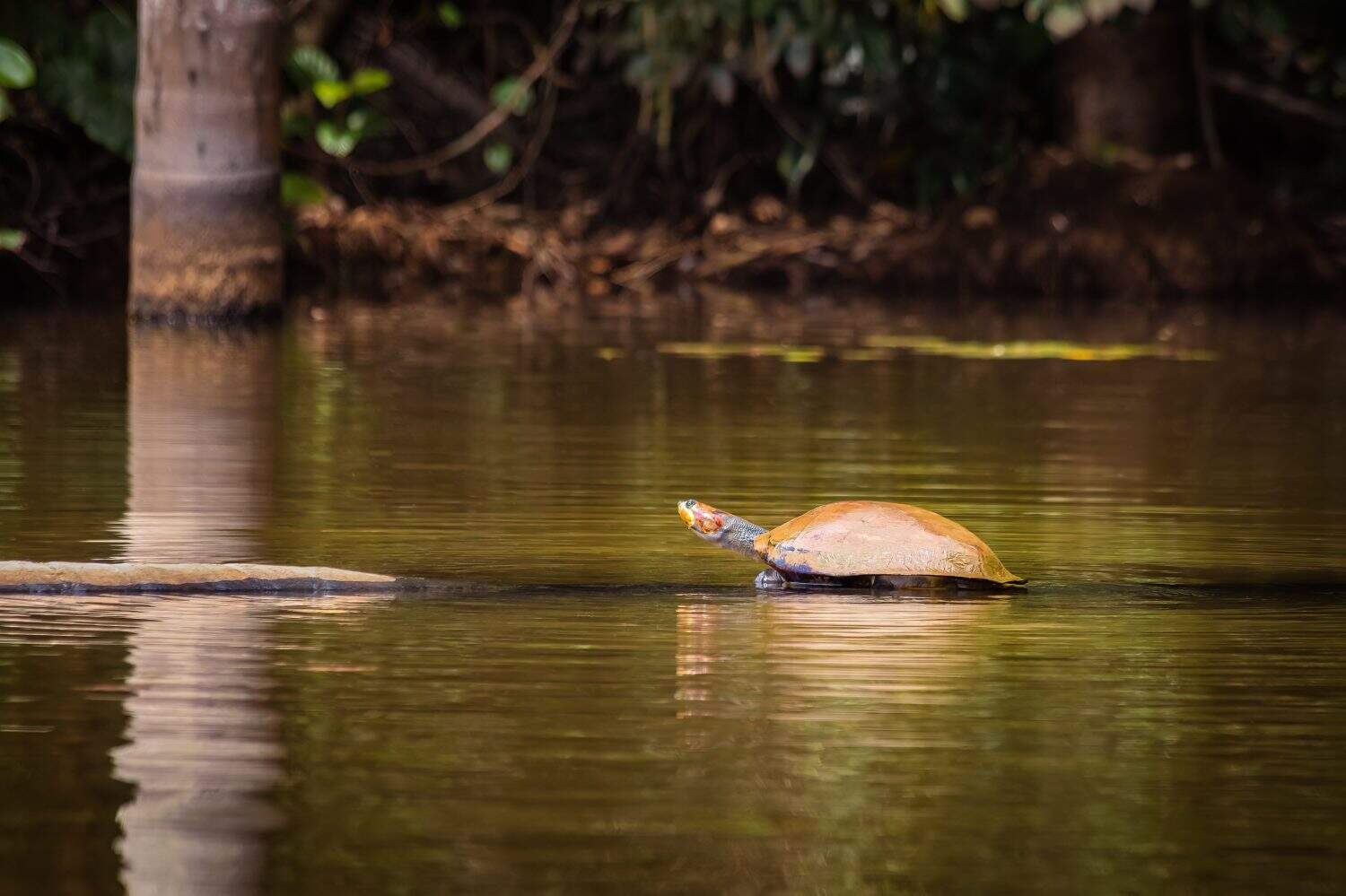
Giant South American river turtles spend much of their time in the water. The females come to shore to nest and lay eggs.
©Maurizio De Mattei/Shutterstock.com
On the ground, researchers counted 16,000 turtles. However, using the traditional orthomosaic method, they estimated 79,000 turtles. Drone footage in a video provided by the research team shows the sheer difficulty of counting animals that are constantly on the move.
“These numbers vary greatly, and that’s a problem for conservationists,” Brack says in the release. “If scientists are unable to establish an accurate count of individuals of a species, how will they know if the population is in decline or whether efforts to protect it are successful?”
How Does the New Counting Method Work?
Scientists prefer the orthomosaic method because it’s less invasive than other strategies. However, the method alone often overcounts animals that move around while the drone is snapping pictures. This can lead to one turtle getting counted multiple times.
University of Florida researchers teamed up with Wildlife Conservation Society (WCS) researchers to develop a new counting method. The scientists used white paint to mark the shells of 1,187 turtles resting on an island sandbank.
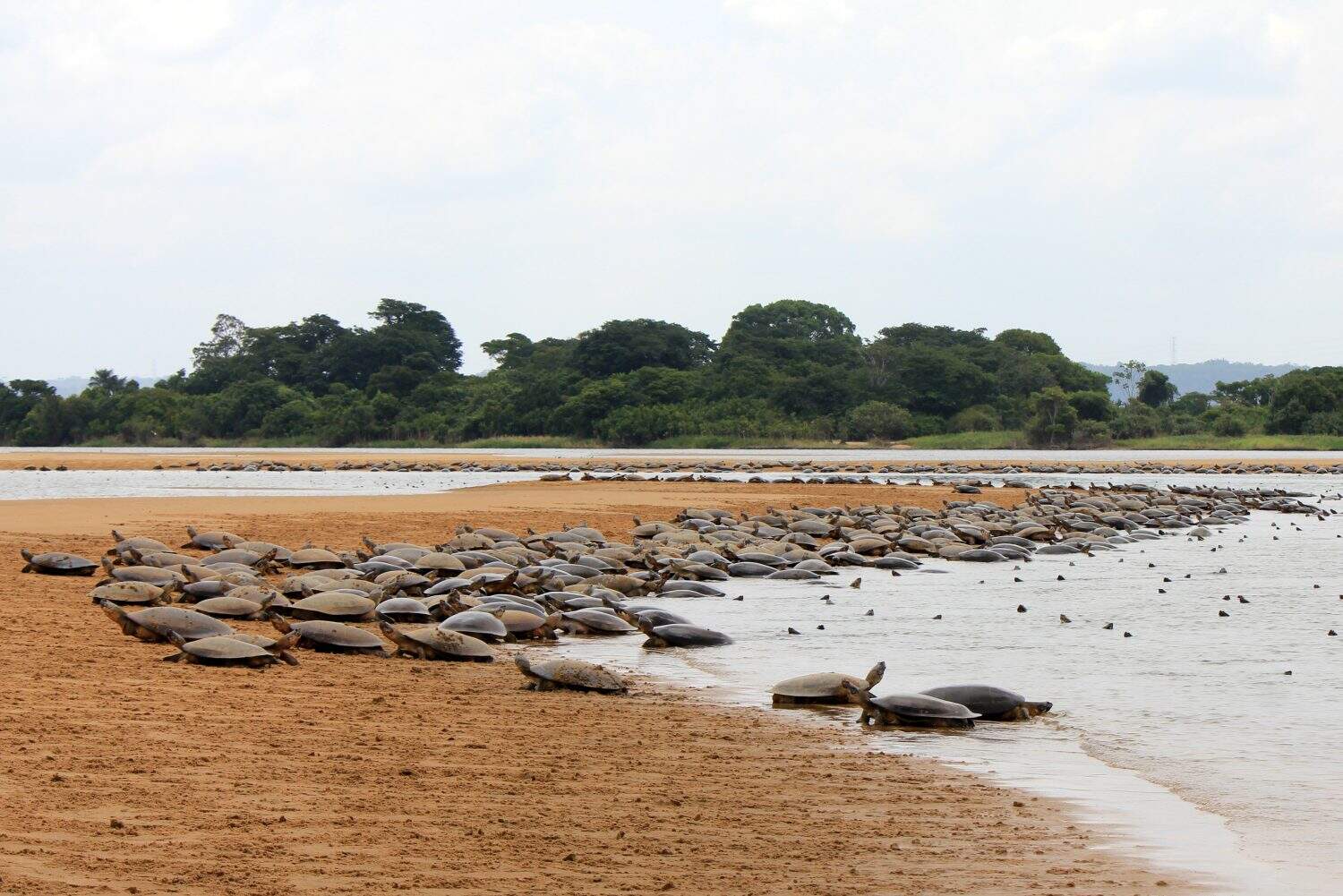
Scientists are working on new methods to get accurate counts of animals that are highly social and constantly moving around.
©Tarcisio Schnaider/Shutterstock.com
They then flew a drone for 12 days over the site, getting 1,500 photos each day. With software, they stitched the photos together. Scientists could see the paths where the marked turtles walked and nested. Based on this information, they created probability models to account for the turtles’ movement.
During their observations, scientists made some discoveries that help explain why the drone method alone is inaccurate:
- 20% of the turtles spotted walking around were counted as different individuals as many as seven times.
- Only 35% of the turtles that used the sandbank were filmed in the drone pictures.
By using the new method and accounting for possible errors, researchers counted 41,000 individual turtles, which they believe is a much more accurate estimate.
Why Accurate Counts Are Difficult to Achieve
It’s a challenge to get accurate counts of animals that are tightly grouped together and moving around. The study suggests several different methods to better understand an animal’s movement. Some examples they provided include clipping the fur of seals, marking mountain goats with paintball pellets, and using high-visibility collars on elk.
An accurate count is critical for conservation organizations to know where and how to expend their efforts. The team plans to continue working on their method. Brack says, “By combining information from multiple surveys, we can detect population trends, and the Wildlife Conservation Society will know where to invest in conservation actions.”