
Quick Take
- Eastern box turtles are declining due to slow reproduction, habitat fragmentation, road mortality, and agricultural hazards.
- Researchers track turtles using radio telemetry and GPS loggers to map movements and identify patterns critical for conservation.
- Long-term studies and collaboration with landowners help implement practical strategies that protect turtles and reconnect fragmented populations.
On a warm morning in Virginia, a wildlife researcher walks slowly through a patchwork of forest and farmland, eyes scanning the ground for something most people would never notice. Somewhere under the leaves, hidden among dappled sunlight and brown soil, is a turtle that’s likely older than the researcher.
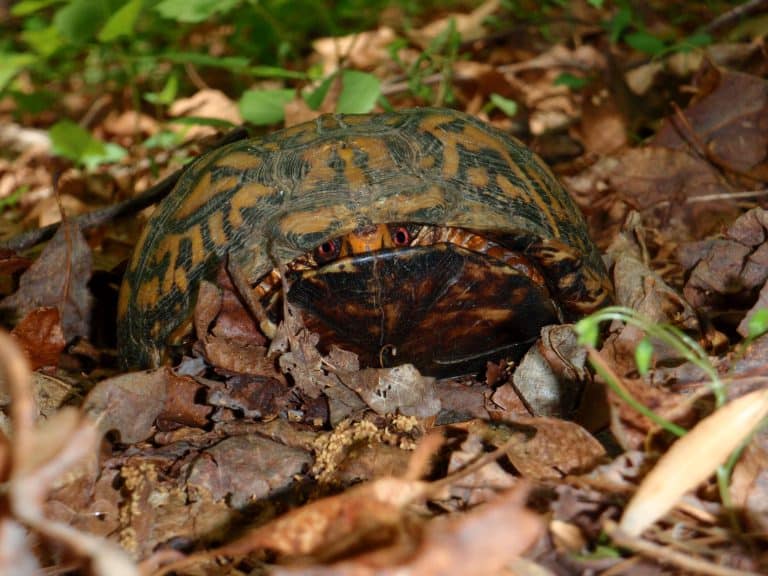
Finding it isn’t easy. Eastern box turtles are masters of camouflage. Their dark shells are patterned with yellow or orange streaks that blend perfectly with fallen leaves. When threatened, they can seal themselves completely inside their hinged shells and sit motionless for hours. That strategy works well against predators. It also makes them extremely difficult for scientists to find and study. They’re also hard to find because there aren’t a lot of them.
Researchers are trying harder than ever to track these quiet reptiles. Across much of the eastern United States, box turtle populations appear to be declining, but no one knows exactly how fast or why. To solve that mystery, scientists are turning to some surprisingly high-tech tools, including tiny radio transmitters, GPS loggers, and long-term field studies that track turtles for years at a time.
The goal is simple. If scientists can figure out how box turtles move across the landscape, they might be able to figure out how to save them.
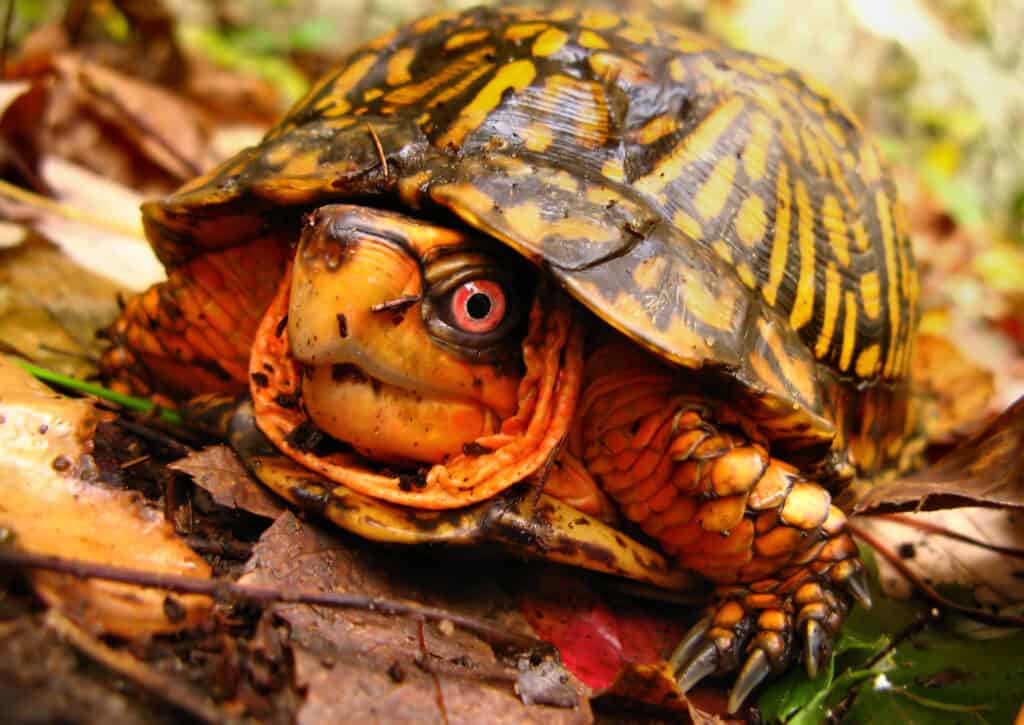
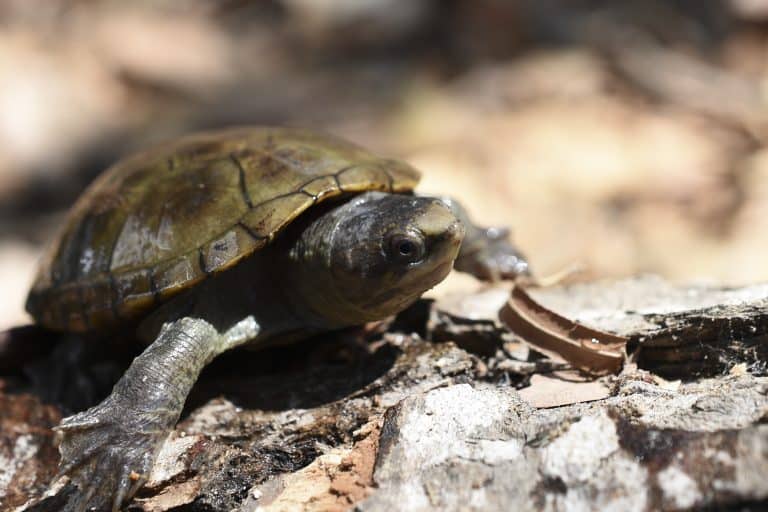
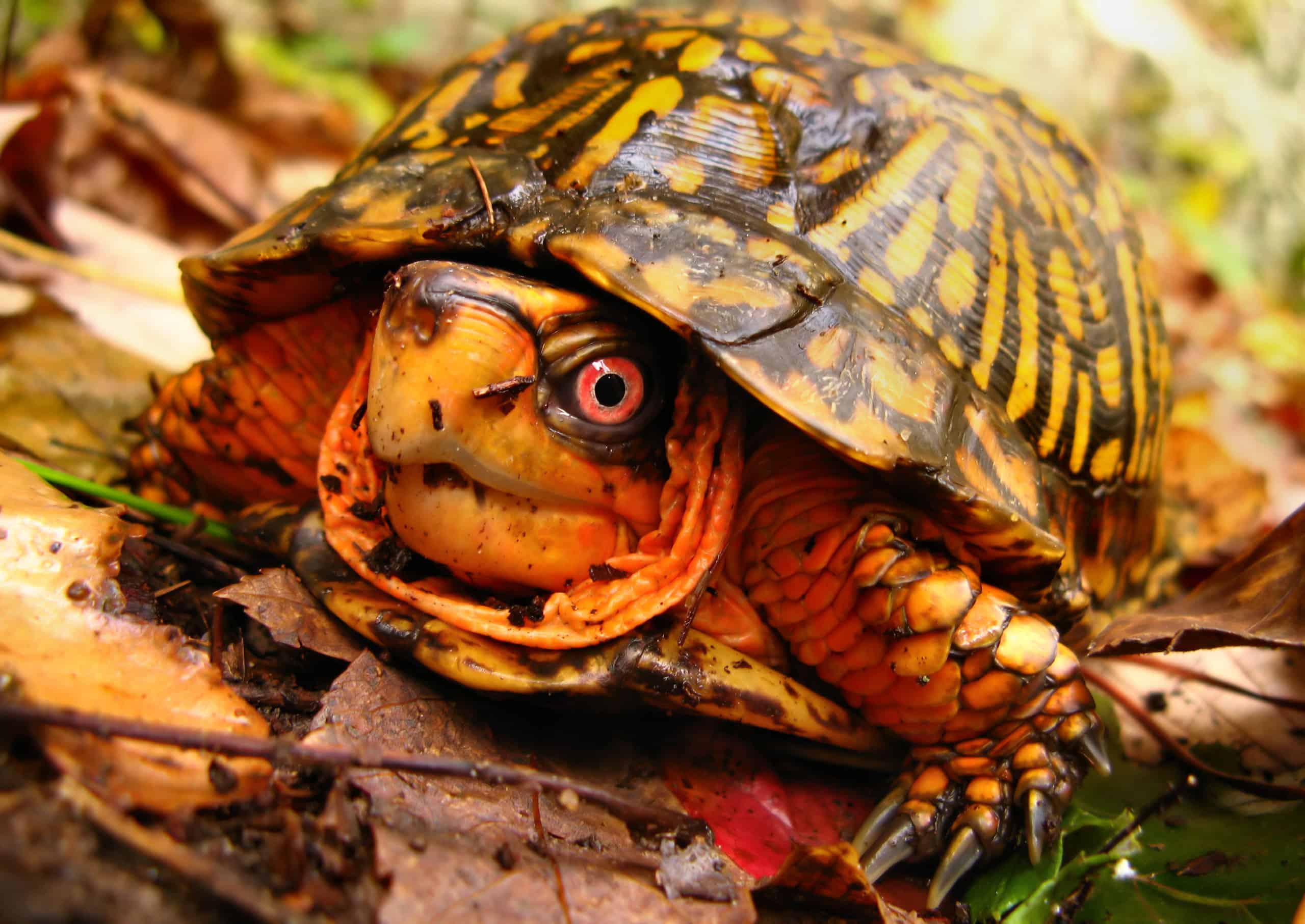
Each Eastern box turtle’s shell has unique yellow or orange markings, like fingerprints, helping researchers identify individuals.
©outdoorsports44/Shutterstock.com
The Eastern Box Turtle
The Eastern box turtle is one of the most recognizable turtles in North America. Unlike many turtles that spend most of their time in water, these turtles are primarily land dwellers. They live in forests, fields, wetlands, and even suburban backyards throughout the eastern United States.
Adults usually grow between 4.5 and 6 inches long. Their domed shells often look like miniature works of art, decorated with bright yellow, orange, or gold markings. No two shells are exactly alike. Like human fingerprints, they can help identify individual turtles.
Their most famous feature is the hinge on the bottom shell, called the plastron. When threatened, the turtle can pull in its head and legs and close the shell completely, forming a tight protective box. That ability gives the species its name.
Box turtles are also surprisingly long-lived. Many individuals survive for 25 to 50 years in the wild, and some have been documented living more than a century. That slow, steady lifestyle once helped them thrive across eastern forests. But there’s also a downside.
A Slow Life Strategy
Many animals rely on fast reproduction to keep their populations healthy. Rabbits, for example, produce large litters several times a year. If predators kill many rabbits, the population can quickly rebound. Box turtles take the opposite approach.
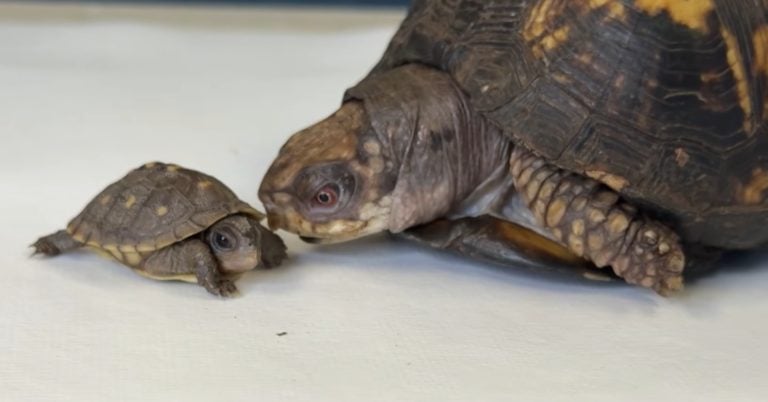
A female box turtle may not start reproducing until she’s about 5 to 10 years old. When she does lay eggs, the clutch is usually small, often between three and seven eggs. And even then, many hatchlings don’t survive. Baby turtles face threats from raccoons, skunks, foxes, snakes, birds, and other predators.
Because of this, adult survival is crucial for maintaining stable populations. If too many adult turtles die, the population can collapse because new turtles simply aren’t produced fast enough to replace them. That’s what scientists worry may be happening today.
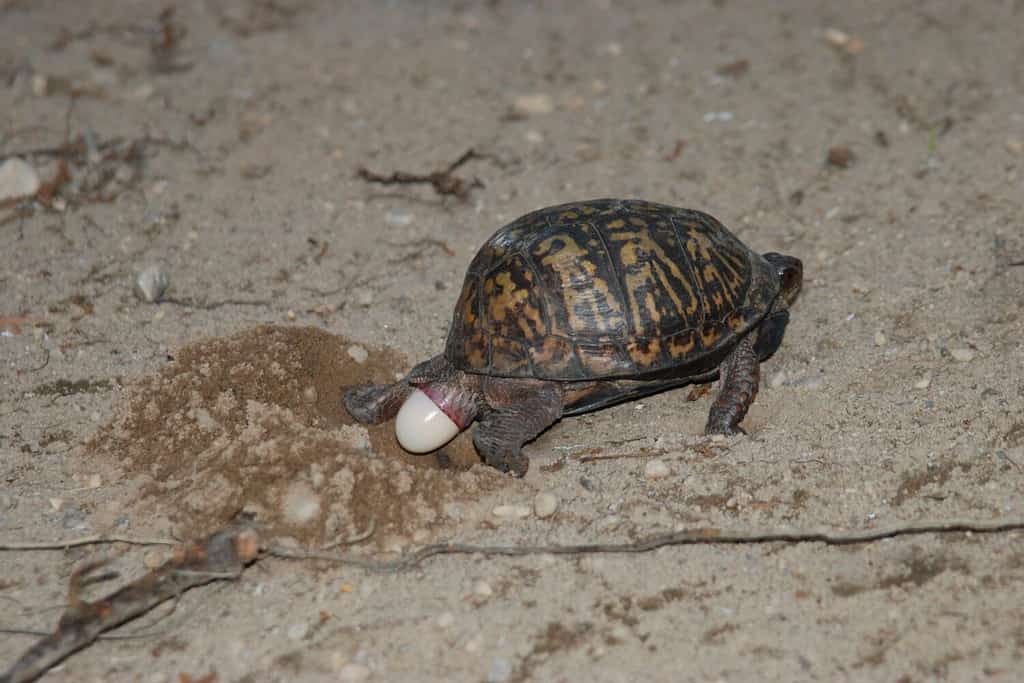
Female box turtles may wait up to a decade before laying small clutches of eggs, making adult survival crucial for population stability.
©RAScottPhotos/Shutterstock.com
A Landscape That Keeps Changing
One of the biggest threats to box turtles is habitat fragmentation. Historically, eastern forests formed large, continuous habitats where turtles could roam freely. Today, those landscapes are increasingly broken up by roads, housing developments, farms, and commercial areas. Instead of one large habitat, turtles often find themselves living in smaller, isolated patches.
That creates several problems. First, turtles may struggle to find mates if populations become separated. Second, they may need to cross dangerous areas like roads or fields to reach nesting sites, water sources, or seasonal feeding grounds.
Roads, in particular, pose a serious danger. Across the United States, millions of reptiles are killed by vehicles every year. Turtles are especially vulnerable because they move slowly and often freeze when threatened. A turtle crossing a road might take several minutes to reach the other side—plenty of time for a passing car to strike it.
Researchers have found that road mortality can dramatically reduce turtle populations, especially in areas with heavy traffic. Even small increases in adult deaths can have long-term consequences for species that reproduce slowly. Some studies suggest that losing just a few adult turtles each year can push a population into decline.
Another challenge comes from agriculture and land management. Many box turtles live in areas that include farmland, pasture, and managed forests. These “working landscapes” can still support wildlife, but they also bring risks. Farm equipment, mowing, and brush cutting can accidentally injure or kill turtles that are hidden in tall grass or leaf litter.
Farmers rarely intend to harm wildlife. In fact, many landowners care deeply about protecting animals on their property. The problem is timing. If land managers knew when turtles were most active or likely to move across fields, they might be able to adjust mowing schedules or avoid certain areas during peak movement periods. That’s one reason researchers are focusing so heavily on turtle movement.
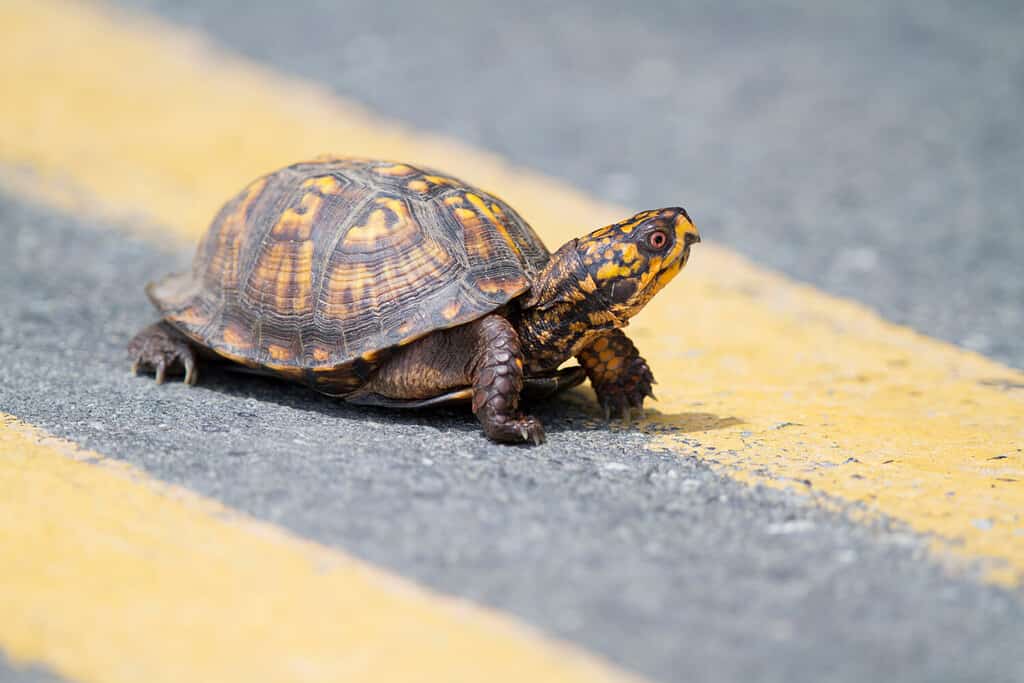
Roads and fragmented habitats force turtles to cross dangerous areas, exposing them to predators and vehicles.
©Mark_Kostich/Shutterstock.com
Tracking Turtles with Radio Telemetry
To understand where turtles go, scientists first have to find them. Once they do, they attach small tracking devices to the turtle’s shell using a lightweight adhesive. These devices usually consist of a VHF transmitter and a GPS logger, both lightweight and designed not to interfere with the turtle’s movement.
The first is a VHF transmitter, which acts like a tiny radio beacon. Researchers can use a handheld receiver and antenna to detect the signal from hundreds of yards away and locate the turtle in real time.
The second is a small GPS logger. This unit records the turtle’s location automatically at regular intervals. Over time, the GPS units build a detailed map of where the turtle travels throughout the day, the season, and even the year.
Early results from tracking studies are revealing how complex turtle movement can be. Some turtles maintain relatively small home ranges, spending most of their lives within a few acres. Others wander much farther, exploring fields, forests, wetlands, and edges between habitats.
Seasons also play a significant role. During warm spring and summer months, turtles may move frequently while searching for food, mates, or, in the case of females, suitable nesting sites. In cooler weather, movement slows as turtles prepare for winter hibernation.
By combining GPS data with weather records, researchers can begin to see patterns, which could eventually lead to practical conservation strategies.
If researchers can determine that turtles are likely to cross fields during specific weeks or following particular weather conditions, farmers could delay mowing or adjust equipment use during those times. Even small changes could reduce accidental deaths.
The same data might also help wildlife agencies identify key turtle habitats or movement corridors. Protecting those areas could help reconnect fragmented populations and give turtles safer routes across the landscape.
The Importance of Long-Term Studies
One of the biggest challenges in turtle conservation is time. Because box turtles live so long and reproduce slowly, population changes can take decades to become obvious. A population might appear stable for years before suddenly crashing. That’s why long-term monitoring is essential.
Many turtle studies track the same individuals year after year, recording where they move, how often they reproduce, and whether they survive. Over time, these records build a clearer picture of population trends. Researchers can estimate how many turtles live in a particular area, how often individuals are recaptured, and whether the population is growing or shrinking.
These studies require patience. But they’re one of the best tools scientists have for understanding species that live long, quiet lives.
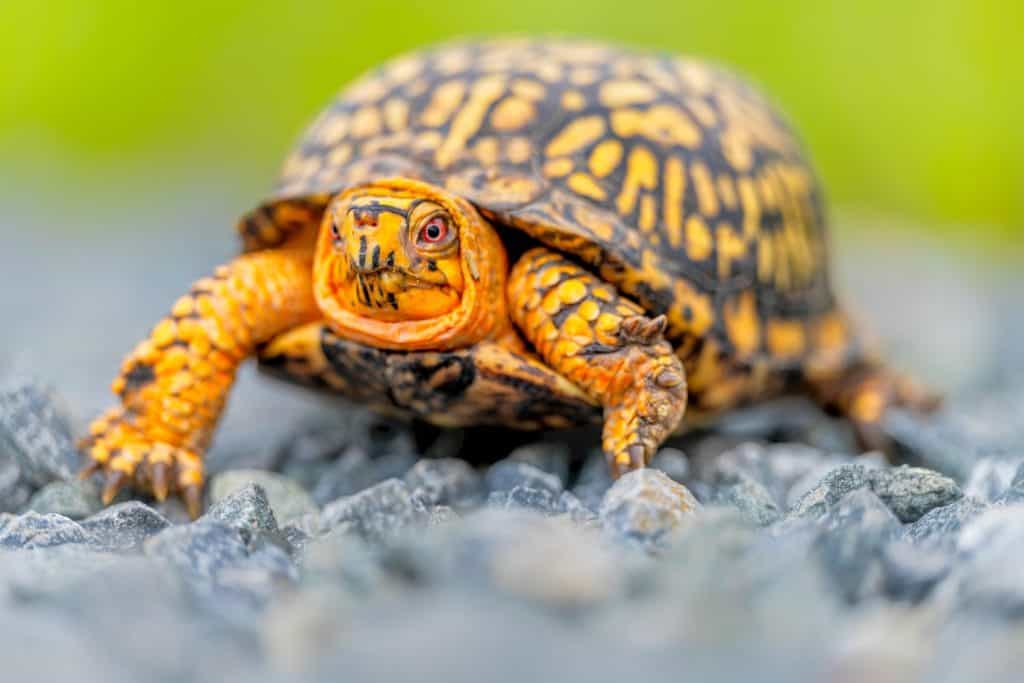
Tracking individual turtles over many years reveals population trends and survival patterns essential for conservation strategies.
©Buvana Bala/Shutterstock.com
Reasons for Hope
Despite the challenges, there’s encouraging news. Some working landscapes appear to support surprisingly healthy box turtle populations. In certain areas of Virginia, researchers have found that farms, pastures, and forest edges can provide valuable habitat if they’re managed carefully.
Equally important is the growing network of conservation partnerships focused on turtles. Universities, wildlife agencies, nonprofit groups, and local landowners are increasingly working together to share data and coordinate conservation efforts.
Many landowners are eager to help once they understand how their actions affect local wildlife. Simple steps like leaving unmowed buffer areas, protecting nesting sites, or helping turtles safely cross roads can make a real difference. Thanks to modern tracking technology, scientists are now learning more about turtles than ever before.