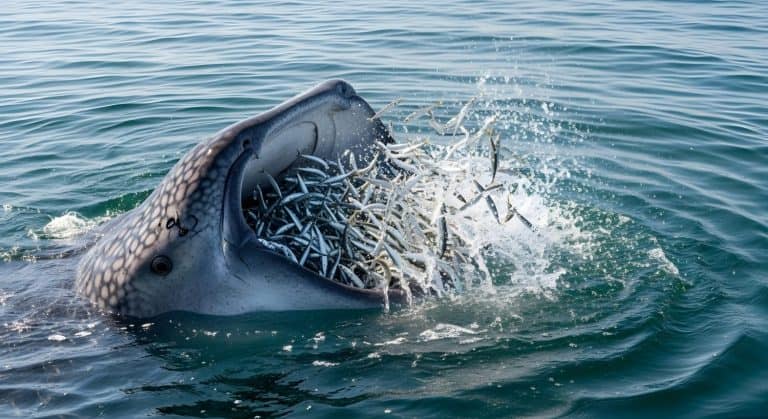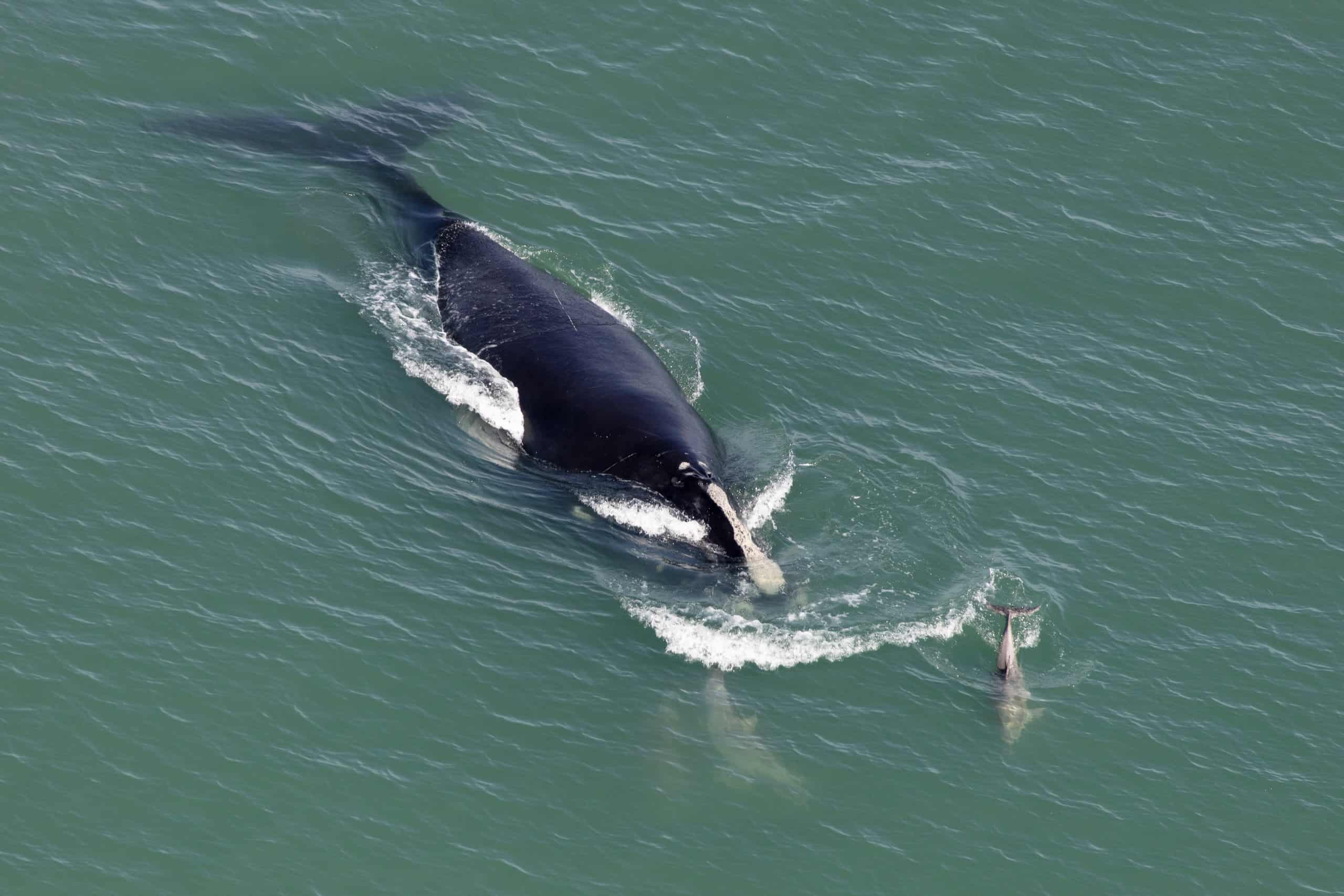

Snot has turned out to be a surprisingly useful substance when it comes to assessing the health of an endangered whale species. Scientists have used what they politely call ‘respiratory exhalant’ from North Atlantic right whales (Eubalaena glacialis) to examine whether the micro-organisms that it contains reflect their health status. Let’s take a closer look at this fascinating study.
About North Atlantic Right Whales
These whales are primarily found in Atlantic coastal waters on the continental shelf. However, they are also known to travel over deep water and far offshore. They also migrate seasonally, either alone or in small groups. This means that in the spring and summer, they are found in waters off New England and further north into Canadian waters, where they feed and mate.
These are large whales; adults can reach 52 feet in length and weigh up to 70 tons. Their bodies are black and stocky, and they have no dorsal fin. Tails are broad and deeply notched with a smooth, trailing edge. Each whale has a unique pattern of white rough skin (callosities) on their head. Their blow spout is shaped like a ‘V’.
North Atlantic right whales are one of the world’s most endangered large whale species. The species has been listed as endangered under the Endangered Species Act since 1970. Only around 380 individuals are remaining as of 2025, and they are threatened by entanglement in fishing gear, vessel strikes, ocean noise, and climate change.
The current population includes both emaciated whales—showing skin lesions, rake marks, and ectoparasites—and robust individuals in good health. This variation makes North Atlantic right whales an ideal species for studying how the respiratory exhalant microbiome reflects whale health.
How Was the Whale Snot Study Conducted?
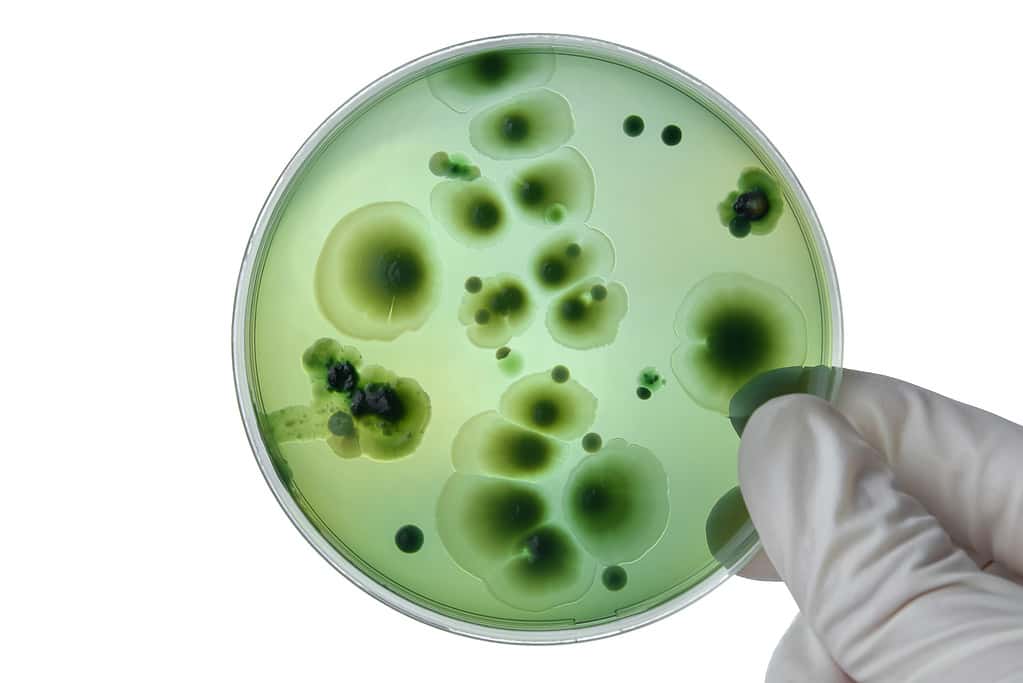
Petri dishes were used to collect snot samples.
©Boonyakiat Chaloemchavalid/iStock via Getty Images
The study was conducted in Cape Cod Bay, Massachusetts, USA, during the spring feeding seasons of 2016–2024. Using a drone, the scientists flew a petri dish through the spray exhaled from a whale’s blowhole as it surfaced. Overall, 103 respiratory exhalant samples were collected from 85 individual whales. This method allows the drone to remain over 100 feet away from the whale, minimizing any potential distress to the animal. At the same time, the drone collected full-body images, which were used to derive an index of body condition. Additional health data was gathered from photo-identification imagery and an existing health and vital rates model.
Using statistical analysis, the scientists explored whether there was a relationship between the number and type of microorganisms in a whale’s snot and their health status. They aimed to determine whether this method could reliably monitor whale health without requiring close contact that might cause stress.
What Did the Study Find?
The results of the study showed that snot bacterial populations were different in thin whales compared to the more robust ones. Interestingly, the thin whale’s snot contained bacteria that are mammalian pathogens, including Clostridium and Peptoniphilus.
Conversely, the robust whale’s snot contained bacteria that are usually found in lipid-rich environments, namely Sediminispirochaeta and Candidatus Gracilibacteria. Researchers hope these findings will contribute to better protection for North Atlantic right whales in the future.