
Quick Take
- Snakes shed their skin through ecdysis to allow growth and remove parasites.
- The epidermis is a tough keratin sheath that cannot stretch, so it must be shed in one piece after a new layer forms underneath.
- Shedding frequency depends on temperature, humidity, food, and reproduction, with brumation or birth often triggering shedding.
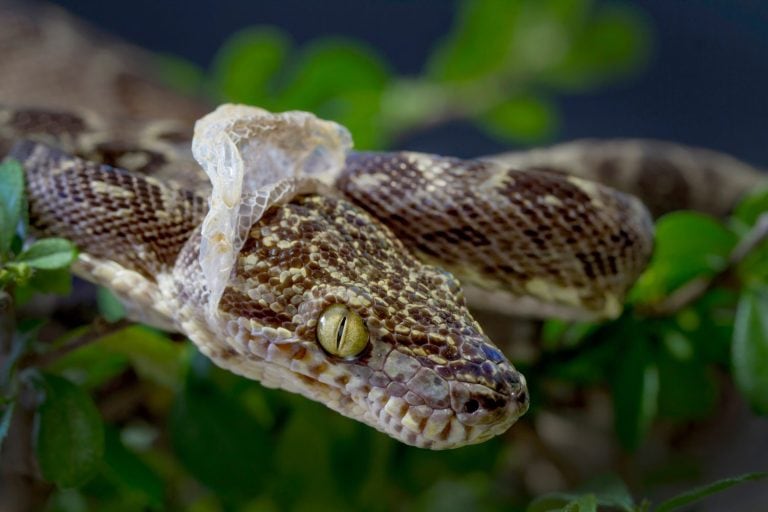
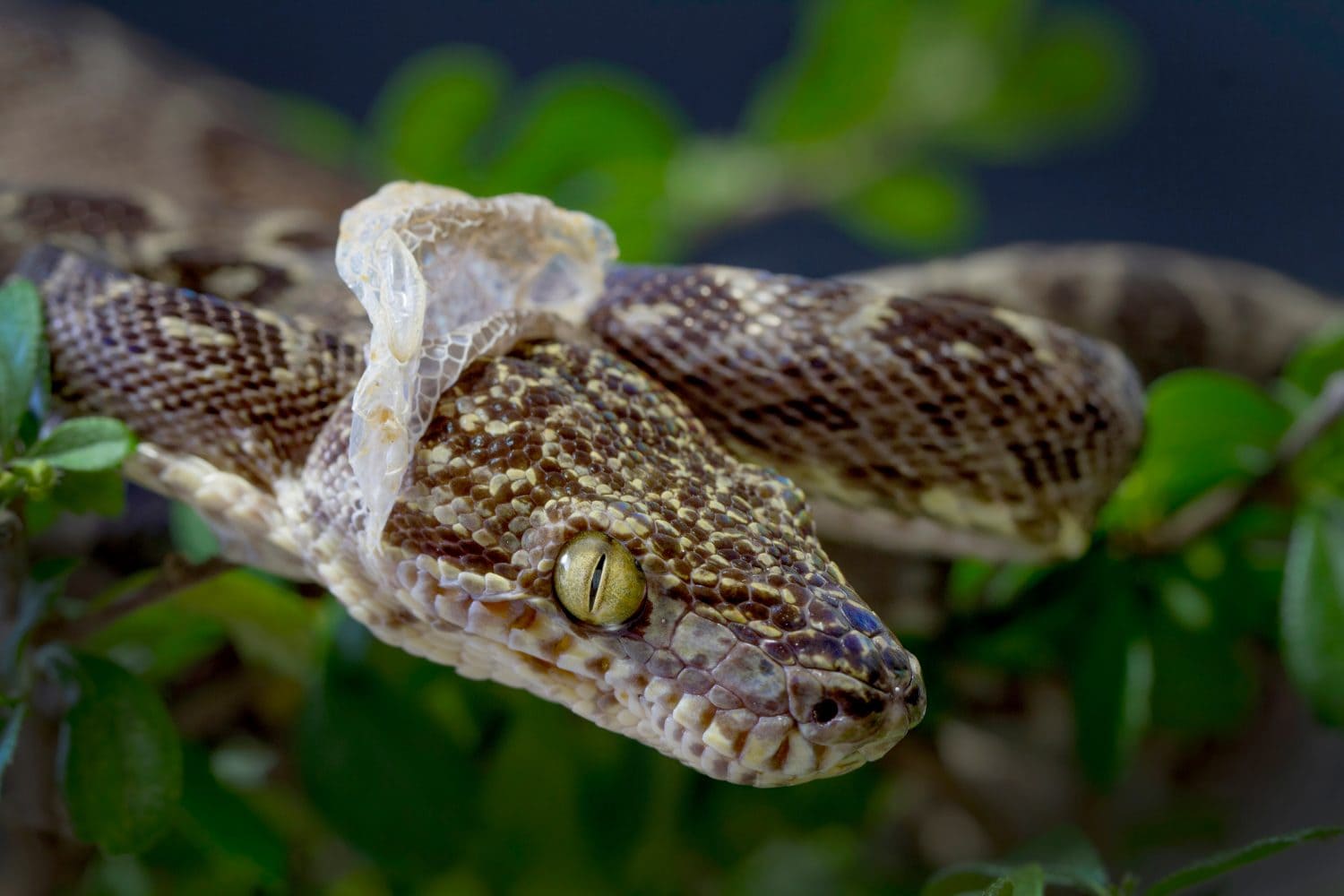
The process of skin shedding is called ecdysis and takes place repeatedly throughout a snake’s life. They literally slide out of their old skin, leaving it behind in papery shreds in which you can see the imprint of their scales. Skin shedding is not unique to snakes; we humans also shed the dead top layer of our skin cells. However, we do it in small flakes rather than in one single piece. Some lizards also shed their entire skin in one go.
Why Do Snakes Shed Their Skin?
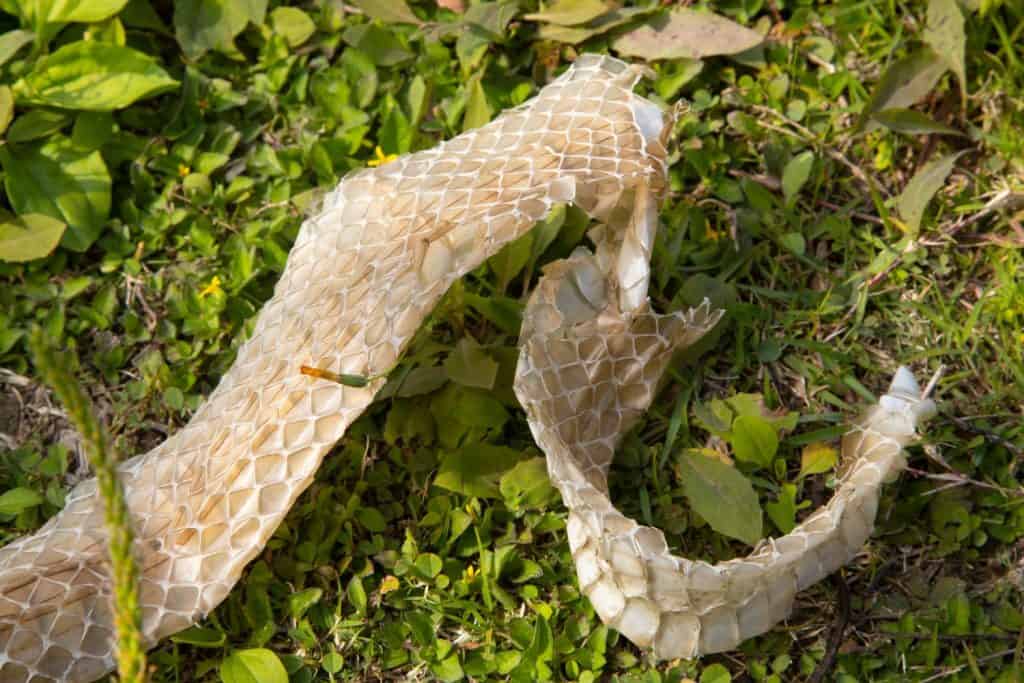
You can see the outline of scales in a shed snake’s skin.
©off5173/Shutterstock.com
The outer layer of a snake’s skin is called the epidermis. It is a layer of semitransparent keratin scales. This layer is very tough, but it cannot expand. So as the snake grows, the skin does not grow with it. Snakes therefore shed their skin to create more room for their growing bodies. Shedding also helps them to get rid of skin parasites and infections.
This sheath-like epidermis cannot come off in bits and must be shed in its entirety in one go because it is so tough. Prior to losing the top layer of skin, the snake will have already started to develop a second fresh keratin layer below the existing keratin sheath.
Fluid is secreted to help loosen the old layer, and the snake will rub its head against a surface to create an initial slit before sliding out.
How Often Do Snakes Shed?
The frequency of shedding is controlled by temperature, humidity, food intake, and reproduction. Significant events such as emerging from brumation and birth/egg-laying typically trigger shedding. The first shedding event is called postnatal ecdysis, and this can be an hour to several weeks after birth or hatching, depending on the species. For example, puff adders (Bitis arietans), shed within hours of birth to avoid detection by predators who hunt using smell. Some young python species, however, take around 17 days before they have their first shed.
When snakes are young and growing rapidly, they may shed every four to six weeks. For adults, shedding typically occurs a few times per year.