
Many birds around the world have been captured on film participating in elaborate dance routines. From the Red-capped Manakin, which is known for its moonwalking moves, to the Laysan albatross, which works to perfect the “sky snap,” and even Clark’s grebe, who perform a synchronized dance across the water, these birds look effortless in their attempts to woo mates during breeding season.
One bird takes dancing to a whole new level by not only jumping into the air but also showing off its remarkable plumage in the process. The bird that is most spritely and has had luck with its rear plumage will be the standout of the group, which could number in the dozens. But what bird is this, and why does it jump the way it does? The answer is Jackson’s widowbird, a bird that can only be found on one continent, which completely transforms itself annually to ensure the next generation of widowbirds is strong, giving them the best possible chances of survival.
Jumping During Breeding Season
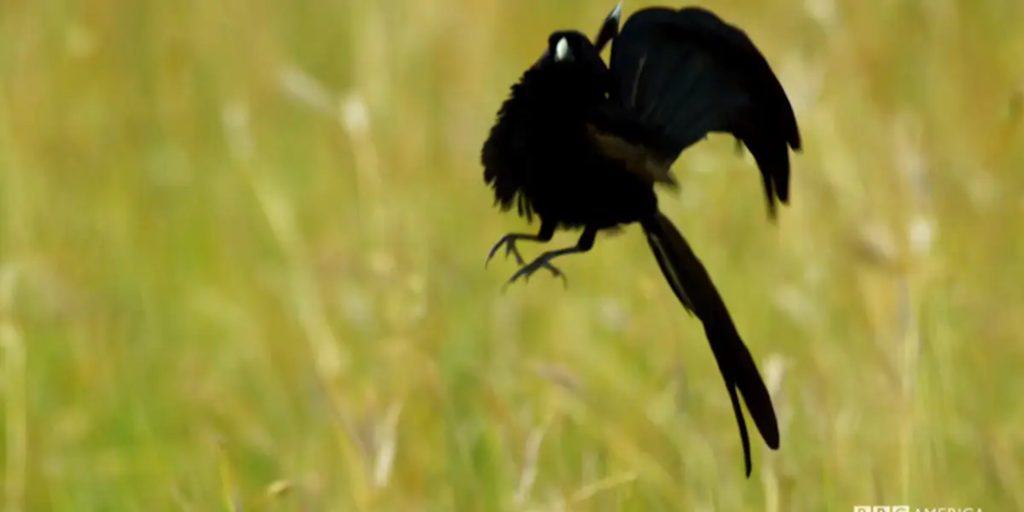
Jackson’s widowbirds will jump as high as they can in the grasslands of Africa to show off their plumage and gain a mate.
© – Original
When visiting the tropical, high-altitude grasslands of Kenya or Tanzania, a diverse array of bird species can be observed that call the region home. However, there is one that puts on a magnificent dance every breeding season that has to be seen to be believed. The bird is Jackson’s widowbird, and the lengths the males of the species go to find themselves a mate are nothing short of spectacular.
BBC Earth was able to capture the Jackson’s widowbird in action as the males of the species jumped high in the air to show off their tail feathers. The YouTube video shows the black feathered males jumping up to 3.2 feet into the air to demonstrate their athleticism. But it is not only the high jumping females of the species that are looking for. The female Jackson’s widowbird is also looking to see just how long the male’s tail feathers are. With some of these feathers reaching up to 24 inches long, the closer the feathers are to this length, the better it bodes for breeding purposes for the males.
The jumping is achieved by the male Jackson’s widowbird only after a three-foot circle is made in the grassland area, called a lek. The circle allows the birds to not only jump without anything getting in their way, but to have a stage of sorts to perform the mating dance. The lek is only used during the breeding season. During that time, there may be dozens of male Jackson’s widowbirds jumping up and down, hoping to catch the eye of a female that will raise the next generation of birds.
What Female Jackson’s Widowbirds Are Looking For in a Mate
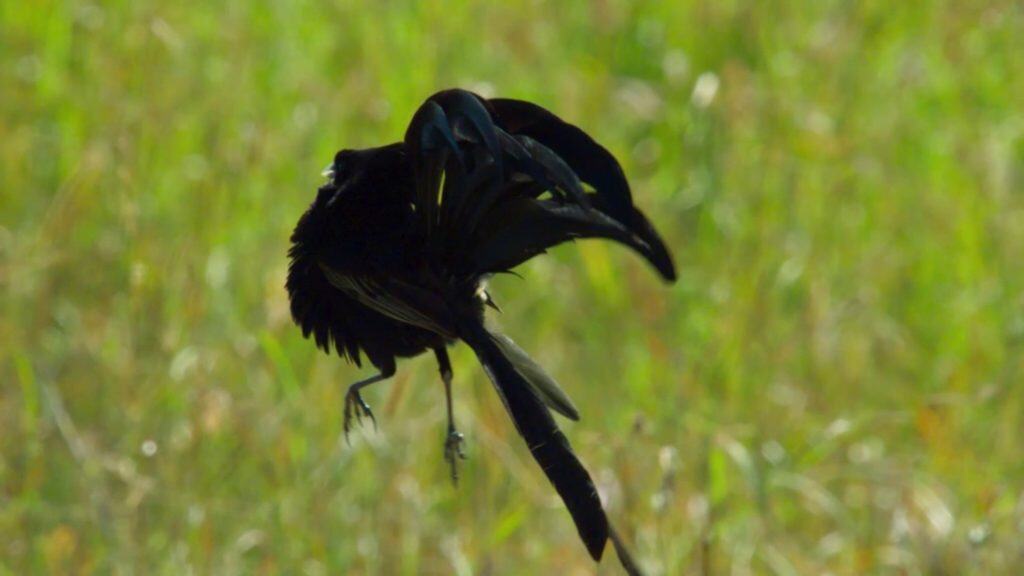
Jackson’s widowbird females are looking for a mate with long tail feathers and strong jumping prowess.
© – Original
When it is not breeding season, the main difference between the male and female Jackson’s widowbird is their size. Males typically tend to be slightly larger. However, feathers and markings are remarkably similar. It is not until mating season that females begin to take note of the males, making it clear just what is important in a mate.
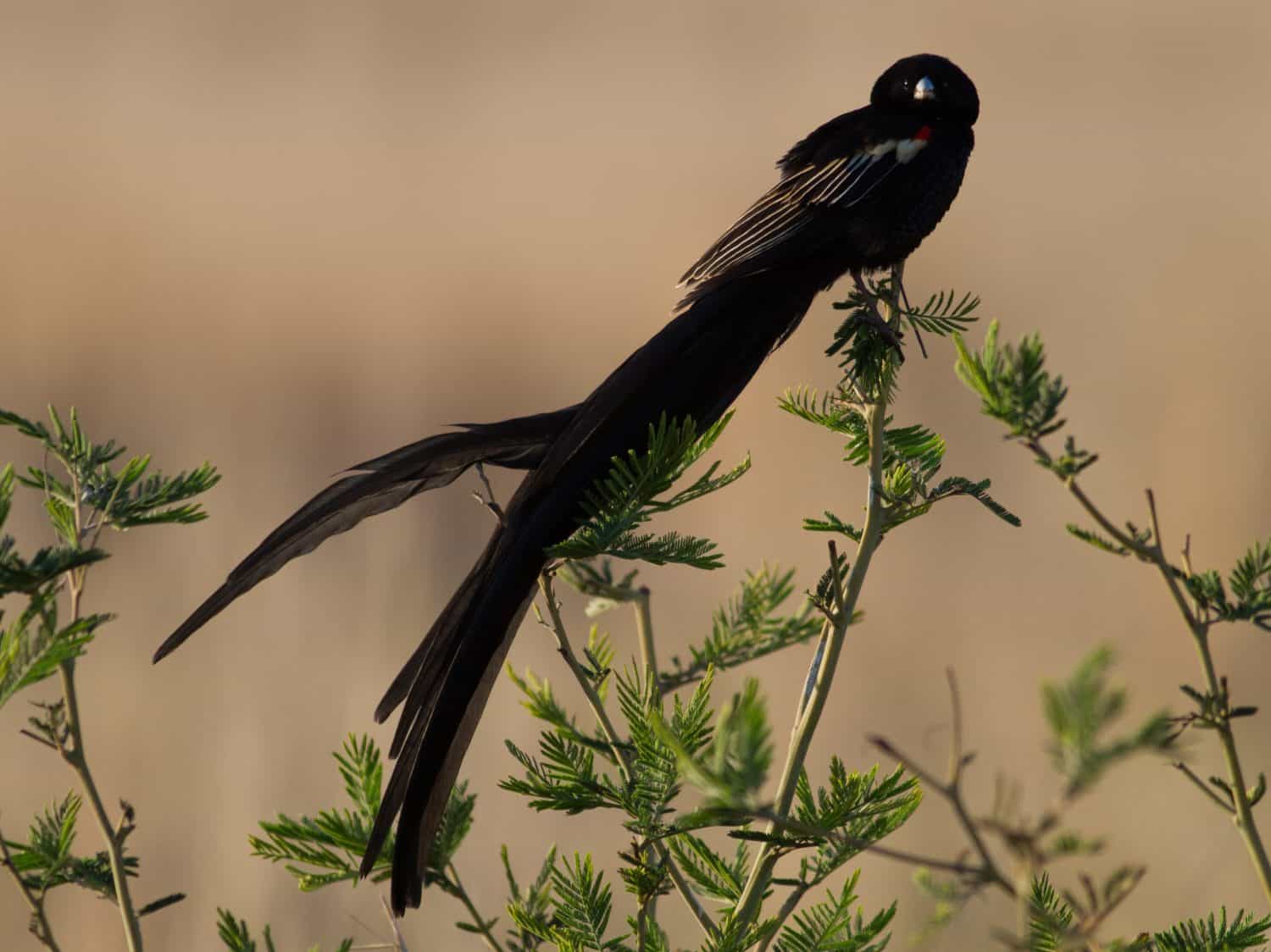
As the mating season begins in November, the male Jackson’s widowbirds will undergo a transformation. Their color changes from brown to dark black. Their tail feathers will grow long and thick. It takes a lot of energy to look this striking, but it is worth all the preening the males have to do during this season to maintain their appearance. These tail feathers are what attract mates for several months.
In addition to growing the long tail feathers, the male Jackson’s widowbirds will go to grassland areas known as leks and begin to jump. During the jumping process, males will display their long tail feathers. The goal is to jump higher and longer than any other male trying to find a mate. Those who outlast the others are perceived as the most dominant within the species and are the most attractive to females.
Jackson’s Widowbirds Are Polyamorous
A male Jackson’s widowbird will mate with as many females as will accept him during the breeding season.
©Yo soy Luz Gamboa/Shutterstock.com
Unlike other birds that mate for life, Jackson’s widowbirds are polyamorous. The more females are attracted to a male during mating season, the better. The goal of the male Jackson’s widowbird is to attract as many female partners as possible during the breeding season. The stronger the plumage and jumping power, the potentially stronger offspring the short-term couple will have. This is why the female Jackson’s widowbirds take their time observing the males as they jump and sing as they visit the lek.
Once a partner has been chosen, the birds will mate. The females then fly away from where the lek is and will build a nest. She will have one to four eggs that will take up to two weeks to hatch. The hatchlings are then under the care of the female bird for another couple of weeks before they begin to care for themselves.
Male Jackson’s Widowbirds Change Feathers After Breeding Season
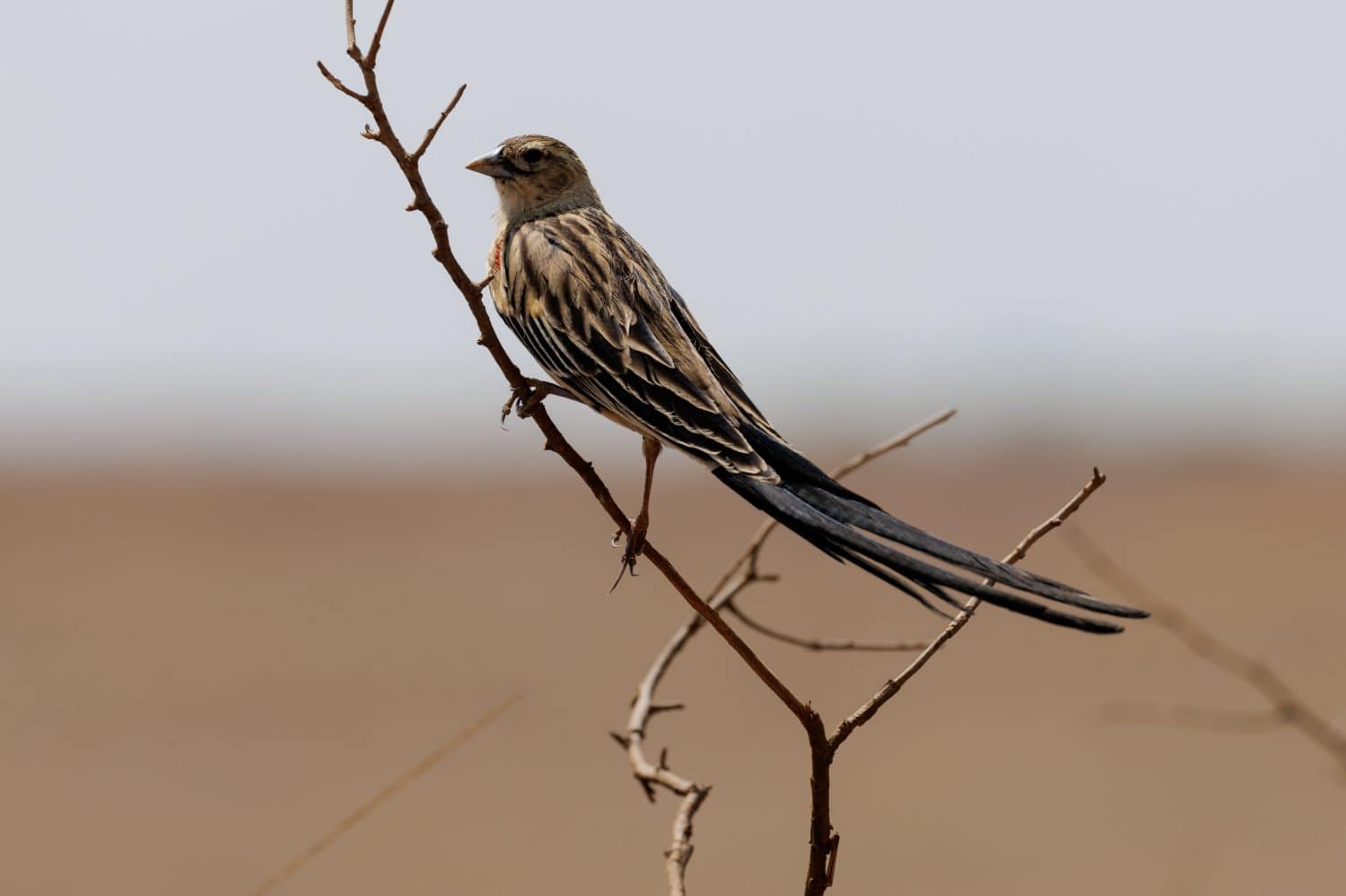
Jackson’s widowbirds will begin to lose their black coloring and return to brown and black, like this widowbird, after breeding season is over.
©Wirestock Creators/Shutterstock.com
What is so very unusual about the male Jackson’s widowbird is that once the breeding season comes to a close, the looks and behavior of the bird completely change.
During the non-breeding season, the male Jackson’s widowbird looks strikingly similar to the female. Both have brown feathers with darker markings. The elaborate tail feathers for which the male is known are not present. More remarkably still, the males and females live in harmony with one another and even forage together. The territorial behavior vanishes.
It is not until the breeding season ramps up, between November and April, that the males of the species who are of breeding age undergo the transformation from brown to black feathers and begin to grow their remarkable plumage. The reason the transformation is only breeding season specific has to do with the amount of energy expended to grow the feathers. The male birds can better conserve their energy in other months of the year by having a simpler look, akin to the females, until it is time to put on a show again and woo the females to produce the next generation of Jackson’s widowbirds.
A Near-Threatened Species
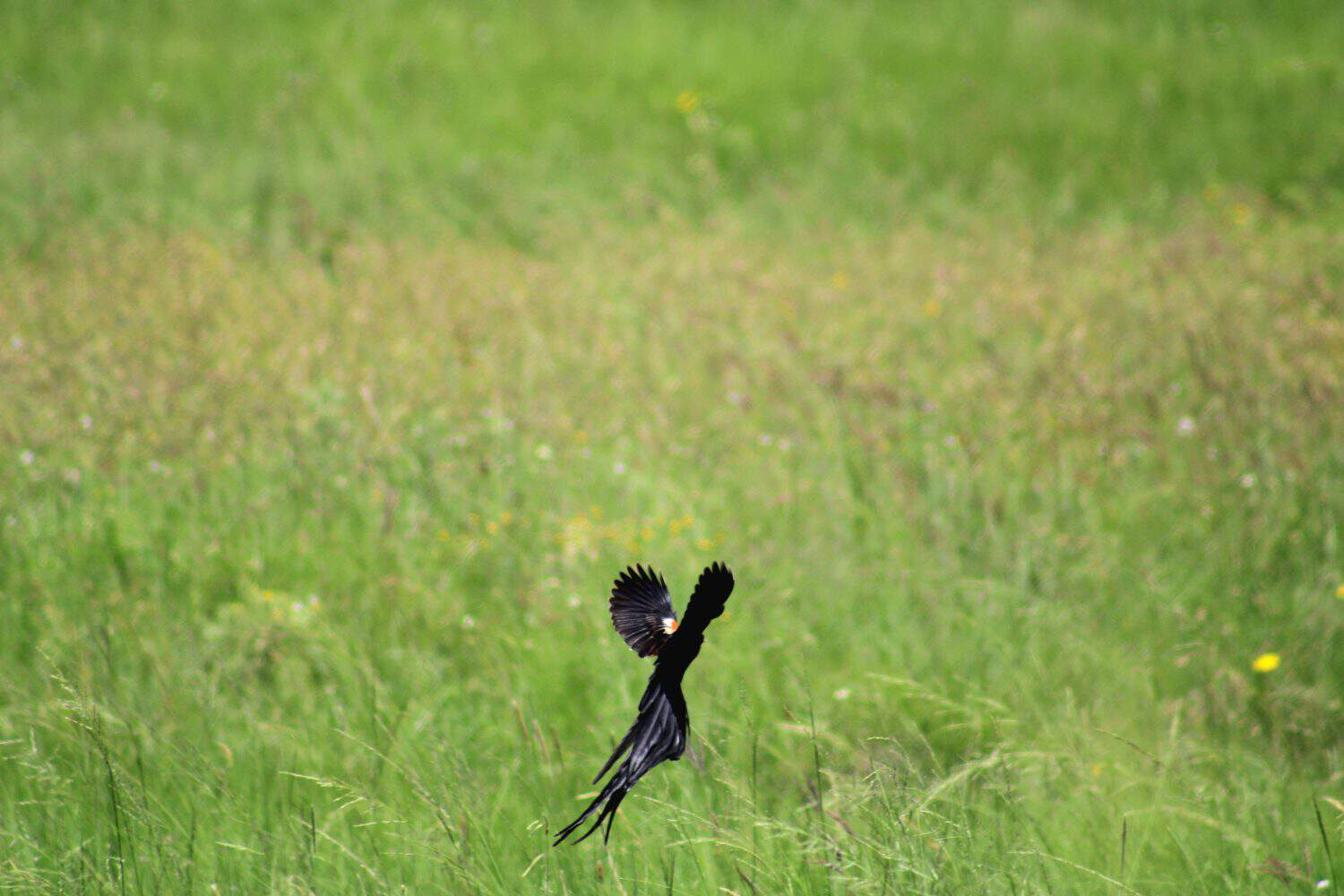
Jackson’s widowbird, similar to this widowbird, is a near-threatened species, meaning there is still time to save them if conservation efforts begin now.
©Hendrik Willem/Shutterstock.com
While videos make it appear that Jackson’s widowbirds are living in abundance in Kenya and Tanzania, the birds are a “near threatened” species, according to the IUCN. Conservationists believe that without some dramatic changes soon, there is the very real possibility that Jackson’s widowbirds may face a real threat in the next decade.
The biggest threat that Jackson’s widowbirds face is the loss of their grassland habitats, which they call home. Not only are these grasslands where the birds feed and build their nests, but they are also where the leks are found. The leks, according to the IUCN, are found in the exact location for multiple years in a row by the male Jackson’s widowbirds to showcase their jumping prowess and long tail feathers.
As these grasslands dwindle due to development, fires set to control ticks, and use for livestock, Jackson’s widowbirds are running out of places to live and breed. In Tanzania, virtually the only places to find the birds are within a protected area in the Serengeti National Park and the Ngorongoro Conservation Area. Unfortunately, Kenya does not have the same protected areas established for the birds.
As conservationists have pointed out, unless the grasslands are left untouched, the current stable population of Jackson’s widowbirds will begin to collapse. Once this happens, these entertaining birds, which were first introduced to the world outside of Kenya in 1889, will have a hard time surviving, and ultimately may face the same fate as the 100 to 200 species that go extinct daily.