
Animal mimicry is one of the most fascinating displays of strategy in the animal kingdom. By mimicking other, more ferocious animals, weaker animals can escape unscathed during encounters with predators. One of these amazing copycats is the bullsnake. This snake has an uncanny mimicry of the rattlesnake, as seen in the video by Hog Blog! Read on to learn about the bullsnake and how it has learned to mimic rattlesnakes.
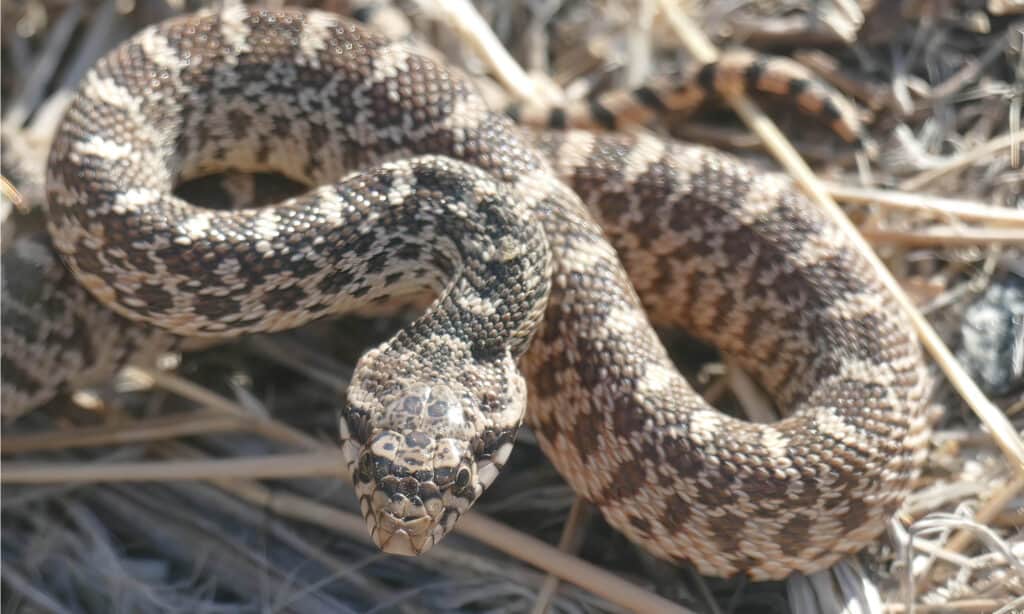
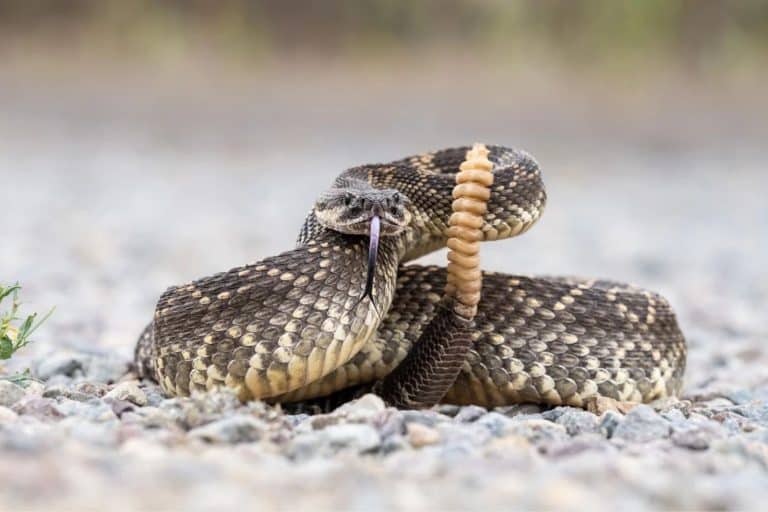
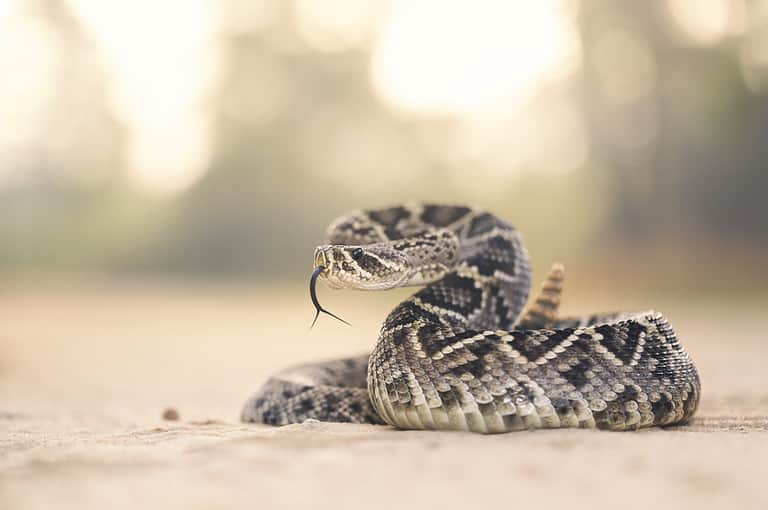
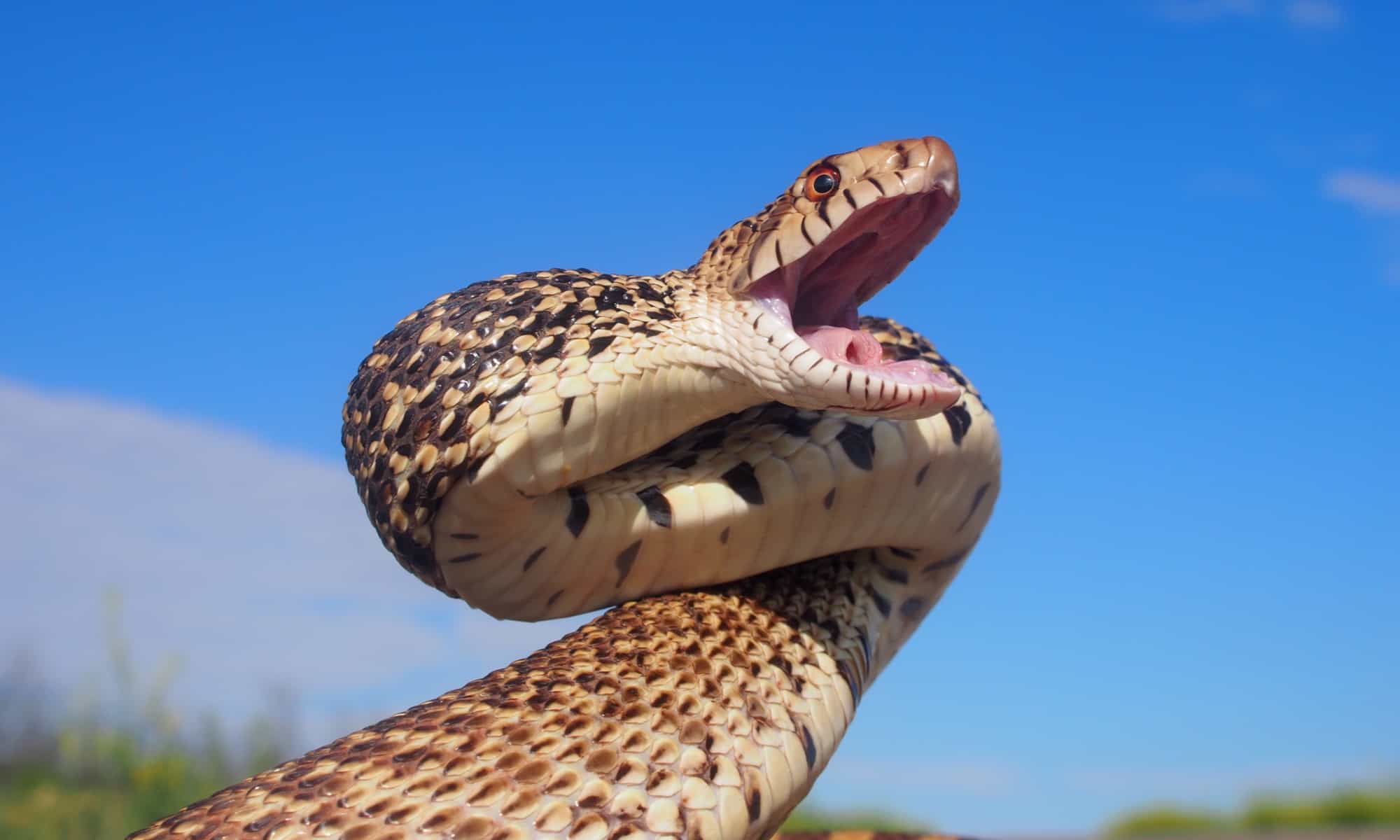
The Bullsnake is similar to the Western Rattlesnake. It has black, brown, reddish, or white dorsal blotches on a yellow, cream-colored, or beige ground.
©steve estvanik/Shutterstock.com
Bullsnake Mimicry
Animal mimicry occurs when a species resembles another animal or its surrounding environment. This evolutionary feature gives an upper hand in survival by deceiving potential predators. It is observed in all sorts of creatures, such as insects, mammals, and reptiles, each using mimicry to their advantage. Some forms of mimicry help lure prey in, while others help keep predators away. The mimicry of the bullsnake is a bluff strategy to trick its predators into thinking it is a venomous rattlesnake. Bullsnakes are non-venomous and instead coil around and constrict their prey in fights. Since they lack venom, they rely heavily on their resemblance to rattlesnakes.
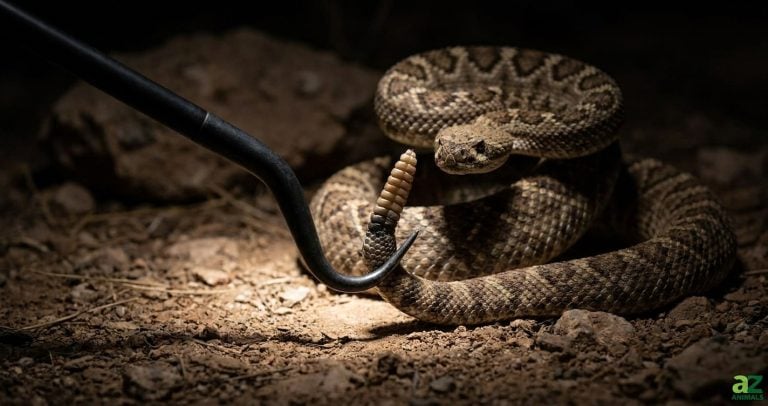
The bullsnake mimics rattlesnakes in multiple ways. They do not have rattles like actual rattlesnakes, so they produce a loud hiss by flapping cartilage in their throat, which creates a sound similar to a rattlesnake’s rattle. Additionally, they vibrate and beat their tails on the ground, causing leaves or grass to shake and further imitating the rattlesnake’s rattle. Combined with their posture, these behaviors make bullsnakes difficult to distinguish from rattlesnakes. The bullsnake will also change its posture to appear ready to strike and bite, even though it is non-venomous. This bluff strategy is a great way to avoid predators.
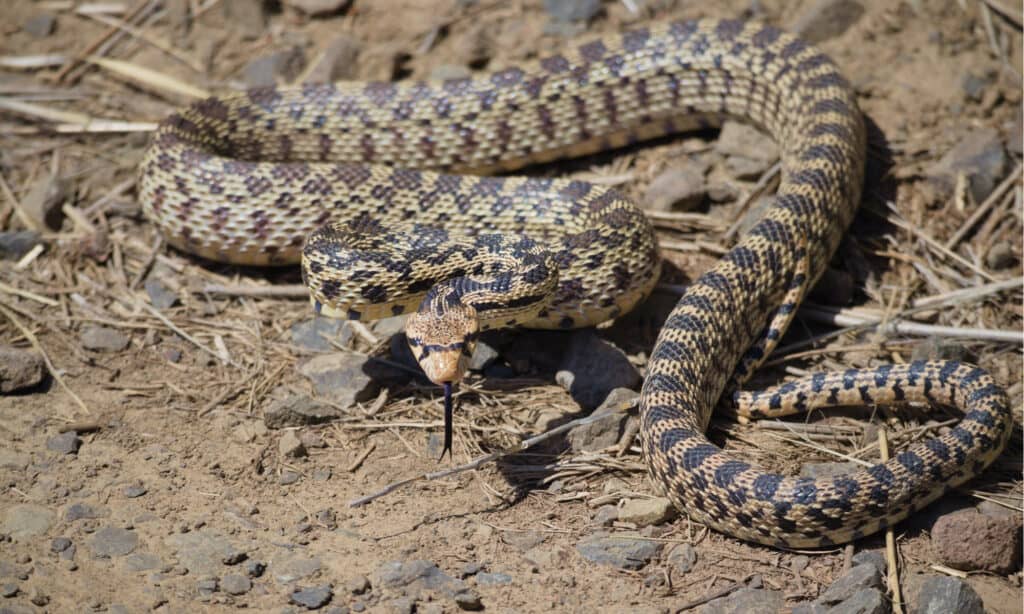
Bullsnakes use their bluff to keep themselves safe from predation.
©Christopher Joe Brown/Shutterstock.com
Predators of Bullsnakes
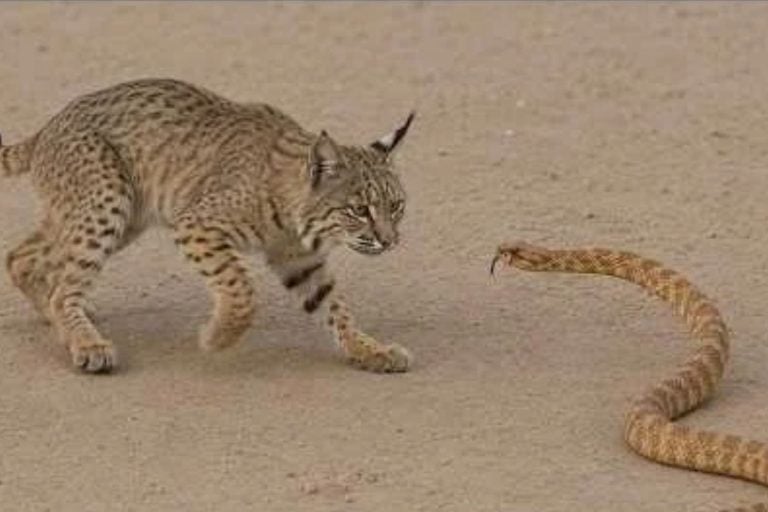
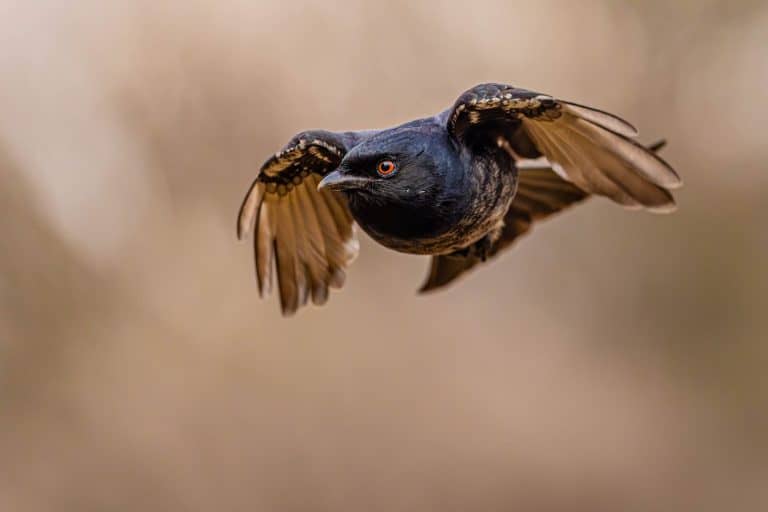
Bullsnakes have multiple predators. They are most susceptible to predation as eggs, hatchlings, and juveniles. They are hunted by owls, coyotes, raccoons, and even other snakes. As they grow into adulthood, they have fewer predators due to their larger size. Even with their intimidating appearance, adult bullsnakes are still commonly hunted by hawks and owls. Because birds of prey can attack swiftly from above, bullsnakes have few means of defending themselves against these predators. This makes their mimicry extremely important for their own survival. Their mimicry is most effective in ecosystems where rattlesnakes are also present, as predators are more likely to be deceived and avoid them.