
October 22 is International Wombat Day, the perfect time to celebrate one of Australia’s most endearing, yet often underappreciated, marsupials. With their chunky bodies, teddy bear faces, and famously cube-shaped droppings, wombats are truly one of a kind. These burrow-building animals are also incredible ecological engineers, constantly shaping the Australian landscape as they tunnel underground.
Their cuddly appearance makes them easy to love, and International Wombat Day is the perfect chance to appreciate the vital role they play in keeping Australia’s ecosystems healthy — and why they deserve a little extra attention.
The Secret Lives of Wombats
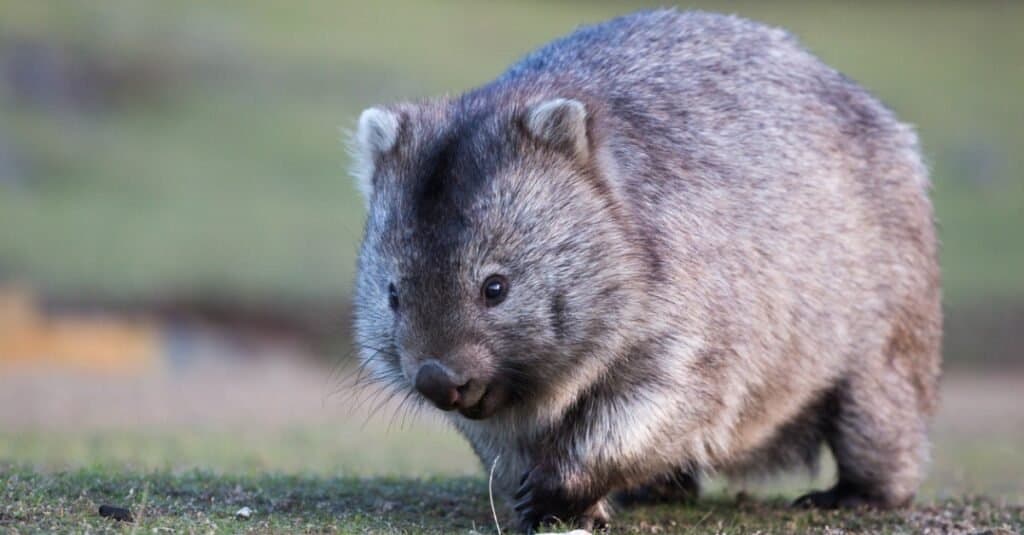
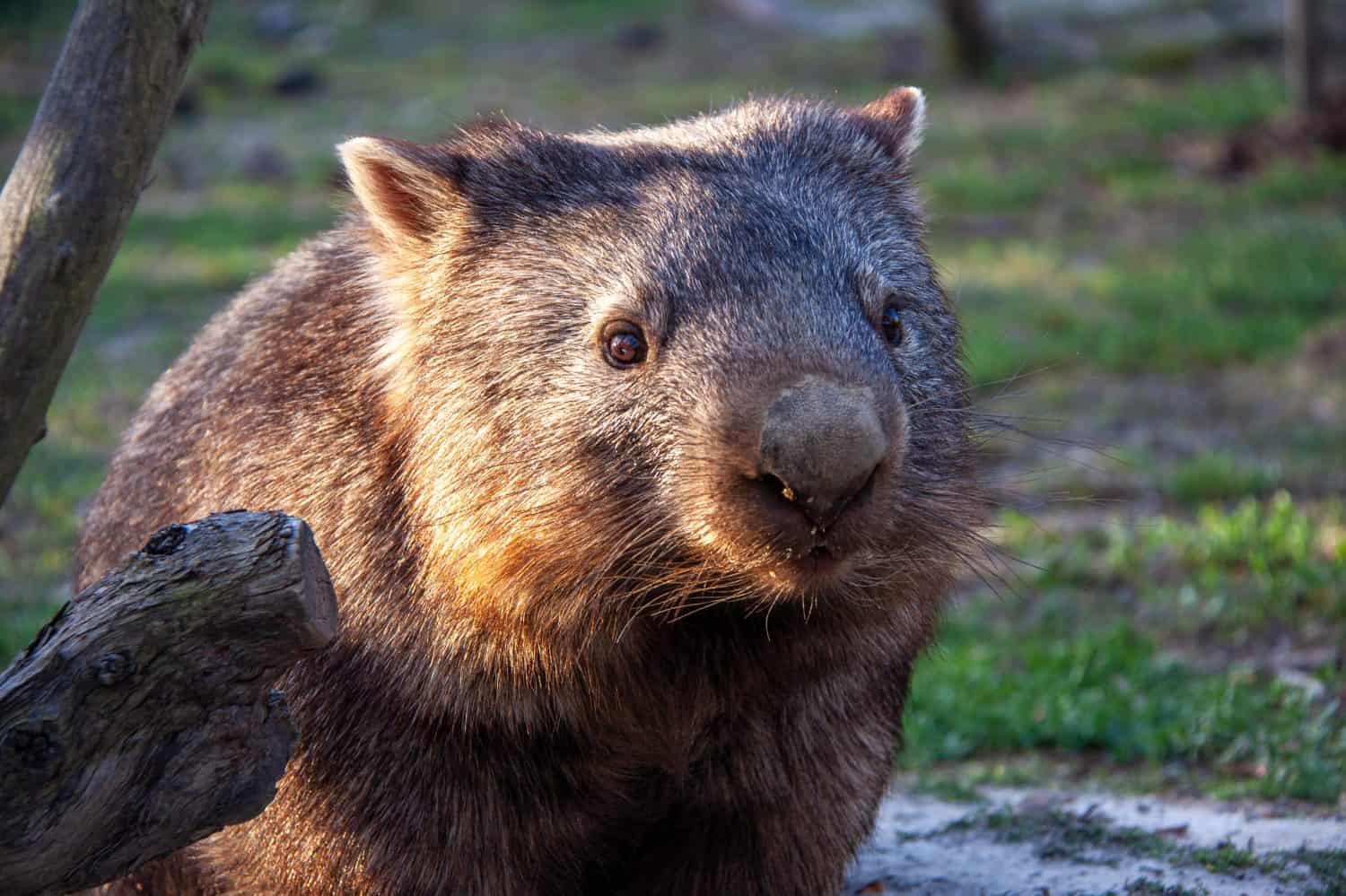
Bare-nosed wombats have short, rounded ears.
©Sander Groffen/Shutterstock.com
Although they may resemble oversized rodents or miniature bears, wombats are actually marsupials — relatives of kangaroos and koalas. Like other marsupials, females carry their young in their pouch. Wombats have compact, barrel-shaped bodies supported by short, powerful legs, perfectly designed for digging. Beneath their teddy bear appearance is an animal that is strong, smart, and surprisingly influential in shaping Australia’s landscapes.
There are three species of wombat, all of which live exclusively in Australia. The bare-nosed or common wombat (Vombatus ursinus) prefers forest habitats in Tasmania and along Australia’s eastern coasts. It is the only wombat species with a bare, leathery nose and averages about 39 inches in length and around 57 pounds on the mainland.
The southern hairy-nosed wombat (Lasiorhinus latifrons) lives across parts of southern and western Australia, where it digs through the dry soils of open scrubland. This species is slightly smaller — just under 3 feet long — but can weigh up to 70 pounds.
The rarest of all is the northern hairy-nosed wombat (Lasiorhinus krefftii). Once found across eastern Australia, it now survives in only two protected areas, with just 300 to 400 individuals remaining. This species is the largest of the three, growing over 3 feet long and averaging around 70 pounds.
Life Beneath the Surface
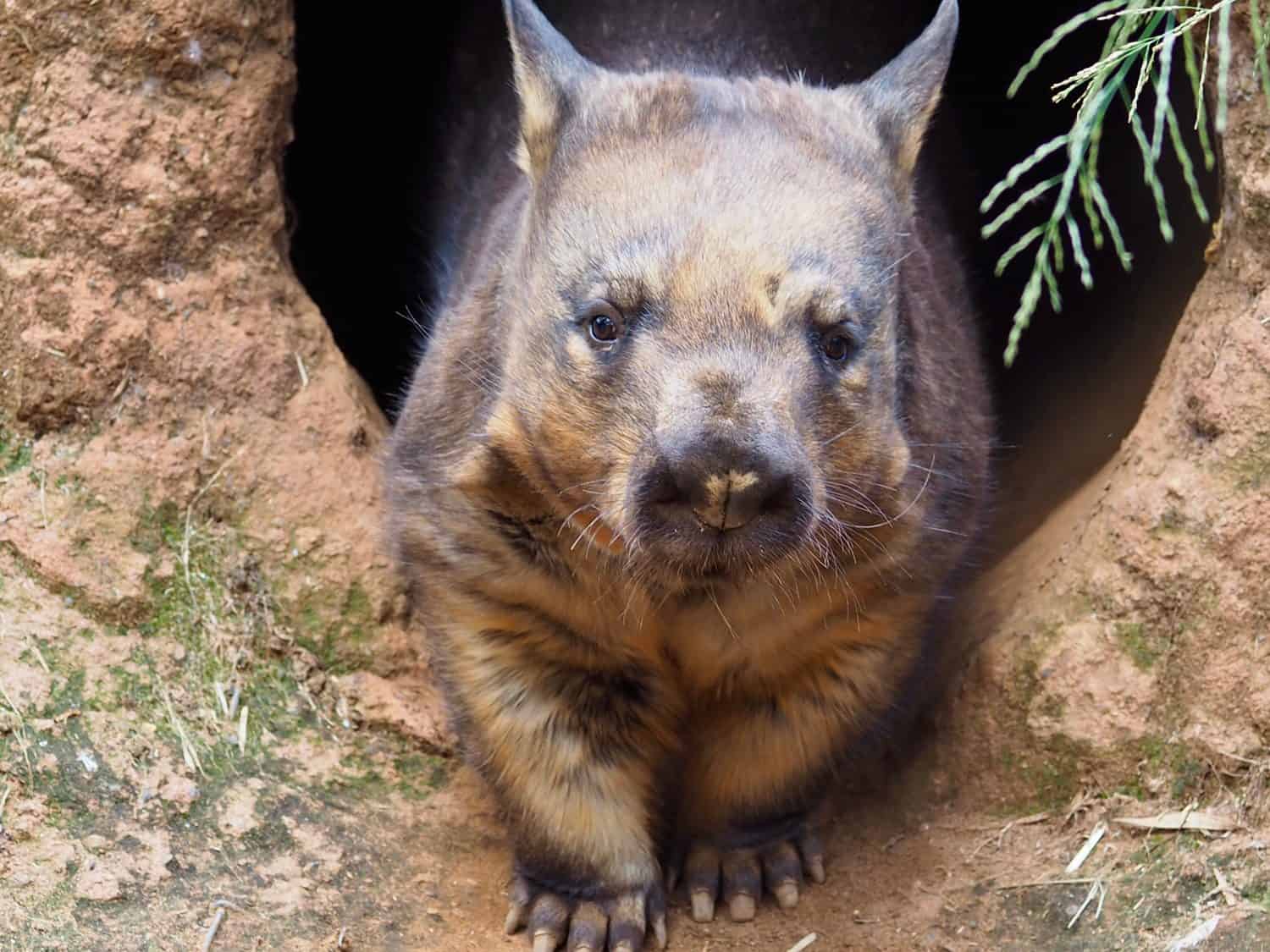
Southern hairy-nosed wombats have longer, pointed ears and soft, silky fur.
©Andreas Ruhz/Shutterstock.com
Wombats spend most of their days tucked away in elaborate networks of tunnels, emerging at dusk to forage for roots, grasses, bark, and herbs. Their slow metabolism helps them extract every possible nutrient from their food, but it can take up to two weeks for them to fully digest a meal!
Though their eyesight is poor, wombats more than make up for it with their sharp hearing, keen sense of smell, and high intelligence. They are also incredibly sensitive to subtle vibrations in the ground.
Although wombats take a long time to digest their food, they are constantly pooping — and bare-nosed wombats in particular have some rather strange bathroom habits. These unusual animals produce cube-shaped poop and are the only animals in the world to do so! This peculiar adaptation prevents their droppings from rolling away, allowing the animals to mark their territories with precision.
How Wombats Shape the Land as Ecosystem Engineers
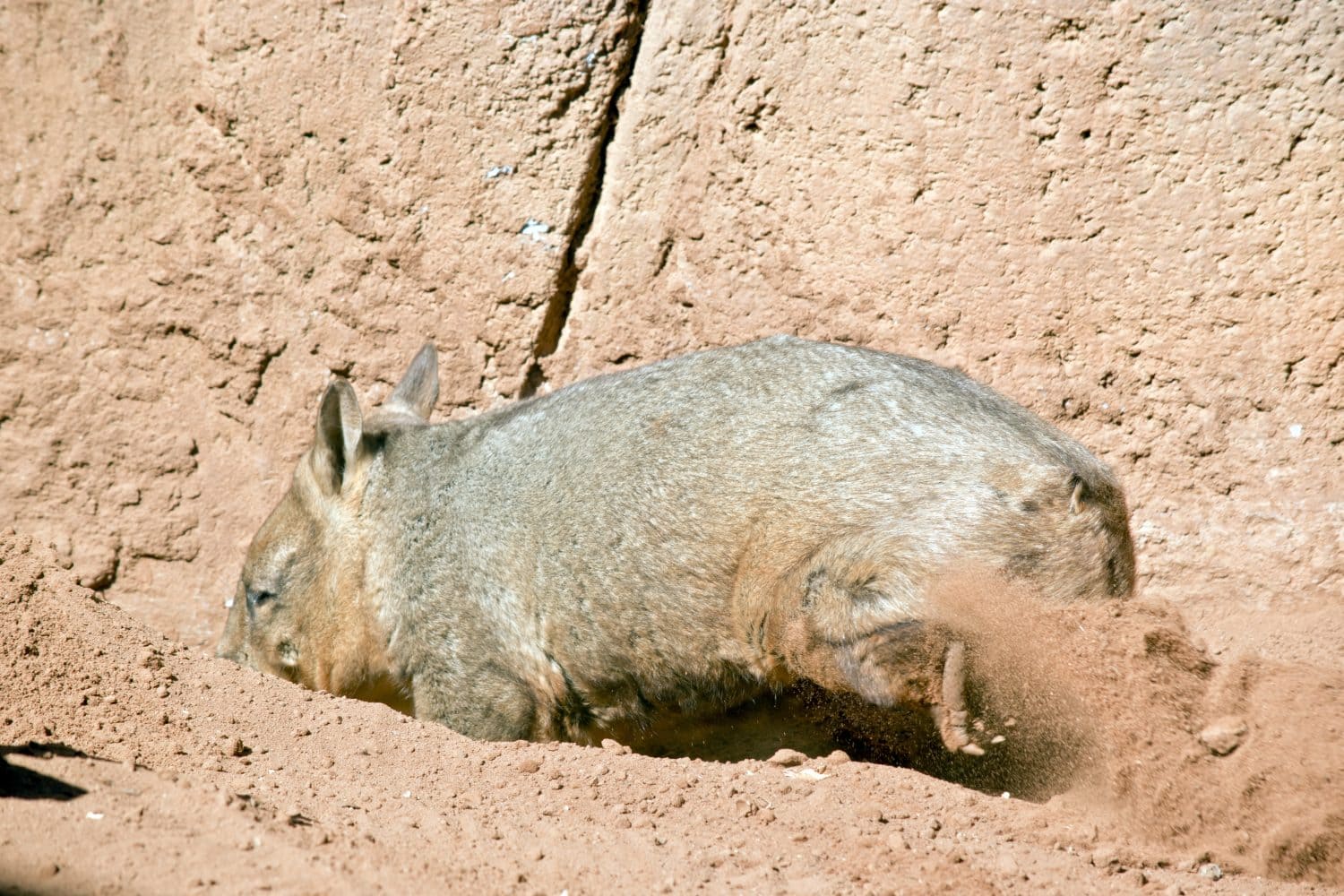
Wombats have large, powerful nails for digging.
©Susan Flashman/Shutterstock.com
Wombats are amazing excavators and can move up to 3 feet of dirt in a single night, constructing extensive, branching tunnel systems that can stretch for hundreds of feet underground.
Most wombats don’t mind occasionally sharing their space, even with other animal species. In fact, these burrows serve as safe havens for other animals during and after natural disasters. During the devastating Black Summer bushfires of 2019-20, many smaller mammals and birds found refuge inside these burrows and tunnels.
But their digging does far more than simply provide shelter — it also transforms the environment. Their digging helps aerate the soil, cycle nutrients, and bury organic matter, naturally improving soil health and carbon storage. It also softens and mixes the soil, creating new pathways for water and enhancing water infiltration, which makes it easier for plant seedlings to grow and helps prevent erosion.
Above ground, wombats are fiercely territorial. Despite their chunky build, wombats can sprint up to 25 miles per hour and use their solid, muscular bodies to fend off threats. When chased, they dive into their burrows and block the entrance with their tough hindquarters like a shield.
Threats and Conservation
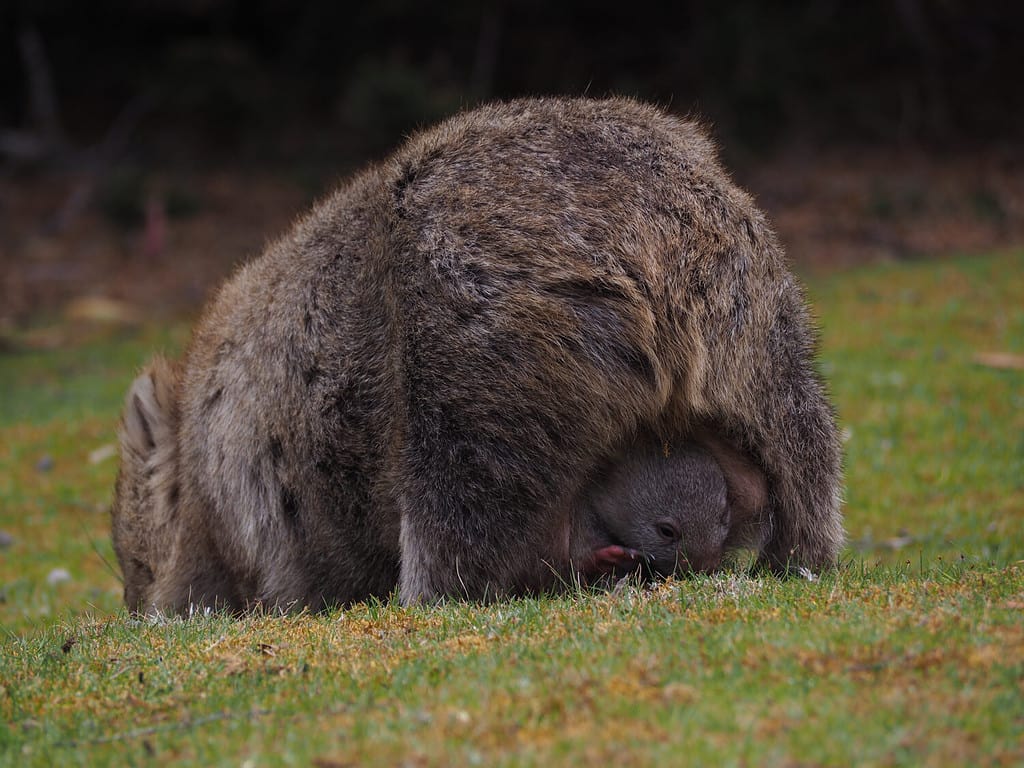
A female wombat’s pouch faces backward so it does not fill with dirt while she is digging.
©tinokoloski/Shutterstock.com
Tragically, wombat populations are much smaller than they once were. In the early 1900s, tens of thousands were killed under government bounty programs. Although they are legally protected in most areas today, in parts of eastern Victoria, permits are still issued that allow landowners to cull these animals. Wombats still struggle against a host of other modern pressures as well.
Urban development, mining, and agriculture continue to destroy and fragment wombat habitats. Vehicle collisions are also quite common, and burrows often collapse under the weight of livestock. Feral dogs, foxes, and disease further threaten these already fragile populations. Sarcoptic mange is another major challenge. Although it is typically easy to treat in captive animals, mange in wild wombats often goes untreated and can lead to death.
The southern hairy-nosed wombat is now listed as Near Threatened, and the northern hairy-nosed wombat is Critically Endangered. However, thanks to conservation organizations like the Wombat Protection Society and The Wombat Foundation, they may still have a hopeful future. Protected areas, disease research, and public awareness are slowly helping these animals to recover.
Celebrating the Mighty Wombat
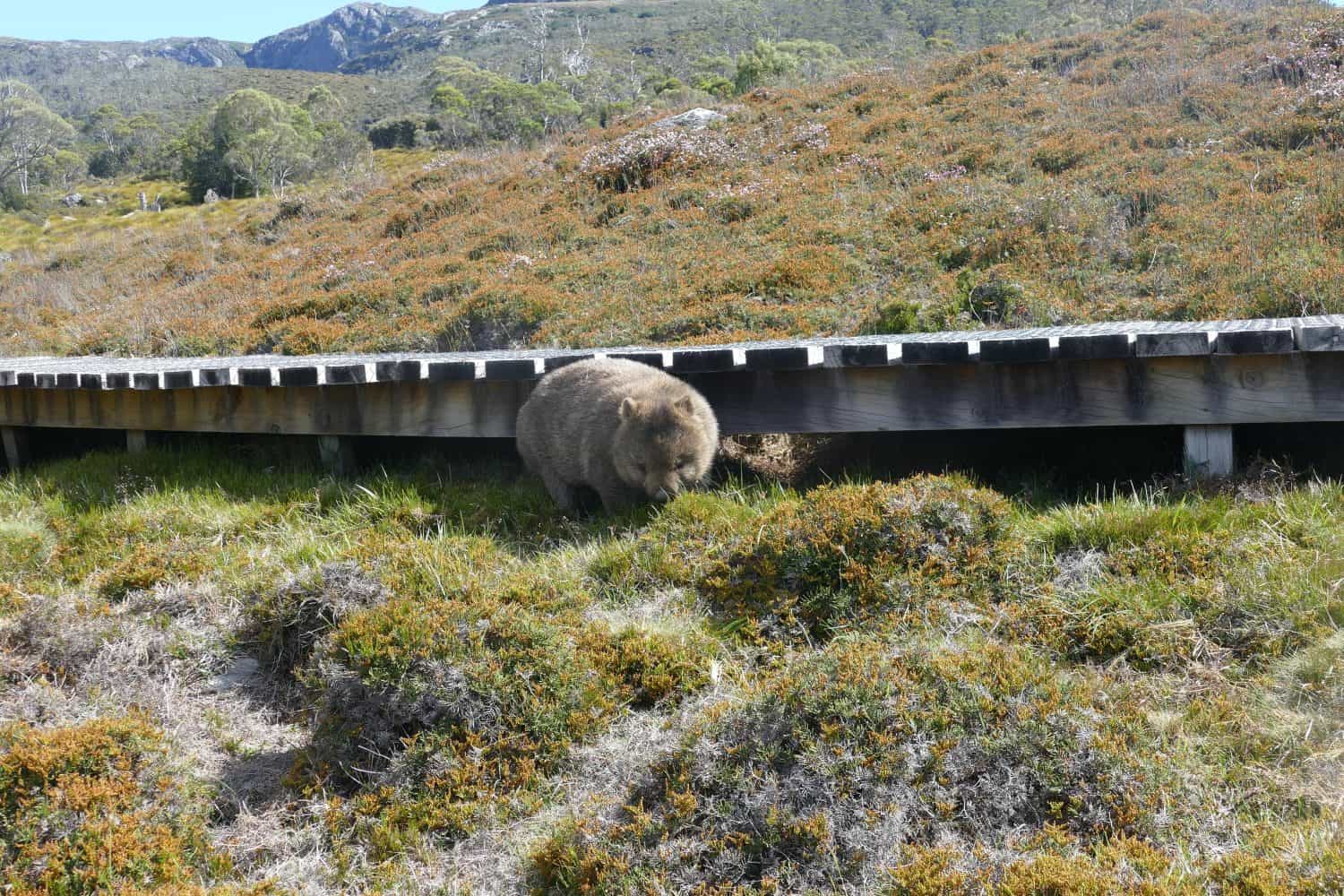
Most wombats are solitary.
©El Paco 33/Shutterstock.com
In addition to their endearing looks, wombats are builders, caretakers, and quiet environmental heroes. Their extensive digging sustains ecosystems, and their burrows serve as life-saving shelters for wildlife during disasters. As we celebrate International Wombat Day, let us honor these remarkable marsupials — not just for their charm, but for the incredible work they do right beneath our feet.