
Quick Take
- Teeth smaller than a grain of rice just forced scientists to rethink everything they believed about how Australian marsupials evolved. See why this matters →
- Researchers only had a handful of crumbled teeth to work with, yet they made a discovery that belongs in a completely new category. See what was unearthed →
- This tiny shrew-sized creature may hold the answer to where all of Australia's carnivorous marsupials actually came from. Explore the new lineage →
- The long-held belief that all Australian marsupials share one common origin may be wrong, a conclusion supported by 18-million-year-old fossils. Challenge to single-origin theory →
What can a handful of ancient teeth on a cave floor in the Australian outback tell scientists about animals that lived millions of years ago? A lot, as it turns out. When researchers from the University of New South Wales dug up the teeth, along with parts of a jawbone, they weren’t sure what they’d found.
But their discovery ended up adding an entire new branch to the marsupial family tree. The findings were recently published online in the Journal of Paleontology.
What the Scientists Found
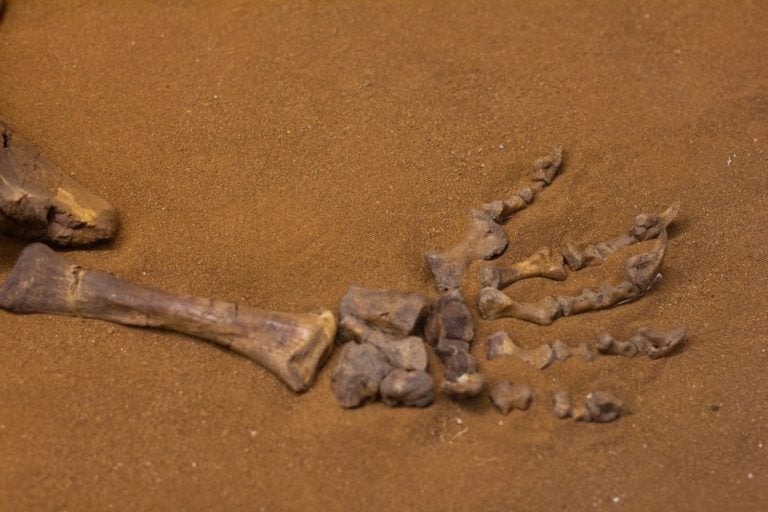
The fossils, including tiny teeth barely larger than a grain of rice and a few pieces of jawbone, were dug up in a cave located in the Riversleigh World Heritage Area, a famous fossil site in northwestern Queensland. The artifacts were discovered in two separate sites – Dirk’s Towers and Neville’s Gardens.
The fossilized remains turned out to be from three different previously unknown species, two from the Phantasmodon genus, including Phantasmodon travouilloni and Phantasmodon minuferox, and one from the Keeunidae genus, which has not yet been named.
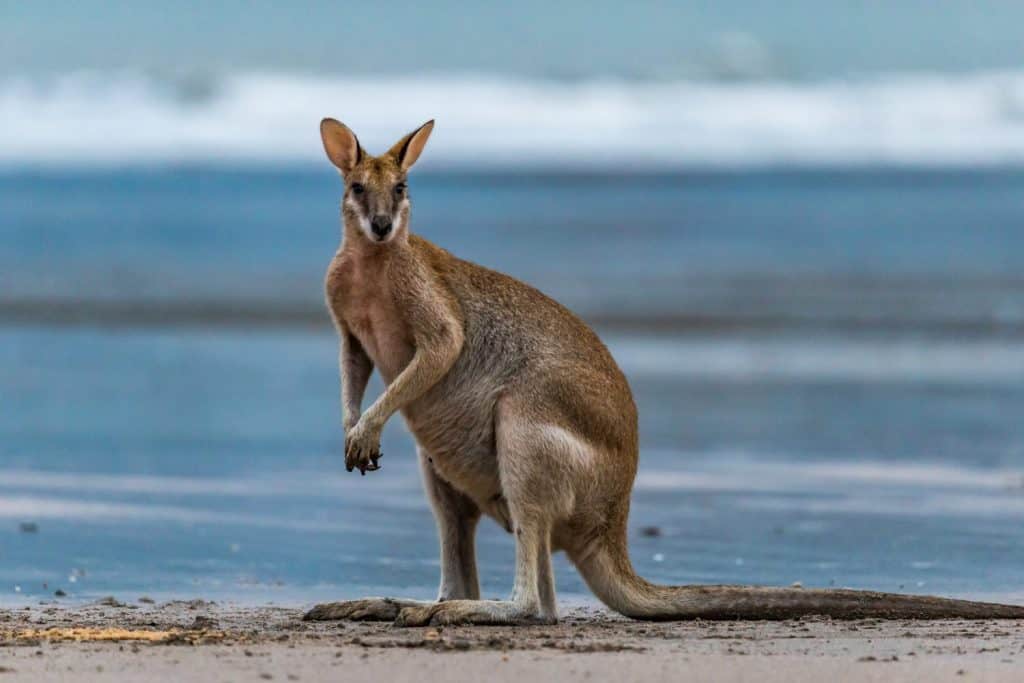
Kangaroos are one of many modern day Australian marsupials that descended from one common family tree.
©Maximiliane Wagner/Shutterstock.com
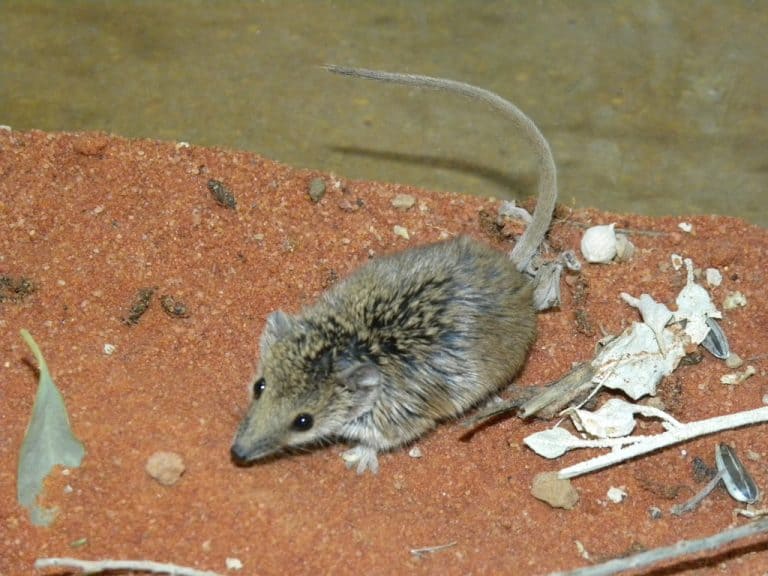
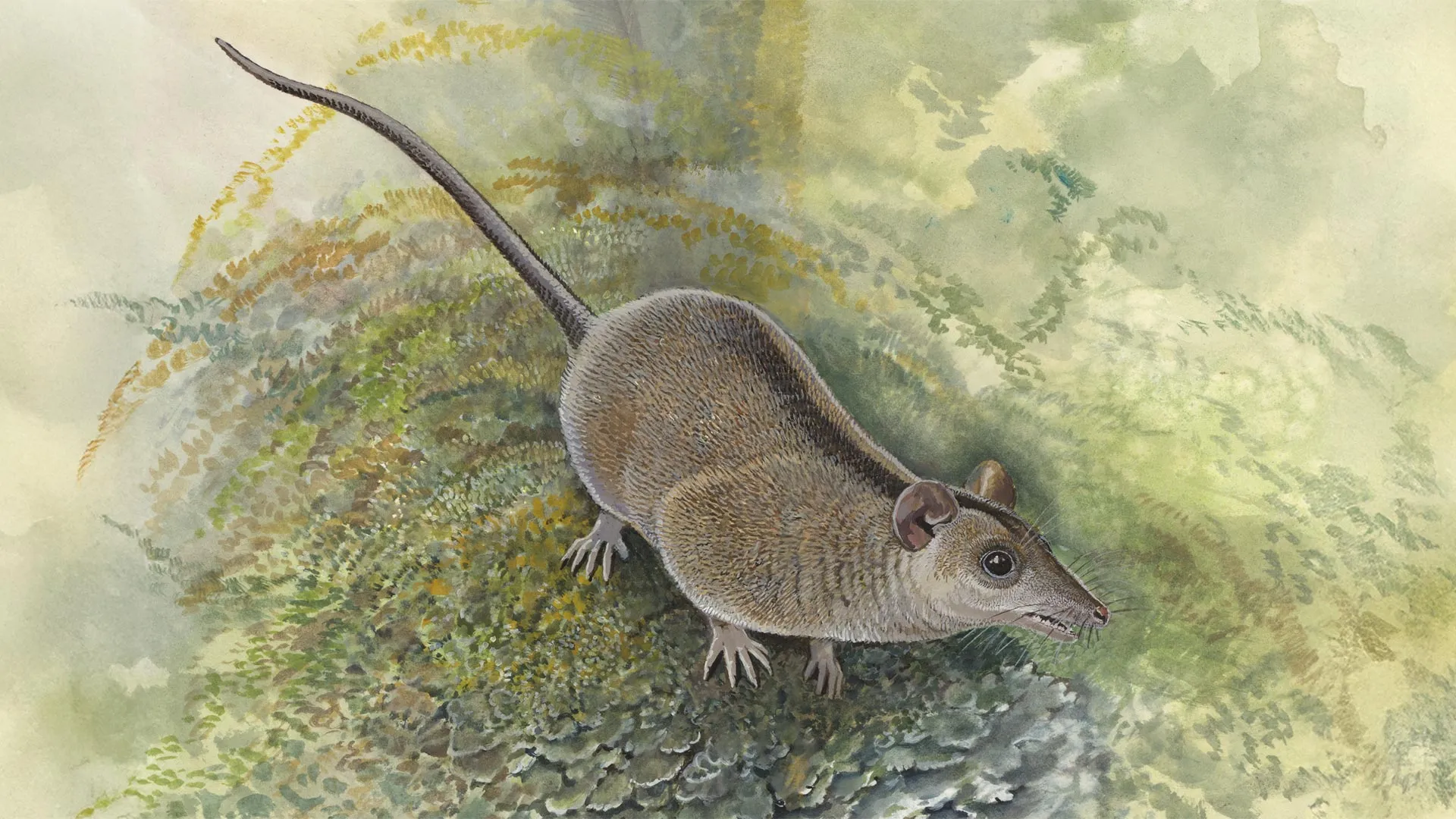
It’s estimated that each animal was about the size of a shrew or small mouse, weighing between roughly one and seven ounces. The species lived about 18 million years ago, during the Early Miocene era. Even though the scientists only had teeth to work with, it was not difficult to identify the new species. Researchers regularly rely on teeth to identify ancient animals, as not much else is usually preserved. Teeth are usually the last surviving evidence of an ancient species.
Why Do Scientists Believe It’s a New Species?
With only the teeth to study, scientists looked carefully at the shape and details of each sample. The teeth contained a mix of features not seen before in any of the five known marsupial groups found in Australia today. The teeth did, however, match two older marsupials the scientists knew of – Keeuna woodburnei and Ankotarinja tirarensis. While the species were identified, little was known about their origins.
The teeth also shared traits with another species, Djarthia murgonensis, which is Australia’s oldest known marsupial. It lived in Australia about 55 million years ago. Fossilized remains dating back to that time were found in the Murgon area in southeastern Queensland.
Armed with this information, the scientists were able to build a phylogenetic tree, which functions like a family tree but for animal species. It combines fossil evidence with genetic data from living animals to determine how species are related and when they diverged into distinct groups.
“We’re essentially trying to create a tree that shows both the relationships of all the different species in the tree, while also calculating when those branches probably diverged,” said University of New South Wales paleontologist Dr. Tim Churchill, lead author of the study, in the press release announcing the findings.
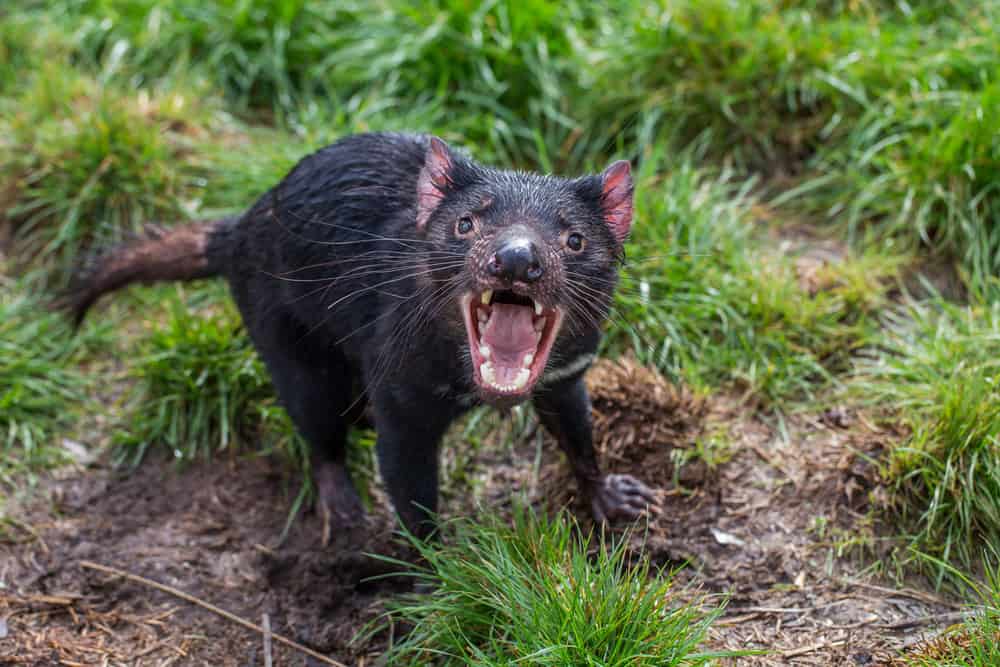
Researchers believe the newly discovered order may be related to modern Tasmanian devils and other carnivorous marsupials.
©Sander Groffen/Shutterstock.com
What scientists found surprised them. The newly found teeth showed characteristics that created a brand-new branch that was separate from every other known marsupial order. The scientists proposed the name Keeunamorphia for the newly discovered order.
“Not only is it a new order, it could also be the most ancient lineage of all Australian marsupials,” Churchill said in the same press release. “It may be the early ancestor of all our marsupial carnivores.”
How Old Is This New Branch?
The first marsupials to reach Australia arrived more than 55 million years ago, likely from South America via Antarctica. That route was possible because in ancient times, the three land masses were connected.
If scientists are correct and the teeth are related to the Murgon fossil, that means the new Keeunamorphia genus could have lived about 50 million years ago. Those animals survived until roughly 15 million years ago, when Australia’s climate cooled and the rainforests turned into open woodland. That means the teeth could be from animals that survived for about 35 million years.
But this is just one possible interpretation of the data. Other scientists think using a different method of time calculation is more appropriate, which would change the timeline. Neither timeframe can be scientifically proven at this point.
Why These Discoveries Matter
The historical view was that all Australian marsupials descended from one ancestral group and branched out into the common animals we know today like kangaroos, koalas, wombats, and Tasmanian devils. However, the introduction of a new branch to the family tree challenges that belief.
This suggests that diverse marsupials may have co-existed for millions of years before some lineages died out entirely.
“Whatever these things were, they seemed to be primitive compared to other marsupials at the time, and they seem to have been doing their own thing and surviving well enough alongside them,” said Churchill in the press release.