
Quick Take
- DNA so damaged it would normally be thrown away just rewrote what we know about two species, and here's how researchers made the impossible work. See how it was done →
- Less than 1% of usable genetic material sounds like a dead end, yet that tiny fraction may be the key to resurrecting species lost for over a century. Explore the DNA extraction →
- Living tortoises walking the Galápagos today may secretly carry the DNA of species everyone thought were gone forever. Discover the hybrid tortoises →
- The same traits that let giant tortoises dominate the Galápagos for centuries became the exact reason humans wiped them out so quickly. See the extinction causes →
When DNA is degraded or compromised, it is typically discarded. However, researchers at Yale University discovered the lineages of two lost Galápagos giant tortoises using damaged DNA. This feat may never have been possible without advanced technology, and more importantly, a willingness to treat the DNA samples like puzzle pieces.
Using Damaged DNA, Researchers Identify Lost Galápagos Giant Tortoise Lineages
Technology has come far enough that specimens collected decades to over a century ago can provide critical DNA information. Because of this, scientists now use fossils not only to reconstruct species’ genetic history but also to potentially conserve species on the brink of extinction today.
According to a new study published in Proceedings of the Royal Society B, heavily degraded DNA is still useful for identifying extinct species lineages. Researchers showed this by identifying the ancestry of two extinct species of Galápagos Islands giant tortoises: the San Cristóbal and Santa Fe Island giant tortoises.
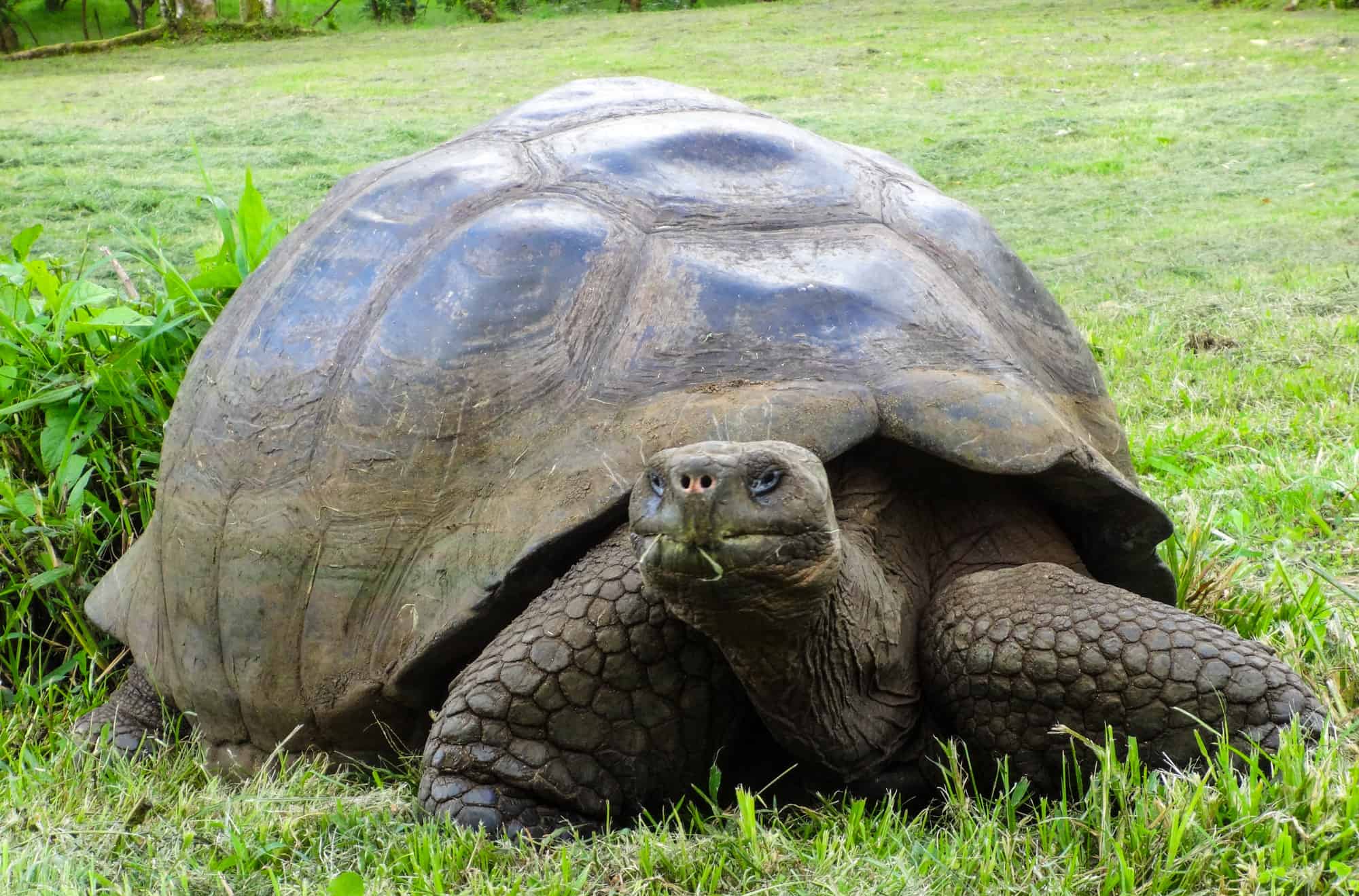
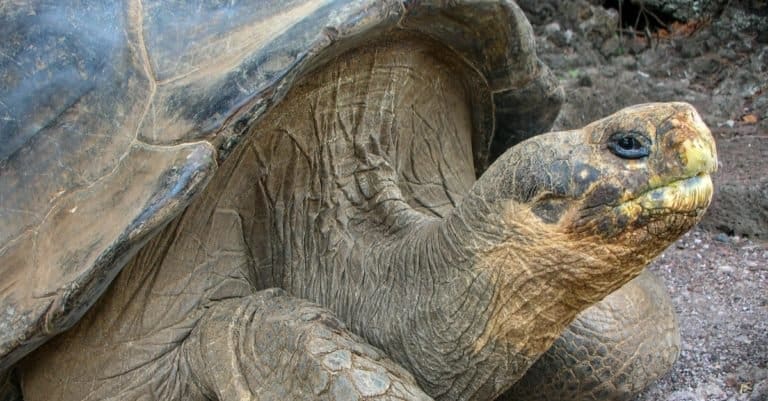
Researchers discovered extinct Galapagos giant tortoise lineages, similar to this tortoise’s, using degraded DNA from museum samples.
©iStock.com/Lisa Seeto
To identify these long-lost species’ lineage, Yale University researchers extracted DNA from museum collections of old bones. Five of these bones were from extinct giant tortoises. What made this extraction different was the quality of the DNA. What was available was degraded, with 1% or less genetic material that could be linked to one species.
By combining tiny bits of this DNA with DNA from living giant tortoises, researchers created a “reference tree.” Using multiple genome analysis tools designed to analyze degraded DNA, researchers mapped the lineages of the extinct tortoises.
Why Degraded Tortoise Specimens Could Still Be Used
Typically, when DNA samples are severely degraded, researchers discard the results. According to the study, degraded material can make species lineages appear related when they are not. In this case, researchers used DNA in which less than 1% of the genetic material could be positively identified. But what allowed them to do this, when samples degraded to this extent in the past were considered too degraded to use?
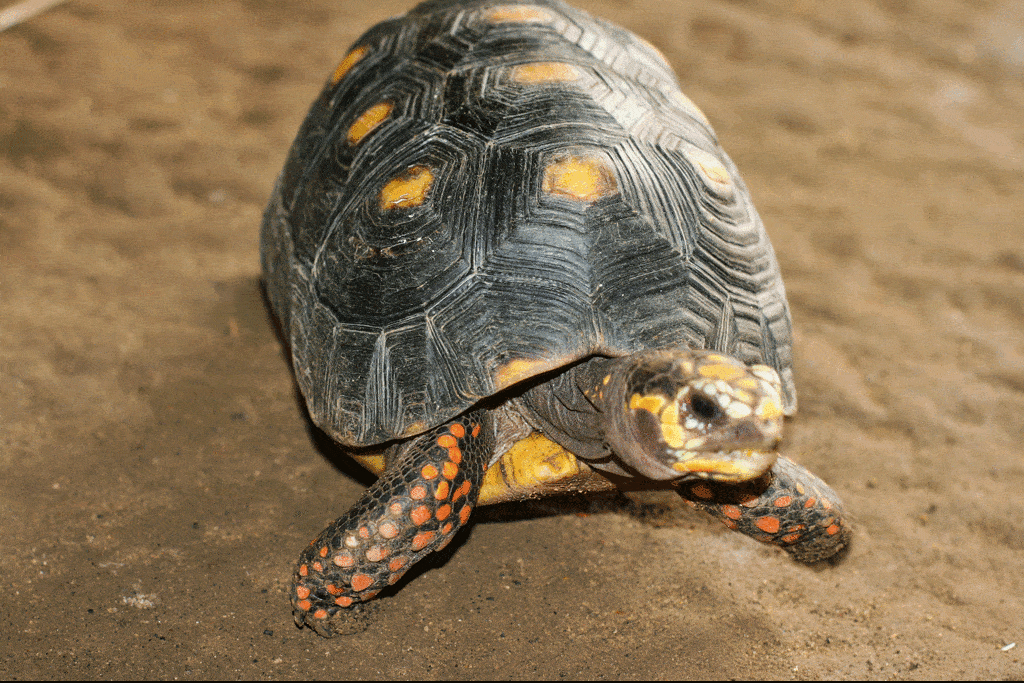
Researchers used DNA with less than 1% genetic material to reconstruct the lineages of Galapagos giant tortoises, like this one, alongside DNA from living tortoises.
©Miguel Andrade/Shutterstock.com
As technology has advanced, even degraded DNA can prove useful. For the Galápagos Islands giant tortoises, researchers used historical specimens to create a “framework.” The framework showed where the genomes fit in the giant tortoises’ evolution. However, according to Alexander Ochoa, the study’s lead author and former associate research scientist in Yale’s Department of Ecology and Evolutionary Biology, there were still challenges to overcome when determining where the extinct DNA fit on the phylogenetic tree.
“The challenge of this study,” Ochoa explained in a press release, “was to reconstruct the genetic relationships of extinct Galapagos giant tortoises, knowing that the DNA we were able to obtain from museum specimens was going to be highly degraded and fragmented and have a high proportion of contamination.”
With this information, the goal is now to find hybrid giant tortoises with DNA from the extinct San Cristóbal and Santa Fe Island species. If this can be done, there may be hope in bringing further genetic diversity to these tortoises and perhaps even resurrecting species lost for well over a century.
What Caused Galápagos Giant Tortoises to Go Extinct?
For centuries, giant tortoises thrived in the Galápagos Islands. A lack of predation on the islands allowed the tortoises to maintain a slow growth rate. This, along with their long lifespan, allowed the tortoises to both maintain vegetation and disperse it throughout the islands. They truly played a keystone role in their ecosystems.
This all changed when humans arrived on the islands. The large size and slow movement that were never an issue for the tortoises became detrimental to their survival. Whalers, sailors, and those who settled on the Galápagos Islands found that the tortoises were an easy-to-catch, long-lasting source of food.
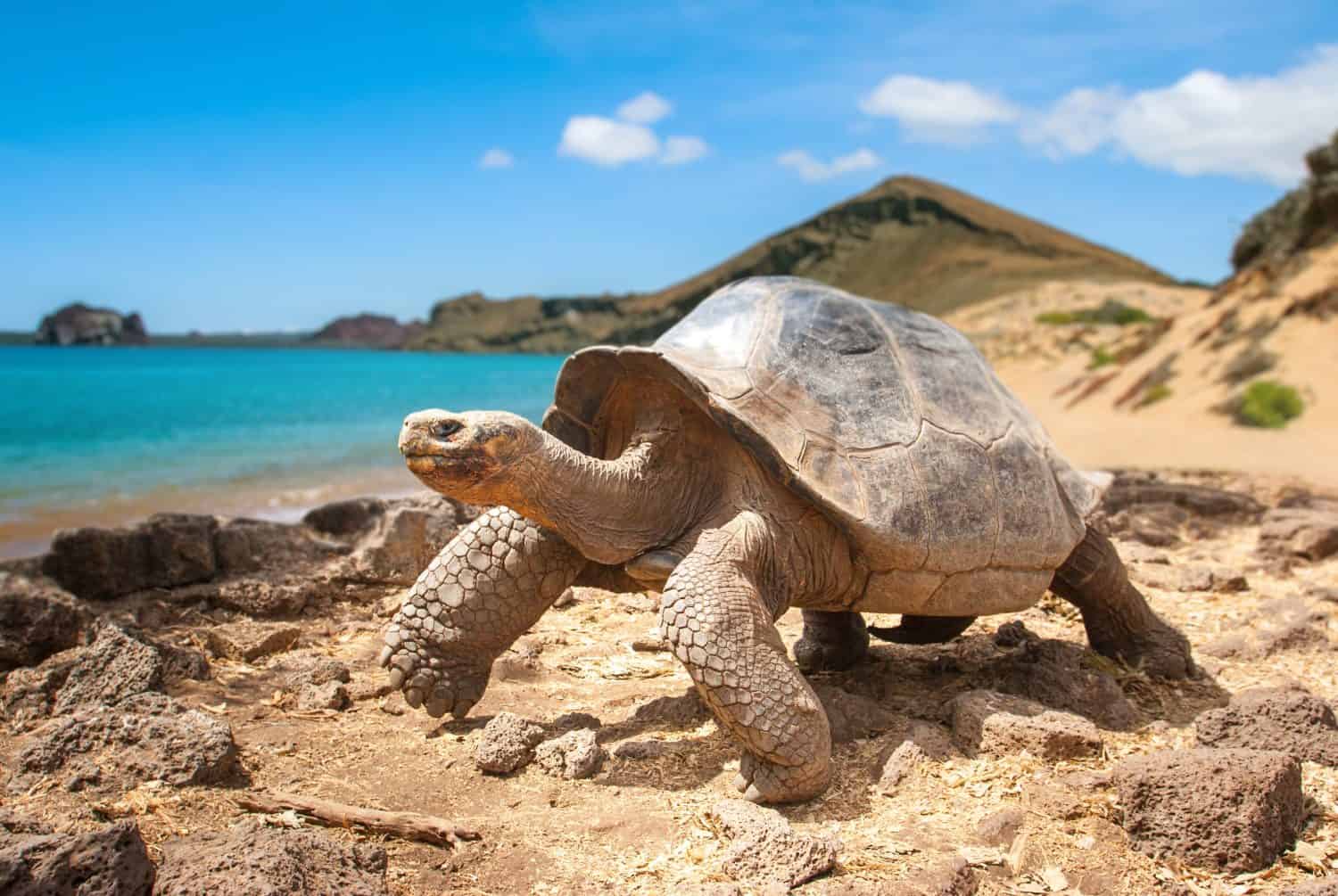
Galapagos Island giant tortoises, similar to this one, went extinct after they were hunted for food, lost their food source to goats and cattle, and rats and pigs consumed their eggs.
©FOTOGRIN/Shutterstock.com
Without regulations on tortoise hunting, populations declined dramatically within a matter of years. Coupled with settlers destroying habitats through clear-cutting to make way for agriculture and ranching, the giant tortoises were on a path for extinction.
The final straw for the giant tortoises that are no longer alive today was competition for food and the introduction of invasive species. Goats and cattle consumed the same vegetation the tortoises did. Rats and pigs targeted tortoise eggs. A once-peaceful island life was gone for the Galápagos Island giant tortoises, and ultimately, multiple species went extinct.
How DNA Can Help Conservation Efforts of Galápagos Giant Tortoises Today
As a result of whalers and sailors targeting the giant tortoises, they were often moved between islands. Those that escaped mated with other species of giant tortoises, creating hybrid species. Because of this, there is hope for conserving endangered giant tortoises and, potentially, resurrecting those that have gone extinct.
Hybrid giant tortoise species have already been found to carry DNA from extinct tortoise lineages, such as the Floreana tortoise. Consequently, researchers have worked over the past few decades to breed the hybrids with the highest proportions of extinct DNA together to create a species incredibly similar to the extinct Floreana tortoise. Soon, these tortoises are due to be released back to Floreana Island for the first time since the 1800s. With this new technology, researchers can now discover hybrids carrying San Cristóbal and Santa Fe Island DNA to bring back these species.
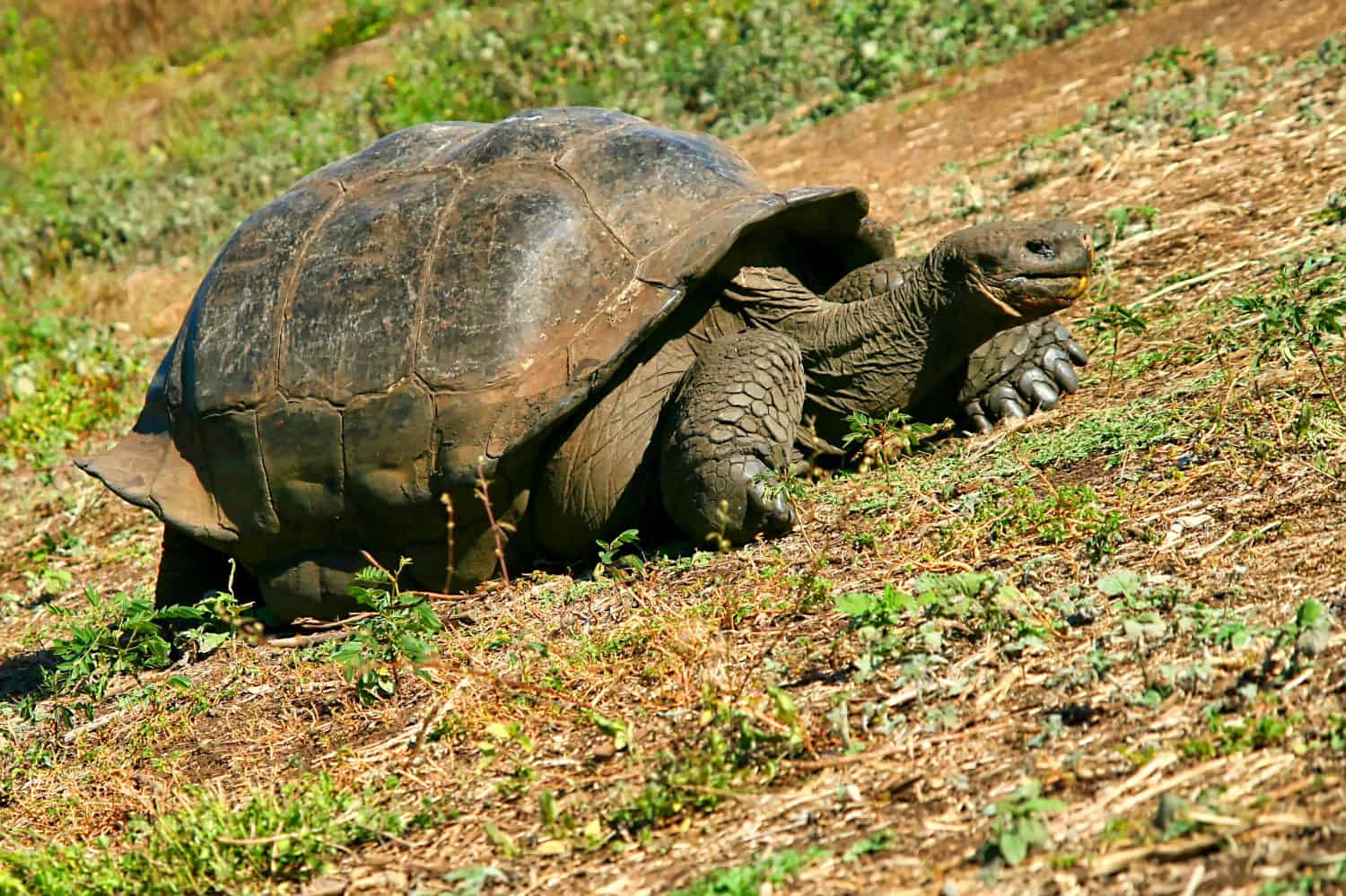
Discovering the lineages of extinct Galapagos Island tortoises, similar to this one, will increase the genetic diversity of existing tortoises today.
©Al Carrera/Shutterstock.com
To accomplish this, each generation would need analysis. Those with the highest percentage of extinct DNA would be bred together. The goal would be to create a giant tortoise that 100% matches, or comes extremely close to, the extinct species’ DNA profile. If this can be achieved, extinct species will have an opportunity to thrive again, and conservation efforts will also benefit.
Creating genetic diversity is not only about bringing back extinct tortoises. Diversity means giant tortoises become more resilient to disease. They can better handle environmental change. This means giant tortoises are healthier overall, and so are their ecosystems.
As technology advances, researchers can take damaged DNA and accurately map the extinct giant tortoise’s lineage, potentially locating tortoises with matching genetic material. With this advancement, researchers can not only save giant tortoise populations on the brink but also give those tragically lost a chance to thrive again.