Basset hounds were originally bred in France, where they were used to hunt small game. Today, they are still used in France for this purpose. They’re particularly utilized for hunting rabbits. This breed first appeared in the 16th century, giving them hundreds of years of history.
Plus, their long ears, hound coloration, and droopy expression make them easily recognizable today.
Their robust build and tenacity can make them great hunting companions. However, not everything is positive with this breed. Below, we’ll explore the pros and cons of having a Basset hound as a hunting dog.
1. Excellent Sense of Smell
Basset hounds are scenthounds, which means that they track the animals they’re hunting using their sense of smell. They are not sighthounds (like Greyhounds), which chase animals they can see. As you might imagine, this means that they have a very good sense of smell.
Their remarkable tracking ability allows them to follow most scents without complication. They’re capable of tracking in even dense undergrowth and damp conditions. Their sense of smell allows them to be remarkably accurate – more so than many other dog breeds.
If you hunt game that is best smelled instead of seen, then a basset hound can be a good option. They aren’t going to catch anything due to their short, stumpy legs, but they can absolutely tell you where they’ve been.
2. Sturdy Build
Basset hounds are relatively small dogs. However, they are exceptionally sturdy. They’re also very low to the ground, which allows them to move through areas with thick underbrush relatively easily. They can fit underneath briars and bushes much easier than a larger hound could.
Given that they usually hunt small game, this can be exceptionally useful.
3. Even Temperament
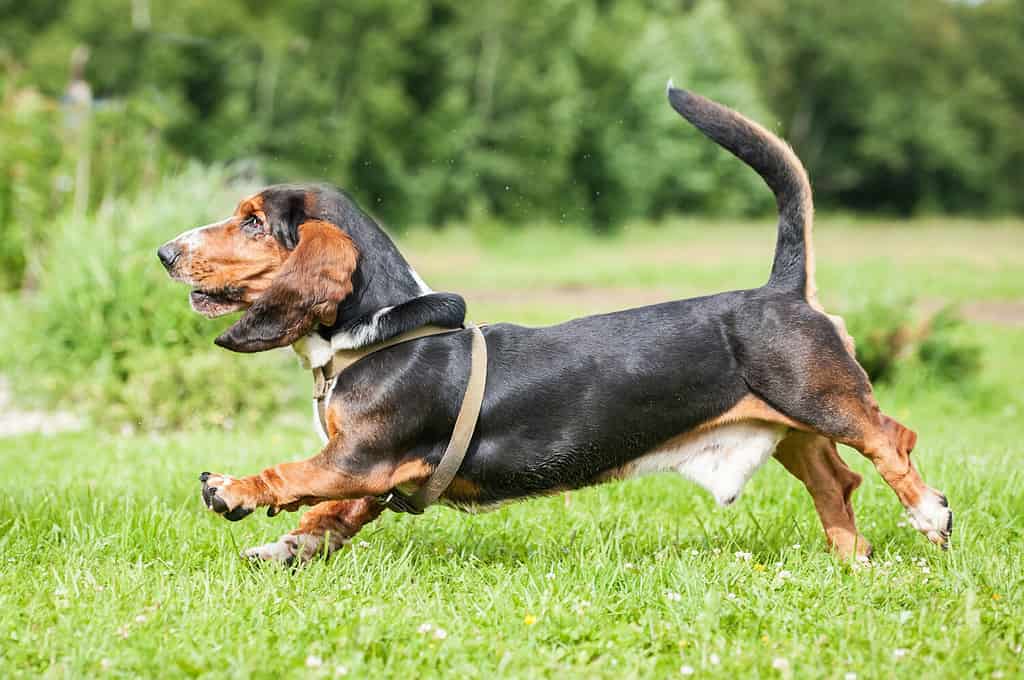
Basset hounds may look small and cuddly, but they can really get going when on a trail.
©Rita_Kochmarjova/Shutterstock.com
Basset hounds are pretty calm, social dogs that get along with just about everyone. On top of being good hunting dogs, they’re also good family dogs. They’re also pretty laid back and don’t require nearly as much care as some other dogs.
Of course, socialization and training are still important. However, they typically need less than some other breeds.
These canines are generally cooperative and don’t need much training for hunting, either. Their calmer demeanor allows them to function very well under stress, which is always a good addition.
4. Stubborn
All that said, these dogs are hounds, through and through. They are incredibly stubborn, as they were never bred for obedience. Following scent trails is just something they do. They don’t need to be trained for it. Therefore, obedience was never something that was high on their breeders’ to-do list.
These dogs can be trained, but it typically takes longer. You’ll need to be especially patient and consistent. Don’t expect these dogs to pick up on a new command during the first session. It can take them a couple of weeks to really figure out a new command.
Luckily, they don’t really need that much training. They tend to be well-behaved dogs anyway. That said, commands like “sit” and “down” can still be important for controlling them in the field. When you need them to stop so that you can catch them, having a very certain “down” command can be very helpful.
5. Slower Pace
Basset hounds can really get moving when they get on a trail. However, they are not sighthounds. They aren’t going to run as fast as a greyhound or a Saluki. In situations where speed is key (and possibly over open ground), basset hounds may pull the shorter straw. They were made for endurance and their scent-tracking abilities, not speed.
Don’t expect these dogs to pursue prey like a sighthound would. They can get you going in the right direction and flush small game, but they aren’t actually going to catch anything.
6. Vocal Tendencies
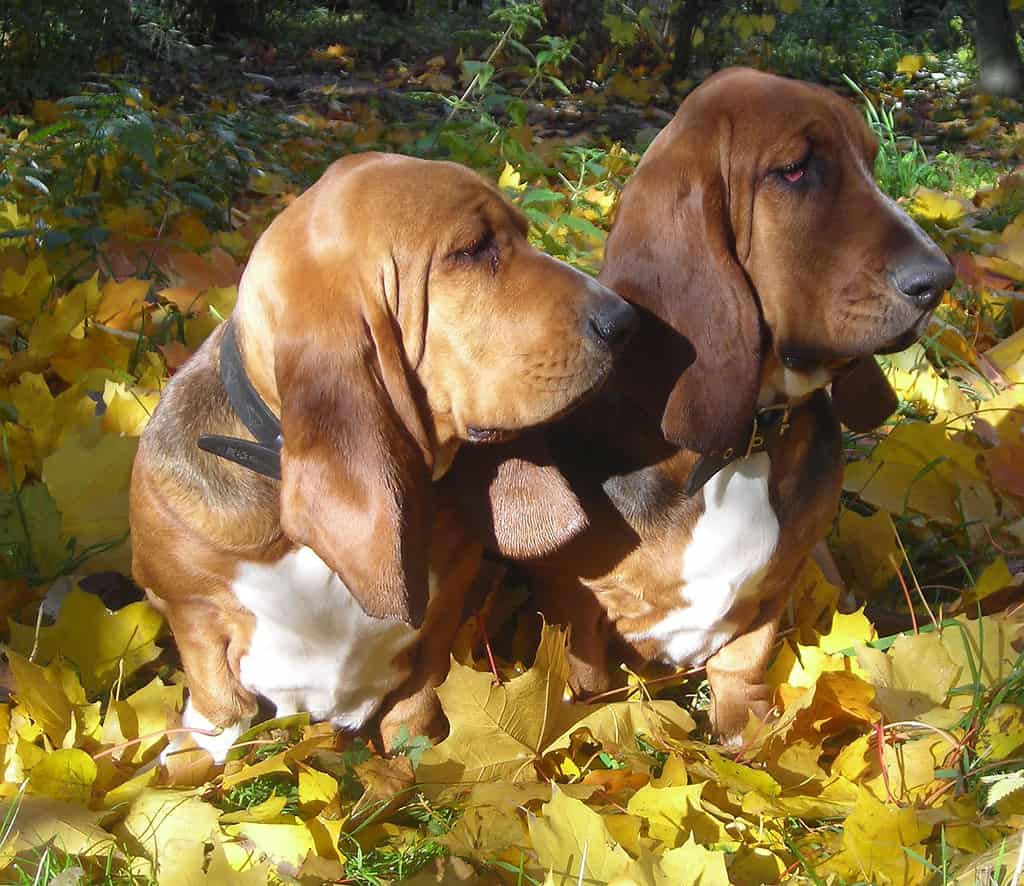
These dogs mature pretty quickly. These 6-month-old puppies already look pretty similar to adults.
These canines are prone to being pretty noisy. They “bay” instead of barking, like most hounds. This can be incredibly loud, and they occasionally get on tangents where they may bay for several minutes. They will bay whenever another dog might bark, such as when they are excited, but they will also bay when following a trail.
That said, it isn’t odd for basset hounds to “make up” trails and “track” things through the house when bored. They may also try to track non-prey animals, like another dog or your cat. Basset hounds simply like to track and may use these “trails” to entertain themselves.
While there isn’t much harm in this, it does mean they’re pretty noisy dogs.