
You’ve heard of a shark’s almost supernatural ability to find you, especially if you’re scared in the ocean. But is that a myth spread via the ever-garbling telephone game, or a fact based on scientific research? Can sharks smell or sense fear? Let’s find out!
Can Sharks Smell Fear?
While it is true that fear emits an odor via your sweat, sharks cannot pick up on it. Sure, you’ve probably believed the lie told in movies or other types of media. But sharks don’t have the capacity to smell fear. That doesn’t mean that a shark isn’t impressive with its ability to detect prey from vast distances using its sense of smell, however. Fear is a complex emotion and a shark’s olfactory system isn’t sufficiently equipped to detect it.
There are other animals that can pick up on these complex emotions. They include dogs, which is why they can be trained to recognize the odors associated with certain emotions. There are also predators in the wild that may be able to pick up on your scent. Ultimately, this is more your natural human smell that predators have evolved to detect. It doesn’t mean they can recognize your emotions.

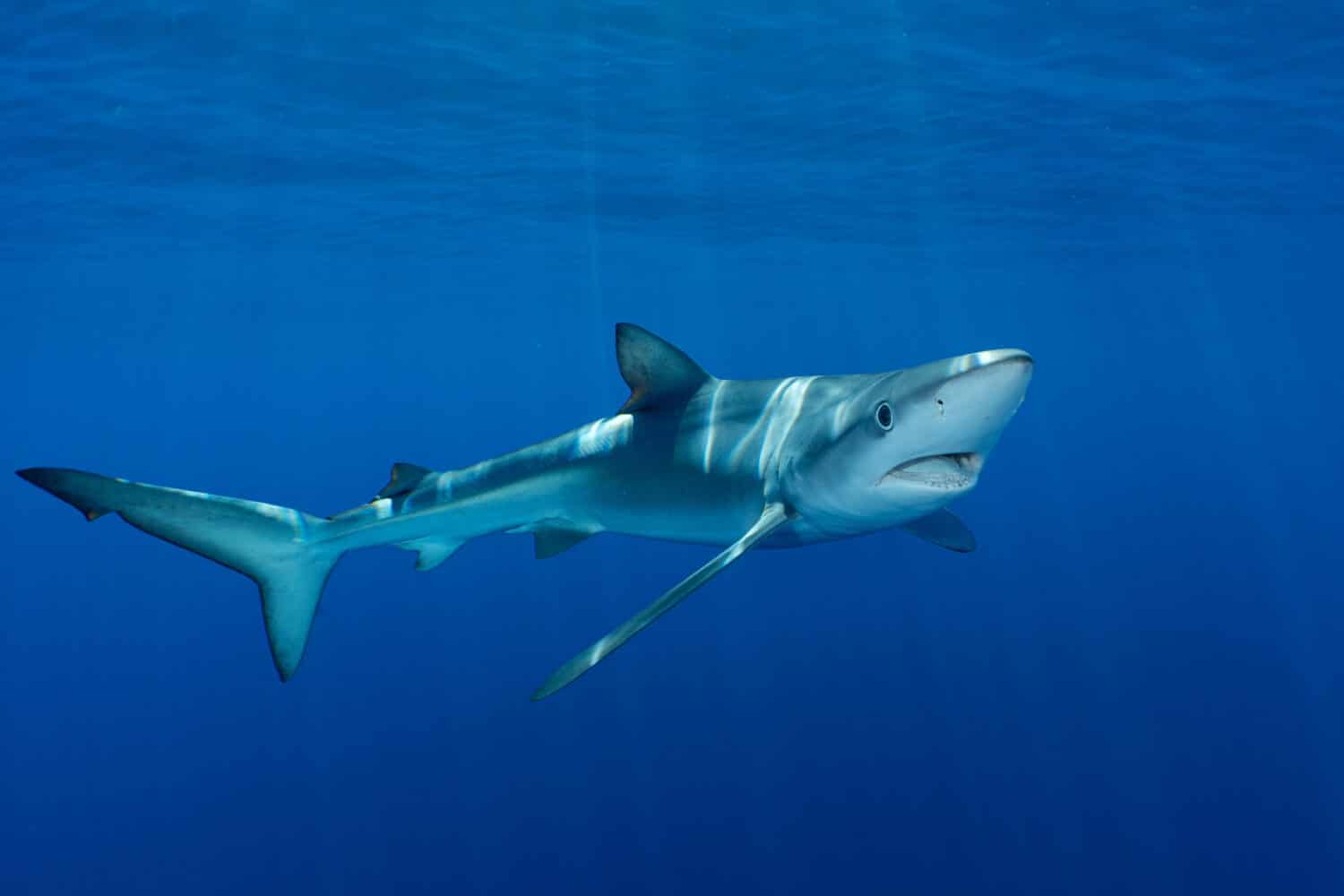
Sharks impressively detect prey but they cannot smell fear.
©Sergey Uryadnikov/Shutterstock.com
But back to sharks. They have an acute sense of smell that allows them to pick up on even the most minute amounts of certain substances, including blood. Using their sense of smell, they can identify where their food sources are. They are also able to determine if there are any predators in their vicinity. Sometimes, they have to hunt in low visibility conditions. So, they rely on their sense of smell to help them navigate the waters.
Ultimately, their sense of smell is adapted to their survival which only includes finding appropriate food sources and steering clear of predators. Shark and human interactions haven’t advanced enough to require the evolutionary adaptation for a shark to be able to smell the emotions of a human.
Can Sharks Sense Fear?
Shark senses don’t just include their sense of smell. Like humans, they also have the sense of sight, the sense of hearing, the sense of touch, and the sense of taste. But unlike humans, they have developed electroreception, which allows them to pick up on electrical fields, even if they are faint.
This could either help a shark pick up on the geomagnetic field of the earth or it could even help a shark detect minute muscle contractions in the animals they hunt. Their ability to sense these movements may lead people to believe that they can sense fear but ultimately the movements help them locate their prey while they’re hunting.
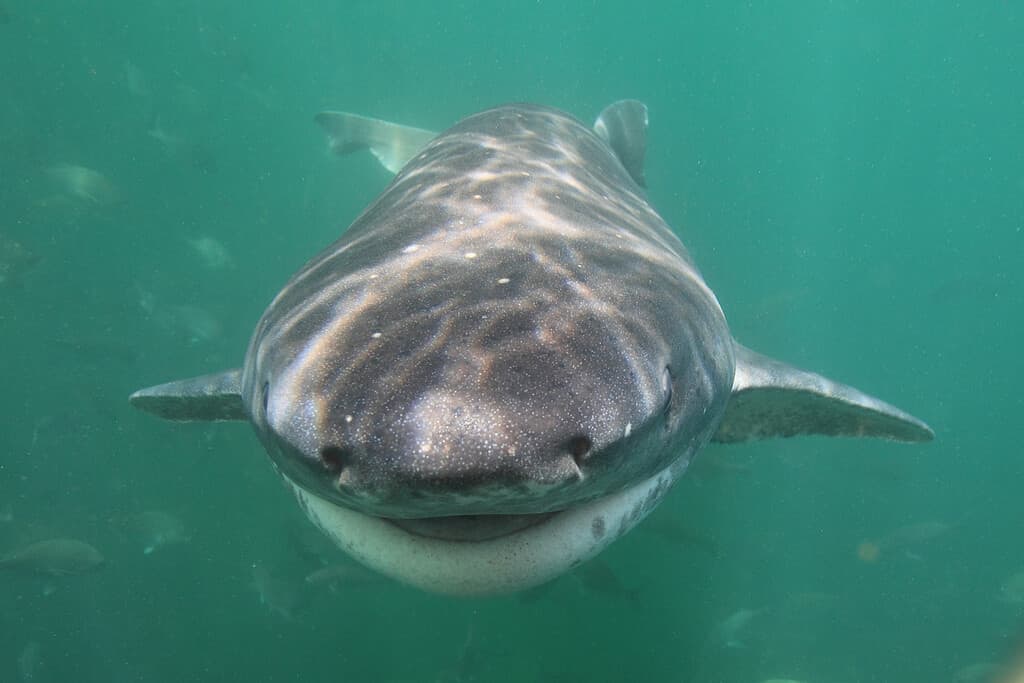
Sharks can sense the earth’s geomagnetic field, but they can’t sense fear.
©Alessandro De Maddalena/Shutterstock.com
What Do Sharks React To?
When a shark uses its sense of smell, it detects several different scents that are integral to its survival. For instance, a shark may react to a potential predator, the presence of prey, or even a nearby mate. When a shark uses its sense of sight, it has an advantage since its eyes are located on either side of its head.
They have a more panoramic perspective than humans do. This isn’t a dominant sense, however. In the water, light doesn’t travel well, which leaves sharks in dark, murky conditions. Nevertheless, they use their sight when they can and especially when they get closer to whatever object they are looking at. When sharks use their sense of hearing, they’re primarily picking up on wounded prey.
The shark is quick to react when there is wounded prey because it’s an easy meal. Sharks also react to touch. Their teeth help them determine what an object is, which is why they bite to determine if something is prey or not. If they bite and they taste something that is not palatable, they quickly release it.
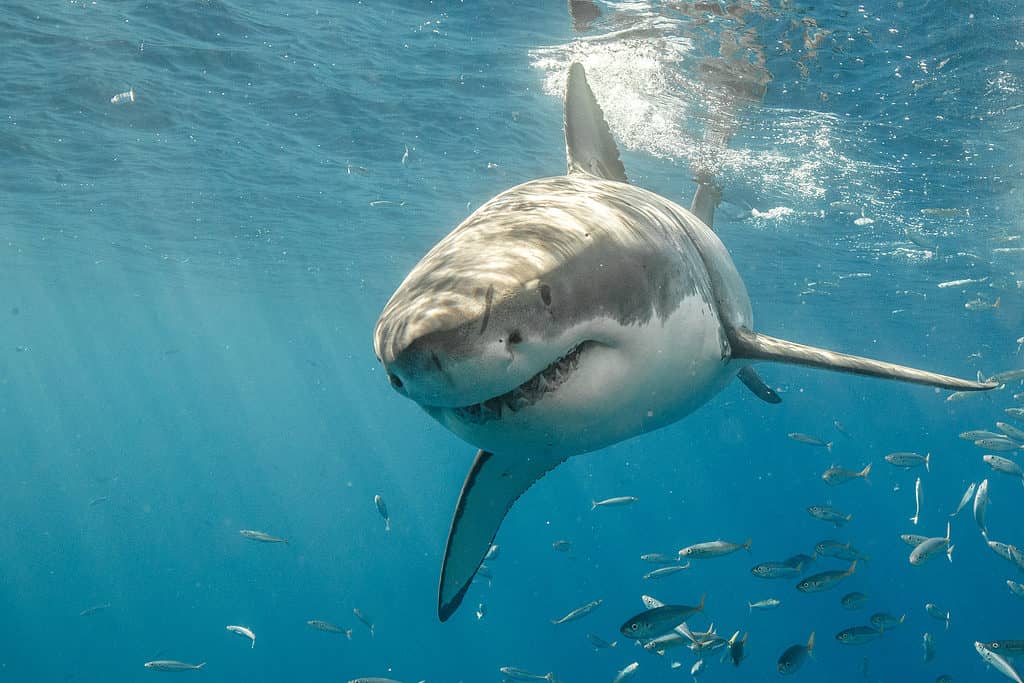
Sharks use their teeth and sense of taste when determining if something is a food source.
©iStock.com/ShaneMyersPhoto
Using their electroreception, sharks react to the earth’s geomagnetic field. It’s how they’re able to traverse open water and migrate such long distances without losing their sense of direction. Sharks react to the movement of their prey as well and they can tell when their prey is moving quickly through the water, when it might be more stationary, or when it may even be injured.
Finally, sharks react to pressure changes. Sharks have a lateral line that helps them pick up on what other animals are present in their surroundings. They have special sensory cells that help them detect when there are any changes to pressure in the water. As they swim through the water, their own movements impact the pressure, which helps them make sense of what is around them, including any reefs or other objects.