
Florida is a popular spot for wintering birds, as it provides warm weather year-round. You can find many unique species in Florida that you may not find in the rest of the country. Check out this list of the 12 most common blue birds in Florida and discover their habitat, diet, behavior, and how to identify them.
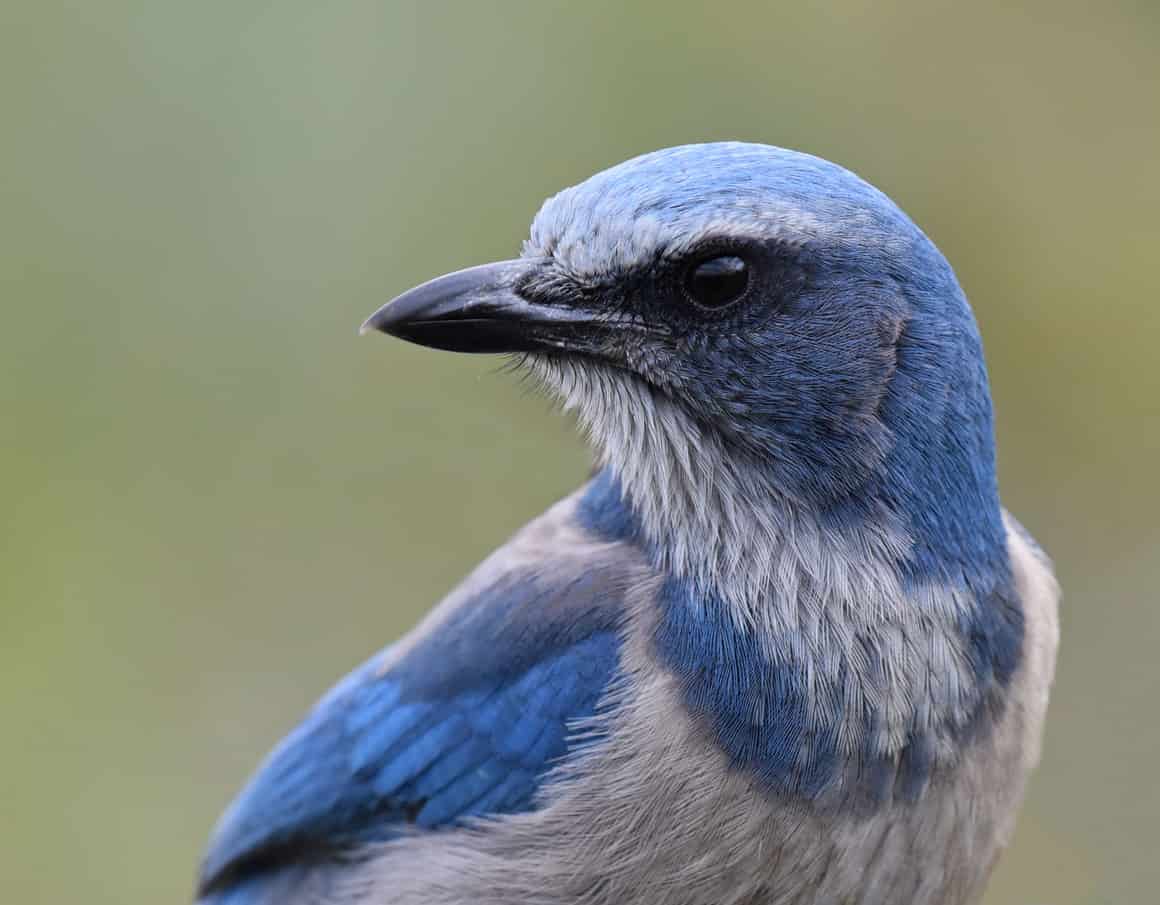
1. Florida Scrub Jay
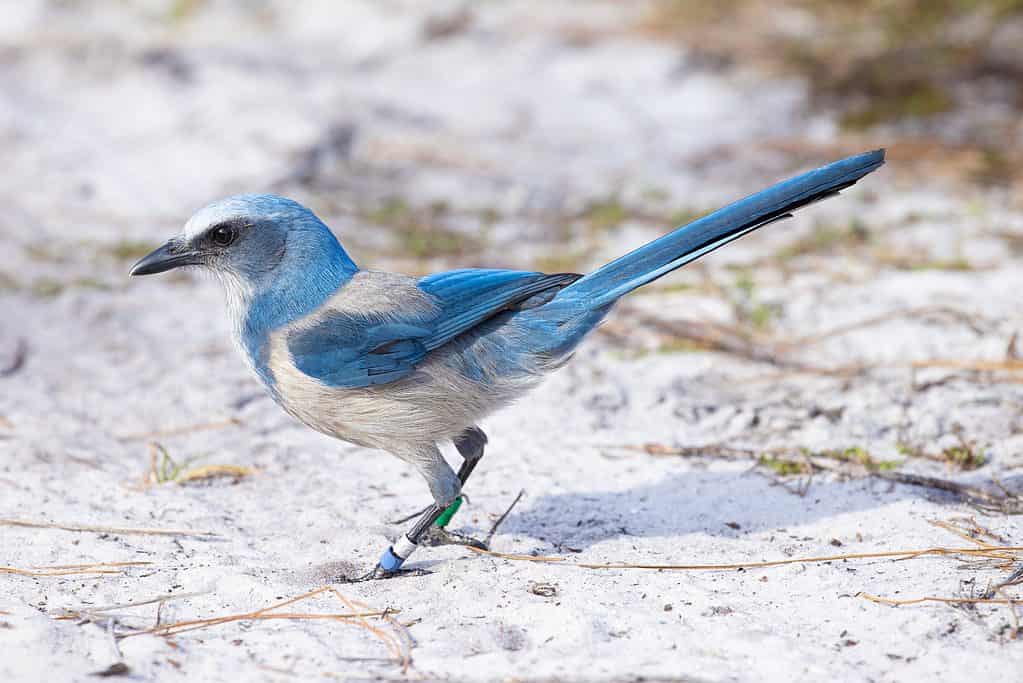
The Florida scrub jay’s neck, wings, and tail are blue, and its belly and back are grayish white.
©Tommy Daynjer/Shutterstock.com
Habitat: The Florida scrub jay lives nowhere in the world outside of Central Florida. And they live only in Florida scrublands, where they rarely wander away from their little scrub patches.
Appearance: These birds are large and slender with long tails and heavy bills. Their necks, wings, and tails are blue, and their bellies and backs are grayish white.
Diet: They eat insects, acorns, berries, snakes, mice, and lizards.
Behavior: They forage in flocks on the ground or in trees and have a complex social system.
2. Blue-Headed Vireo
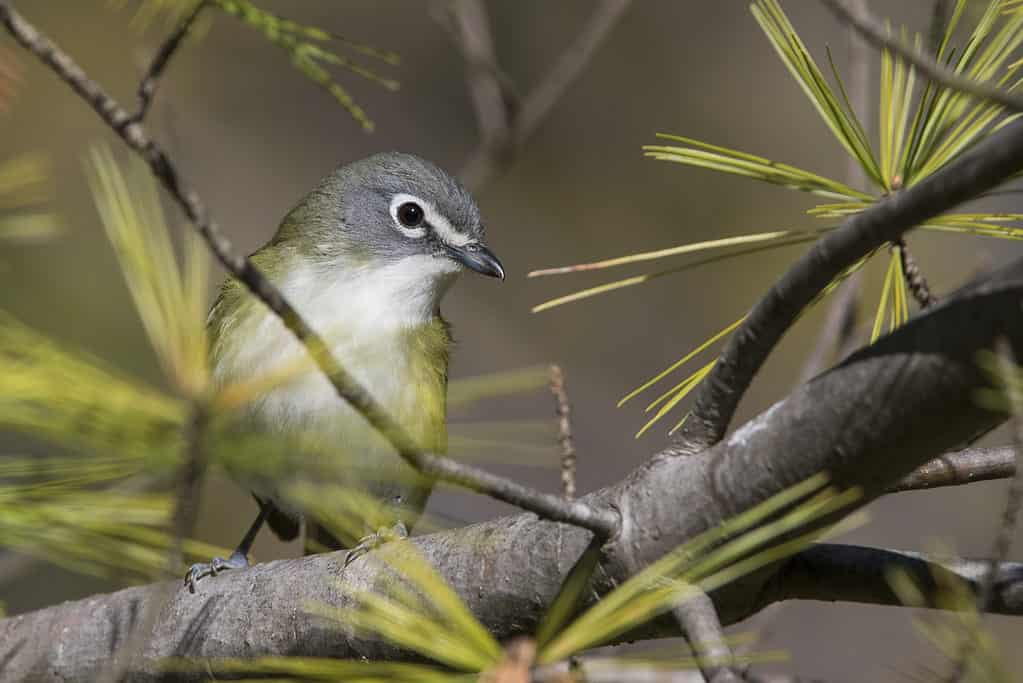
Small and stocky, this vireo has a bluish-gray head, hooked bill, and thick legs.
©iStock.com/mirceax
Habitat: The blue-headed vireo is an eastern bird of the United States and Canada, and it spends its winters throughout Florida. You can find them in many forest and woodland habitats, including parks and swamps.
Appearance: Small and stocky, this vireo has a hooked bill and thick legs. They have bluish-gray heads, green upperparts, and white underparts. Their wings and tails are streaked black and white.
Diet: These birds consume insects, larvae, spiders, snails, and small fruits.
Behavior: This species diligently forages in the upper trees, looking at the undersides of leaves and twigs.
3. Painted Bunting
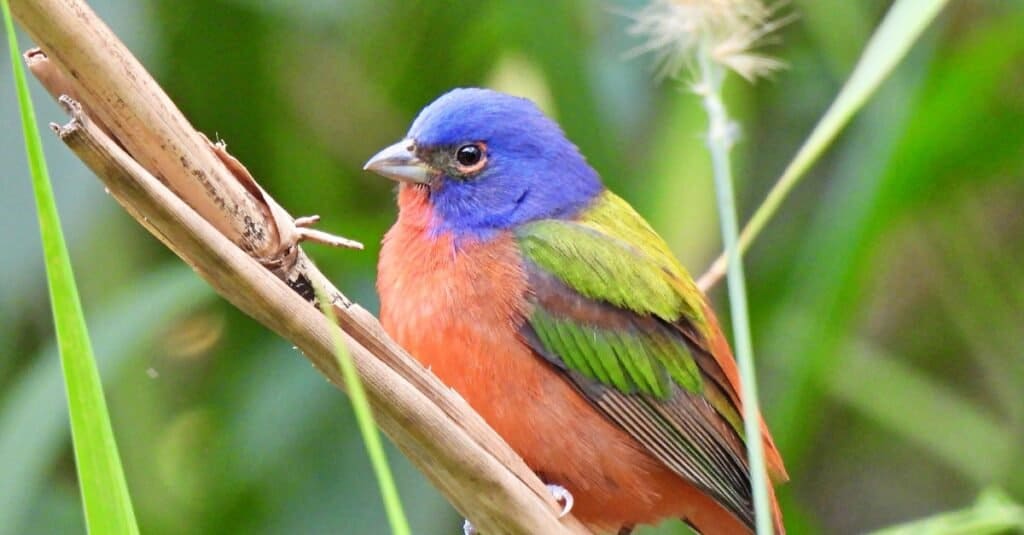
The painted bunting’s plumage is a mixture of blue, green, and red.
©iStock.com/passion4nature
Habitat: The painted bunting breeds along the northeast Florida coast, migrates through Central Florida, and winters in the southern tip. You will find them in woodland edges, roadsides, towns, and gardens.
Appearance: These medium-sized birds are beautifully colored. Their plumage is a mixture of blue, green, and red.
Diet: Seeds and insects are their favorite foods.
Behavior: These secretive birds stay in dense cover, foraging on the ground and occasionally in mixed flocks.
4. Common Gallinule

The common gallinule’s coloring is bluish gray to charcoal gray, with bright red forehead shields and green legs.
©iStock.com/Sander Meertins
Habitat: You can find common gallinules primarily in the Southeastern United States, where they live year-round in Florida. They inhabit freshwater marshes and reedy ponds.
Appearance: These medium-sized marsh birds have thin necks, and long legs and toes. Their coloring is bluish gray to charcoal gray. They feature bright red forehead shields and green legs.
Diet: Plant matter, insects, snails, and seeds make up their diet.
Behavior: They are highly adaptable and common in the southeastern marshes. Look for them foraging while swimming or walking through marsh vegetation.
5. Great Blue Heron
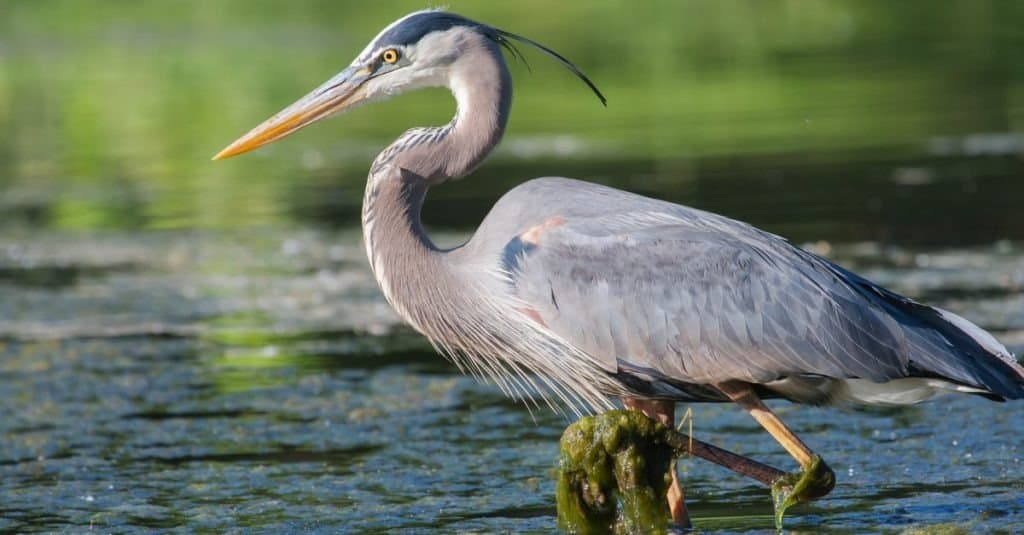
Great blue herons are found in marshes, swamps, shores, coastal bay, and tide flats.
©Joseph Scott Photography/Shutterstock.com
Habitat: The great blue heron lives year-round throughout most of the United States, including Florida. They are aquatic birds found in marshes, swamps, shores, coastal bay, and tide flats.
Appearance: Largest of the North American herons, the great blue has long legs, a long (S-curved) neck, and a thick, pointed bill. They are bluish-gray all over with a long black stripe over their eye.
Diet: They prefer fish, amphibians, reptiles, small mammals, birds, and insects.
Behavior: They stand silently in shallow water, waiting for prey to swim near, before thrusting their dagger-like bills into the water.
6. Tree Swallow
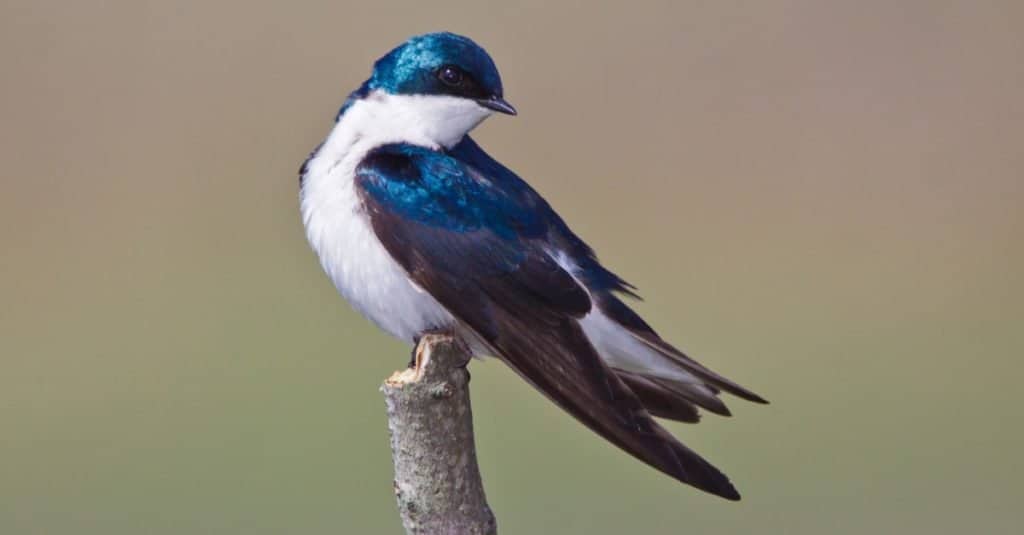
The tree swallow has shiny bluish-green plumage.
©Elliotte Rusty Harold/Shutterstock.com
Habitat: The tree swallow is abundant in North America, where it lives in Florida during the winter. They like open country areas near water, such as meadows, lakes, and marshes.
Appearance: These small songbirds have streamlined bodies and feature shiny bluish-green plumage above and white below with dark brown wings and tails.
Diet: Insects and berries form their diet.
Behavior: They fly low over water and fields, snatching prey from the surface in mid-air.
7. Little Blue Heron
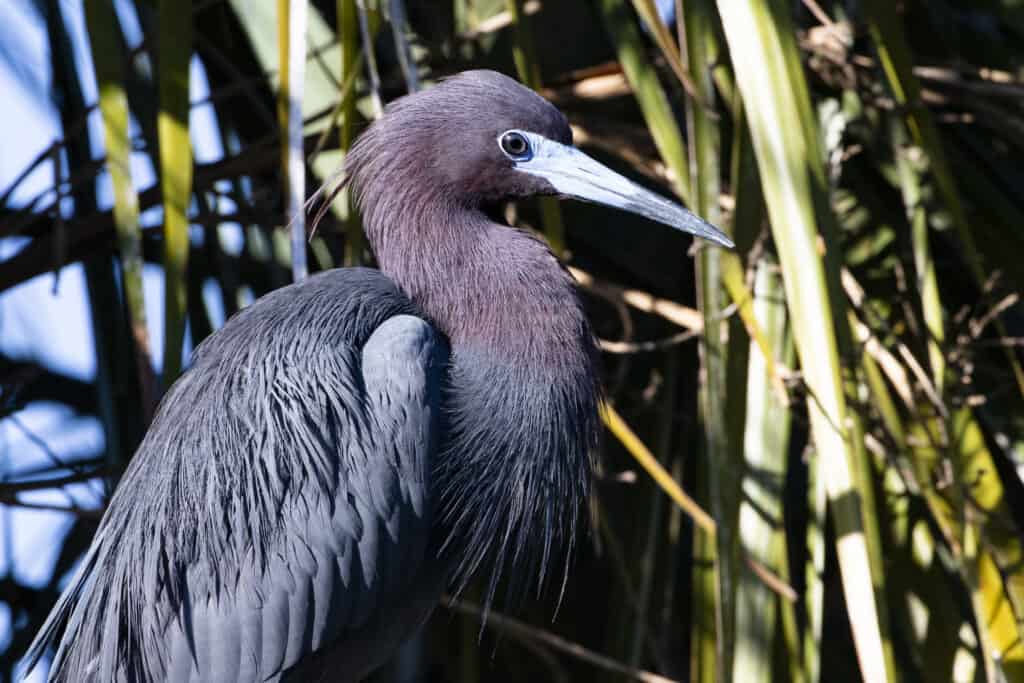
The little blue herons resemble snowy egrets and have long legs and slender necks.
©iStock.com/Florence and Joseph McGinn
Habitat: The little blue heron lives in the Southeastern United States, where it stays year-round in Florida. They are primarily found in freshwater habitats, such as marshes, rice fields, swamps, and ponds.
Appearance: They resemble snowy egrets and feature long legs and slender necks. Adults are dark bluish-gray and maroon.
Diet: They love to eat fish, crustaceans, frogs, lizards, snakes, and turtles.
Behavior: They are methodical foragers. You can find them walking slowly in shallow water, waiting for their prey to pass.
8. Purple Martin
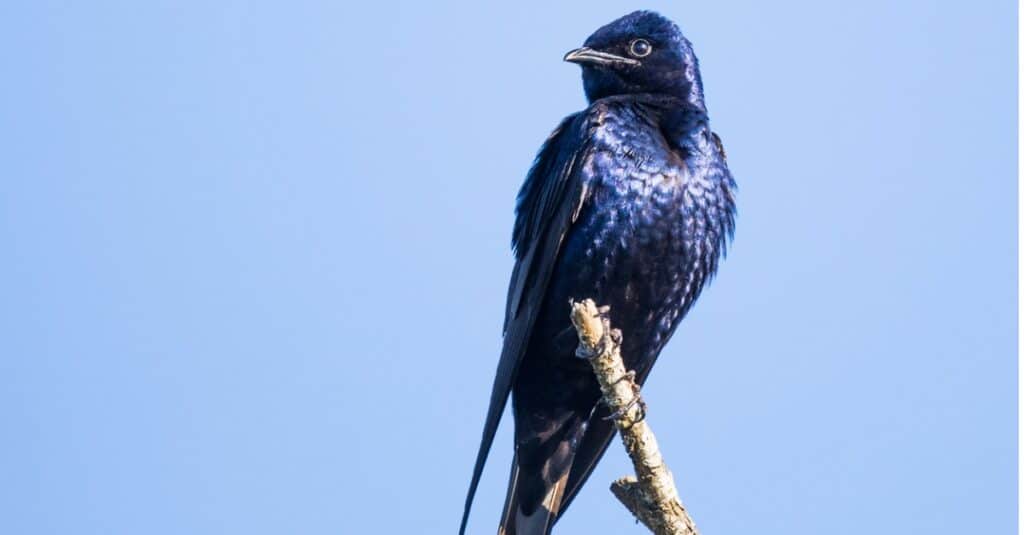
Male purple martins are shiny dark bluish-purple and have brownish-black wings and tails.
©iStock.com/Jeff Huth
Habitat: The purple martin breeds across the Eastern United States. You can find this species all over Florida in many common areas, like farms and towns. You can also find them in woodland edges and lowland deserts.
Appearance: These birds are very large swallows with broad chests, long wings, and forked tails. Males are shiny dark bluish-purple and feature brownish-black wings and tails.
Diet: These birds eat flies, dragonflies, beetles, crickets, grasshoppers, and butterflies.
Behavior: Graceful fliers, the purple martins forage by flying low and snatching prey mid-air.
9. Eastern Bluebird
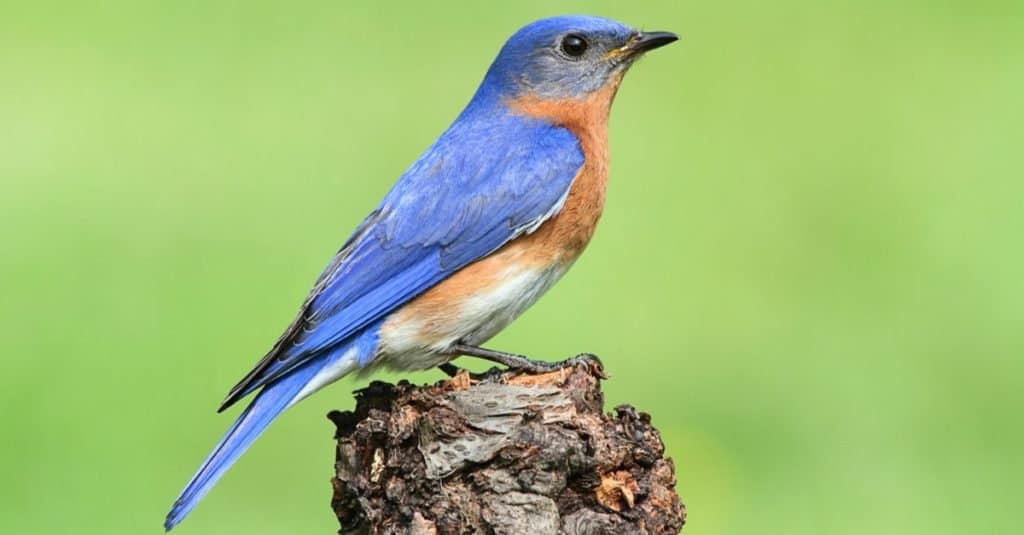
Eastern bluebirds’ plumage is blue above and white below, with rusty red breasts and throats.
©Steve Byland/Shutterstock.com
Habitat: Eastern bluebirds live year-round throughout Florida, except for the very southern tip. They inhabit open countries with scattered clusters of trees, like farms and forest clearings.
Appearance: This species is small, plump, and alert in posture. They have long wings and short tails and their plumage is blue above and white below. Additionally, they have rusty red breasts and throats.
Diet: Beetles, crickets, caterpillars, grasshoppers, spiders, and berries comprise their diet.
Behavior: They perch in low branches and observe their surroundings before fluttering to the ground to forage.
10. Blue Jay
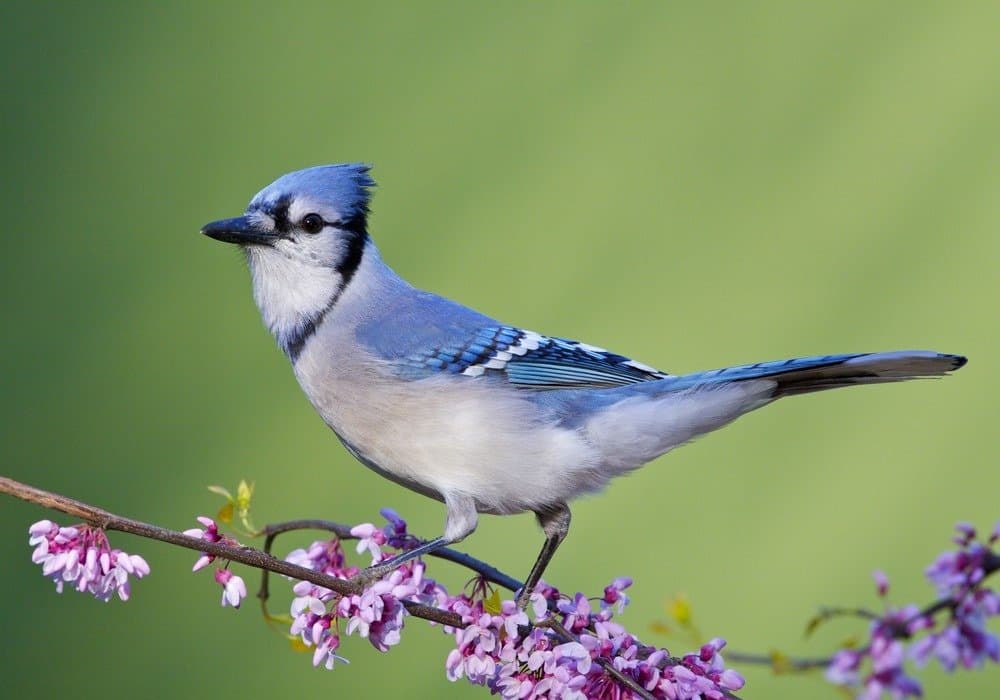
Blue jays can be found in many areas including towns, gardens, groves, and woods.
©Tom Reichner/Shutterstock.com
Habitat: Blue jays live year-round in the Eastern United States, including Florida. These loud birds inhabit many areas, such as towns, gardens, groves, and woods.
Appearance: They are large songbirds with various blue shades, white, and black patterns above and white below. They also have light blue crests.
Diet: They’ll eat insects, nuts, seeds, and grains.
Behavior: They forage on the ground, in shrubs, and in trees. They are also common birds at backyard feeders.
11. Belted Kingfisher
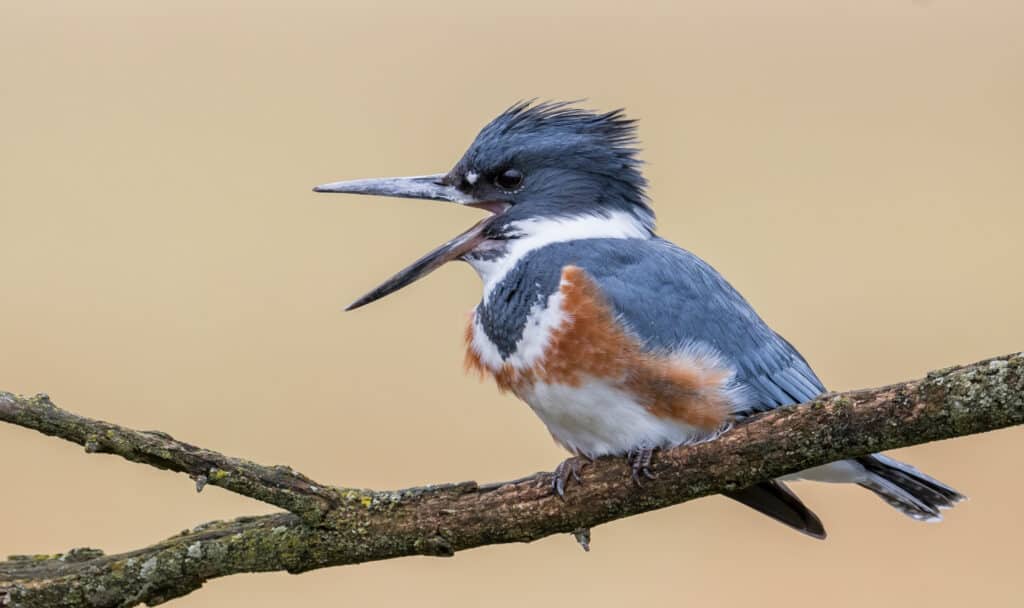
The belted kingfisher will watch from a perch above water before diving for fish and crustaceans.
©Harry Collins Photography/Shutterstock.com
Habitat: The belted kingfisher is abundant across North America. They live year-round in Northern Florida and winter in Southern Florida. These birds are associated with most water habitats, like lakes, streams, bays, and coasts.
Appearance: Large and stocky, the belted kingfisher has a shaggy crest and a thick bill. They are bluish-gray on the head and back and white below, with patches of chestnut on the sides.
Diet: They prefer fish, crustaceans, amphibians, small mammals, and reptiles.
Behavior: These birds watch from a perch above water before diving head-first to catch prey. They have a loud rattling call that helps distinguish them from other birds.
12. Common Grackle
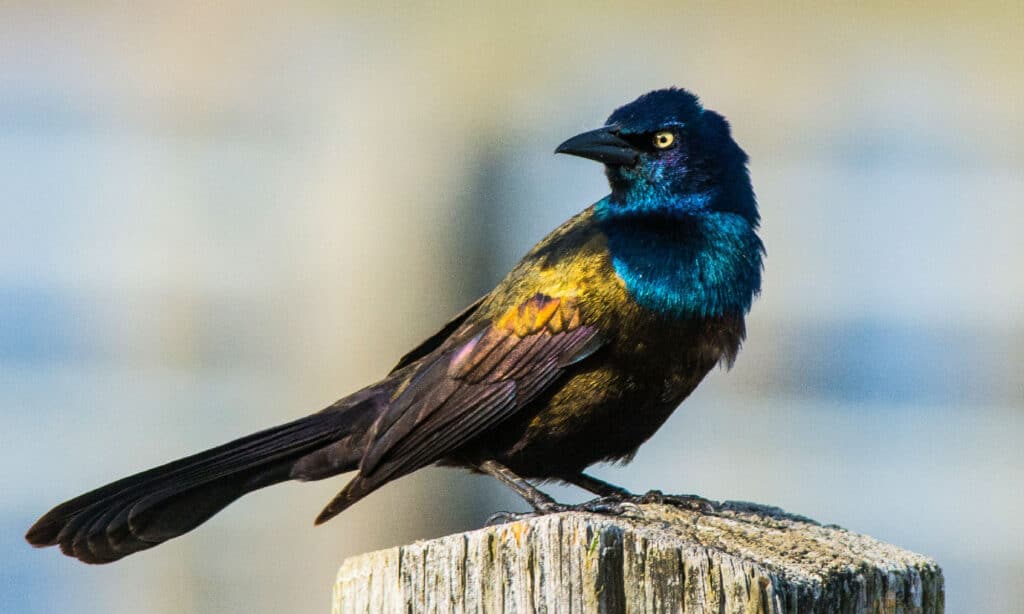
Common grackles are long and lanky, featuring iridescent plumage.
©JoshCW Photo/Shutterstock.com
Habitat: Another bird of the eastern half of the United States, the common grackle lives year-round in Florida. You can find them throughout the state in farms, towns, pastures, and suburban yards.
Appearance: They are long and lanky, featuring iridescent plumage. Their heads are blue and green, and their bodies are bronze.
Diet: These birds consumer seeds, grains, insects, and spiders.
Behavior: You will find them wading in shallow water or walking on the ground looking for food. They typically forage in groups and will occasionally steal food from other species.
Summary of 12 Blue Birds in Maryland
Here’s a recap of a dozen birds with blue coloring that can be found in Maryland.
| Number | Bird Species | Range | Coloring |
|---|---|---|---|
| 1 | Florida Scrub Jay | Central Florida | Necks, wings, and tails are blue; bellies and backs are grayish white |
| 2 | Blue-Headed Vireo | United States and Canada; spends winters in Florida | Bluish-gray heads, green upper parts, white underparts; wings and tails are streaked black and white |
| 3 | Painted Bunting | Breeds along the northeast Florida coast, migrates through Central Florida, winters in the southern tip | Plumage is a mixture of blue, green, and red |
| 4 | Common Gallinule | Primarily in the Southeastern U.S.; lives year-round in Florida | Bluish gray to charcoal gray; bright red forehead shields and green legs |
| 5 | Great Blue Heron | Year-round throughout most of the U.S., including Florida | Bluish-gray all over with a long black stripe over its eye |
| 6 | Tree Swallow | Abundant in North America; in Florida during the winter | Shiny bluish-green plumage above and white below with dark brown wings and tails |
| 7 | Little Blue Heron | Southeastern United States; lives year-round in Florida | Dark bluish-gray and maroon |
| 8 | Purple Martin | Breeds across the Eastern U.S. including all over Florida | Males are shiny dark bluish-purple and feature brownish-black wings and tails. |
| 9 | Eastern Bluebird | Live year-round throughout Florida, except for the very southern tip | Plumage is blue above and white below; rusty red breasts and throats |
| 10 | Blue Jay | Live year-round in the Eastern U.S., including Florida | Various blue shades, white, and black patterns above and white below; light blue crests |
| 11 | Belted Kingfisher | Abundant across North America; live year-round in northern Florida and winter in southern Florida | Bluish-gray on the head and back and white below, with patches of chestnut on the sides |
| 12 | Common Grackle | Eastern half of the U.S.; lives year-round in Florida | Iridescent plumage; heads are blue and green; bronze bodies |