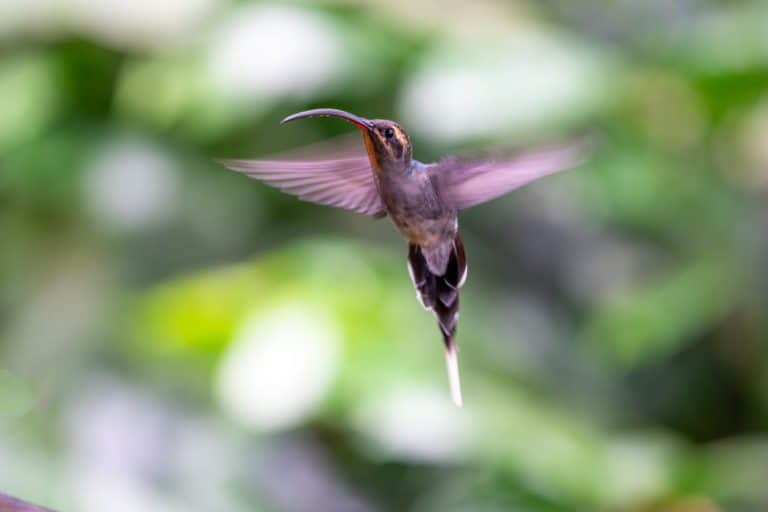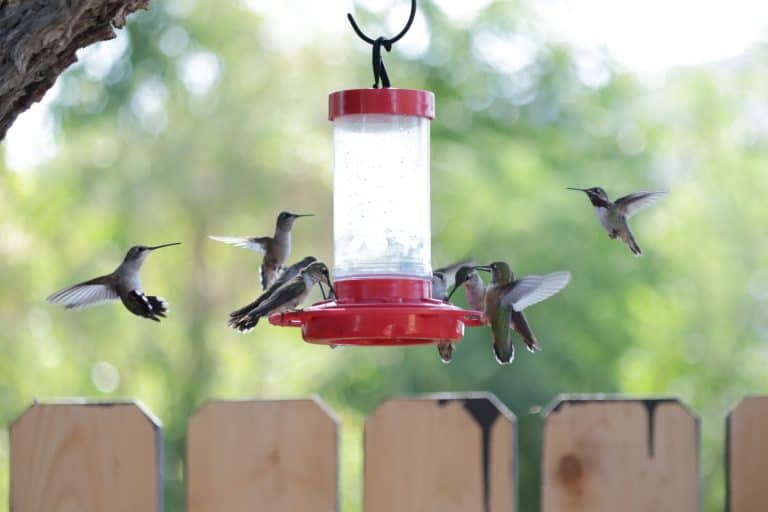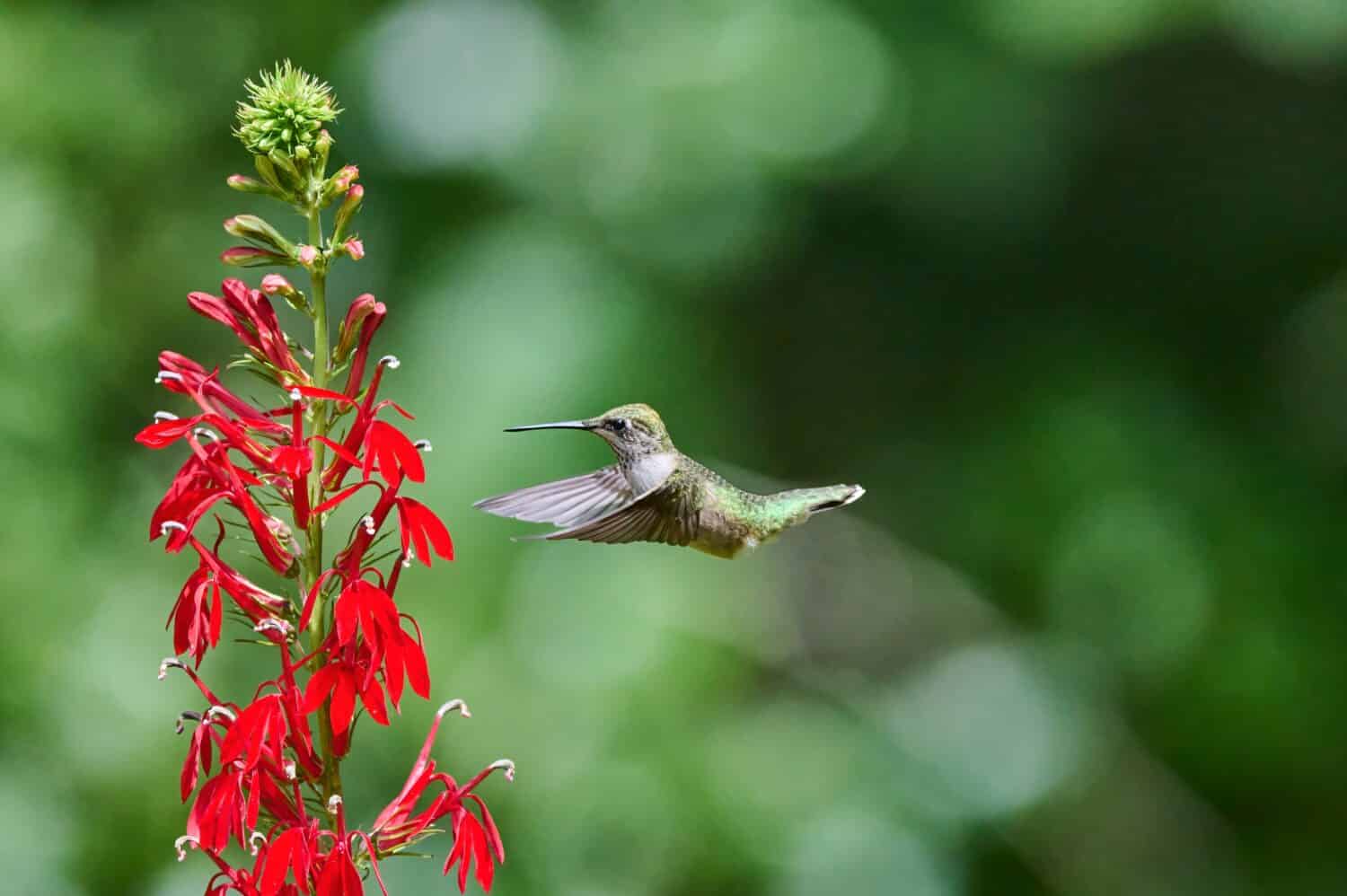

If you live in Arkansas, you’ve probably seen a few hummingbirds flying around. After all, this is one of the most recognizable bird species, thanks to their small size, fast wings, and iridescent coloration. You probably also know that hummingbirds are migratory, which might prompt you to wonder when hummingbirds are set to flee Arkansas.
While these birds are very small, they also travel very far. Most species cannot survive in the winter without freshly bloomed flowers. Therefore, they have to migrate to warmer climates.
However, there are many species of hummingbird in Arkansas. Each has its own timing and migration pattern (or no migration at all).
In this article, we’ll explore when most hummingbirds flee Arkansas, as well as where they migrate to.
When Hummingbirds Are Set to Flee Arkansas
As the days grow shorter after the summer equinox, hummingbirds begin to prepare for their long journey south. To complete this journey, hummingbirds must stock up on fat to fuel the journey. Therefore, in the late summer, you may notice that your local hummingbirds suddenly become hungrier.
While the exact timing does vary, most hummingbirds leave Arkansas from August to September.
It’s thought that several factors influence migration timing. One of these is the day length, which may trigger hormonal changes that prompt the hummingbird to fly. These daylight changes may also prompt the excess eating and building of fat reserves.
Weather conditions may also affect migration, though we know very little about this. It’s thought that hummingbirds use the sun (and maybe stars) to migrate properly. On cloudy days when the sun isn’t visible, they may not migrate as far or hard.
Food availability may also play a role. Hummingbirds need a certain amount of fat to make migration feasible. Without it, they may have trouble sustaining themselves during a flight. Therefore, if the hummingbirds don’t have very much food, they may be forced to delay their migration.
All that said, these hummingbirds generally migrate during the late summer and early fall months.
Destinations of Arkansas Hummingbirds
After leaving Arkansas, migratory hummingbirds often travel thousands of miles to Mexico and other areas of Central America. In these areas, it is warm enough throughout the winter months for flowers to stay bloomed, allowing them to find a consistent food source.
The Yucatan Peninsula is a particularly popular wintering destination. It provides a range of habitats and nectar-rich flowers, allowing it to support a sizable hummingbird population. The Sierra Madre Oriental is a mountain range in northeastern Mexico that also serves as a wintering ground for many species.
You’ll also see many hummingbirds wintering in the coastal regions along the Gulf of Mexico. Some hummingbirds may only stop in these areas before continuing on, though.
Traveling to these regions is no small feat, though. The hummingbirds must travel over vast stretches of land and sea, crossing challenging weather conditions. Furthermore, they must also stop and refuel at several points along the way.
If these refueling points don’t provide enough food, the hummingbirds may be in trouble. Sadly, we simply don’t know where many of these refueling points are, which makes protecting them impossible. Scientists are currently studying exactly where hummingbirds stop on their migration route.
Non-Migratory Hummingbirds in Arkansas
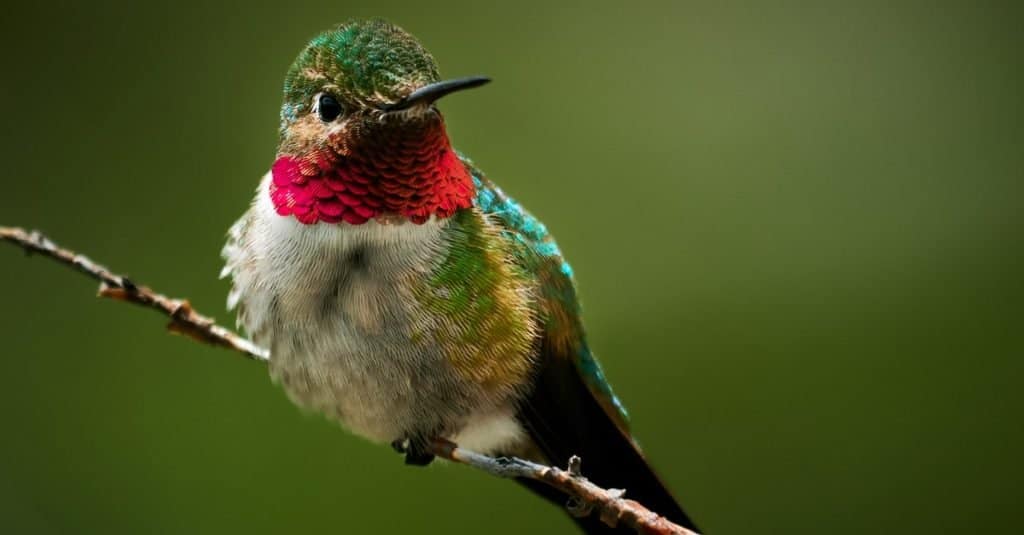
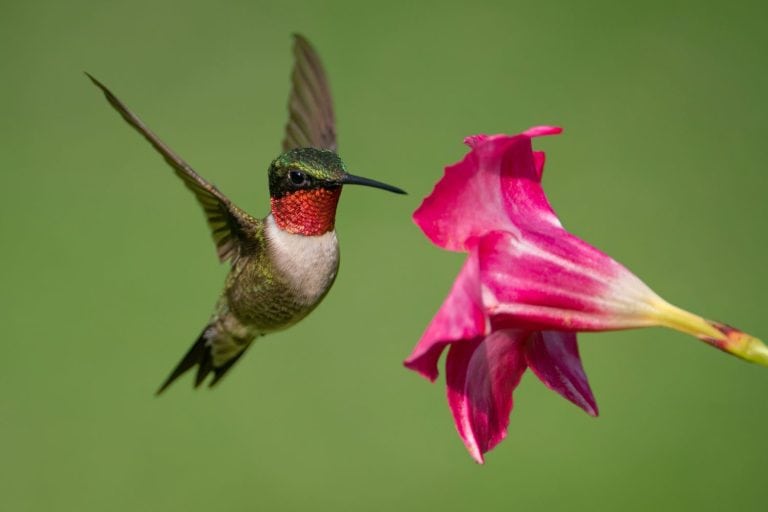
Ruby-throated hummingbirds migrate to eastern North America in the spring.
©CounselorB/Shutterstock.com
While most hummingbirds do migrate, there are only two species in Arkansas that do not. These species have unique traits that allow them to survive the colder winters, which as going into a torpor state when it gets too cold. Because of these traits, they do not have to migrate like other hummingbirds.
- Anna’s Hummingbird: This hummingbird is found throughout the western United States and southern Canada. In many areas, these birds are year-round residents and do not have to migrate.
The ruby-throated hummingbird is sometimes listed as a non-migratory species. However, this seems to be a bit up in the air. Almost all of these hummingbirds migrate in the winter months, wintering in Mexico, Costa Rica, and Panama.
That said, some individuals may stay behind, especially if they have access to a permanent food source (like a feeder).
Migratory Hummingbird Species in Arkansas
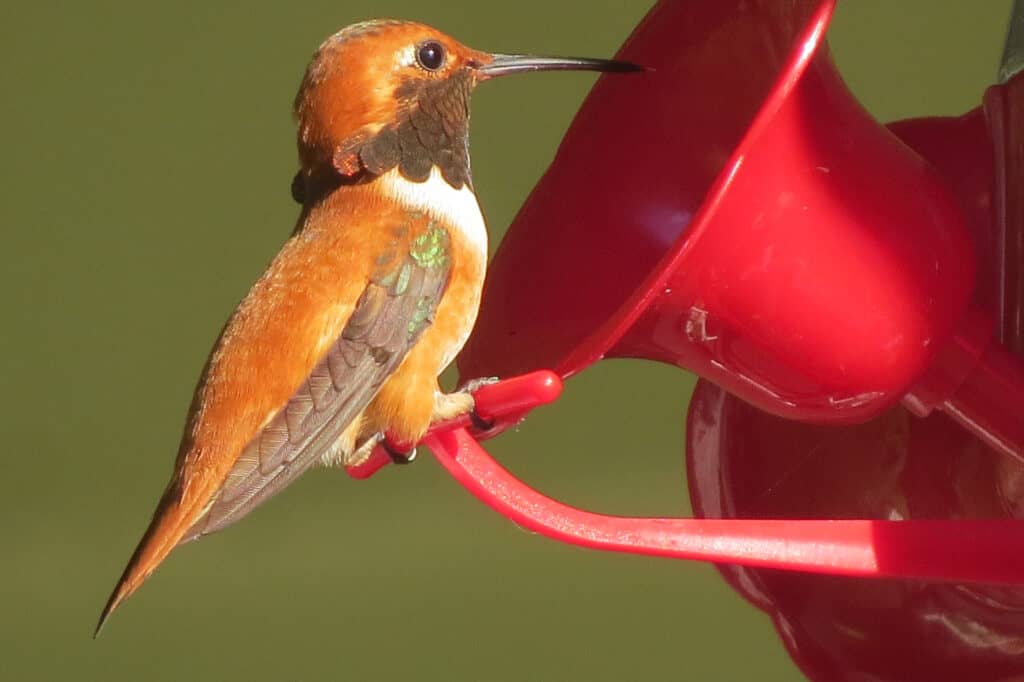
When feeding at hummingbird feeders, Rufous hummingbirds like to perch if they can.
©Rachel Lambert/Shutterstock.com
Several hummingbird species in Arkansas do migrate. Here are some of the most common ones:
- Ruby-throated Hummingbird: The Ruby-throated Hummingbird is the primary species found in Arkansas. Its arrival marks the onset of spring, and its departure signals the approach of fall. Though many Ruby-throated Hummingbirds migrate, some individuals remain in Arkansas year-round.
- Rufous Hummingbird: The Rufous Hummingbird is known for its migratory behavior, as it often travels thousands of miles. These hummingbirds may be found in Arkansas during their migration. Some individuals may even stay in the area through the winter if they find a quality food source.
Factors Influencing Migration
Sadly, we don’t know how migration works 100%. Until recently, humans weren’t sure that birds migrated at all. Until the 1800s, scientists had no proof that birds migrated.
(There were many theories at the time about where birds went during winter. One unlikely theory was that they turned into rabbits. Another involved birds digging very deep holes and hibernating.)
Today, we know for certain that birds migrate thanks to tracking studies. However, we still don’t know much about how they do it or how they know when to leave.
One potential factor is the shifting of daylight. The days continue to lengthen until the summer solstice. After that, they get shorter. It may be this shift that lets hummingbirds know it’s time to gorge on food and prepare to migrate. Hormones are likely involved.
We know that hormones are affected by light exposure. Some species even know when breeding season is based on light levels. Melatonin is produced when light exposure decreases, so it could also be that melatonin causes birds to migrate (while it just makes us sleepy).
Weather conditions may also affect migration. Hummingbirds are relatively small, so they are also sensitive to certain weather changes. For instance, strong winds, storms, and temperature fluctuations may make hummingbirds decide to put off migration for a few days.
However, we don’t know exactly what weather conditions affect when hummingbirds will leave. More studies need to be done before we have a more complete understanding of this behavior.
Providing Support for Migrating Hummingbirds
There are many ways you can support the migrating hummingbirds in your area. One way is to plant late-blooming flowers that provide the food hummingbirds need for the journey. These flowers can provide a critical source of nectar when summer starts coming to an end.
Some native plants that may be good choices include bee balm, cardinal flower, and trumpet vine. These plants offer sustenance and look very pretty, as well.
You can also offer sugar water in a hummingbird feeder, which provides a reliable source of food for these birds. Sugar water mimics the nectar these birds are used to consuming, and it is very easy to make.
Simply mix four parts of water with one part of white sugar. Don’t use red dye, as this is unnecessary and potentially harmful. Place these feeders somewhere visible and safe. Avoid placing it near a window, as this can be a collision risk.
You can also consider transforming your garden using hummingbird-friendly plants. Aim to plant native flowers. While decorative flowers can be tasty for hummingbirds, too, they may outcompete native plants, which can be damaging for the hummingbird population in the long run.
Plant trees and shrubs, too, to provide shelter for resident hummingbirds and those passing through during their migration. Avoid using pesticides, as these can be damaging to hummingbirds.