
Nebraska is home to several hummingbird species. However, many of these species are migratory, which means that they do not stay in Nebraska all year. The state is also a common stopping point for more northern species on their migration route. So, you may be wondering when hummingbirds leave Nebraska after the warm summer.
The exact migration pattern differs from species to species. Even individuals may have a slightly different migration pattern, or they may even adjust their migration to fit the needs and weather of each year.
That said, there are some general guidelines that most hummingbirds follow when migrating. Keep reading to learn when hummingbirds leave Nebraska.
When Hummingbirds Leave Nebraska
Typically, hummingbirds begin to migrate when the summer starts coming to an end. Summer marks the end of plentiful flowers and nectar. Therefore, hummingbirds often need to leave before the flowers dry up completely. Often, most hummingbirds migrate in late August to early September.
If there is an ample food source nearby, some hummingbirds may stay longer. Therefore, it’s generally recommended that you leave your feeders up until the end of September to help any stragglers along.
Weather can also play a role in hummingbird migration. Hummingbirds use the sun and stars to navigate (we think). On cloudy days, these signals are less visible, and most migratory birds tend to be less active. On the other hand, more favorable conditions may encourage hummingbirds to leave early.
Different species of hummingbirds have slightly different migration patterns. Some travel very far, up to thousands of miles, while others travel less. Some species may only pass through Nebraska on their journey southward, making them a much rarer sighting in the state.
Destination of Migration
Hummingbirds end up in widely different areas depending on their species. Many journey all the way to Central America and Mexico, where it is warm enough for most of the year for flowers to grow. However, different individuals will often show up in slightly different places. It’s nearly impossible to know exactly where an individual hummingbird will end up without tracking it with electronics.
Some hummingbirds stay within the United States, though they may travel a few states southward in the winter. The ruby-throated hummingbird is what most people consider “the hummingbird,” as it is the most common species in the United States. They travel very far, but many other species do not.
Of course, migration is a serious challenge for many. These birds have to travel many miles, finding food along the way. Often, they will stop at several refueling sites to consume nectar before moving on. Leaving your feeders up until the last hummingbirds have come through can be helpful. Birds will remember where they got food the year before, so they may be looking for yoru feeder.
Hummingbirds also face extreme weather conditions and predation. Urban development can take out their historical refueling areas, making it challenging for them to find enough food.
It’s important to protect the migration destination of hummingbirds, as well as the areas they stop at along the way. Hummingbirds rely on many different areas for food throughout the year, and we’re still learning about which areas hummingbirds use.
Non-Migratory Species in Nebraska
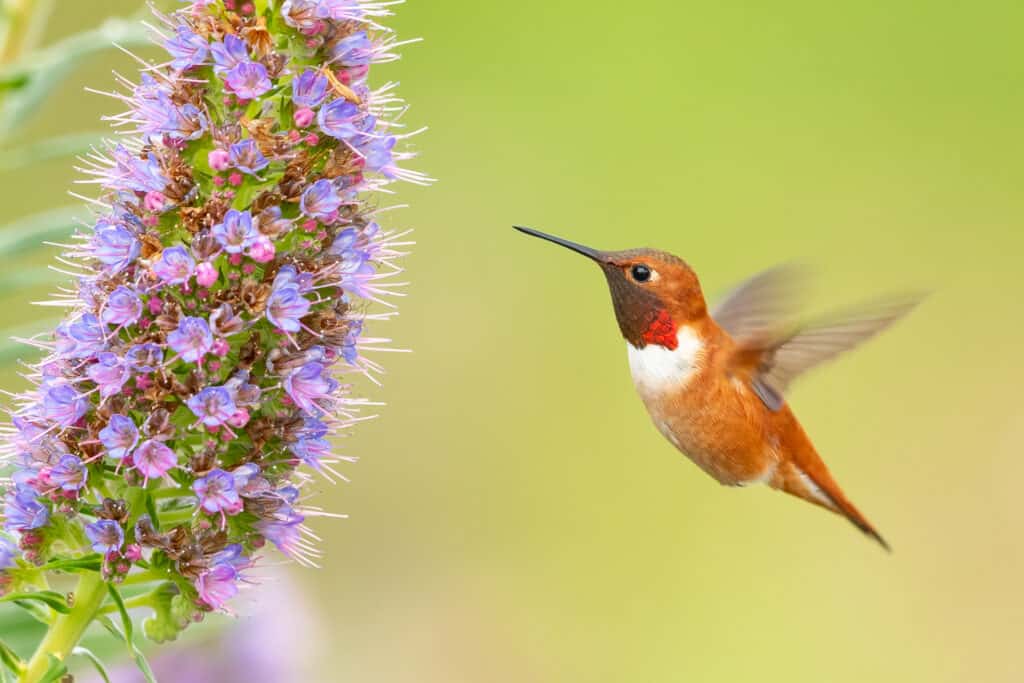
Male Rufous Hummingbirds are brightly colored, with a reddish-orange face.
©Keneva Photography/Shutterstock.com
Not all hummingbirds migrate, despite some common misconceptions. Many hummingbird species have evolved to cope with challenges in their particular habitat, including Nebraska. Often, these species have a lower metabolism, especially when it is colder. They may also rely on other food sources, like insects, to make it through the colder months.
Migrating is dangerous and can be a toss-up. Therefore, not migrating may have given these species an edge over competing hummingbirds.
One example of a non-migratory hummingbird species is the Anna’s Hummingbird. While not as common in Nebraska as in the western United States, this species has been observed in the state during the winter months. Anna’s Hummingbirds have adapted to a range of climates, from coastal areas to deserts, allowing them to thrive year-round in regions where food sources are available.
Another non-migratory species that can occasionally be found in Nebraska is Costa’s Hummingbird. This species is primarily found in the southwestern United States and Baja California. This species has developed adaptations that allow it to withstand the colder temperatures of winter.
The Rufous Hummingbird is an unusual species that exhibits many migratory patterns within the same species. Some individuals do not migrate at all and may spend the winter in Nebraska. They may even migrate to this state from more northern areas. However, most will keep going south.
Migratory Species in Nebraska
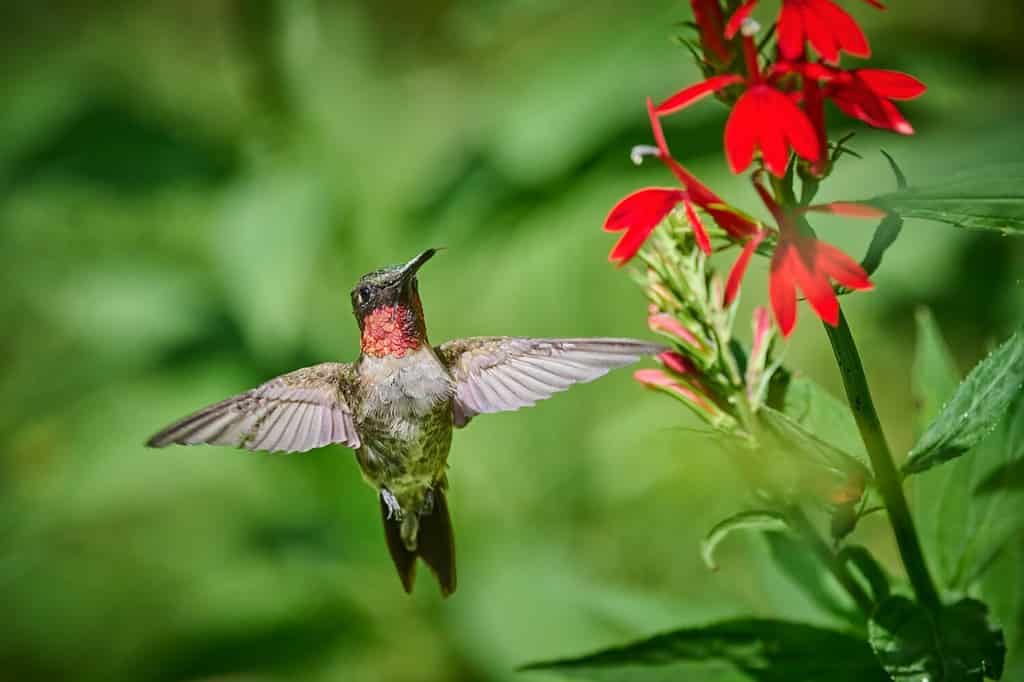
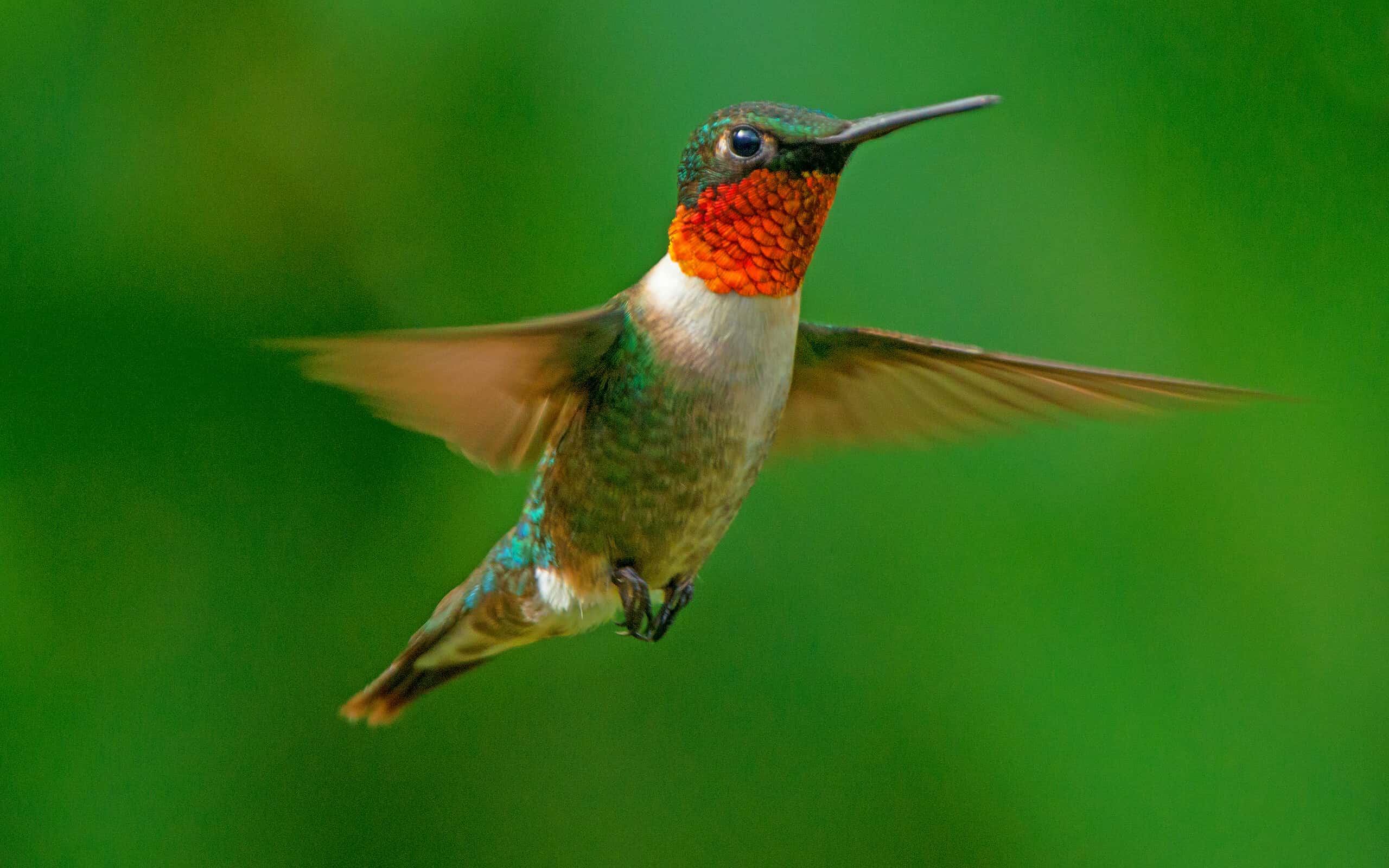
Ruby-throated hummingbirds are the most common species in Nebraska.
©Patrick Jennings/Shutterstock.com
While not all species migrate, the vast majority do. The Ruby-throated hummingbird is one of the most common in the state and migrates down into Central America each year. These small birds are known for their iridescent plumage and vibrant ruby-red throat patch. Nebraska sees a lot of these birds throughout the year, including residents and visitors.
The Rufous Hummingbird sometimes migrates and sometimes doesn’t, as we have discussed. Often, this species doesn’t live in Nebraska, except for the occasional straggler that decides not to migrate further south. However, you will see these hummingbirds moving through the state in the fall on their way to warmer areas.
The Calliope Hummingbird is less common in Nebraska than in other regions. However, the bird may make its way through the state while migrating. They usually don’t stay very long, though.
The Broad-tailed Hummingbird is another occasional visitor to Nebraska. Known for their iridescent green plumage and distinctive metallic “trill” vocalizations, these birds breed in the western United States and migrate to Mexico for the winter.
The Black-chinned Hummingbird is also occasionally spotted in Nebraska. While not particularly common, this species is known for its shimmering black throat patch that gives it its name. They usually breed in the western United States and then make their way to Central America for overwintering.
Supporting Migrating Hummingbirds
Hummingbirds require many specific things to line up for them to migrate successfully. Because of urban development and plain bad luck, not all of these things may occur. Luckily, you can support the hummingbirds moving through your area in several ways.
Consider planting a variety of native flowers that hummingbirds can feed on. Flowering plants that are nectar-rich are the best options. Try to plant more than one species, as this helps ensure that at least some flowers are blooming at all times.
Some suitable options for Nebraska include bee balm, cardinal flower, trumpet vine, and various species of salvia.
You can also provide shelter and perches, which hummingbirds also require when migrating. Shrubs and trees provide natural shelter from predators and adverse weather conditions. You can also add perches near any feeders or flowers to provide resting locations.
Hummingbirds also require a water source, which can sometimes be just as hard to find as nectar. A shallow bird bath or water feature can provide them with water to drink and bathe in. Make sure the water is clean and change it regularly to prevent mosquitoes and algae growth. Some water features are designed to emit a gentle sound that can attract hummingbirds.
Of course, one of the best ways to help hummingbirds is to hand feeders. Well-maintained feeders can provide tons of food for a hummingbird, which may be exactly what it needs to survive the migration. You can make your own sugar water using four parts water and one part white granulated sugar. Don’t use any additives or colorings, as these are unnecessary and may harm the bird.
Place the feeder in a visible, safe location away from windows (hummingbirds tend to hit windows). Change the mixture every few days at least or whenever it gets empty.
Remember, when resident hummingbirds leave Nebraska, others may still be passing through.
Avoid using pesticides, as these can potentially harm hummingbirds. If you’re hanging feeders and planting flowers, you’ll likely attract a few birds. You don’t want them to be subsequently harmed because of the pesticides you use in your yard.