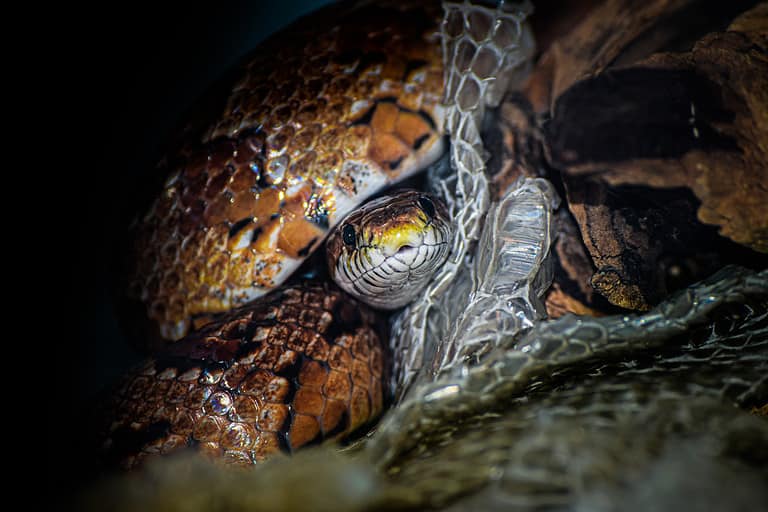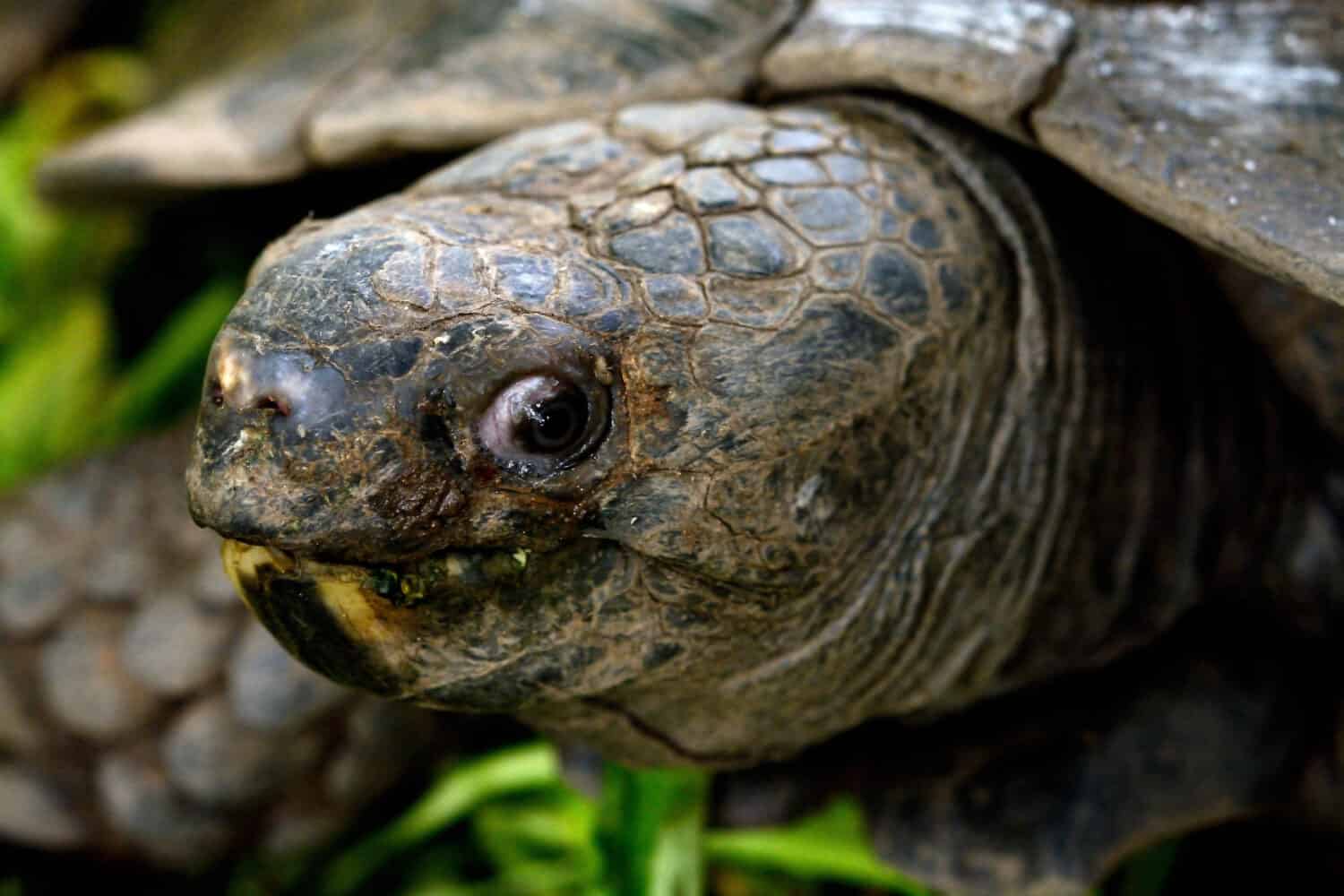

When a turtle is scared or stressed, it may go inside its shell to protect itself. But sometimes, when a turtle sees a dark color, such as if a person wears black shoes, it will attempt to attack it and may even head butt the object. To turtles, that dark color signals that the thing is a predator. It can’t distinguish the difference between something black and a predator, such as a black snake.
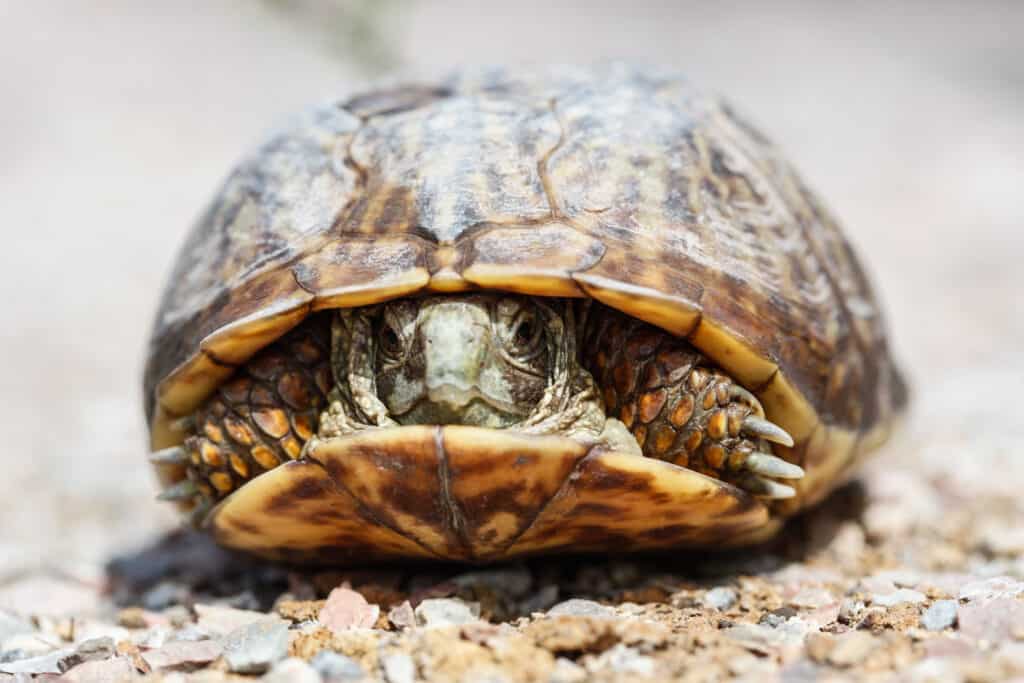
Turtles dislike the color black because they fear it could be a predator.
©Ingrid Curry/Shutterstock.com
What Animals Are Predators Of Turtles?
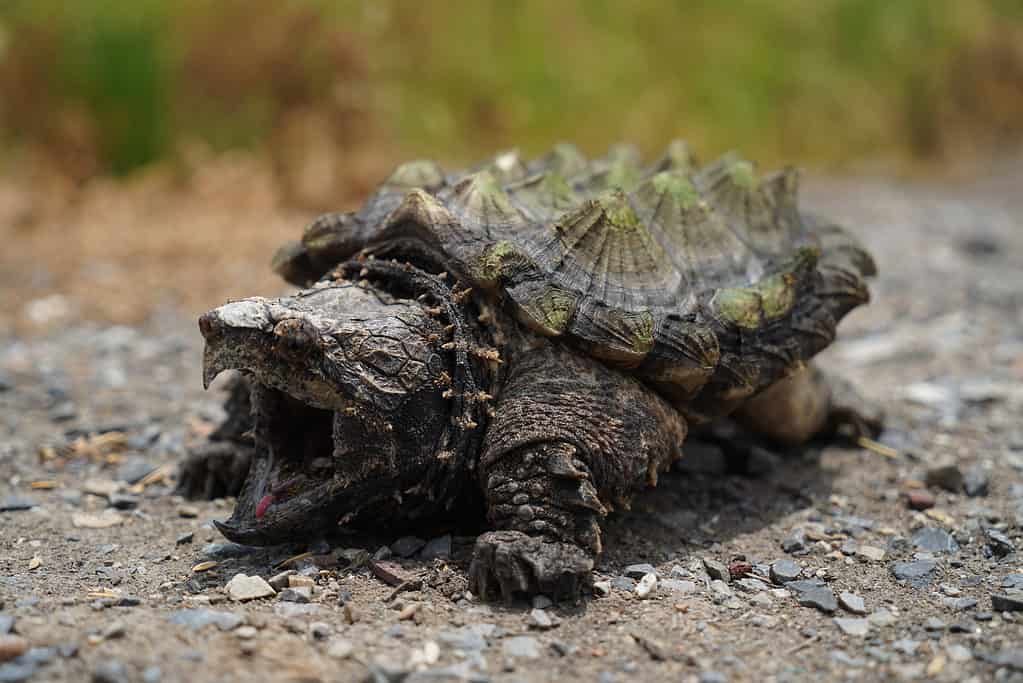
Snapping turtles are predators of other turtles.
©iStock.com/Sista Vongjintanaruks
Predators with sharp teeth that can puncture their shells are dangerous for turtles. Large birds of prey, snakes, dogs, raccoons, lizards, skunks, and coyotes all prey on land turtles and can target their eggs and young as sources of food. Sharks, crabs, killer whales, and even other turtles, such as the snapping turtle, also prey on sea turtles.
What Colors Do Turtles See?
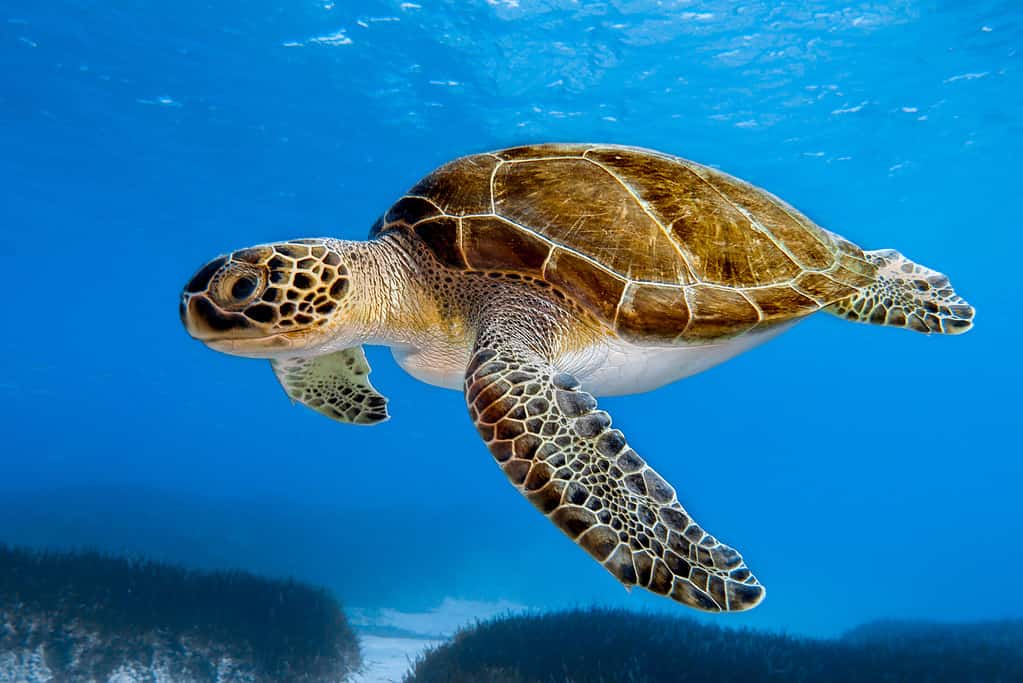
Green sea turtles appear to like the color blue.
©Sakis Lazarides/ via Getty Images
Turtles don’t only see black. They can also see shades of colors, including red, green, blue, orange, and yellow. Some turtles might even have a color preference, depending on their species. For example, Green Sea Turtles may be drawn to blue and green shades, which mimic their natural ocean habitat. So if you’re keeping a turtle as a pet, it’s a good idea to keep dark objects away from it to avoid stressing your new friend!
Do They Prefer Light Over Dark?
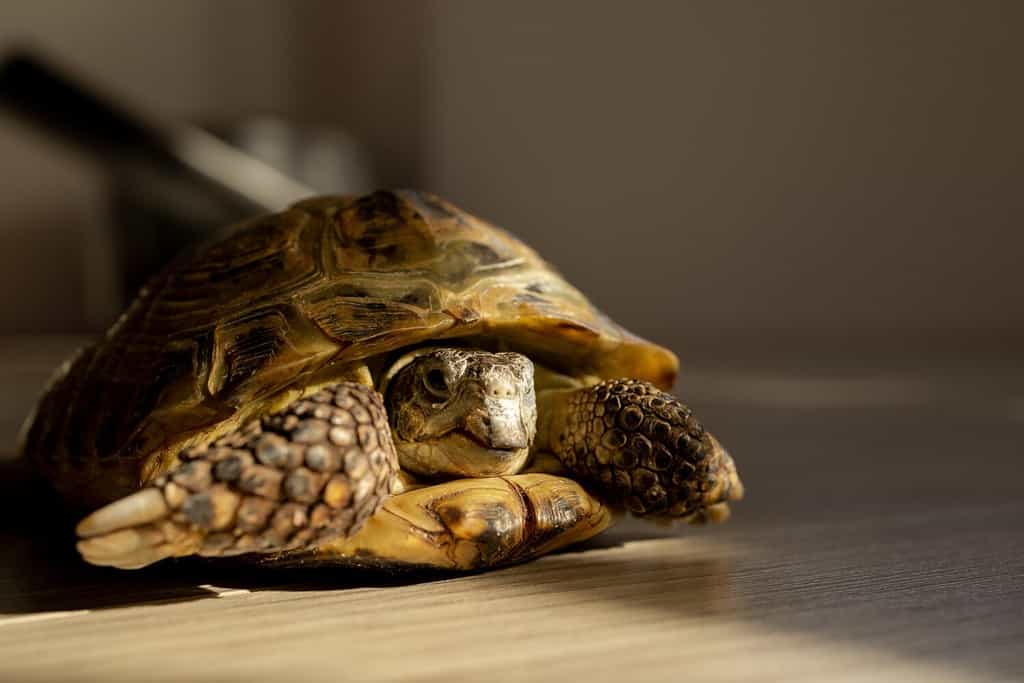
Turtles enjoy the warmth of the sun.
©Anna List/Shutterstock.com
Turtles need to see night and day just like humans do. They need access to the warmth of the sun’s rays, or what feels like the sun, during the daytime. Darkness at night encourages sleep for turtles, as it does for most animals. If you have a pet turtle, you don’t need to provide any special lighting at night. Turtles may dislike black objects, but they still need to experience nighttime!