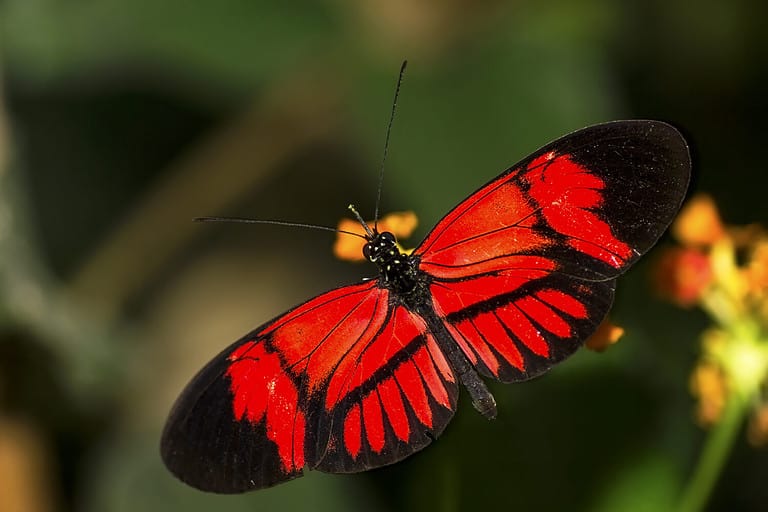

Butterflies (Papilionoidea) come in a remarkable variety of colors and patterns, from the orange majesty of the monarch to the lustrous red and blue of the peacock butterfly, but all butterflies follow the same reproduction processes. Butterflies begin life as an egg, hatch into a larva, create a chrysalis as a pupa, before transforming into their adult form. This long, intricate process has been honed through millions of years of evolution. Continue reading to discover fascinating details about how butterflies reproduce.
Butterfly Reproduction
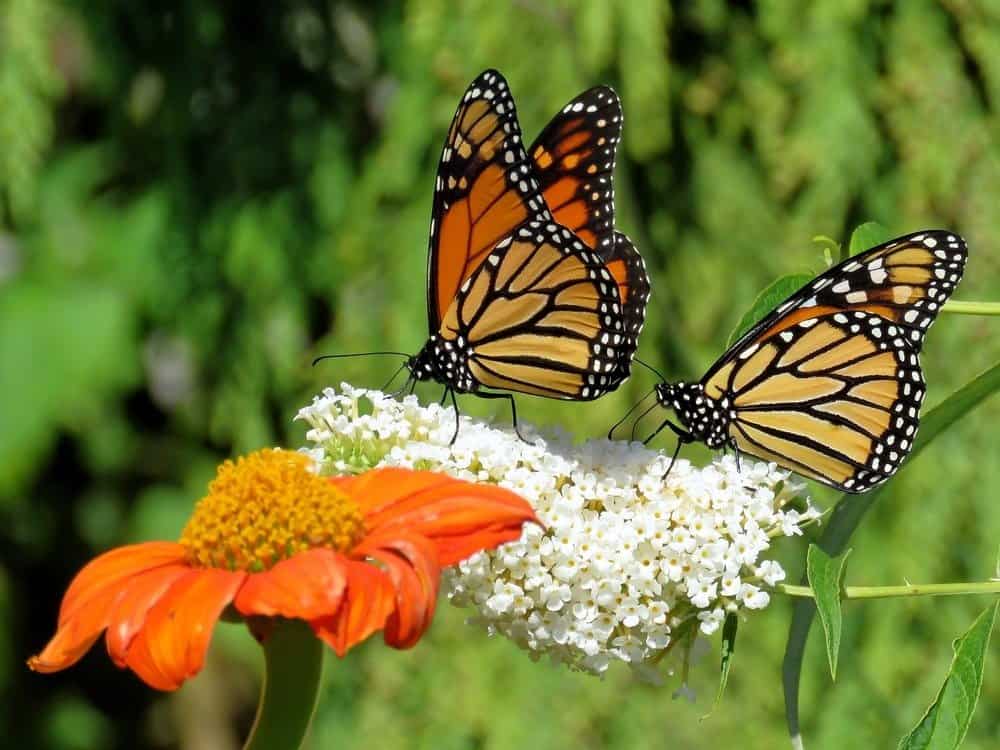
Two monarch butterflies are seen in a garden on Lake Ontario in Toronto, Canada.
©emkaplin/Shutterstock.com
Butterflies reproduce sexually, which has numerous advantages over asexual reproduction. The most important advantage is that it provides significant genetic variation to the offspring, creating new combinations that can adapt to changing conditions. Individuals with genes best suited to the environment are more likely to survive and reproduce than individuals with less favorable genes.
A downside to reproducing sexually is that both a male and a female are required to be present at the same time. This limits the number of offspring that the parents can have. Asexually reproducing animals, by contrast, can create massive numbers of offspring quickly without expending effort on the mating process.
Finding a Mate
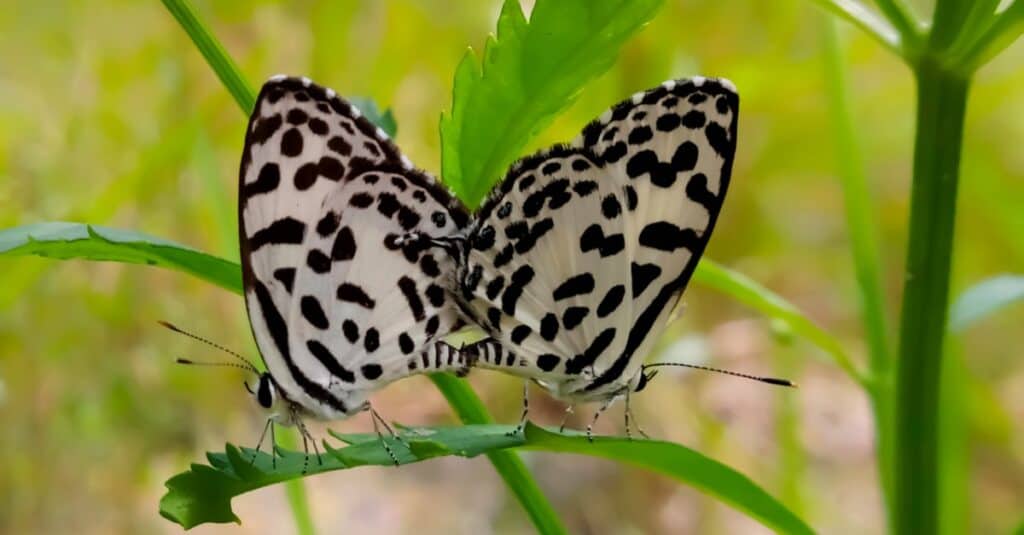
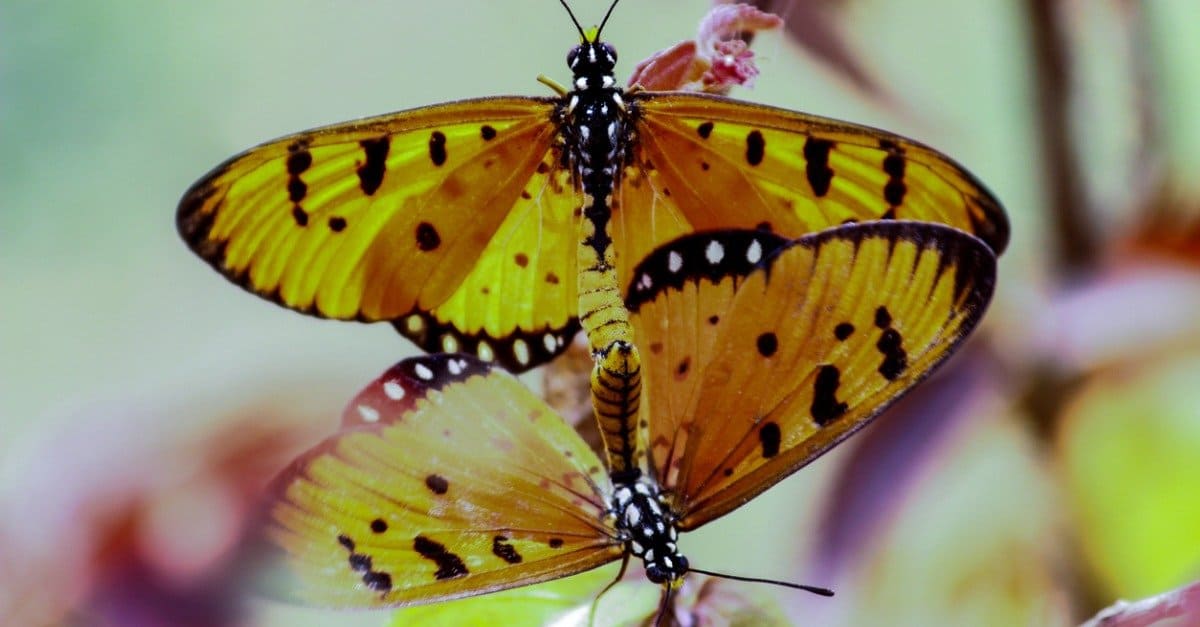
When a male butterfly has found a suitable mate, he will fly above and perform a mating dance.
©iStock.com/Nadim Mahmud Himu
The butterfly reproduction cycle begins in spring or early summer. This is when the butterflies have returned from their long migration or emerged from winter dormancy. The colors and patterns of the wings help males identify female members of their species. When a male has found a suitable mate, he will usually fly above or below the female and release chemical pheromones to convey his intentions to mate. He will follow up with the performance of an aerial mating dance, unique to each species. Males are so eager to impress a potential mate that sometimes swarms of them will gather around a chrysalis before the female has a chance to emerge.
How Butterflies Mate
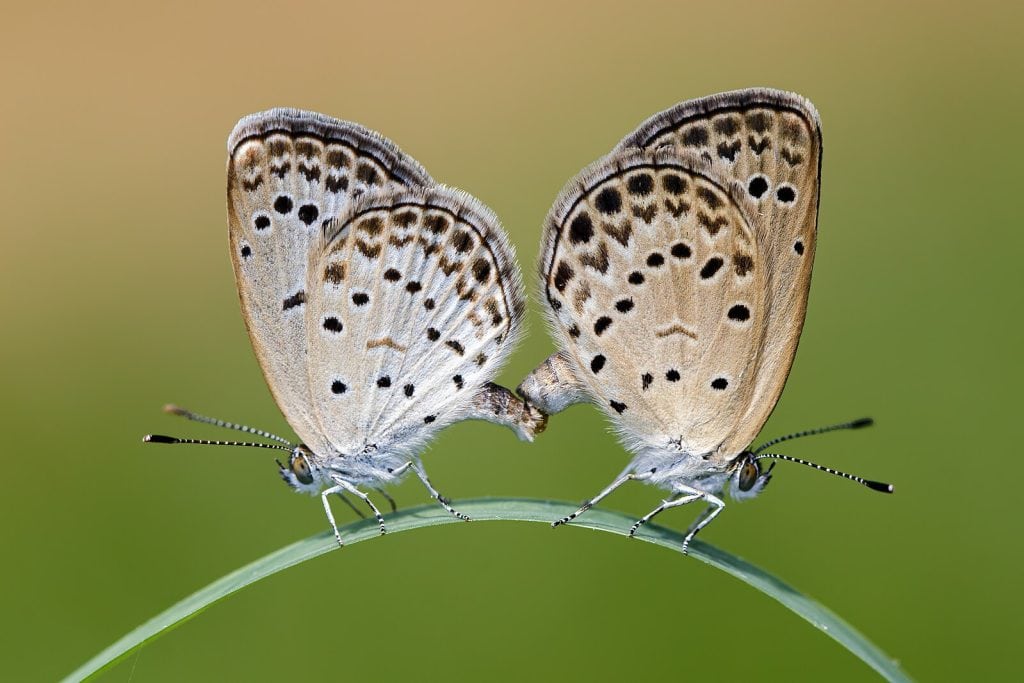
Female butterflies may mate with more than one male during the breeding season.
If the female is agreeable, she will join the male in his elaborate courtship dance. With their relationship now established, they will find a place on the ground or a perch and join the ends of their abdomens together. The male has a specialized clasping organ at the end of his abdomen to keep the female in place. The mating process can last anywhere between a few minutes and a few hours. The male will then transfer a spermatophore to the female’s body. The spermatophore contains sperm and nutrients that the female needs to fertilize and lay her eggs. These nutrients are so important to the mating process that the male will often spend extra time gathering food to produce a higher-quality spermatophore.
The female may mate with one or more partners per season, but the male, who will die a few weeks after mating, uses several strategies to ensure his sperm outcompetes those of his rivals. To prevent the female from mating with other males, the male may spray her with an off-putting scent. Some species can also plug the female’s reproductive opening to stop more sperm from entering. However, even after mating is completed, fertilization doesn’t occur immediately. The female can store the sperm inside a special sac called a bursa until she is ready to lay eggs.
How a Butterfly Lays Its Eggs
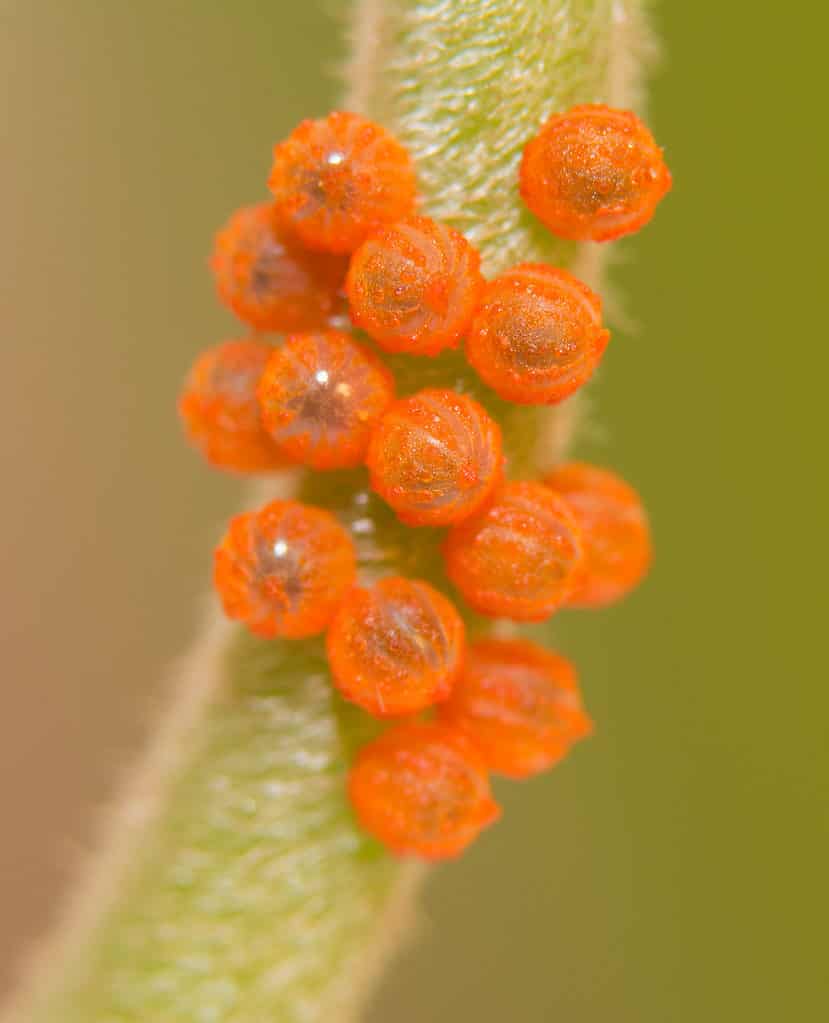
Butterfly eggs on a stem.
©Sari ONeal/Shutterstock.com
The egg-laying process can occur at any point between the spring and fall, depending on the exact species. The female butterfly deposits her eggs on a plant, which will provide a home and food source for the first stage of her offspring’s life.
To find a suitable plant, the female pays very close attention to the color, shape, and odor of the leaf. She must also consider the environmental conditions: too little moisture can cause the eggs to dry out, while too much can cause them to rot or develop fungus.
When she has found a suitable plant, the female fertilizes the eggs and then deposits them, either individually or in clusters, on the plant. A single cluster can contain hundreds or even thousands of eggs. The mother attaches the eggs to the leaf with a thin coating of wax and leaves them to develop on their own. Although the mother does not care for her offspring past this point, the eggs are protected from threats by a hard outer layer called the chorion.
Life Stages of the Butterfly
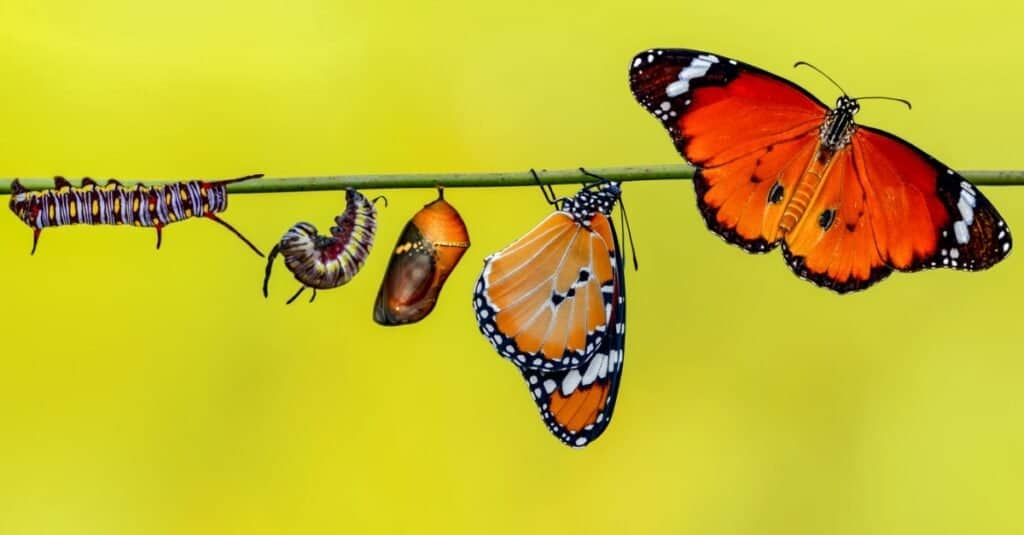
Caterpillars can sometimes grow ten times their size.
©iStock.com/Darkdiamond67
Once the young butterflies hatch from their eggs, they enter the larval stage, becoming caterpillars. The caterpillar’s sole purpose is to eat and grow as much as possible, sometimes reaching up to 10 times its initial size.
As it grows, the caterpillar sheds its outer layer four or five times. Each larval molt is known as an instar. Since this process can take several months, caterpillars sometimes enter a state of dormancy to survive the winter.
Once the caterpillar reaches its full size, it transforms into a pupa, protected by a chrysalis suspended from a branch or hidden from sight on the ground. This stage can last from a few weeks to as long as two years. As the butterfly transforms, specialized cells in the larva develop into the legs, wings, and eyes of the adult. When it finally emerges from the chrysalis, it is a fully developed adult butterfly, ready to mate in the spring and begin the reproductive cycle again.