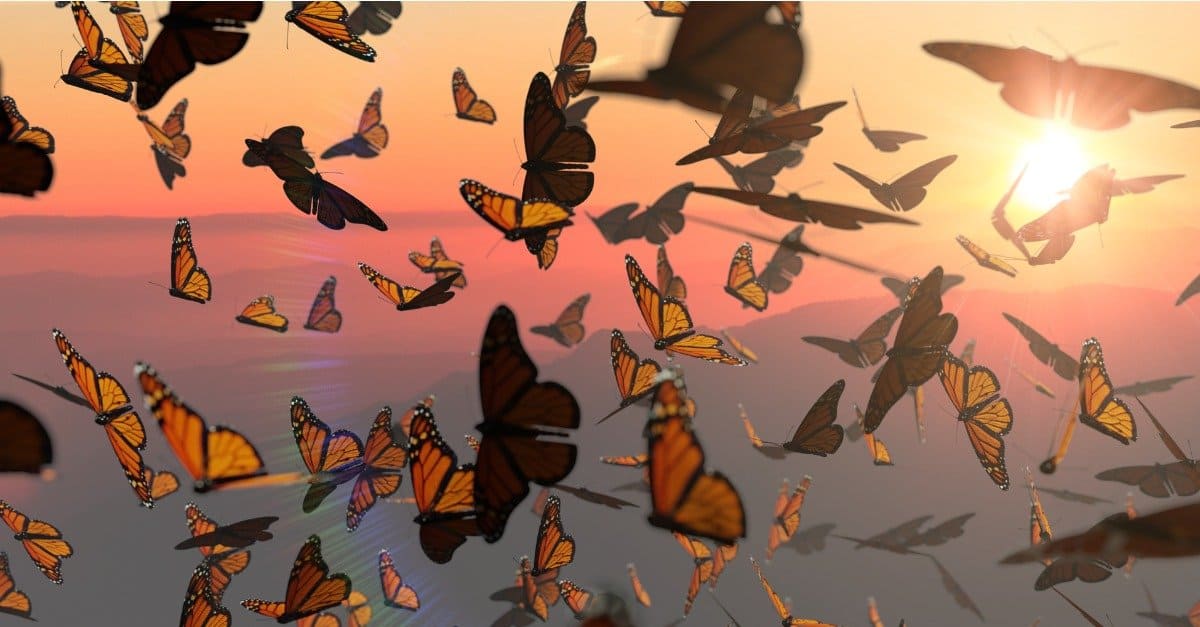

Whether you’re a butterfly fanatic or simply interested in nature, the monarch butterfly is worth a study. Beautiful and serene, monarch butterflies have a unique lifespan. But how long do monarch butterflies live, and what is their life cycle like from beginning to end? In this article, we will discuss what monarch butterflies experience, how long they live on average, and how unique their life cycles are when comparing different generations of monarchs throughout the year.
How Long Do Monarch Butterflies Live?
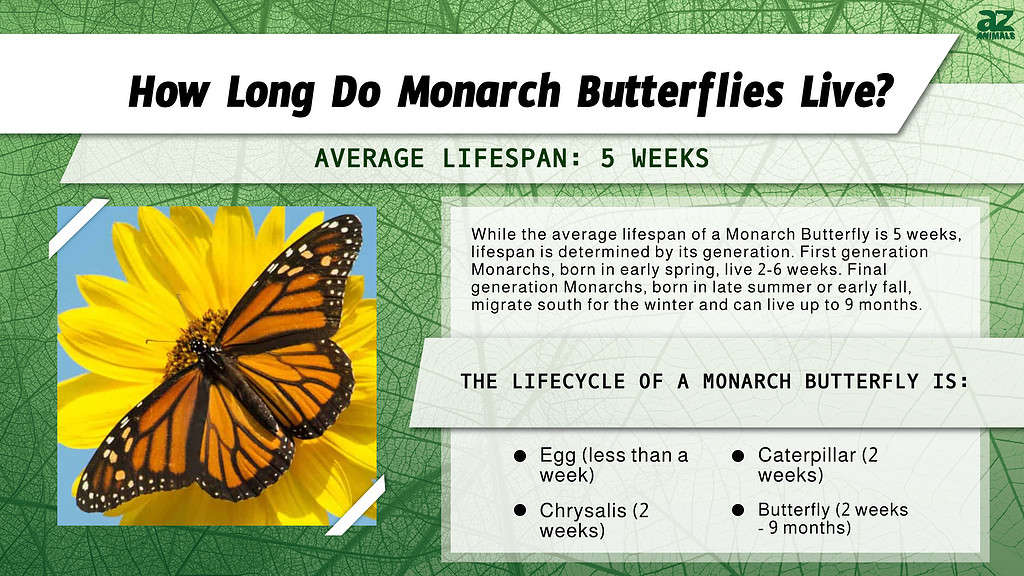
What is the average lifespan of a monarch butterfly? Monarch butterflies generally live for five weeks, with a range of two to six weeks during summer months, while migratory monarchs live for six to nine months. The final monarchs born during the year are usually born in late August or September, and these are the ones that migrate.
While migrating monarch butterflies can live longer in order to reach their warmer destinations and climates, this does not necessarily mean that they accomplish this. A migrating monarch is much more at risk of getting eaten by predators or dying while in flight. However, should a migrating monarch survive their perilous journey, it will hibernate and overwinter in warm locations. Then, they will begin the monarch life cycle all over again, mating and laying eggs in the early spring. Monarch butterflies are special for this reason. They are one of the few insects that migrate, and their lifespan changes based on when they are born in the year. Miraculously, the final generation of monarchs can survive significantly longer than the first generation of monarchs born that year.
The Average Monarch Butterfly Life Cycle
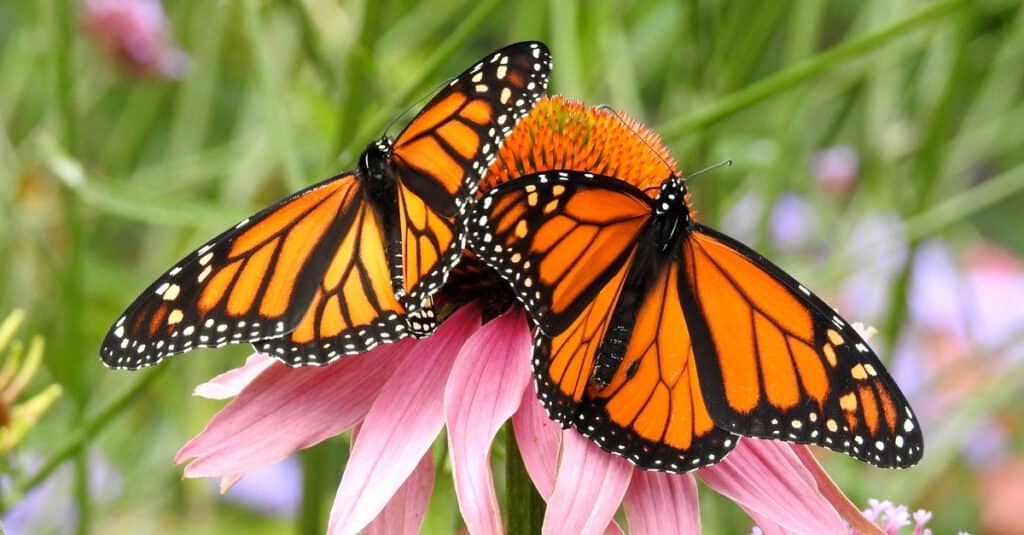
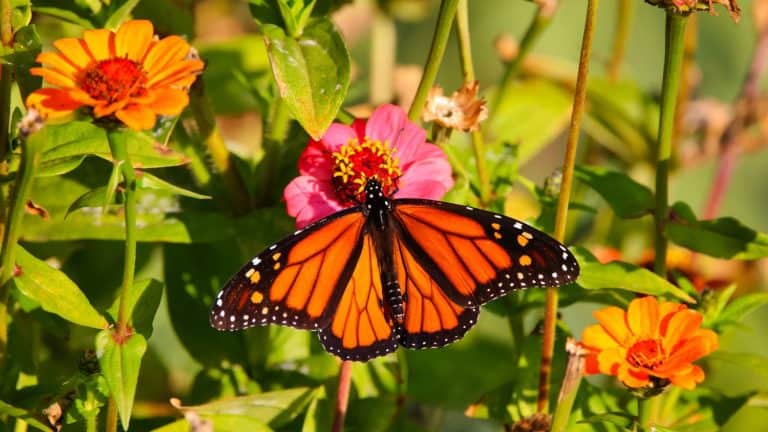
Monarch butterflies live for a matter of weeks during summer months, but migratory monarchs can live for 6 to 9 months.
©Kate Besler/Shutterstock.com
No matter what time of year a monarch butterfly is born, all of these beauties go through the same process. From egg to caterpillar to chrysalis, this is how a monarch butterfly is born!
Eggs
You will know a female monarch butterfly is getting ready to lay her eggs when you notice her on a milkweed plant. Milkweed is a monarch’s one and only food source, and monarchs will not lay their eggs on any other plant.
A female monarch lays only one egg at a time. However, she can lay as many as 300 to 500 eggs over a couple of weeks, although some may occasionally lay up to 700. These eggs are extremely small, white, and round. A monarch butterfly remains in its egg for less than a week before it emerges.
Caterpillars
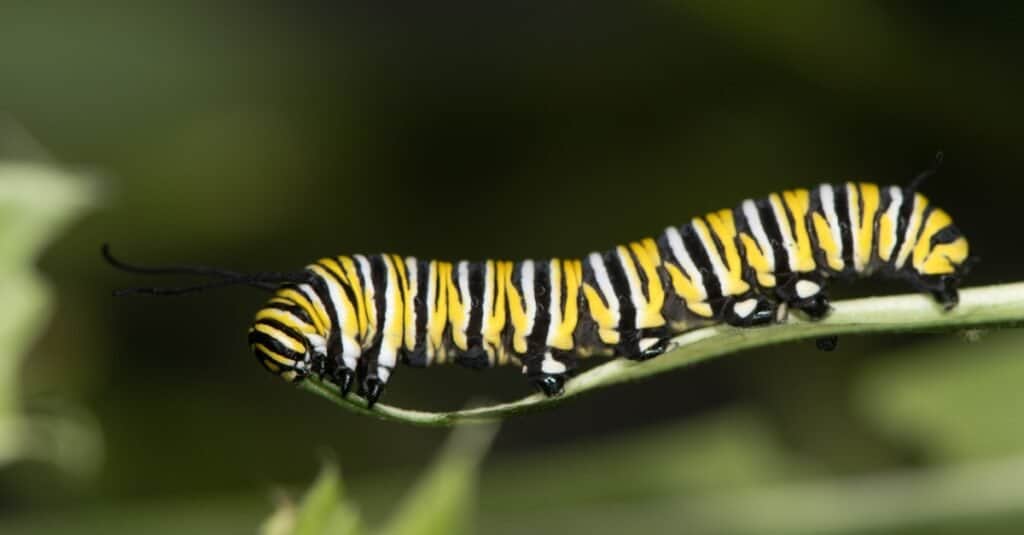
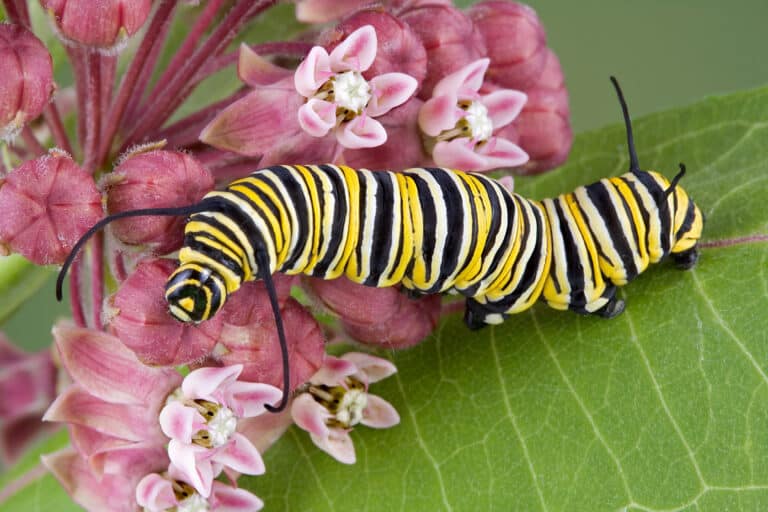
The monarch butterfly caterpillar has beautiful black, yellow, and white stripes along its body.
©iStock.com/Ian_Redding
Monarch butterfly caterpillars are in the caterpillar form for approximately two weeks. During these two weeks, the caterpillar goes through many molts and growth spurts. A monarch caterpillar will also be eating its body weight in milkweed over and over again.
Growing into a two-inch-long caterpillar takes time. A monarch will be constantly outgrowing its own body, molting and shedding its own skin three to five times to keep up with its changing body during its lifespan.
Once it has reached an adequate size, a caterpillar will find a safe and quiet spot to form its chrysalis. By now, it will be showing more of its classic monarch butterfly colors. The caterpillars are uniquely striped.
Chrysalis
Caterpillars form small green chrysalis on leaves and plants so that they can blend in. They are in this protective form for approximately two weeks, much like their caterpillar stage. You will know a monarch butterfly is about to emerge from its chrysalis when the color shifts from vibrant green to dark brown.
Monarch butterflies are unique in their chrysalis form, as they form golden dots around the outside of it. Scientists are baffled by this behavior, but some speculate that these dots are not decoration, but are ways for the butterfly to get oxygen while in their chrysalis.
Butterflies
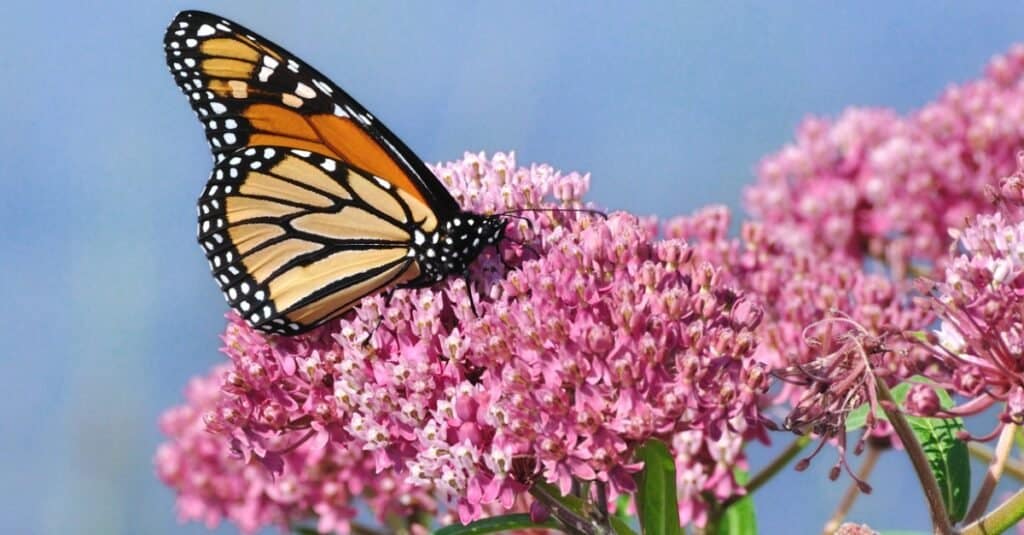
Milkweed is the only plant that monarch caterpillars use as a food source.
©iStock.com/herreid
Adult monarch butterflies hatch with their wings folded and damp. They will need some time to dry off and get used to having wings. Once dry, female monarchs are ready to reproduce, though males will need some more time to adjust — about a day or two.
Butterfly adults are characterized by their scale-covered wings. These scales give butterflies their colorful wings. They are pigmented with melanin, which gives them different colors of blacks and browns, as well as uric acid, which gives them yellows, blues, greens, and reds. These iridescent colors are created by structural coloration produced by something called micro-structures of hairs or scales.
However, once male and female monarchs are ready, they mate. Monarchs can mate multiple times during their lifespan, leading to more eggs and more generations of monarchs.
Lifespan of a First-Generation Monarch vs. a Last-Generation Monarch
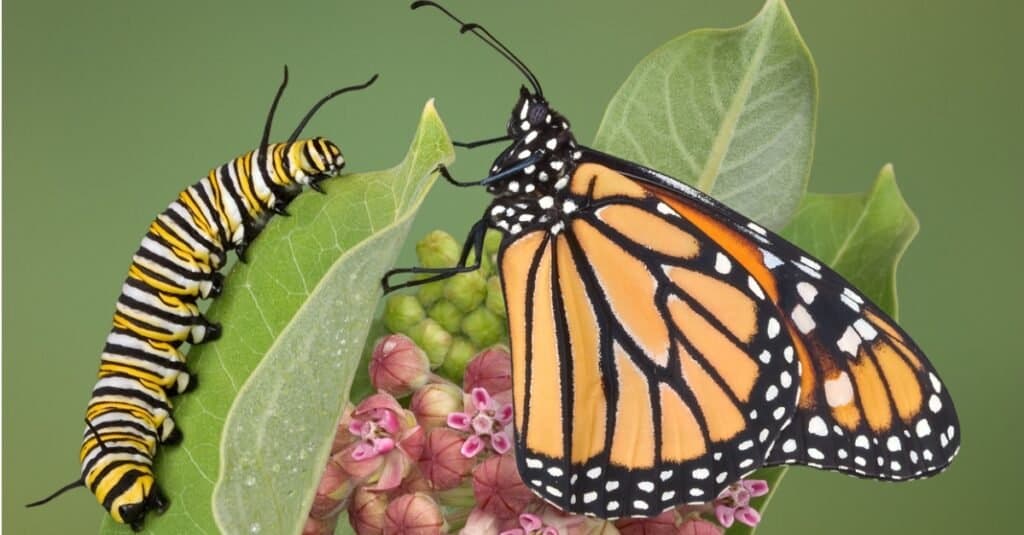
Migratory monarch butterflies live for longer.
©Cathy Keifer/Shutterstock.com
The biggest factor affecting how long monarch butterflies live isn’t predation or weather — it is the generation in which they were born. A first-generation monarch butterfly has a much shorter lifespan than a monarch born in the final generation at the end of the year.
First-generation monarchs are usually born in early spring, such as February or March. These butterflies are born after the generation from the previous year has migrated back north.
These monarchs lay eggs in the springtime and are likely to live an average of two to five weeks. The next generation is born, and the cycle continues. A monarch flock will likely have three to five generations in a year, and the final generation born has a great responsibility.
The final generation of monarchs in a year, usually born toward the end of summer and beginning of fall, has an important task. They will fly south for the winter, much like birds do. They will overwinter in central Mexico (for eastern monarchs) or along the California coast (for western monarchs).
This is why the final generation of monarchs lives so long. They spend much of their time in flight and hibernating, waking up in the spring to fly north and begin the life cycle all over again. No matter the generation, monarch butterflies live impressive lives, though.