
Uh-oh, was that a brown recluse spider that just scurried across the floor? In the wild, brown recluse spiders are a valuable part of the ecosystem. They’re remarkable nocturnal hunters who help control small bug populations, eating pests like mosquitoes. But when these spiders choose to start hunting the bugs in your house, it can be cause for alarm. A brown recluse bite is a serious matter, and left untreated can develop into a serious medical problem. In this article, we’ll explore what brown recluse spiders look like and how to get them out of your house for good.
What’s the Best Way to Get Rid of Brown Recluse Spiders?
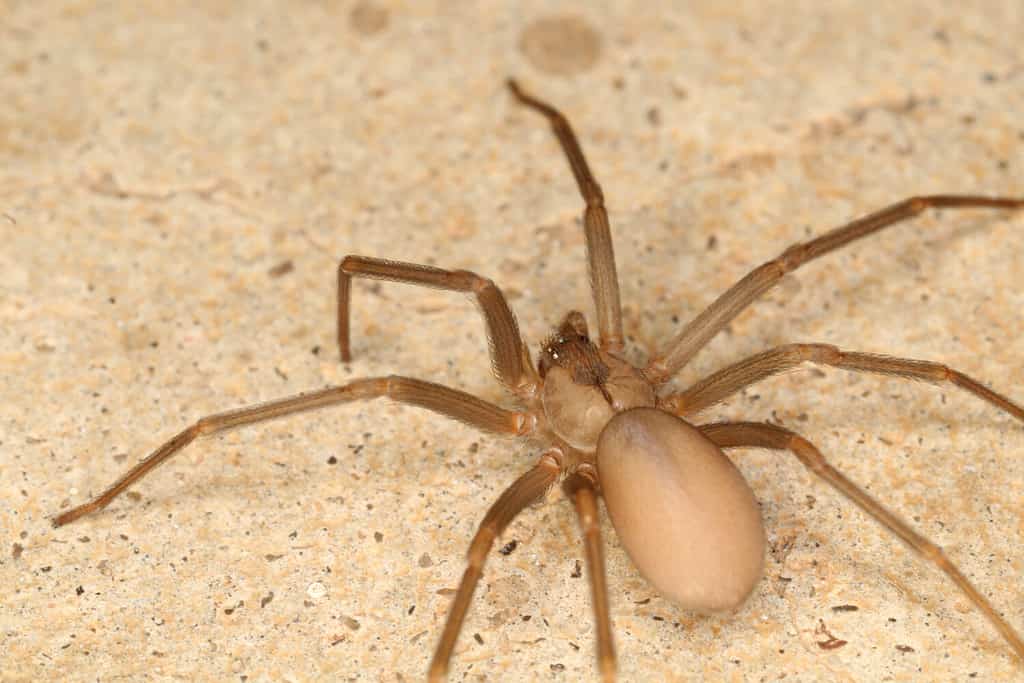
Removing hiding spaces and using insecticides can help rid your house of brown recluse spiders.
©Nick626/Shutterstock.com
Insecticides are one of the fastest methods for ridding your home of brown recluse spiders. Next, remove all hiding spaces. If the spiders don’t have a place to live, they’ll start looking for somewhere else to go. You should also seal gaps and cracks, paying special attention to areas around windows, doors, and foundations.
To handle spiders who won’t leave, sticky traps are a non-toxic and effective way to catch brown recluse spiders. Place these in corners, behind furniture, and in other secluded areas. If the problem persists, consider hiring a professional pest control service. These experts have the right tools and knowledge to handle a brown recluse infestation safely and effectively.
Finally, take preventative measures to keep spiders out. Since brown recluse spiders prefer darkness, consider installing lights in your basement, attic, or other dim areas. Bright, warm lights can deter these spiders from hunting in these places.
Where Spiders Hide
Does your home have places for brown recluse spiders to hide?
Here’s a checklist of hiding places brown recluse spiders might hide:
- Under logs and rocks in your garden or backyard.
- In the stack of firewood for your fireplace or wood-burning stove.
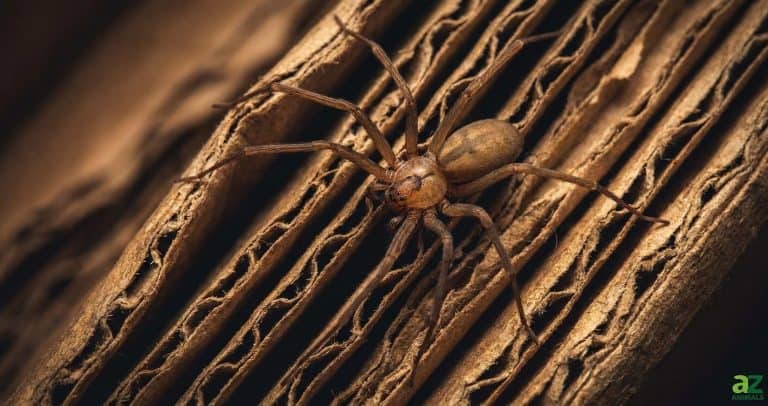
- Inside cardboard boxes stored in attics, basements, or closets.
- In old clothes or shoes that have been left undisturbed for a while.
- Among the clutter in storage areas like garages, crawl spaces, and storerooms.
- Within bedding materials, especially if they’re tucked away for long periods.
- Inside furniture, such as the corners of couches, chairs, and tables.
- In dark, rarely accessed corners of bedrooms or closets.
- Behind picture frames or paintings hung on walls.
- Hiding in the recesses of heat tunnels, boiler rooms, or commercial buildings.
Remove piles of debris, wood, and rocks from your garden. Store firewood off the ground and as far from your home as possible. Clean up any cluttered areas, making your old boxes, shoes, and unused clothes the perfect hiding places. Consider using plastic bins with secure lids for storage instead of cardboard boxes, as the spiders are fond of the latter. They have a particular fondness for cardboard, since it resembles rotting tree bark, which attracts them to nest in storage areas.
How to Tell if You Have an Infestation
How can you tell if you have a brown recluse infestation or if seeing the spider was an isolated occurrence? True to their name, these spiders are reclusive. The elusive brown recluse spider is known for its preference for dark and undisturbed hiding places, making them difficult to spot. To determine if you have a single spider sighting or an infestation, look for clues.
Start looking for signs of other spiders. The first sign of a brown recluse infestation is the presence of webs, although they are usually hidden inside clutter or hiding in corners and crevices. Other signs include spotting egg sacs. Brown recluse egg sacs resemble white berries covered with silk. Are there decreased flying insects? Brown recluses love eating mosquitoes. Seeking professional help may be necessary for more severe infestations.
What Attracts Brown Recluse Spiders?

Brown recluse spiders are attracted by prey, like silverfish.
©eleonimages/Shutterstock.com
What attracts brown recluse spiders in the house? Food and hiding spaces. The brown recluse is an active hunter, their primary food source is small bugs, and sometimes they scavenge for dead bugs. At night, both male and female brown recluse spiders leave their webs to hunt for food. They primarily feed on other spiders and freshly killed or dead insects such as mosquitoes, silverfish, flies, roaches, moths, and other small bugs. They also occasionally, they may also feed on other arachnids and spiders.
What Does a Brown Recluse Look Like?
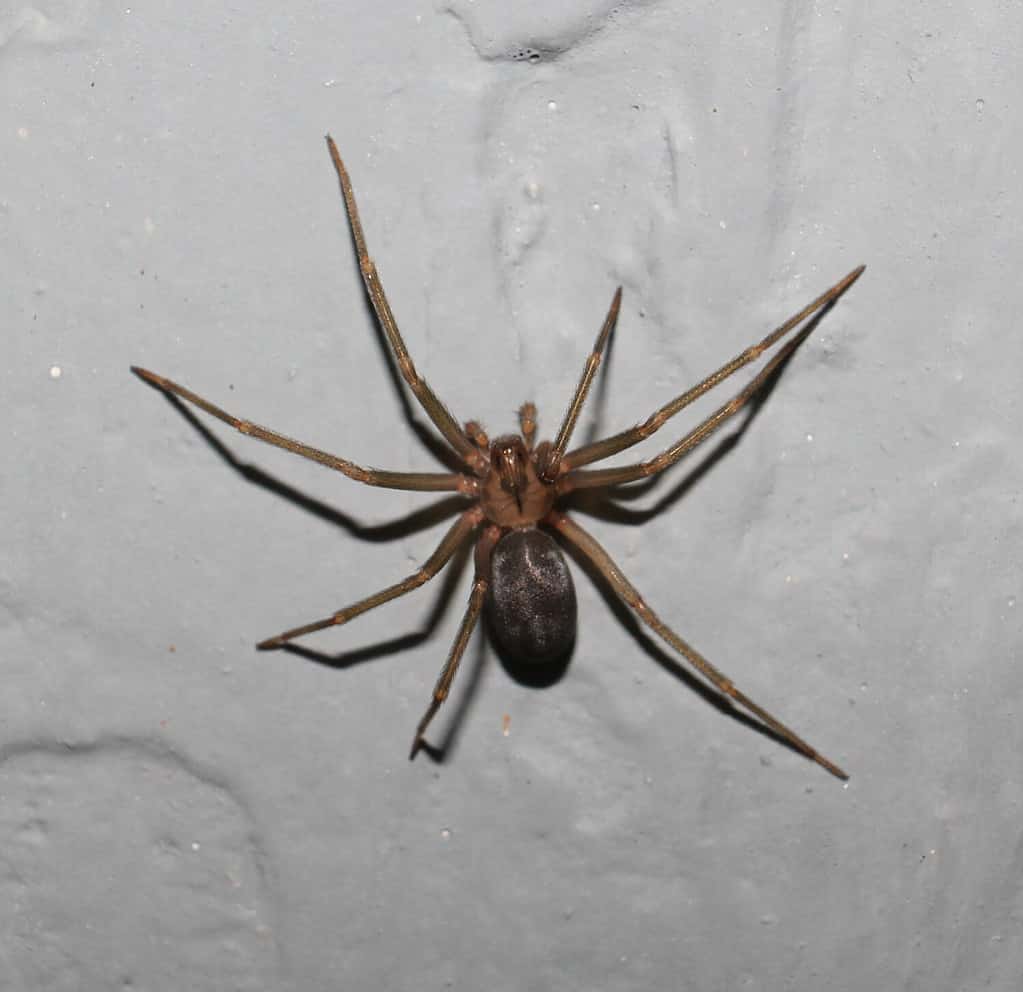
The brown recluse is a small brown spider.
©Keith Davis/Shutterstock.com
The brown recluse is small, brown, and reclusive. They measure less than ½ an inch in body size, with a leg span of up to an inch. Their common body size is ¼ inch. Adults are most frequently seen during the spring months and have a dark violin-shaped mark on their back. The neck of the violin points toward the abdomen, or rear, of the spider. This spider is most widespread, living in the southcentral Midwest from Nebraska to Ohio and south from Texas to Georgia. Let’s look at some fast tips so you can identify a brown recluse within seconds.
Fast Identification Tips
Know what type of spider you’re dealing with. Here are a few ways you can identify a brown recluse:
- 6 eyes
- Violin marking
- Brown all over
- Hairy legs, no spines
- Nontraditional web
- Commonly body size ¼ inch
- Legs can be up to 1 inch long
Six eyes, violin mark, one color, hairy legs, hidden web, small in size — that’s the brown recluse. Identifying a brown recluse involves checking for a violin-shaped marking on its back, uniform tan to dark brown coloring, and a distinct U shape 6-eye arrangement.
Leg Hairs
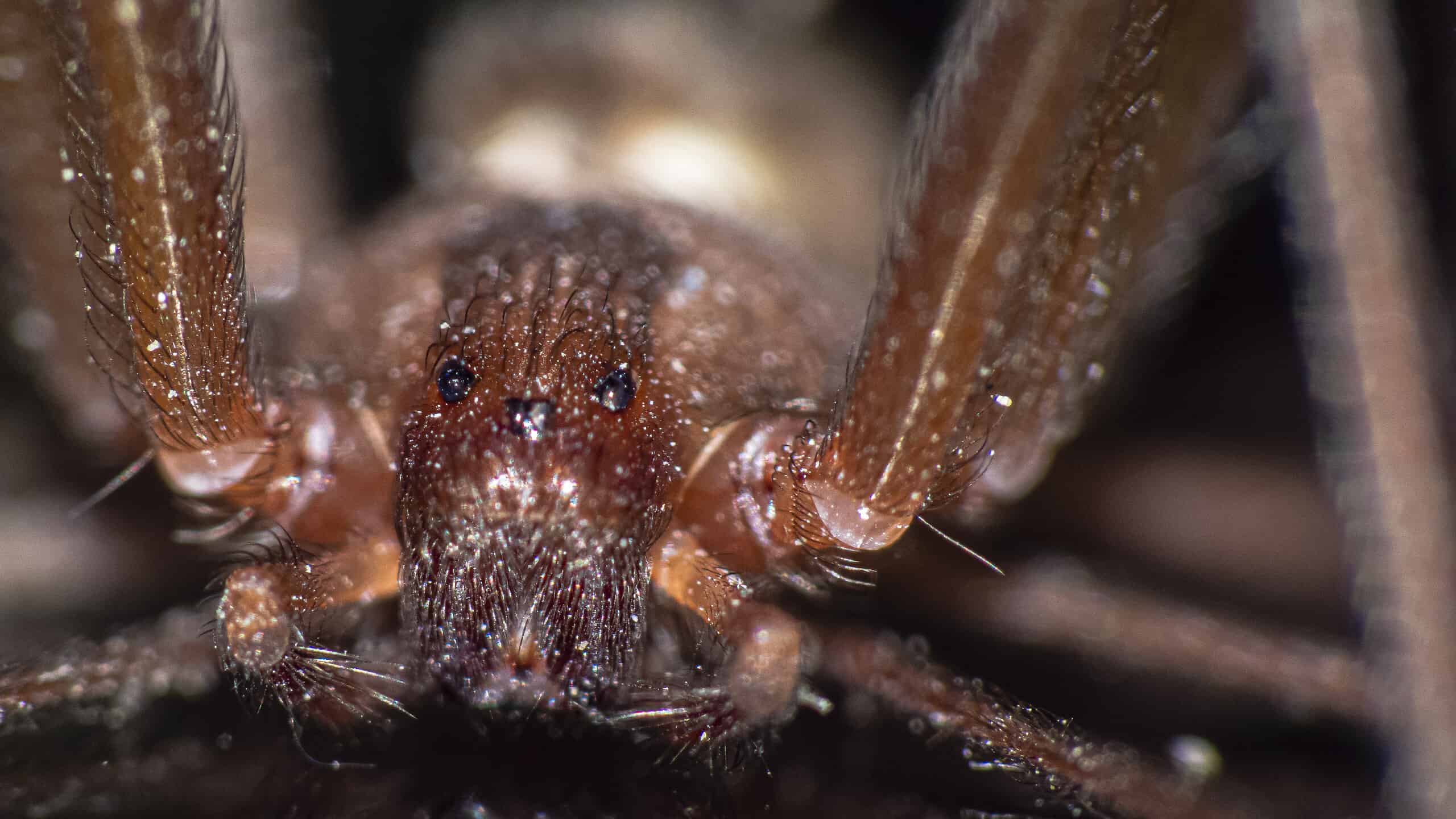
Seeing the six eyes without magnification can be tricky, but sometimes the leg hairs are more visible. Brown recluses are hairy but don’t have spines. The woodlouse spider is sometimes mistaken for the brown recluse. But a closer look shows they don’t look much alike at all. Spitting spiders look a lot more like brown recluse, but they have a different eye pattern.
6 Eyes
Unlike most spiders, brown recluses only have six eyes, organized in pairs. The pairs sit in a horseshoe-like shape on the front and sides. A magnifying glass might help spot this feature. Look for a dark violin-like pattern on the spider’s cephalothorax. The legs and abdomen of the brown recluse are uniformly colored, ranging from light to dark brown. There are no stripes, bands, or changes in pigmentation on their abdomen.
Small Size
As for brown recluse size, these spiders are fairly small, usually less than ½ an inch long, with a leg span of up to an inch. A common body size is ¼ inch.
Off-White Web
A brown recluse web is usually hidden in a dark space or corner. Common web locations include wall corners, crawl spaces, crevices, or near vents in homes. The strands of their web have this interesting off-white color. This is because brown recluse spiders use these protein-based silks, which they release from special organs called spinnerets. The brown recluse doesn’t use its web to catch food. Sometimes, food gets stuck there, which becomes a happy accident for the spider. For regular meals, the brown recluse goes out on a nightly hunt. Adults have small but sharp fangs that can penetrate their prey’s bodies.
Symptoms of a Brown Recluse Bite
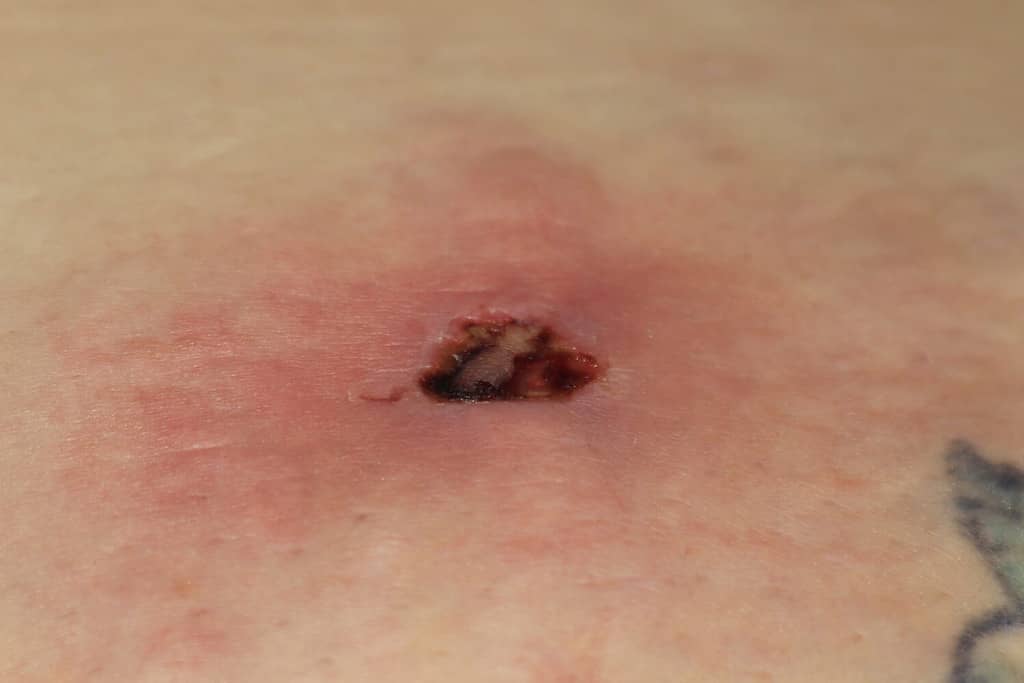
Within 24 hours, a brown recluse bite can change color and develop an ulcer.
©Robert D Brozek/Shutterstock.com
What does a brown recluse bite look like? At first, it can appear as a red area with two small puncture holes. Sometimes the center is white. After a few hours, the area around the bite becomes red, itchy, and inflamed. Within 24 hours, the bite may turn bluish or purple and develop an ulcer; skin death is likely if symptoms worsen. Sometimes, after a few days, an ulcer forms in the center of the bite, which can break down into a deep wound. It’s common for bites to heal within three weeks, leaving behind a thick, black scab. Brown recluse spiders have necrotic venom, which can cause severe symptoms. Put your safety first. If bitten, seek medical attention. Even if the bite doesn’t seem severe, reach out to a doctor for advice.
When Are Brown Recluse Spiders the Most Active?
How common are brown recluse spiders? It depends on where you are and when it is. During the day, brown recluse spiders prefer to stay hidden and rest in dark places. They seek warm and secluded areas like basements, attic spaces, crawl space corners, wall voids, garages, and storage sheds. Infestations are more common during warm seasons, specifically March to October. Brown recluse spiders become more active as they search for new shelters with abundant food supplies. They’re especially fond of areas with small flying insects that start emerging as warmer weather rolls in. They feed on insects like mosquitoes and flies and aren’t aggressive toward humans but will bite to defend themselves against a perceived threat.