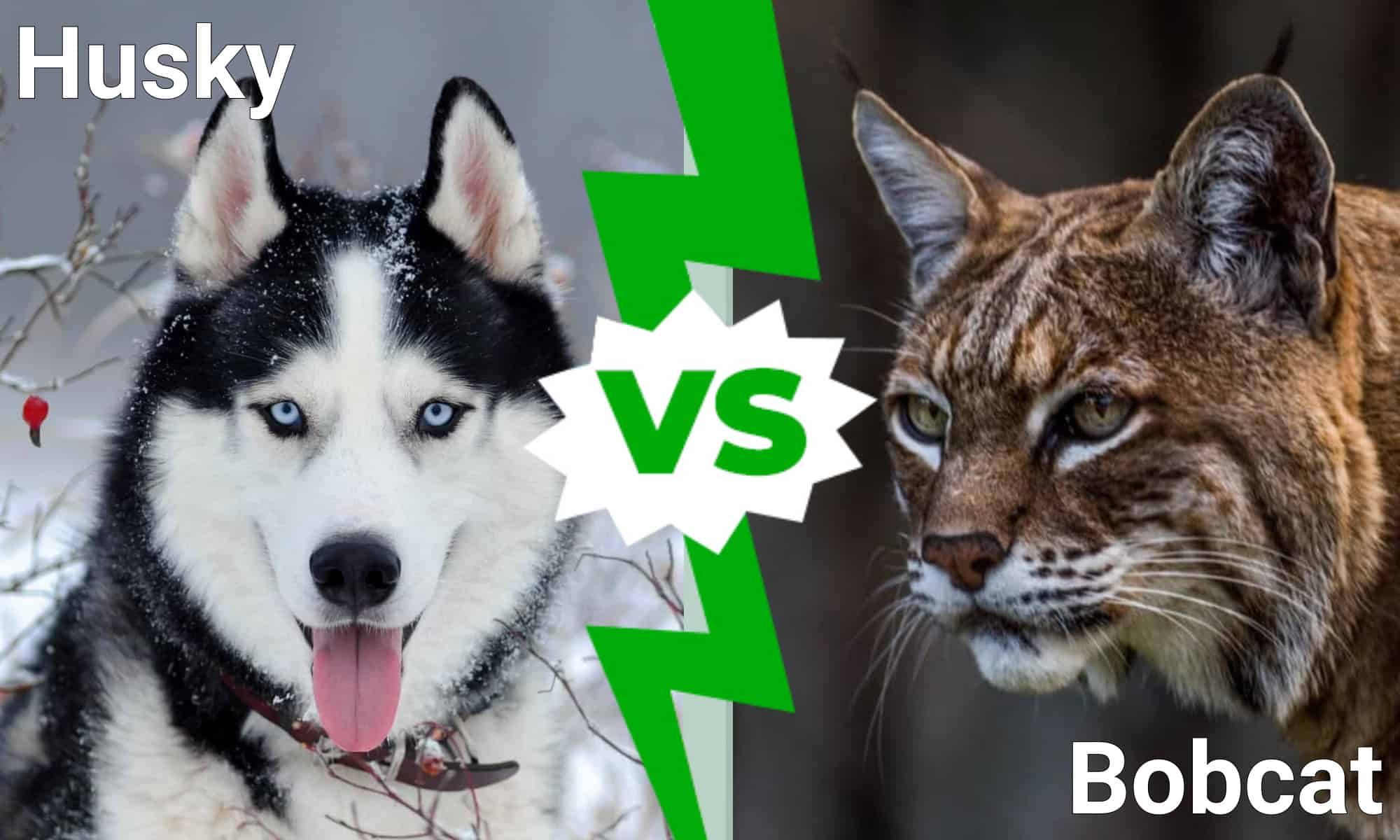

Huskies are best known for being working dogs raised in Siberia that were introduced to the United States as early as 1909 in Alaska for dog races and to serve as a means of transportation to remote villages. These dogs are known for their tenacity and friendly nature but are strong and resilient, able to defend themselves and their packs in times of danger. Unlike huskies, bobcats are predominately wild cats in various regions throughout the United States.
These carnivorous predators are stealthy and nocturnal, rarely visible to humans and prey. While huskies are mainly domesticated and bobcats live in the wild, their differing lifestyles are not a fair assessment of who would win in a fight. Bobcats may be small and aggressive, but huskies are much larger and calculated, making a clear victor much more difficult to determine. Keep reading to find out whether a bobcat or a husky would win in a fight based on indicators such as size, temperament, and strength.
Husky vs. Bobcat Comparison
| Husky | Bobcat | |
|---|---|---|
| Size | One-and-a-half to two feet tall | One-and-a-half to two feet tall |
| Weight | 35-60 pounds | 11 to 30 pounds |
| Lifespan | 12-14 years | 10 to 12 years |
| Diet | Omnivores: eat high protein kibble with chicken and fish as well as some fruits and vegetables | Carnivorous: eats small game such as salmon, rabbits, mice, birds, and even animals as large as deer |
| Temperament | Friendly, intelligent, determined, and independent | Shy around humans, solitary, aggressive when threatened |
| Bite Force | 320 psi | 800 psi |
Overview: Husky
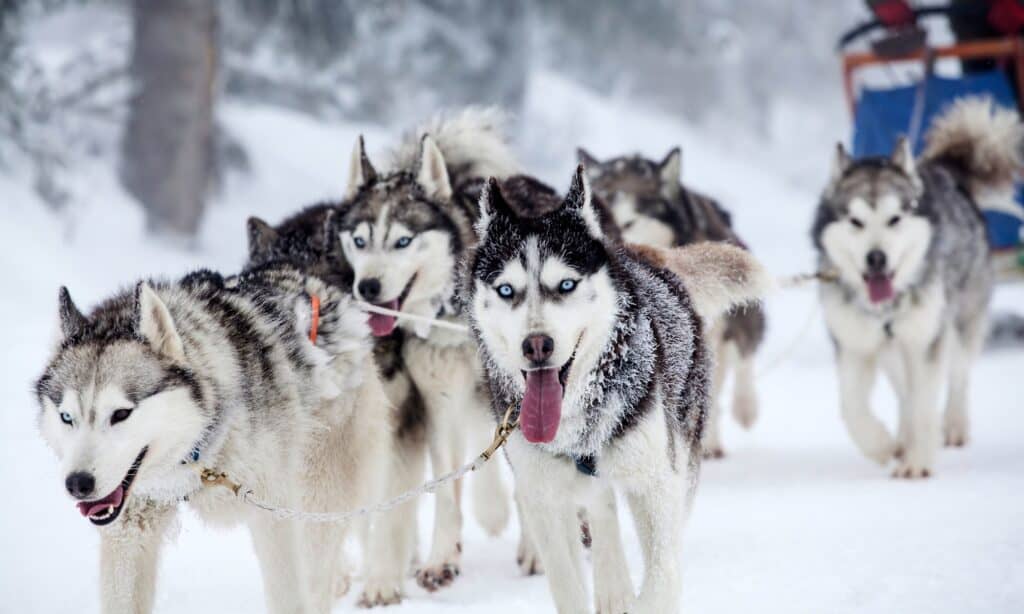
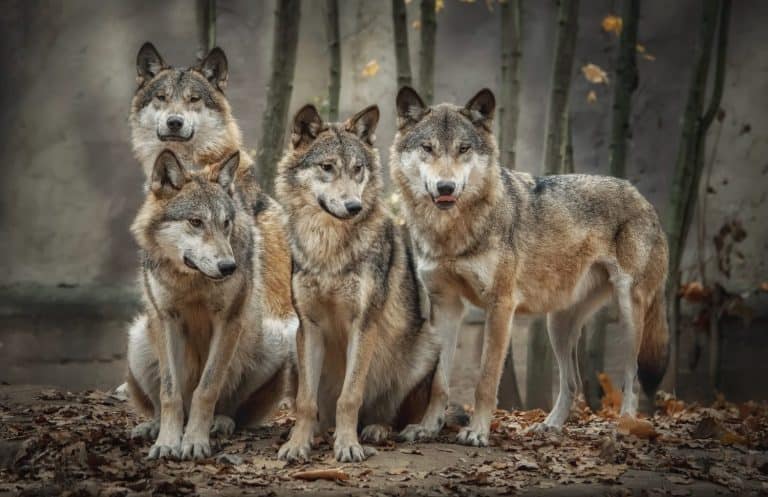
Huskies are identified by their gray, black, and white fur, and have a strong resemblance to wolves.
©iStock.com/8213erika
The Siberian husky was raised as a working dog by the Chukchi people, regarded for the dog’s companionship and ability to carry sleds over long distances in packs. After being brought to Alaska in 1909 for dogsled racing, the Siberian husky quickly gained popularity, becoming famous after saving a small Alaskan from a diphtheria outbreak by racing almost 700 miles through freezing conditions to deliver a cure. It belongs to a subgroup of Nordic sled dogs called the Spitz family, and is classified as a member of the working group.
Size and Appearance
Huskies are one of the largest domesticated dog breeds, standing as tall as two feet and weighing up to 60 pounds. They are identified by their gray, black, and white fur, and have a strong resemblance to wolves. Huskies sometimes have markings adorning their head that resemble a kind of mask or cap. These dogs have dense coats with plenty of fur to shield them from harsh winter temperatures and have bushy tails that curl upwards as they are walking and running.
Temperament
Domesticated huskies are known for being friendly and docile, requiring lots of active playtime and exercise. They are fairly independent creatures, however, they get along well with other dog breeds and house pets. While Siberian huskies had to hunt for prey in order to survive in the wild, they are not classified as good guard dogs.
Their sustenance in the wild consisted mainly of small animals and plants, meaning they never developed a need to defend themselves or fight off predators due to their large size. Because of this, huskies lack a certain territorial, defensive nature present in other dog breeds, making them amicable and lacking in aggression.
Overview: Bobcat
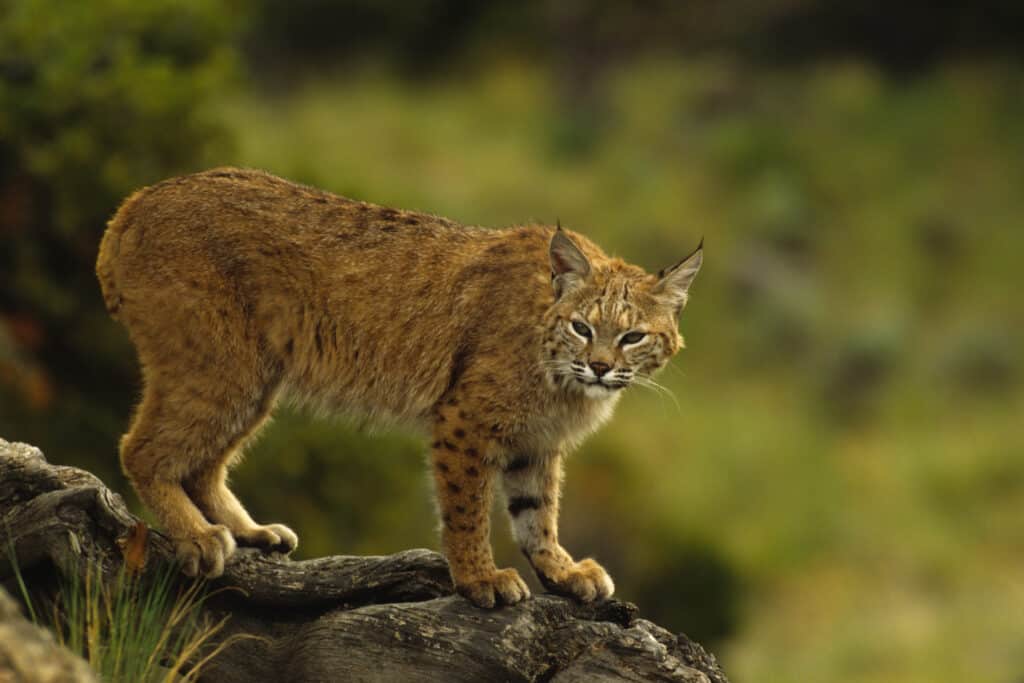
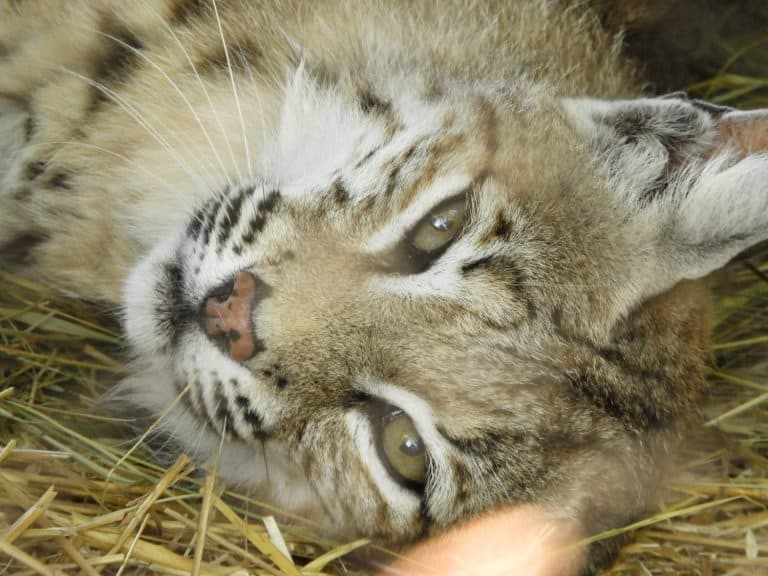
Bobcats are roughly half the weight of a husky, reaching a maximum weight of around 30 pounds.
©iStock.com/twildlife
Bobcats are found in many areas and different ecosystems around the United States, populating forests, suburban areas, deserts, and grasslands. The wild predator is a subspecies of the lynx and is around twice the size of a normal house cat. They can live up to 12 years in the wild, stealthily hunting for small prey during the nighttime and resting during the day. The cat is native to the Americas and traces back to the stories of indigenous tribes inhabiting various areas centuries ago.
Size and Appearance
The bobcat is much smaller than the husky, weighing as little as nine pounds and reaching a maximum weight of around 30 pounds, which is still just half of the husky’s weight. Bobcats are covered in a brown coat with a hint of red and are decorated with black and dark brown stripes. They have light-colored fur on their undersides and white tufts of fur that stick out at the tips of their ears. Their coats allow them to camouflage themselves with the various environments they inhabit, shielding themselves from both predators and prey. They have long legs that can carry them up to 30 miles per hour and allow them to jump to heights of around six feet and 12 feet in distance. Bobcats can be distinguished from other lynx subspecies by their abnormally short tails.
Temperament
Bobcats are independent, territorial animals. They mark their territories with their scents, and males can roam areas of up to 40 square miles, threatening any predators that dare to disturb their hunt. These cats are nocturnal, traveling up to seven miles each night to stalk and silently kill their prey. Known for being incredibly shy and elusive, bobcats blend in with their surroundings and are difficult to spot, especially during the daytime when they are resting in hollow trees and rock crevices.
While these animals are mainly silent, they have recognizable screeching noises that they make during mating season in order to attract a fellow bobcat to reproduce. Bobcats are not overtly aggressive creatures, but when they feel threatened they are known to lash out, using their sharp teeth and claws to inflict serious damage on the attacker and neutralize the threat.
Husky vs. Bobcat: Who Would Win in a Fight?
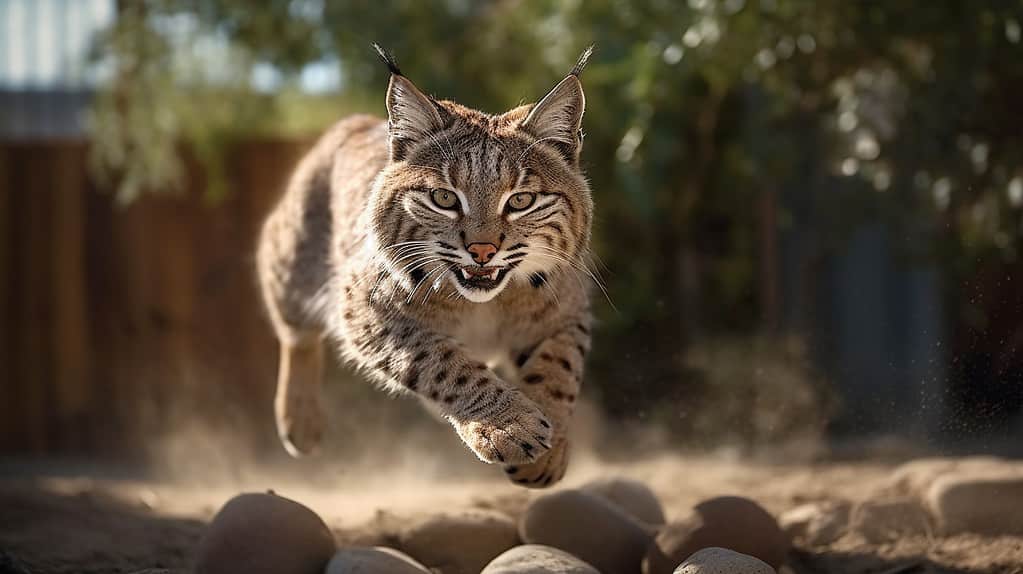
After learning about the characteristics and behaviors of both of these animals, it is now time to see which would come out victorious should a conflict between the two arise.
The first thing to consider between the two species is size. While a fight between a husky and a bobcat would be a fairly even match, the husky is significantly larger than the bobcat. This would allow the husky to pin down the bobcat during a fight, suppressing it with its weight and allowing it to win in a fight by asserting its strength and power over the bobcat.
Both animals can reach speeds of up to 30 miles per hour, however, the bobcat is significantly smaller than the husky and therefore more agile. While the husky may be able to overpower the bobcat due to its weight advantage, the bobcat’s small size and agility would allow it to skillfully dodge the husky’s advances and deliver blows of its own. In addition, the bobcat’s long legs compared to the rest of its body would allow it to jump on top of the husky quickly, preventing the husky from pinning the bobcat down and winning the fight.
Second to the bobcat’s agility comes its territorial nature. Huskies are very domesticated dogs known for their friendliness and gentle nature, making them bad guard dogs. On the other hand, many bobcat attacks have been reported after the cat has felt threatened or disturbed, showcasing just how aggressive and lethal it can be. Without territorial or defensive instincts, it is likely that the husky would not be able to hold its own in a fight against a bobcat, allowing the wild animal to attack without much resistance from the husky.
Husky vs. Bobcat: Final Thoughts
Finally, the bobcat has a bite force of around 800 psi, which is more than double the bit force of the husky. This means that for each attack, the bobcat would be dealing significantly more damage from bites to the husky than the dog would be able to reciprocate, causing the husky to ultimately lose in a hypothetical fight between itself and a bobcat.