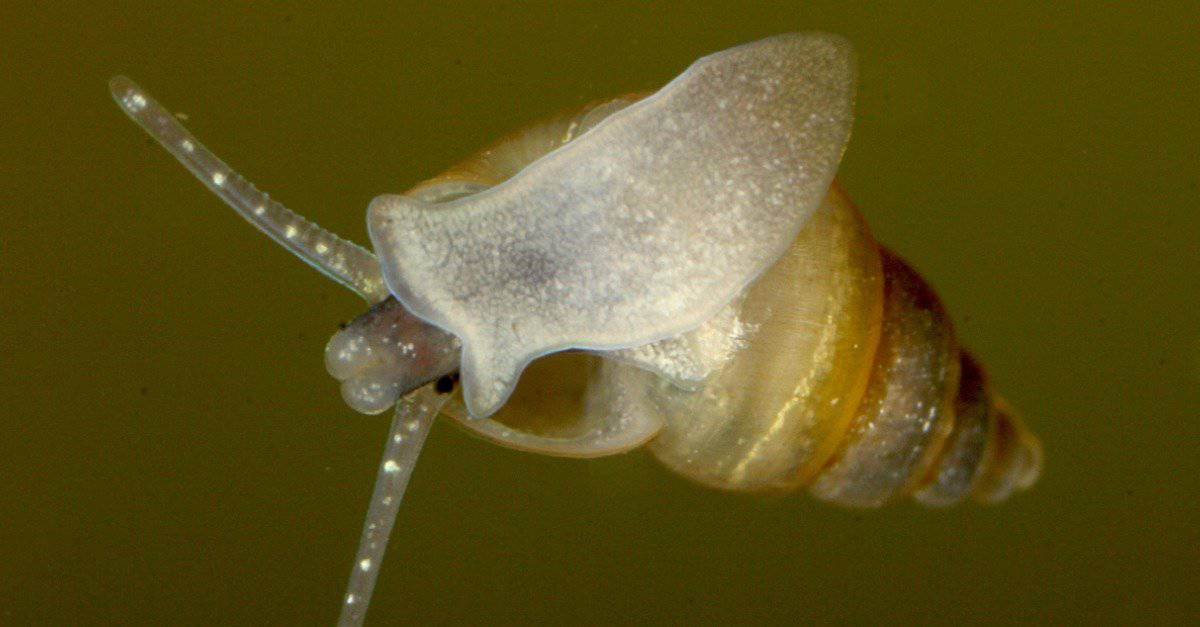

Although this tiny, invasive snail has been in the United States for over three decades, it’s the first time anyone has detected it in California’s Lake Tahoe. A news release from the California Department of Fish and Wildlife (CDFW) announced an invasive species, the New Zealand mudsnails (Potamopyrgus antipodarum) were detected in Lake Tahoe. This invasive species found in California is extremely small and difficult to detect.
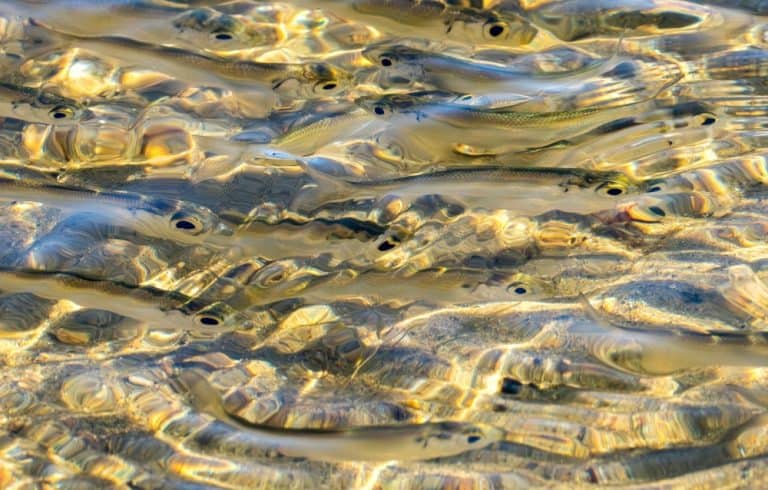
Although they are about the size of a grain of rice, the snails are harmful to the ecosystems of freshwater lakes and rivers. The snails reproduce rapidly, gobbling up the food resources. When the snails are present, other populations of aquatic insects may be reduced, including insects that trout and salmon rely upon for their diet.
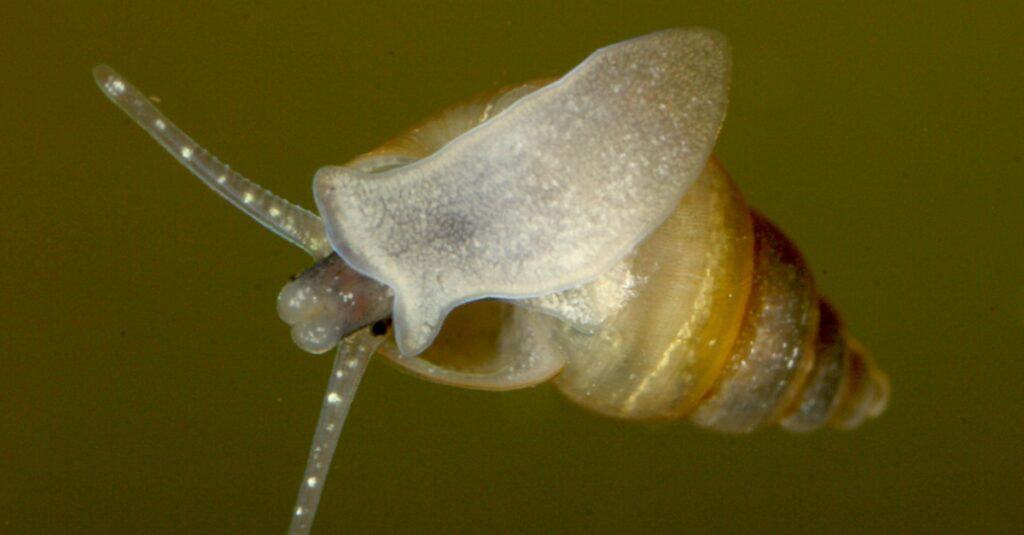
The New Zealand mudsnail is native to New Zealand but poses a risk to ecosystems around the world as an invasive species.
©iStock.com/Heather Broccard-Bell
Regarding the specimens found at Lake Tahoe, Colin Purdy, Environmental Program Manager for CDFW’s North Central Region stated in the release, “This is a significant detection and one we’re treating with the utmost seriousness and urgency to determine the extent of the infestation and prevent any further spread within the Lake Tahoe watershed.”
The Lake Tahoe Regional Planning Agency released a bulletin stating climate change is causing alterations in Lake Tahoe’s native ecosystem, allowing new invasive species, such as the New Zealand mudsnail to thrive.
Officials recommend the following steps to prevent the further spread of the New Zealand mudsnails in Lake Tahoe:
- Clean, drain, and dry water gear, toys, kayaks, and boats after leaving the water to avoid transporting the invasive species.
- Anglers should clean all fishing gear when leaving the water.
- Be careful not to bring water, debris, or plants with you when you leave the recreational area.
How to Spot New Zealand Mudsnails
New Zealand mudsnails are tiny snails that live in freshwater. They have an elongated right-handed coiling shell with five to six whorls, although it can get up to eight. Their shells are gray or light to dark brown.
When Did New Zealand Mudsnails First Arrive in California?
The snails were first spotted in the United States in 1987. They were discovered living in Idaho in the Snake River. By 2000, they had reached California and were found in the Owens River. Since then, the invasive species of snail has spread throughout the country. It now lives in waterways throughout the Western U.S. and the Great Lakes region.
Why Are New Zealand Mudsnails So Problematic?
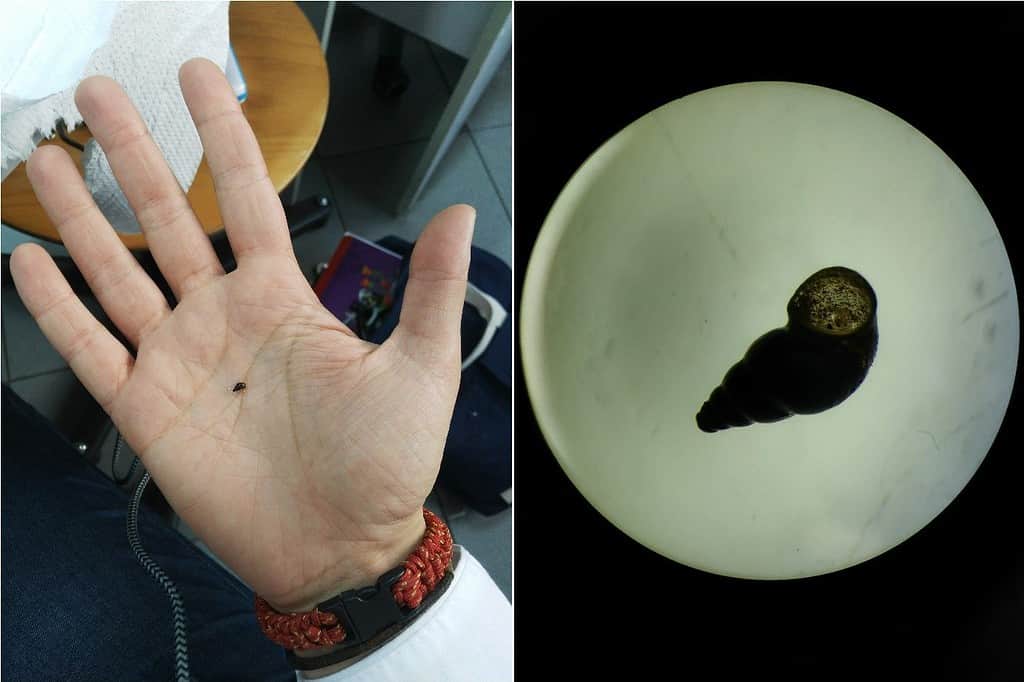
The tiny New Zealand mudsnail can be hard to detect.
© Sylwia10 / CC BY 4.0
The invasive species reproduces rapidly and takes over ecosystems. The snails are ovoviviparous, meaning they produce eggs, but the eggs develop inside the female’s body and the snail releases live young, not eggs. The offspring are genetically identical females that asexually reproduce. The females can give birth to 230 new females each year. One snail and its offspring can result in over 2.7 billion snails in only four years.
The large population of snails can consume half of the resources in a lake, river, or stream, threatening native aquatic ecosystems. Further, when fish eat the snails, they can’t digest them. The snails pass through the fish’s digestive system without providing any nutrients, leading to starvation for the fish.