
Killer whales, also known as orcas, are easily recognized by their stunning black and white appearance. These huge animals can reach up to 26 feet long and are actually the largest members of the dolphin family, despite more commonly being known as whales. However, unlike dolphins, killer whales are apex predators that prey on a wide variety of larger marine animals, including seals, porpoises, dolphins, sharks, and even other whales. Given the size of the prey that they eat, you might be wondering what kind of teeth they have. So, let’s discover everything you need to know about killer whale teeth, including their size and shape.
What Kind of Teeth Do Killer Whales Have?
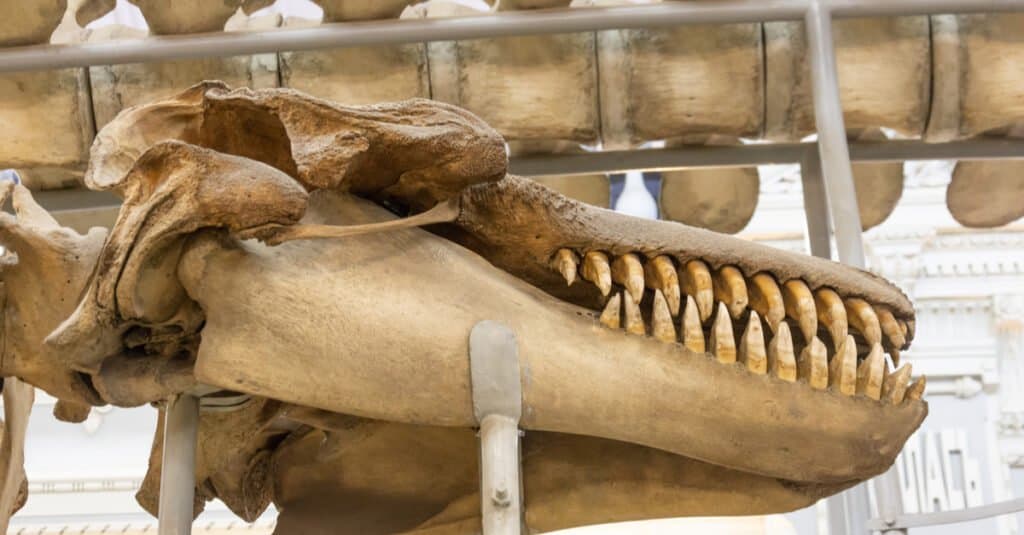
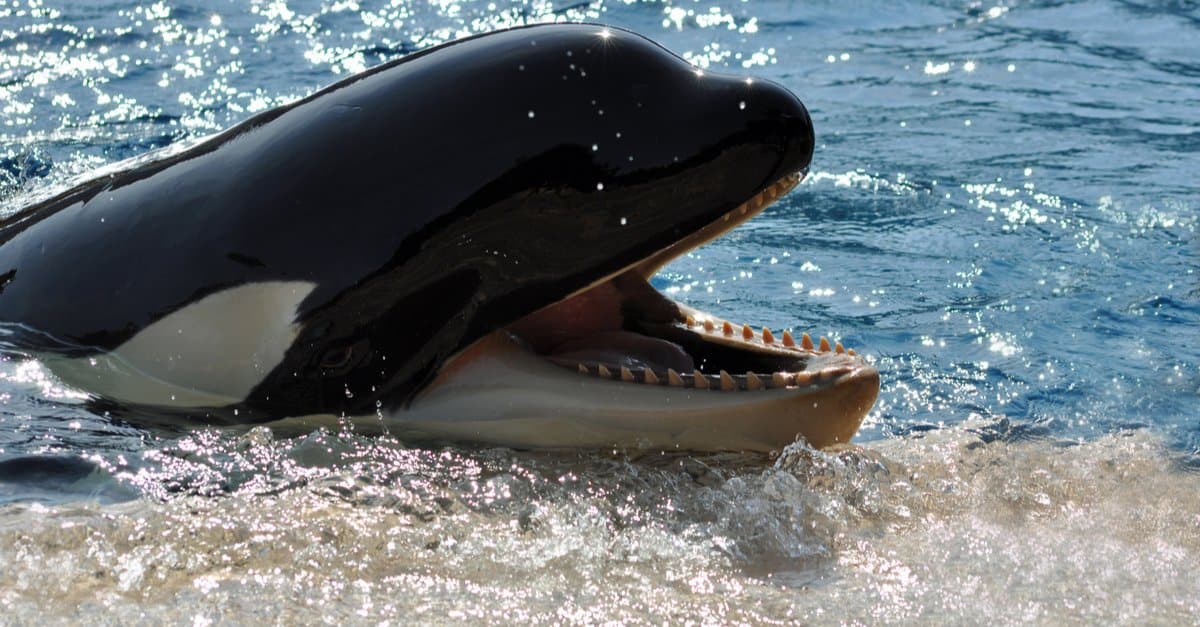
Killer whales have large, sharp teeth that can grow up to four inches long.
©aapsky/Shutterstock.com
Whales fall into two types — toothed whales and baleen whales. Baleen whales are filter feeders and have baleen plates instead of teeth, while toothed whales have actual teeth. Killer whales are toothed whales and have large, sharp teeth that are conical and interlocking. Their teeth typically measure around three inches long and approximately one inch in diameter, although they can reach up to four inches long.
Killer whale teeth are made up of dentin or ivory, which is similar to the composition of bones. However, the crown of the killer whale’s teeth is protected by enamel. The growth of dentin in an orca’s teeth can also tell their age.
Killer whales are monophyodonts, which means they grow only one set of teeth throughout their lifetime. Sharks are usually compared to killer whales because of the similarities in their chosen diet. However, the main difference between the two is their dentition. Sharks are polyphyodonts that grow back teeth over and over again. However, once orcas lose a tooth, they can never grow it back.
How Many Teeth Do Killer Whales Have?
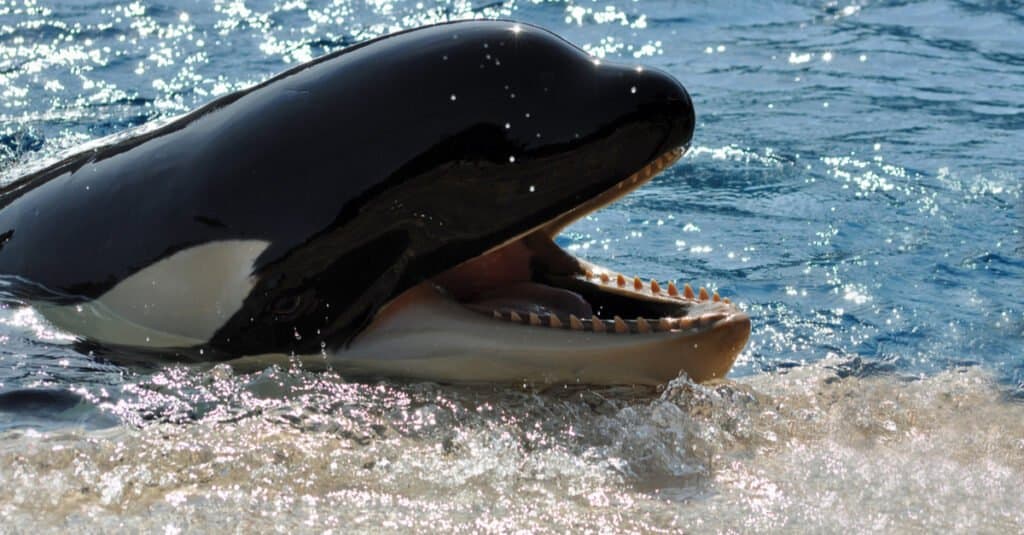
Though the numbers vary, killer whales usually have around 40 to 56 teeth.
©Heather Renee/Shutterstock.com
Killer whales have varying numbers of teeth, but they normally possess around 40 to 56 interlocking teeth protruding up to 4 inches long. Killer whales typically have 10 to 14 teeth on each side of their jaw, and all have the same appearance and structure.
Unlike land mammals, which have a variety of teeth in their mouths, orcas only have one type of tooth, and all of them look identical to one another–sharp, conical, and cut like a blade. Killer whale teeth are strong and sharp enough to pierce through their victim’s flesh. However, since they do not have molars like most land mammals to chew their food, the killer whale’s teeth are adapted to grab its prey, kill it, and tear it into smaller pieces.
What Do Killer Whales Use Their Teeth For?

As adept hunters, killer whales use their teeth to capture and tear their prey apart.
©Lori Skelton/Shutterstock.com
As we mentioned earlier, killer whales are apex predators. They use their sharp teeth to capture and tear their prey into smaller, bite-sized fragments. Orcas do not have molars to chew their food. Instead, they pierce through their victim’s flesh to kill them, and then they either swallow them whole or break them into smaller pieces before sliding them down their throats.
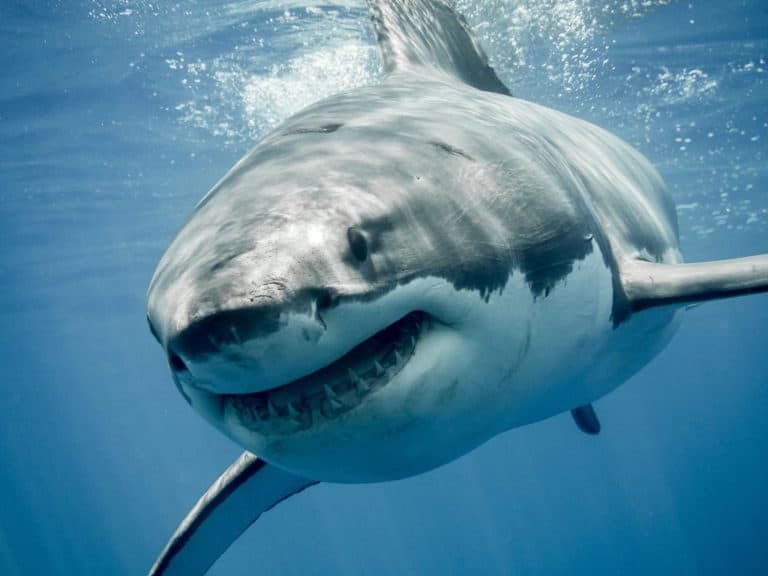
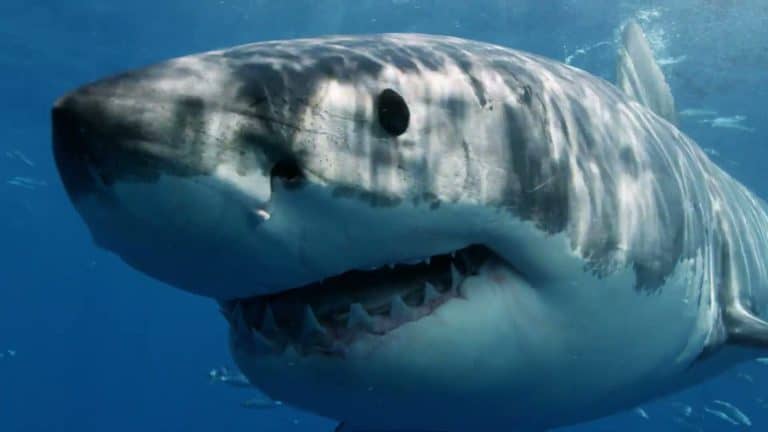
Killer whales hunt in both open waters and shallow coastal areas, going where the prey is. Their prey typically consists of a variety of sharks, whales, dolphins, seals, and penguins. Incredibly, orcas also hunt on the fearsome great white shark, often targeting them for their livers. On average, killer whales eat 3 to 4% of their own body weight per day, meaning they can eat up to 500 pounds of food in one day. However, killer whale teeth are susceptible to wear, and older whales often have more worn-down teeth than younger ones.
Do Killer Whales Have Baby Teeth?
As monophyodonts, killer whales are born with only one set of teeth. This set of teeth will be their teeth for an entire lifetime, and if they lose any of them, they can never grow back. Young orcas develop their teeth within a few weeks of birth, after which they begin to eat solid food. However, they still rely on their mother’s milk and will nurse from her until they are between one and two years old.
How Strong is a Killer Whale’s Bite?
As killer whales can attack great white sharks without a sweat, it is not surprising that they have a much stronger bite force than them. As one of the world’s largest predators, killer whales also have one of the strongest bite forces. Killer whales can generate an estimated bite force of 19,000 PSI, which is huge compared to great whites’ 4,000 PSI bite force.
Killer whales are also known for their speed, and can reach speeds of up to 34 mph in short bursts, which is another reason that they are such accomplished predators.
Do Killer Whales Attack Humans?
Despite their terrifying names and impressive hunting skills, killer whales are friendly, playful, and curious around humans. Killer whales don’t usually attack people, and there have been no records of them killing humans in the wild, although incidents have occurred in captivity.