
Quick Take
- Running straight at a group of wild seals sounds like the worst possible idea, yet there is a critical reason trained rescuers do exactly that. See why rescuers charge in →
- Entangled seals that reach the water face a far grimmer outcome, and the window to prevent that outcome is smaller than you'd expect. Learn about the water risk →
- Cape fur seals carry a risk most beachgoers have never considered, and it's a serious reason why even a well-meaning rescue attempt can go badly wrong. Understand the dangers involved →
- Fishing gear entanglement isn't just a painful inconvenience for seals. The way it kills is more insidious than most people realize. See how entanglement kills →
Anyone who watches enough wildlife footage eventually comes across scenes that are difficult to watch. Sometimes that is simply nature doing what nature does. Predators hunt, prey animals defend themselves, and stepping into the middle of either situation can make things worse. Human-made hazards are different. Fishing line, nets, plastic straps, and other debris can trap animals in ways they have little chance of escaping on their own.
There are good reasons not to rush into a wildlife encounter yourself. Wild animals can bite, charge, or injure someone who gets too close, and an attempted rescue can add even more stress. The team in this video is not a group of bystanders deciding to wing it. Ocean Conservation Namibia specializes in finding and freeing Cape fur seals caught in fishing gear and other marine debris along Namibia’s coast. These are trained rescuers dealing with a very specific, human-caused problem.
Seal Rescued in Namibia
The video clip shown at the beginning of this post takes us to Namibia, on the southwestern coast of Africa. It comes from Ocean Conservation Namibia, a conservation group based in Walvis Bay that patrols seal colonies and other stretches of the Namibian coastline looking for entangled animals. The organization says its rescuers have freed thousands of Cape fur seals from fishing line, nets, plastic straps, and other marine debris.
How to Safely Rescue a Seal
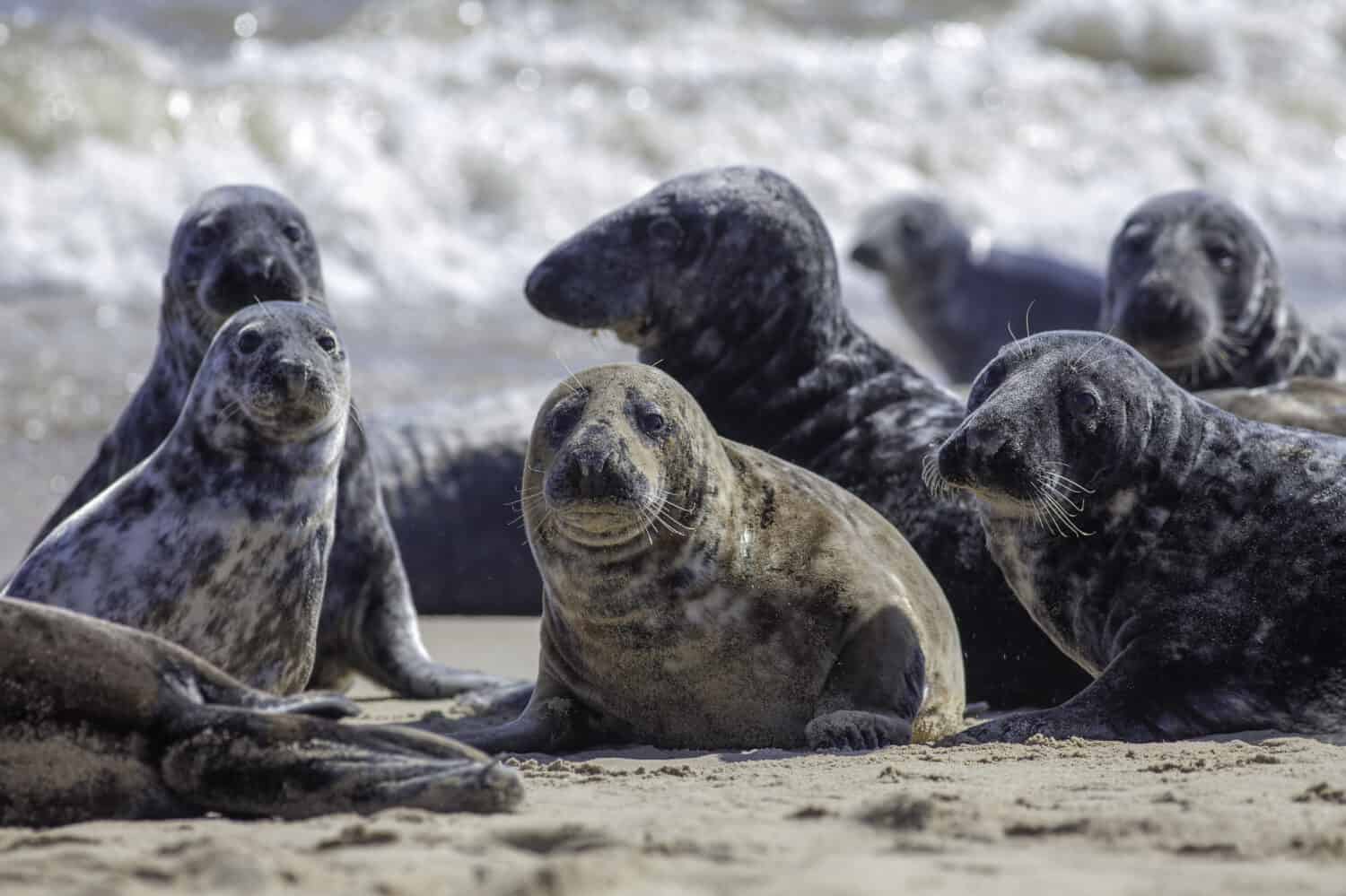
The video opens on a large group of Cape fur seals gathered on a beach. This species occurs along the coasts of Namibia and South Africa and can form extremely dense colonies on shore. Other seal species gather on land as well. The Alaska Department of Fish and Game, for example, notes that harbor seals, a different species, may haul out in groups ranging from only a few individuals to thousands.
The first thing we see is a rescuer running toward the colony as seals scatter toward the water. Out of context, that would be a pretty terrible wildlife-viewing strategy. Here, though, the team has identified a seal caught in green fishing material and is deliberately trying to intercept it before it disappears into the ocean. An entangled seal that reaches the water may be much harder to locate and safely capture again.
Once the seal is caught, the rescuers restrain it while the material is carefully cut away. The team works quickly because the animal is understandably fighting to get free. This is not something beachgoers should try themselves. Cape fur seals have powerful jaws, and Ocean Conservation Namibia currently advises people to keep their distance from seals and contact local authorities rather than attempting to handle one. Rabies has also been confirmed in Cape fur seals in Namibia, adding another very serious reason to leave hands-on rescues to trained responders.
Do Seals Get Caught in Fishing Nets?
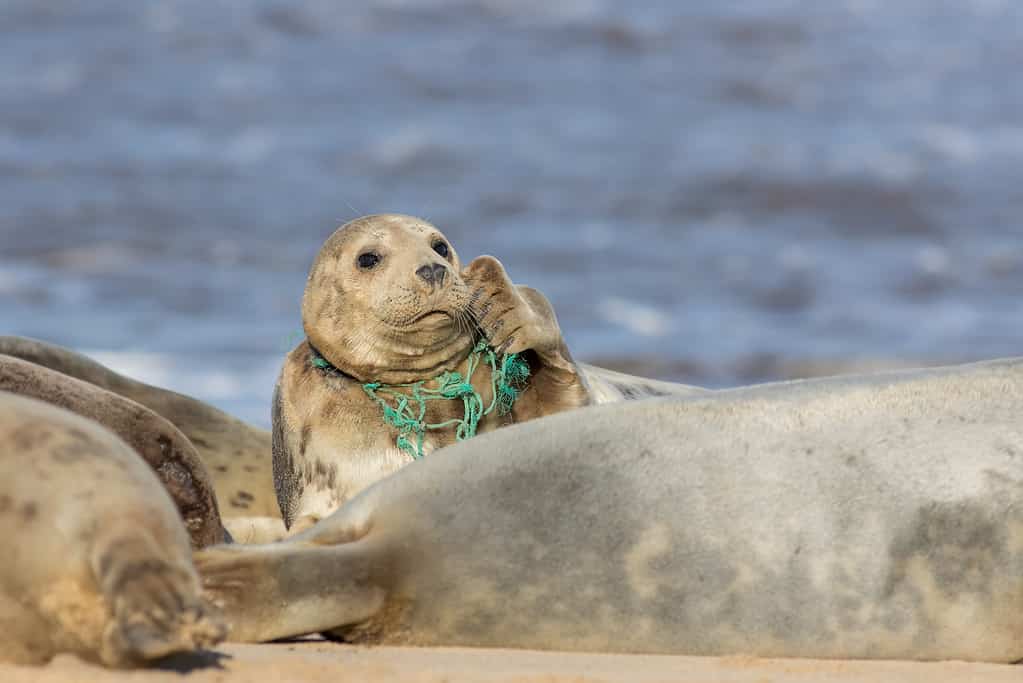
Fishing gear and other marine debris can cause serious or fatal injuries when seals become entangled.
©Ian Dyball/iStock via Getty Images
Unfortunately, seals becoming tangled in fishing gear is a well-documented problem. Line, netting, rope, packing straps, and other debris can loop around an animal’s neck, flippers, or body. The material may tighten as a young seal grows, cut into tissue, interfere with swimming and feeding, or eventually cause severe injury or death. Research at Cape fur seal colonies in central Namibia found that fishing-related materials were the most common source of entanglement, with younger seals particularly likely to be affected.
The National Oceanic and Atmospheric Administration (NOAA) has documented the same broader problem among pinnipeds, including animals caught in trawl netting, monofilament fishing line, plastic straps, and other debris. Entanglements can lead to deep wounds, restrict movement, increase the energy an animal needs just to swim, and in some cases cause drowning or death.
The seal in the video has no way of understanding that the people chasing and restraining it are trying to help. From the animal’s perspective, getting away is the obvious response. That makes the rescue look chaotic, but the important part comes at the end: the line is removed and the seal is released. Without that debris tightening around its body, it has a much better chance of returning to normal life. For Ocean Conservation Namibia, scenes like this are not unusual. They are exactly why the team keeps returning to the coast looking for the next animal that needs help.