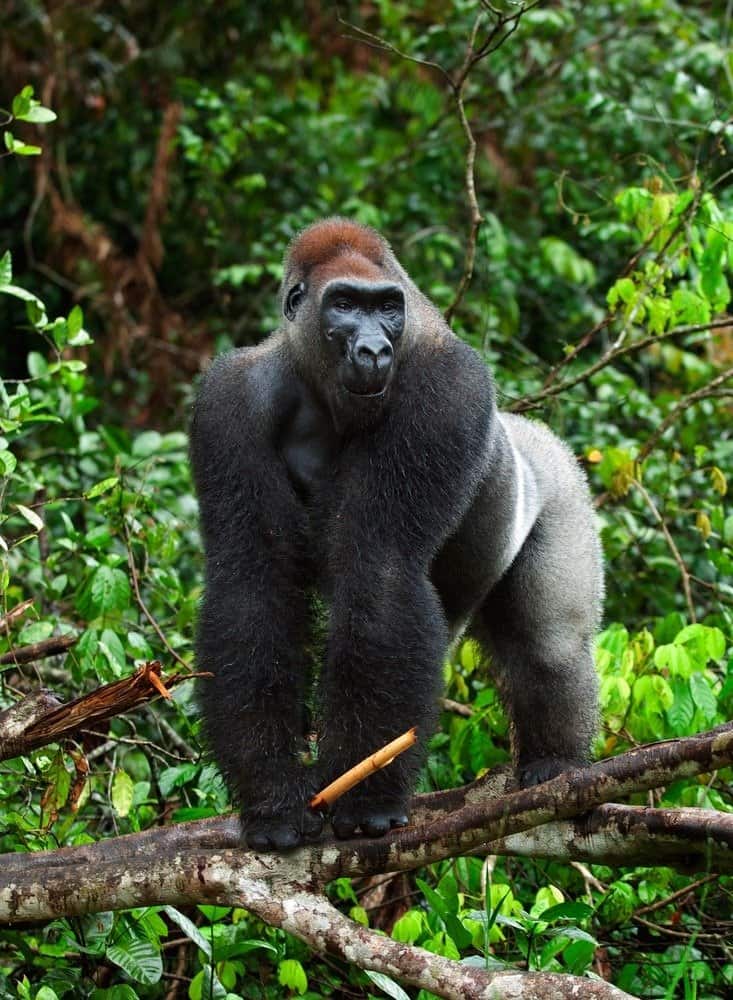

Quick Take
- These gorillas once fled at the sound of a human voice, and what it actually took to reverse that fear will surprise you. See how long it took →
- Researchers modeled the project after successful efforts in other countries, but Cameroon's gorillas had a very different response. Compare with other countries →
- Adult gorillas didn't just become tolerant of humans. They also passed something unexpected on to their young. See what was passed down →
- Gaining gorillas' trust turned out to solve a problem researchers never set out to fix. Discover the unexpected benefit →
In Cameroon’s Campo Ma’an National Park, western lowland gorillas were once a rare sight. If they heard a human voice, they fled. That reaction was driven by a long history of human-led activities, with poaching at the top of that list.
But today, that story has changed. Those same gorillas, once terrified, now barely acknowledge human presence. What caused this dramatic change in gorilla behavior? It turns out it took patience and a calm approach, according to a new study published in the African Journal of Ecology.
The Study That Changed Everything
Researchers from Concordia University understood that ecotourism is an important way to aid in gorilla conservation. But to support it, visitors had to be able to actually see the animals. In an effort to help the gorillas unlearn human avoidance behavior, the researchers headed to Dipikar Island, a remote area in southern Cameroon, within the national park’s borders. It is a region with a history of excessive gorilla poaching.
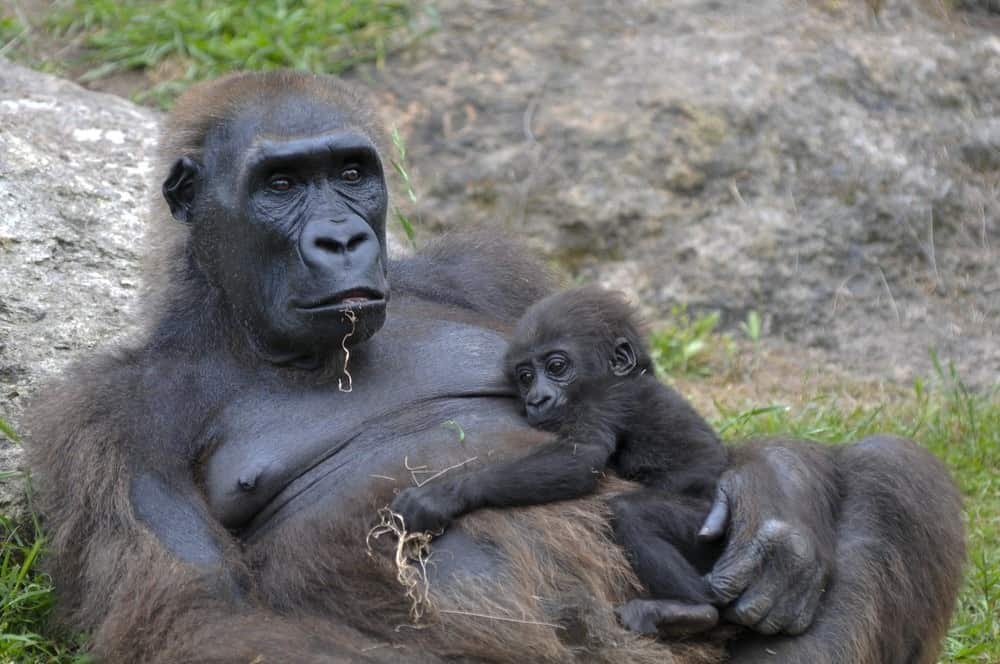
The study involved 12 western lowland gorillas, including one silverback male, several females, juveniles, and infants.
©Boris Diakovsky/Shutterstock.com
Their goal was to re-habituate Cameroon’s gorillas to human presence, modeling their approach after similar successful efforts in Rwanda, Uganda, and the Central African Republic. The researchers expected the process to be relatively short. In those other countries, habituation took between 28 and 53 months.
The gorillas in Cameroon took significantly longer to adjust. The study in Cameroon required a full 91 months of near-daily contact with the gorillas.
How Trust Was Built
Over the course of those 91 months, researchers followed a group of 12 western lowland gorillas as the animals moved about their island home. That group included a silverback adult male, several adult females, juveniles, and infants.
The first four years of the project, between 2011 and 2014, had researchers indirectly monitoring the gorillas from a distance. Researchers tracked the gorillas with GPS to identify the animals’ home range boundaries. It was not until 2015 that researchers made direct contact.
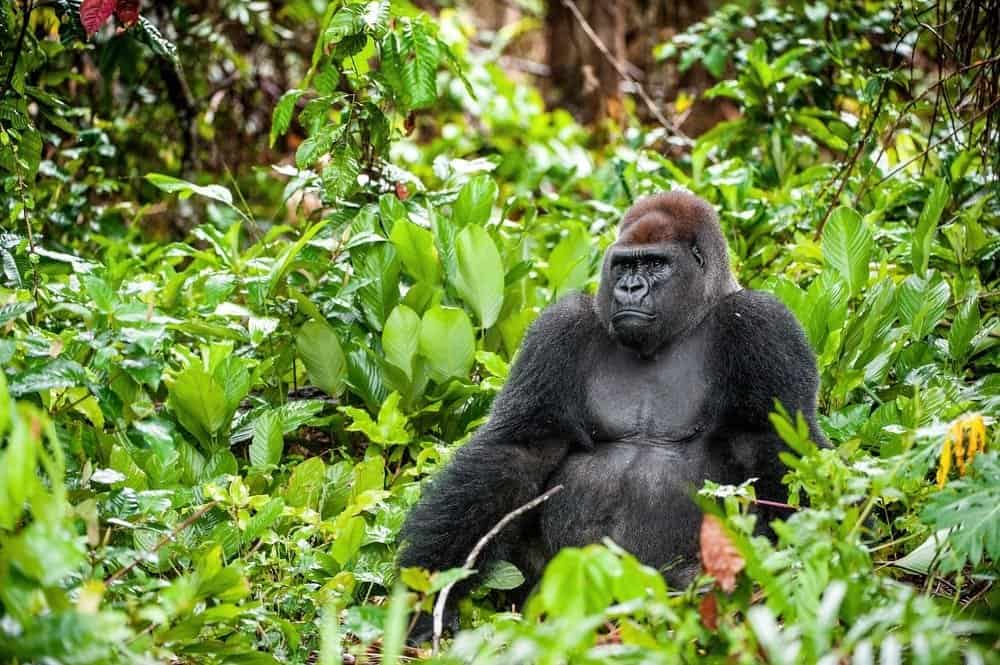
Researchers began by indirectly studying the gorilla group from afar.
©Sergey Uryadnikov/Shutterstock.com
In 2015, the team used non-threatening vocalizations and audio cues to alert the gorillas to their presence. During these encounters, researchers recorded each gorilla’s initial reactions. They categorized them into fear, aggression, avoidance, curiosity, or indifference. The team also noted how long the animals were in contact with them and how long the animals remained visible.
Over the course of the study, researchers collected almost 582,000 minutes of contact with the gorillas. They also found that as the years went by, the gorillas chose to spend more time near the researchers. Negative reactions also declined and were replaced primarily by indifference, with some curiosity. The gorillas learned not to care when the researchers were present.
Changes Went Beyond Gorilla Trust
Most interestingly, this increased tolerance of human presence correlated with a reduction in illegal poaching activities. Efforts ramped up to educate local communities about why protecting gorillas matters. As nearby communities saw the gorillas become more trusting of people and learned why protection was important, illegal poaching activity dropped significantly.
However, beyond community awareness, the regular presence of ‘good’ humans — field teams, ecotourists, and anti-poaching patrols — must continue. Without such presence, researchers believe poaching activity will ramp up, causing any habituation efforts to reverse quickly.

The study was led by PhD student France Anougue, under the supervision of Prof. Robert Weladji.
“Without the daily presence of field teams, tourists and anti-poaching patrols, these populations will become exposed to harm very quickly,” said the study’s lead author, France Anougue, a PhD student at Concordia, in the press release announcing the study. Anougue conducted the study under the guidance of Robert Weladji, a professor in the Department of Biology.
The Young Learn From Adults
The adult gorillas also seemed to teach their young that they, too, could trust the right people.
“Gorillas have the capacity to distinguish between threatening people, such as poachers, and non-threatening people, such as researchers and tourists. We also observed this tolerance in younger gorillas, suggesting that behaviour is learned from other members of the group,” said Anougue in the press release.
The Impact on Conservation
Habituating gorillas does more than protect them from poachers. The research team believes that protecting gorillas and getting them used to human presence provides local communities with positive economic impacts from increased ecotourism in the region. Anougue also believes the positive changes in gorilla behavior can help mitigate climate change threats, too.
“Habituation can also help reduce the impacts of climate change through forest regeneration, since gorillas are important seed dispersers that help maintain healthy forests,” she said in the press release.
Continuing Habituation Efforts
Maintaining gorillas’ habituation to non-threatening humans requires ongoing effort, rather than a one-time intervention. Anougue warns that ongoing habituation efforts must persist to keep the gorillas safe. “Without the daily presence of field teams, tourists and anti-poaching patrols, these populations will become exposed to harm very quickly,” she said in the press release.