
Bringing home a Newfoundland puppy? Wondering how big they might get when they’ll stop growing, and how to raise a healthy and happy pup? Our Newfoundland progression guide is packed with info to help you along this exciting journey.
Read on to learn more!
Newfoundland: Breed Summary
The exact ancestral lineage of the Newfoundland is a bit unclear, but we do know that this breed originated in the land of its namesake- Newfoundland. Officially, the AKC recognized this breed in 1886. Possibly, Newfoundlands arose from crossing various breeds that 15th-century settlers brought from Europe with native dog breeds of North America. Another suggests the breed may originate at least partially with a group of Vikings who visited Newfoundland around 1000 A.D.
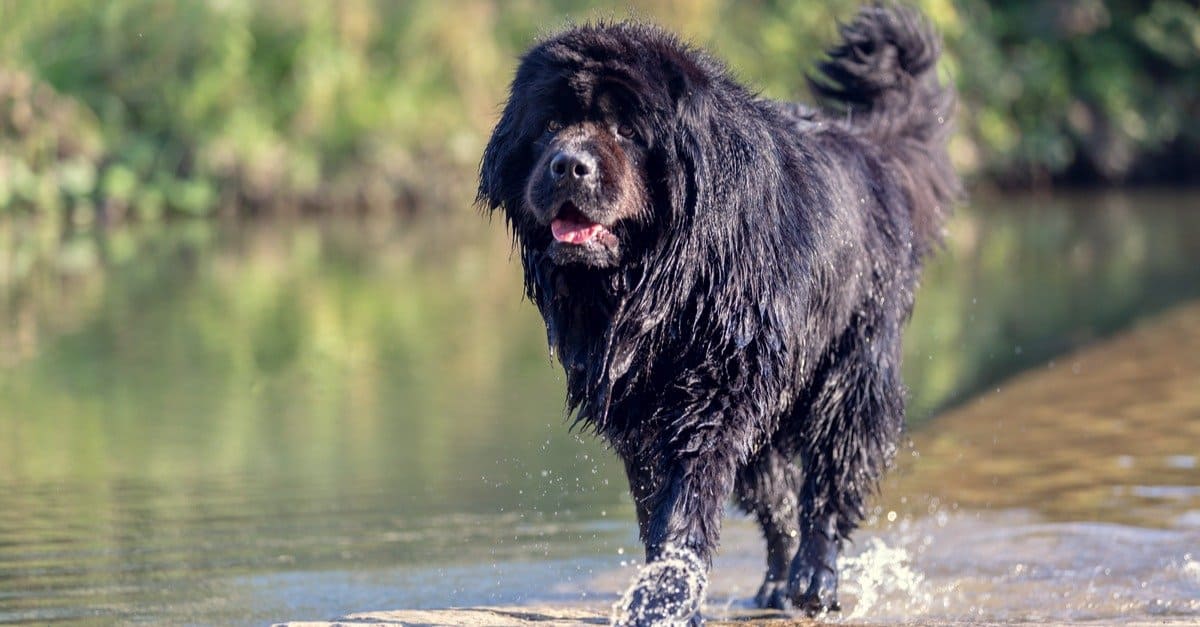
This giant dog excelled in endurance, strength, the ability to swim well in cold waters, and gentleness. Its water-resistant coat and webbed feet make this breed perfect for swimming in northern climates. In the 18th and 19th centuries, these dogs were particularly popular with fishermen and foresters who used them for hauling fishing nets and wood. They were also cherished as guardians of children. Additionally, people used Newfies as rescue water dogs as early as the 19th century. Today, Newfoundlands are still popular rescue dogs in some parts of Europe such as Italy and France.
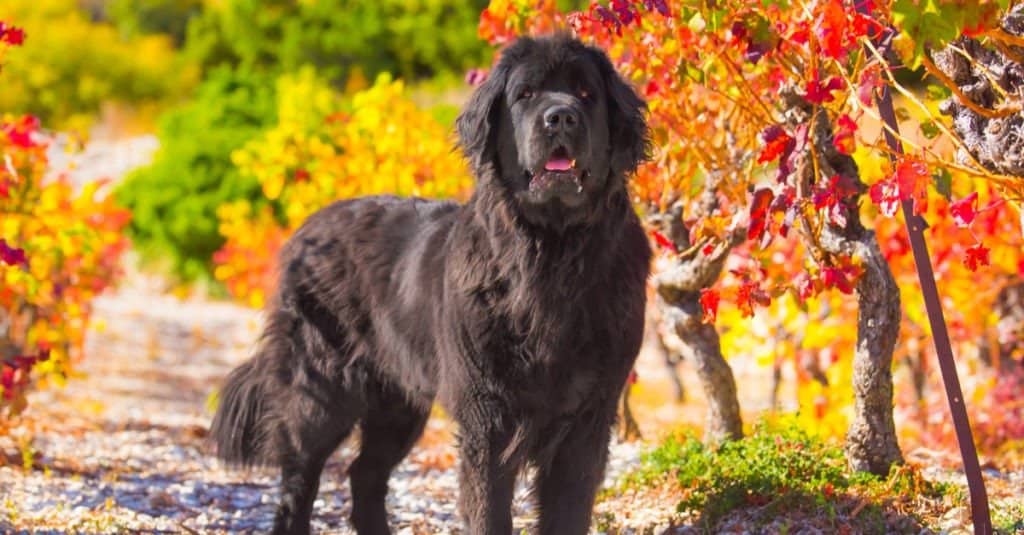
Newfoundlands are popular search and rescue dogs for the coast guards of England, France, and Italy.
©Pandas/Shutterstock.com
Attributes
Overall, people tend to associate Newfoundlands with gentleness, bravery, strength, and love of water. You may find that these attributes ring true for your Newfie. However, genetics only present part of the story of an individual dog. How they experienced their early socialization period, their health, attachment style to their primary caregiver, how safe they feel growing up, and whether or not their essential needs are met throughout their life also play big roles in influencing personality, temperament, and abilities.
If you’re considering adopting a Newfoundland, it’s important to ensure that you have the space and lifestyle to support this wonderful breed.
Newfoundland Progression: Growth Chart
Below, we’ll provide a growth chart for male and female Newfoundlands from 2-24 months. Remember, this chart gives an estimation and the best way to ensure that your puppy is properly developing is through periodic vet checkups.
| Age | Female Newfoundland | Male Newfoundland |
|---|---|---|
| 2 Months | 15-20 lbs | 16-27 lbs |
| 3 Months | 30-42 lbs | 38-50 lbs |
| 4 Months | 39-52 lbs | 49-60 lbs |
| 5 Months | 54-64 lbs | 58-74 lbs |
| 6 Months | 58-73 lbs | 72-84 lbs |
| 7 Months | 65-75 lbs | 80-97 lbs |
| 8 Months | 69-79 lbs | 91-100 lbs |
| 9 Months | 75-85 lbs | 101-113 lbs |
| 10 Months | 85-95 lbs | 108-120 lbs |
| 11 Months | 90-105 lbs | 113-125 lbs |
| 12 Months | 93-110 lbs | 115-130 lbs |
| 18 Months | 96-115 lbs | 120-140 lbs |
| 24 Months | 100-120 lbs | 130-150 lbs |
When Will My Newfoundland Stop Growing?
As a giant breed dog, you can expect your Newfoundland pup to continue growing until they are about 2 years old. They should reach their maximum height at about 12 months and continue thickening out until they reach 2 years old. On average, as adults, these extra-large dogs should eat about 8-12 cups of kibble per day. The exact amount will depend on the type of food you provide and the exact weight of your pup.
As your puppy grows, periodic vet checkups will help ensure that your dog is properly developing.
Newfoundland Progression: How Big Will My Newfoundland Be When Fully Grown?
You can expect your Newfoundland to reach at least a whopping 100 pounds when fully grown. For females, the AKC accepted weight range is 100-120 pounds. For males, the range is 130-150 pounds. Adult females should stand about 26 inches tall at the withers, and adult males should reach about 28 inches. Genetics and diet can affect whether your Newfie fits this standard.

On average, you can expect your Newfoundland to weigh between 100-150 pounds in adulthood.
©cynoclub/Shutterstock.com
When Should My Newfoundland Be Spayed or Neutered?
It’s crucial to have an informed conversation with your vet about the best time to alter your pup. There are some benefits to spaying and neutering that include reduced or eliminated risks of certain reproductive cancers and preventing litters that further the crisis shelter and stray dogs face in countries like the U.S. However, spaying and neutering, typically too early, in some breeds can potentially cause a range of long-term negative health effects and increased risks of fear-related behaviors.
Large and giant breeds are often the most potentially negatively affected by early spay and neuter, especially regarding joint and bone development. Given their size, your vet may want to wait until your Newfoundland is over 1 year old to spay or neuter.
Newfoundland Progression: When Should I Potty Train My Newfoundland?
It’s ideal to begin potty training your Newfoundland puppy as soon as you bring them home. They can only hold their bladder and bowels for a short time when their little, so you’ll need to take them out frequently for successful potty training. A 2-month-old puppy, for example, can typically only hold it for about 2 hours. To increase your chances of success, you’ll also want to take your puppy out within 20 minutes of eating or drinking lots of water.
Make sure to give your Newfoundland pup plenty of praise and affection when they use the bathroom outside or on their puppy pads. If they have an accident, it’s imperative to never punish or scold them. Punishment will only serve to frighten your puppy, can damage your relationship, and doesn’t show them what you’d like them to do.
When Should My Newfoundland Stop Eating Puppy Food?
As a giant breed dog, your Newfie pup should continue to eat puppy food until they reach full skeletal maturity at around 24 months of age. At this point, you can begin transitioning them to appropriate adult food. Switching over to adult food too early can deprive your pup of the energy-dense foods they need to properly develop.
Newfoundland Progression: When Will My Newfoundland Start Losing Teeth?
Your Newfoundland puppy should start to lose their set of 28 primary teeth at around 12 weeks of age. By 6 months, their baby teeth should be fully replaced by a set of 42 adults, or permanent, teeth.
Between 4-6 months old, your puppy will seek out items to chew to ease the uncomfortable process of the adult teeth erupting from the gums. It’s important to provide plenty of toys of various textures for your pup to chew on during this phase. You’ll also likely need to practice good management by putting tempting items you don’t want them to chew out of reach and gating off areas of the house.
If you find your pup chewing something inappropriate, it’s important to not punish or scold them and to trade for an equally good or better chew toy. By trading, your puppy will learn that giving you items is safe because they will receive some as good or better in return. If you only take items away, you can damage your relationship and risk creating habitual resource-guarding behaviors in your pup.
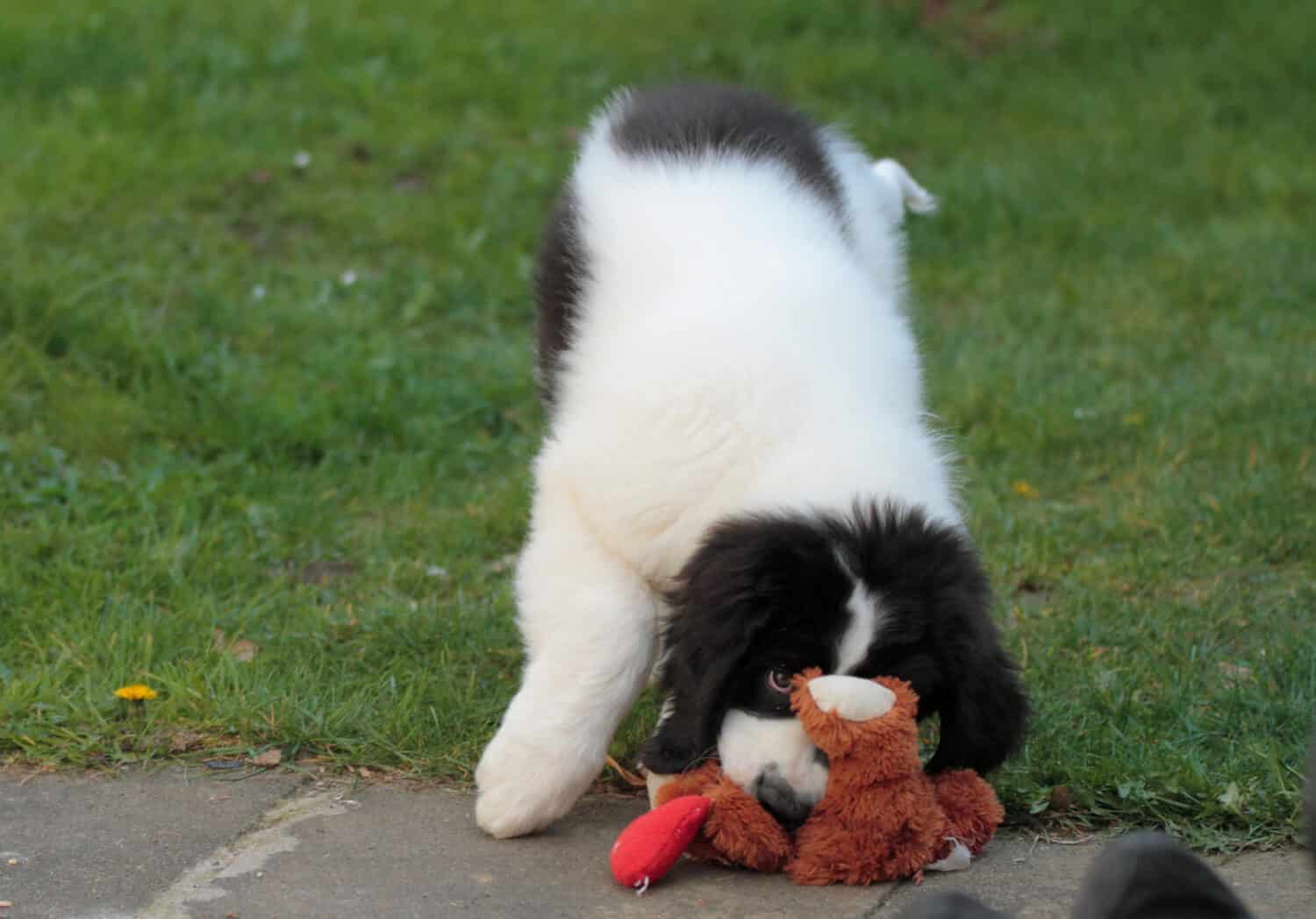
Your Newfoundland puppy will be teething from 4-6 months old, so make sure to provide plenty of chew toys.
©Lato Pictures/Shutterstock.com
When Should I Start Training My Newfoundland?
You can begin short, fun, and easy-to-understand education with your Newfoundland puppy at 8 weeks old. At this age, these sessions should only be a couple of minutes long. Throughout their life, you should focus on rewarding education that facilitates and strengthens a secure attachment bond.
While teaching cues is important to help our dogs navigate a human-dominated world, training is only a piece of raising a puppy. Sometimes, the emphasis on training overshadows the need to develop a strong, secure bond, which is crucial to helping your puppy feel safe and confident as they grow.
Newfoundland Progression: What Cues Should I Teach My Newfoundland First?
When teaching cues, you should focus on relationship building and using positive reinforcement, in which desired behaviors are reinforced with items or experiences that are truly rewarding for your specific canine companion. These rewards can include offering exciting toys, treats, and play.
One of the best behaviors you can teach your Newfoundland puppy first is a recall cue. The better relationship you have with your puppy, the easier this cue will be to teach and reinforce. Having a strong recall back to you means your pup can interact more safely with the world.
When you first begin teaching this cue to a young puppy, you’ll only want to move a couple of steps away and encourage them to come to you, providing lots of snuggles, toys, treats, and play when they do. Slowly increase the distance and distractions in the environment as your pup succeeds.
When Will My Newfoundland Calm Down?
Newfies aren’t typically considered high-energy dogs, but they will still enter an adolescent phase from about 8-24 months in which you may see increased energy levels and perhaps hyperactivity. Your Newfoundland will likely reach full social maturity around 3 years old. The most important thing you can to do help facilitate a dog who can truly feel calm throughout its life is to meet its species and breed-specific needs.
As a species, this includes sniffing, play, socialization (if they enjoy it) with other dogs and people, restorative and uninterrupted sleep, freedom of movement and choice, species-appropriate food, physical, social, and mental enrichment, companionship, and safety. For Newfoundland pups in particular, you may find that they gravitate to water-based enrichment such as free swimming, wading in creeks, and retrieving toys in water.
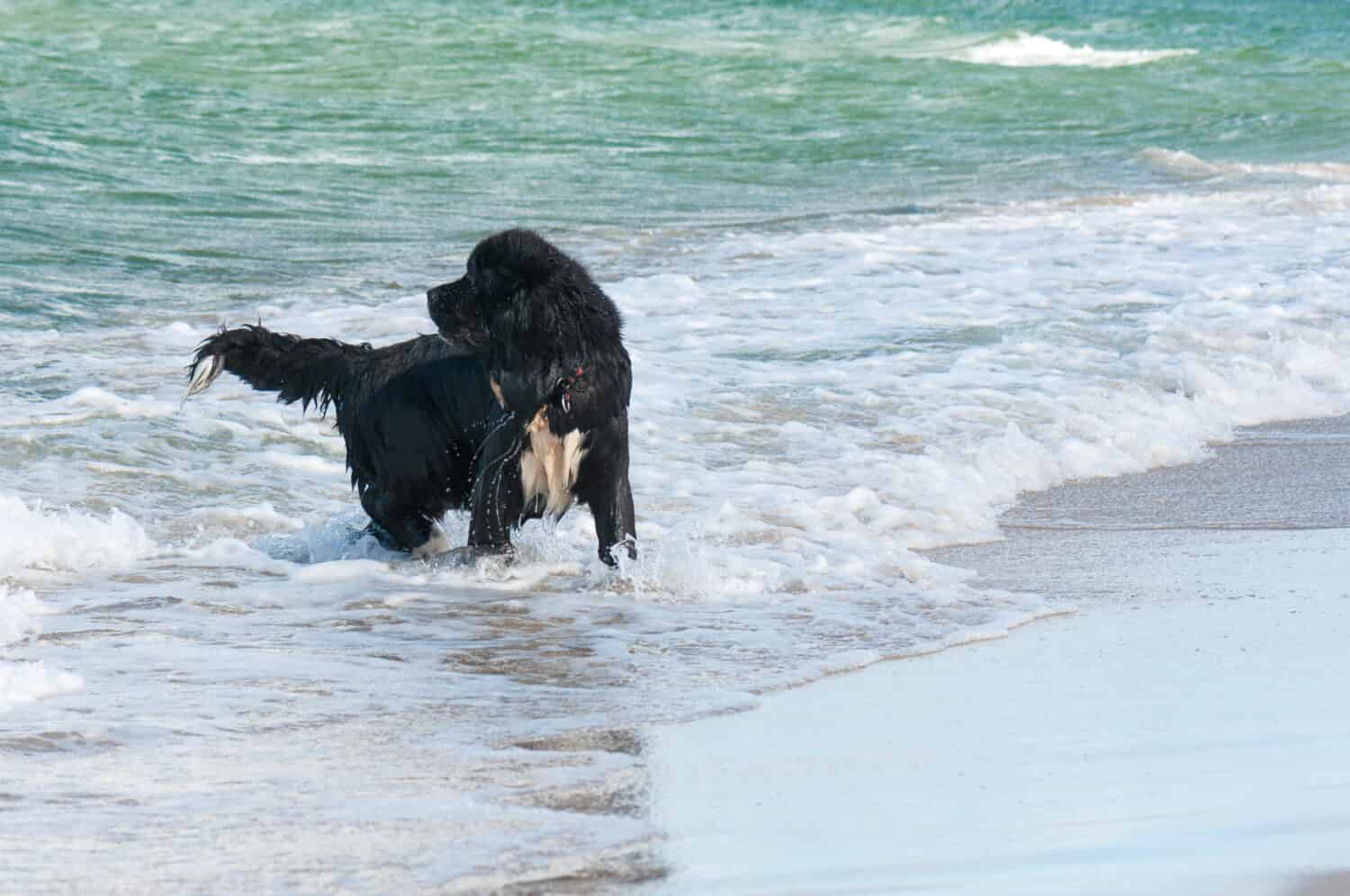
Your Newfoundland may benefit from swim-based enrichment to help them feel content.
©TheHighestQualityImages/Shutterstock.com
Common Health Issues Your Newfoundland Might Experience
The following is a list of health issues a pedigree Newfoundland has an increased risk of developing:
- Hip dysplasia
- Elbow dysplasia
- Bone cancer
- Dilated cardiomyopathy (weakened, enlarged heart)
- Gastric dilation-volvulus (life-threatening stomach bloat)
- Allergies
- Subaortic and pulmonic stenosis (respectively, left ventricular outflow obstruction of the heart and narrowing of the valve between the lower right chamber of the heart and the lung arteries)
If you notice any sudden changes in your Newfoundland’s behavior or see any clinical signs of a medical problem you should always seek out a consultation with your vet.
Picture of a Newfoundland Puppy
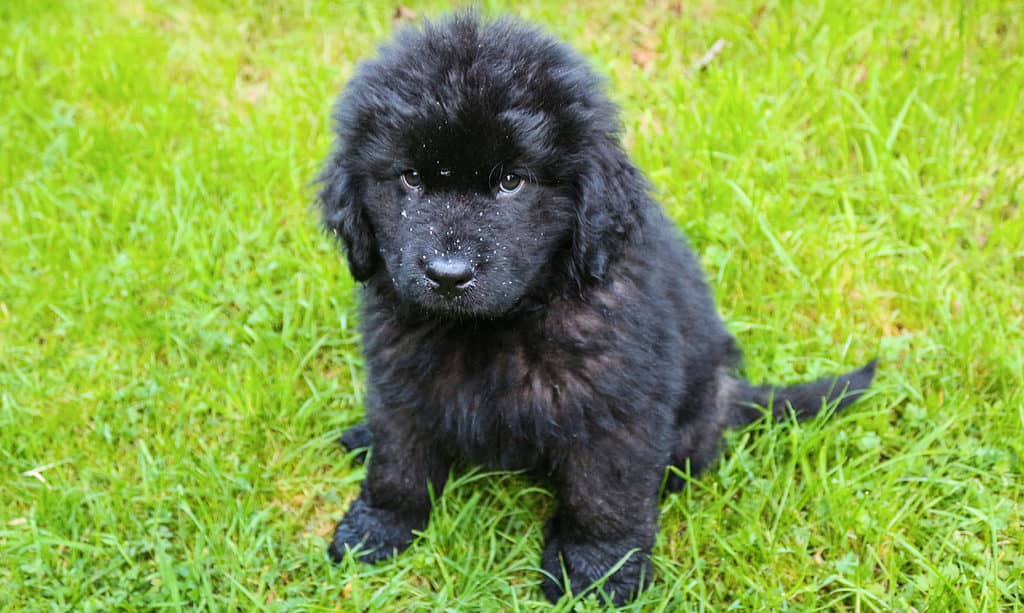
Newfoundland puppies are the epitome of cute.
©LigaP/Shutterstock.com
Picture of a 6-Month-Old Newfoundland
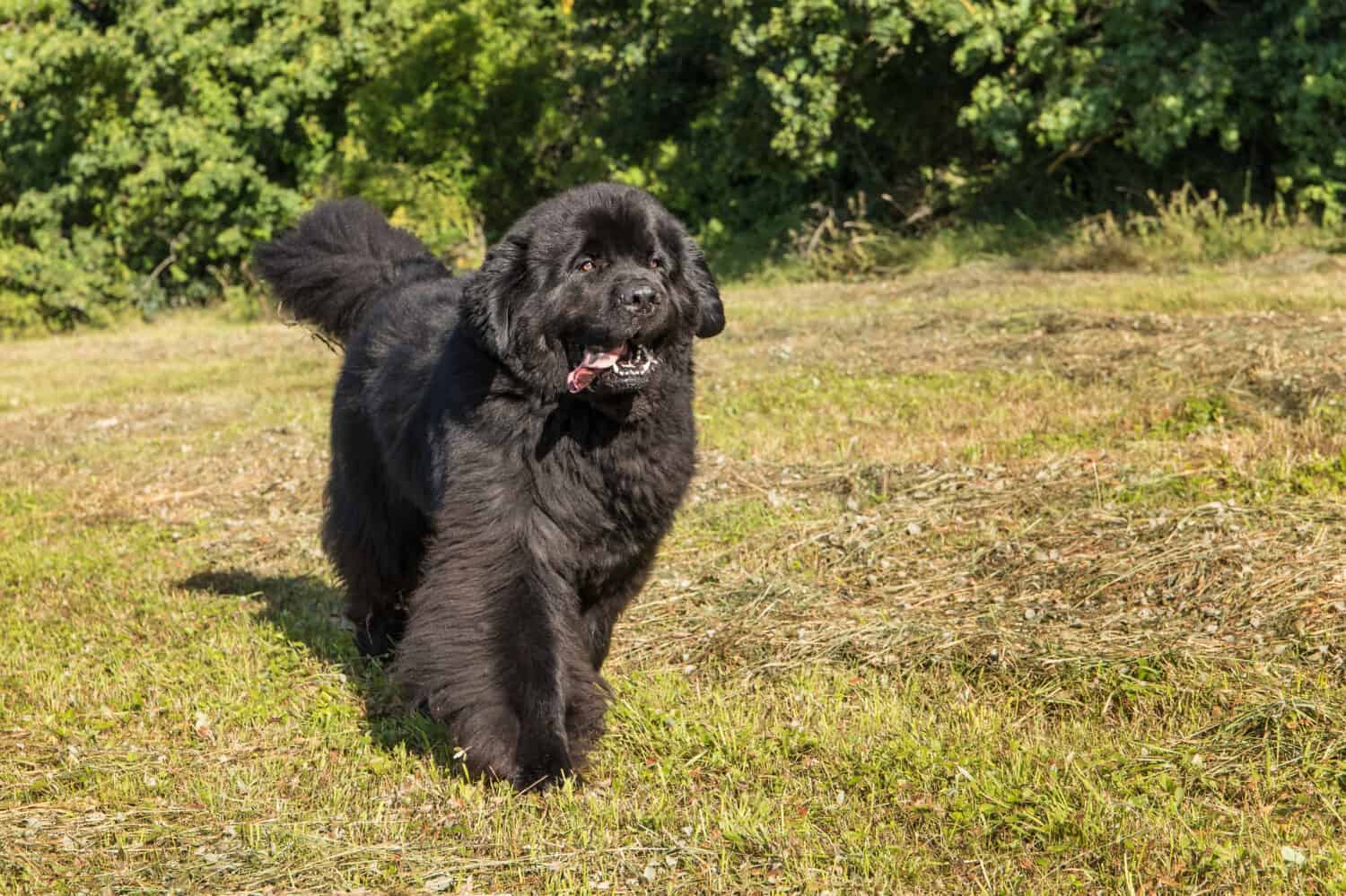
At 6 months old, these gentle giants can weigh about 60-85 pounds.
©Marsan/Shutterstock.com
Picture of an Adult Newfoundland
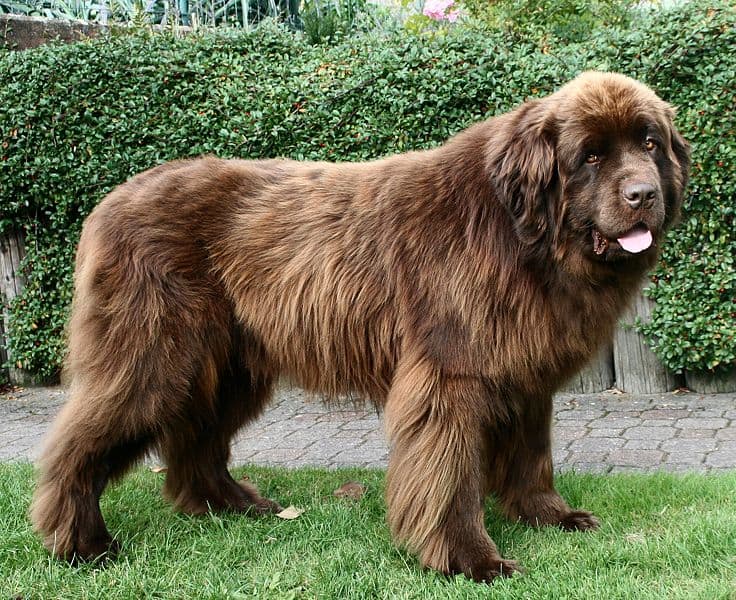
Adult Newfoundlands are strong enough to rescue full-grown humans from the water.
©Peter Ludes / Creative Commons – Original