
Quick Take
- These dolphins have nearly lost their eyesight, and yet they navigate one of the world's most treacherous river systems using a trick that surprises most people. Discover their sensory tricks →
- Human infrastructure cut their population by 80 percent, yet the story of how they clawed back from the brink is more complicated than it looks. See how infrastructure hurt them →
- A new 250-mile protected zone sounds like a win, but one stubborn threat still causes more than half of all documented dolphin deaths there. Explore the new sanctuary →
- Enforcement alone won't save these dolphins, and the reason why flips conventional conservation thinking on its head. Why communities are the key →
Freshwater ecosystems are among the most threatened habitats on Earth, so it’s always exciting to hear some good news about these fascinating environments. The beleaguered Indus River dolphins of Pakistan are making a comeback and will now benefit from a new protected area. However, this news needs to be balanced by the reality of the ongoing threats that they face. There is still a lot of work to do to protect these freshwater mammals.
Meet the Indus River Dolphins
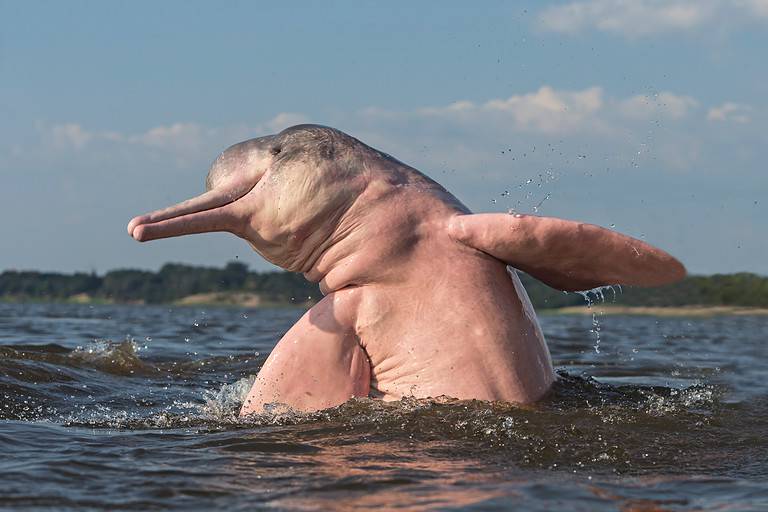
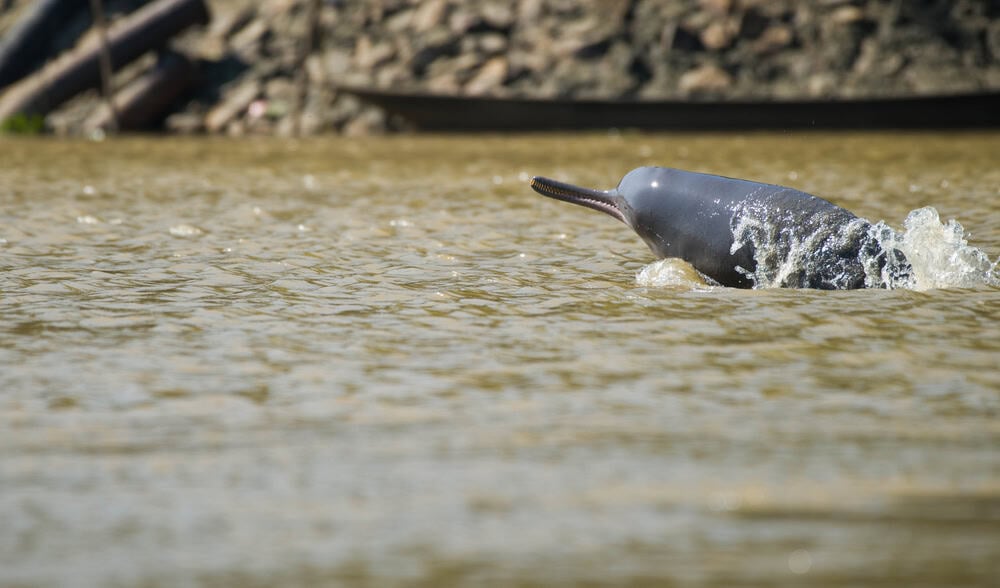
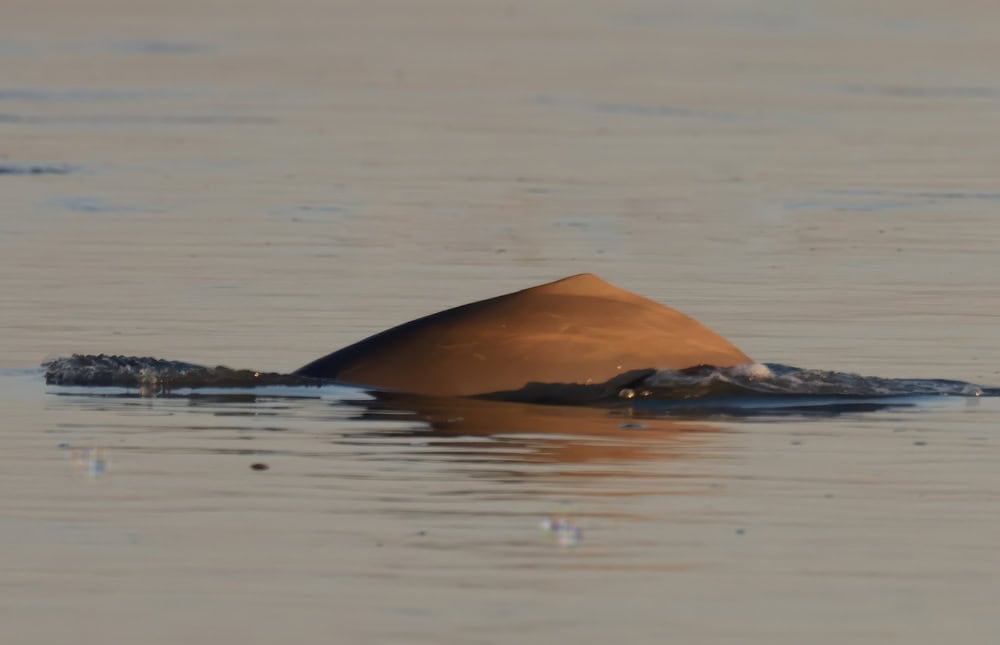
Indus River dolphins (Platanista gangetica minor) are roughly the same color as the river water they live in, which is a gray-brown. Their ‘beaks’ are swollen at the tip and very long. In fact, they make up 20 percent of the length of their body. Within the beak are large, visible teeth. Their dorsal fins are small, but they have large flippers and flukes which help them navigate river waters. They can grow to around 8 feet in length and weigh up to 185 pounds.
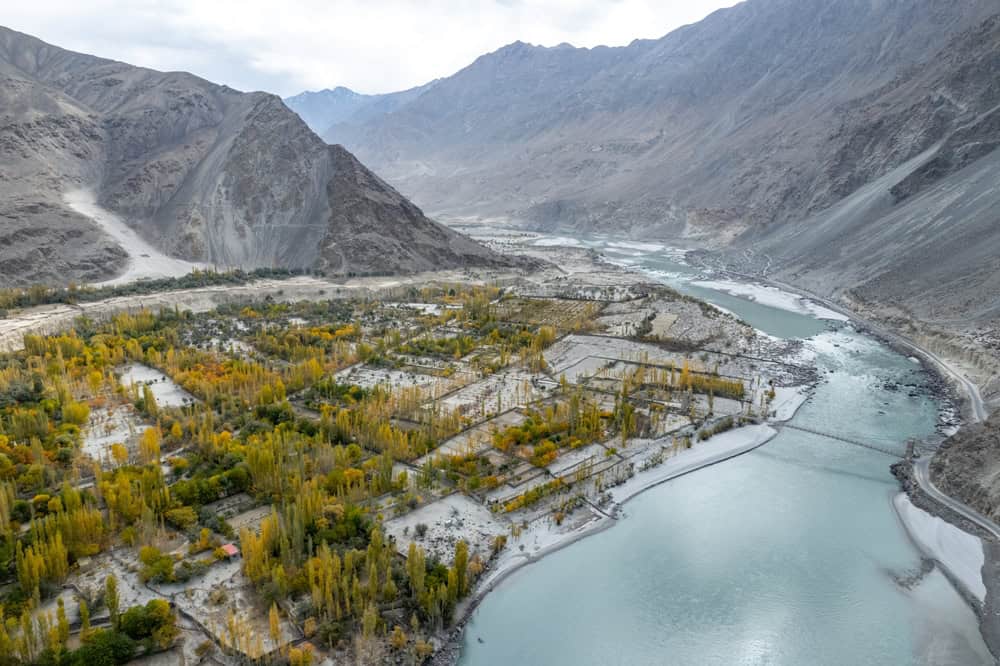
Indus River habitats are fragmented.
©Daniel Karfik/Shutterstock.com
These dolphins are mainly solitary, although they can be seen in groups of up to 30 individuals. Most of the time their groups only contain up to three dolphins. You are unlikely to see them leaping out of the water like their marine cousins. That said, they are highly vocal and use echolocation to find their way around. They can even survive in the shallow dry-season waters by swimming on their sides! They have largely lost their eyesight but may see cloudy shadows.
These dolphins also use echolocation to find food. With their long, toothed snouts, they forage in the riverbed for bottom-dwelling creatures. The dolphins eat a range of fish and invertebrates, including catfish, herring, prawns and clams. They have very few natural predators, and the main threat to their survival is humans. Some evidence suggests that they migrate seasonally along the river.
Indus River Dolphins – The Bad News
Indus River dolphins are found primarily in the Indus River in Pakistan, with a small population also present in the Beas River in India. Between 11 million and 16 million years ago, their ancestors were able to enter the river system thanks to high sea levels in the middle Miocene period. As the waters receded, they remained in the rivers and adapted to their new freshwater environments.
Sadly, they cannot cope with the human-induced changes to the river system. A network of dams, canals, and irrigation barrages has drastically reduced their population by around 80 percent. In 2001, a survey in Sindh province counted just 617 of them, while broader estimates put the total population closer to 965.
What Is Being Done to Save the River Dolphins?
From these catastrophically low numbers, their population rebounded to around 2,000 over the next decade. In 2025, a study reported that 1987 were alive in 2017. However, it remains on the IUCN list, classified as endangered.
The Pakistan government also created the Punjnad Indus River Dolphin Sanctuary in June 2026. It covers about 123 miles of the Indus River and connects with an existing protected area in Sindh province, southeastern Pakistan.
Indus River dolphins can get tangled in fishing nets.
©MuhammadAliRajput/Shutterstock.com
However, despite this positive news, there is no room for complacency. The population is still fragile and only occupies a fraction of its former range. They still face a threat from gillnet entanglement. This accounts for 52 percent of documented dolphin deaths in the Indus Basin. It is hoped that the formal expansion of protection will help to regulate fishing activities.
Still Much to Be Done
Despite its new status, there are still a lot of hazards for the dolphins in this habitat. The river remains fragmented by barrages which have been constructed to provide water for agricultural lands. The dolphins get trapped in small areas, creating isolated subpopulations. They can also end up in hazardous human-made canals. The local WWF has experience rescuing dolphins in these predicaments, but it is still highly stressful for the animals.
The new sanctuary does not resolve the issue of habitat fragmentation. Yet, moving the barrages is unrealistic. So, operational changes may be needed to make sure the dolphins cannot get into the canals.
Further pressures are introduced by gold mining, which introduces toxic chemicals such as mercury and cyanide into the river water. Additionally, climate change is speeding up the melt rate of the Himalayan glaciers, which threatens the flow of the Indus River.
Community Involvement is Vital
The future of the river dolphins can only be secured if the involvement of the local communities is secured. Many people rely on the river for survival, so their needs also have to be taken into account. In many areas, sustenance fishing has been replaced by commercial fishing which is more damaging to the environment. Therefore, community-based sustainable fishing will be encouraged in the protected areas.
It’s hoped that the establishment of the Punjnad Indus River Dolphin Sanctuary will facilitate a science-based management plan involving local river-dependent communities. These must be for the benefit of people, fisheries, irrigation, and biodiversity in the area, as well as the river dolphins themselves.