
Quick Take
- Fish raised on motorboat noise don't just struggle to flee predators. Some do the opposite, and the reason why is more unsettling than you'd expect. See the behavioral findings →
- The size difference between noise-exposed fish and their quieter counterparts seems small, yet its consequences for survival are anything but. Explore the size impact →
- Researchers found that even a full day of silence after months of boat noise wasn't enough to undo the damage. This reveals something troubling about how early sound shapes development.
- A surprisingly low-effort intervention could dramatically boost reef fish survival rates, and it requires no new technology whatsoever. See the field study results →
For one species of small fish on the Great Barrier Reef, noise from motorboats is causing them to be born smaller and to lose their ability to avoid predators. That’s according to a new press release from the University of Exeter.
Researchers from the University of Exeter, University of Bristol, and James Cook University released these findings in the journal Environmental Pollution.
Continue reading
What Researchers Tested
The researchers studied spiny chromis, Acanthochromis polyacanthus, a damselfish species abundant across Australia’s Great Barrier Reef. They chose this species because, unlike most other reef fish, spiny chromis skip a key part of reef fish development – the floating larval stage.
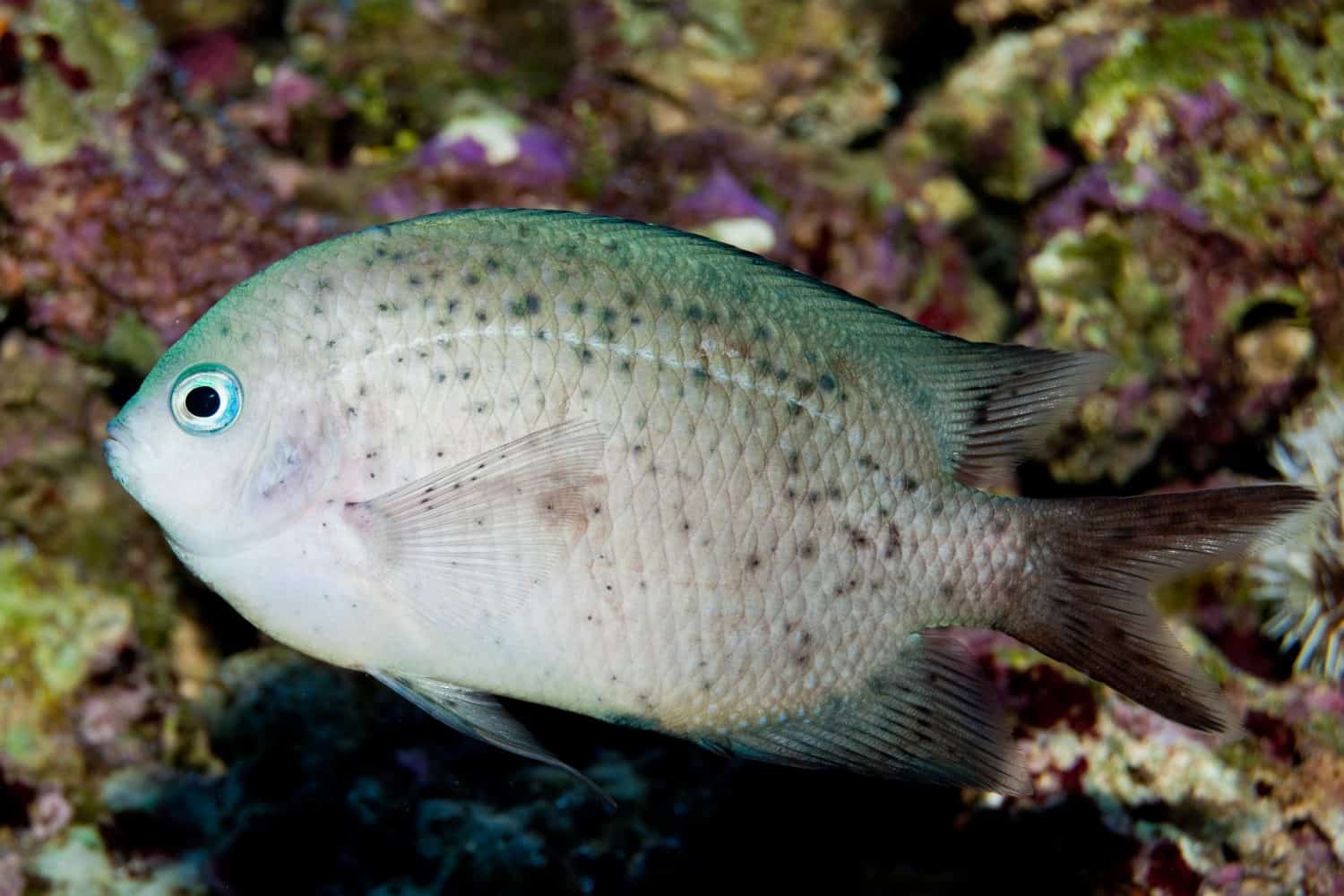
Spiny chromis were the subject of this study.
©iliuta goean/Shutterstock.com
Instead, spiny chromis are guarded by their parents from the time the eggs are laid until the baby fish reach the juvenile stage. This makes it possible for scientists to precisely control the sounds these tiny fish are exposed to across all lifecycle stages.
Researchers split the chromis into two groups of embryos, juveniles, and a mix of both. Each group heard a different sound as they grew – either motorboat noises or natural reef sounds that excluded motorboat noises. The research was conducted over a period of 78 days.
The Test Results
After the 78-day exposure period, the researchers placed the chromis in complete silence for 24 hours—no motorboat noises or reef sounds. They then tested the fish’s response to predators during this silent period.
The goal was to determine whether noise exposure caused long-term effects, rather than merely distracting the fish during testing. The researchers then simulated a predator by dropping a weight onto the water’s surface. The natural reaction of a spiny chromis is to twist into a “C” shape and quickly swim away from the perceived danger.
The fish that grew up exposed to natural reef noises for at least one stage of development responded normally—curling up and darting away from the predator—about 80 percent of the time. A few still darted toward the predator, but the majority swam away.

The study found that motorboat noise adversely impacted the chromis’ growth and behavior.
In contrast, the fish raised on motorboat sounds throughout their development responded normally only 68 percent of the time, and about 40 percent swam toward the predator instead of away.
Overall, the takeaway was that the chromis exposed to motorboat noise throughout their development were less likely to respond appropriately to a simulated predator attack.
“Our results show that exposure to motorboat noise during early development can affect growth and disrupt the escape response of juveniles, even when the escape occurs in relatively quiet conditions,” Sophie Nedelec, a researcher from the University of Exeter, said in the press release.
According to the National Oceanic and Atmospheric Administration (NOAA), sound is one of the main ways ocean animals find food, avoid predators, and communicate. Noise pollution can interfere with all of these functions, not just for fish.
Fish Size Was Also Smaller
In addition to being less defensive around predators, the fish exposed to motorboat noise during development were about seven percent smaller than those raised with natural reef sounds. This size difference is significant.
Smaller reef fish swim more slowly and have fewer energy reserves, making them easier targets for predators.
“We know from previous research that motorboat noise affects parental care behaviour, including oxygenating eggs by fanning during the embryonic phase, which is linked with their survival,” Nedelec said in the press release.
“If exposure as embryos sensitises them to noise, it’s possible that they respond more strongly to noise as juveniles. For example, it could cause stress or affect feeding, creating cumulative effects that lead to poor assessment of risk and poor decision-making, and smaller body size.”
An Earlier Study Sheds Light on a Possible Solution
A 2022 field study from the University of Exeter and University of Bristol found that reducing the number of boats and their speeds near reefs during breeding season could help preserve natural life on the reef.
The study found that when boat volume and speeds were reduced, the number of offspring that survived increased from 40 percent to 65 percent.
What Can Be Done to Help Reef Fish?
The researchers studying the spiny chromis are using data from the 2022 study to develop proposed solutions to protect this species and other reef fish.
“Limiting motorboat traffic close to reefs during the breeding season may reduce these effects and protect reef fish – thereby helping to preserve coral reefs, which are valuable and vulnerable ecosystems worldwide,” Nedelec said in the press release.
The latest study was funded by the Natural Environment Research Council.