
Quick Take
- This wasp goes beyond simply parasitizing a host. It hijacks a parasite that is already hijacking another organism, creating a chain of manipulation that defies belief. See the hypermanipulator →
- The crypt-keeper wasp struggles to chew through wood, but it engineers a situation where it never has to. How it escapes the gall →
- Scientists can see exactly what the crypt-keeper does to its host, but how it controls the host's mind remains a mystery. Explore the mystery →
- Its scientific name was borrowed from the Egyptian god of evil, and the wasp's actual behavior somehow lives up to that title. Origins of the name →
With a sinister name like the ‘crypt keeper,’ you would expect Euderus set to have a macabre lifestyle. But when scientists closely observed how it manipulates the young of another wasp species to its own advantage, the situation was even more diabolical than originally anticipated. Welcome to the gruesome world of hyperparasites.
Meet the Crypt-Keeper
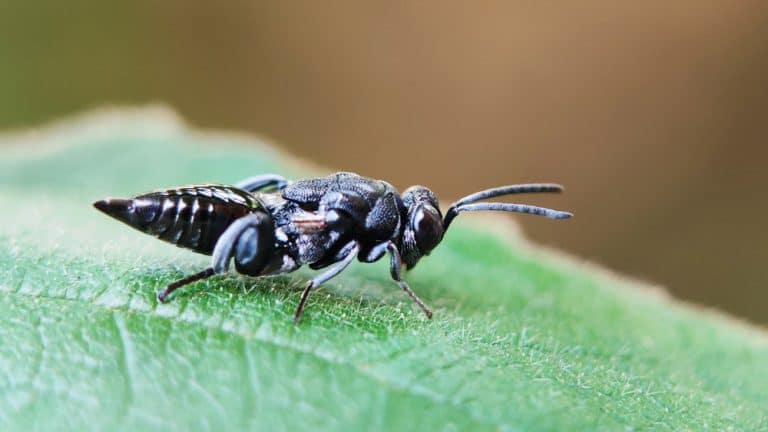
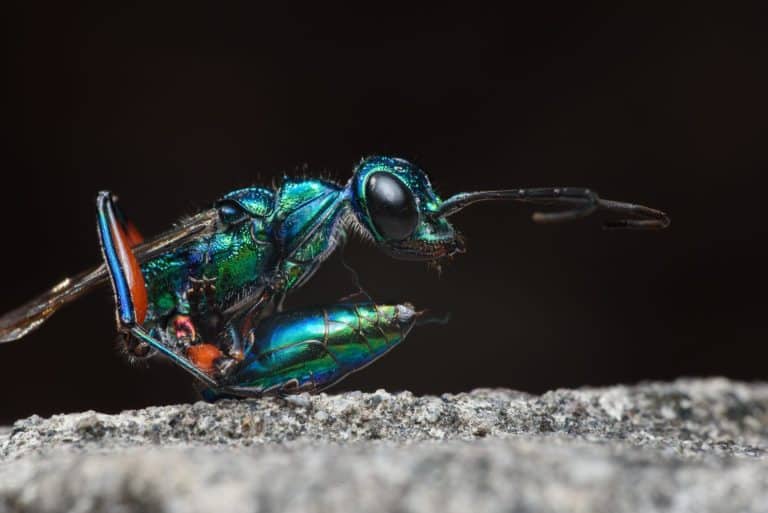
The crypt-keeper wasp (Euderus set) is a small chalcid wasp found throughout the midwestern, south-central, and southeastern United States. Most of their body is a vivid metallic green, and they can grow to around 1/10th inch in length. The males are smaller than the females.
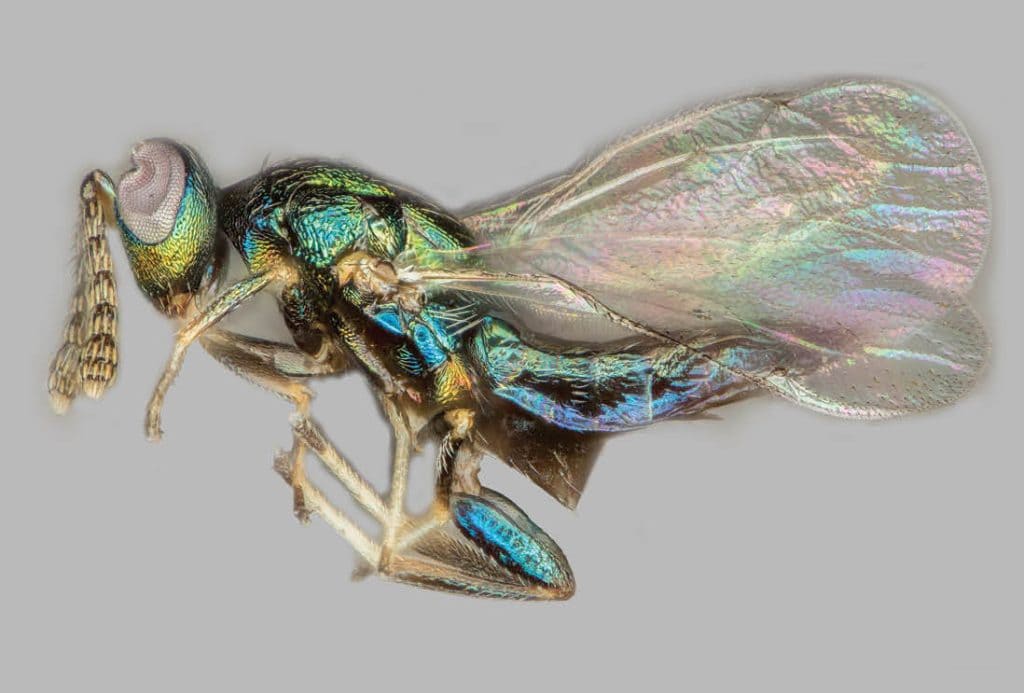
The crypt-keeper wasp controls the behavior of its host.
©Scott P. Egan, Kelly L. Weinersmith, Sean Liu, Ryan D. Ridenbaugh, Y. Miles Zhang, Andrew A. Forbes – Original / License
Their scientific name is derived from Set, the Egyptian god of evil and chaos! He tricked his brother into a sarcophagus that was sealed and cast into the Nile, and he later dismembered his body after it was recovered. What’s more, he was also reported to have control over animals like hyenas and serpents. This mirrors some of the more unpleasant aspects of this wasp’s behavior.
Which Creature Does the Crypt-Keeper Parasitize?
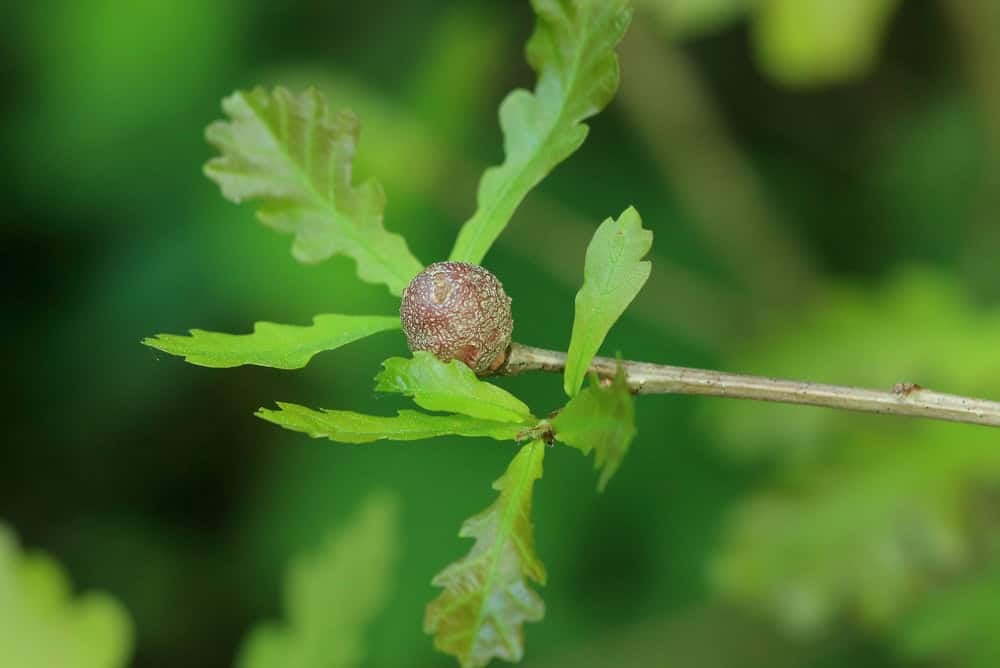
Let’s start by looking at the poor creature that the crypt-keeper wasp targets. This is the crypt gall wasp (Bassettia pallida). These wasps form galls (a swelling/growth that looks like a knobby protuberance) on plants that act as both a habitat and a food source. In the case of this wasp, the galls are formed on live oaks. The female crypt gall wasp lays her eggs into a young stem on the tree, which reacts by forming an internal, swollen gall known as a crypt. Here, the larvae emerge from the eggs and grow.
To exit, the larvae chew a small hole in the woody plant material and fly away. However, their problems start when they are parasitized by the crypt-keeper wasp.
Cryptic-Keeper Wasp Parasitic Behavior
The crypt-keeper wasp has exploited this entire life cycle for its own reproduction. The female locates a gall and inserts her eggs into it using her ovipositor (egg-laying tube). When the larvae hatch, they burrow into the larvae of the crypt gall wasp (the host). It manipulates the host larvae to speed up development and makes them quickly metamorphose into an adult.
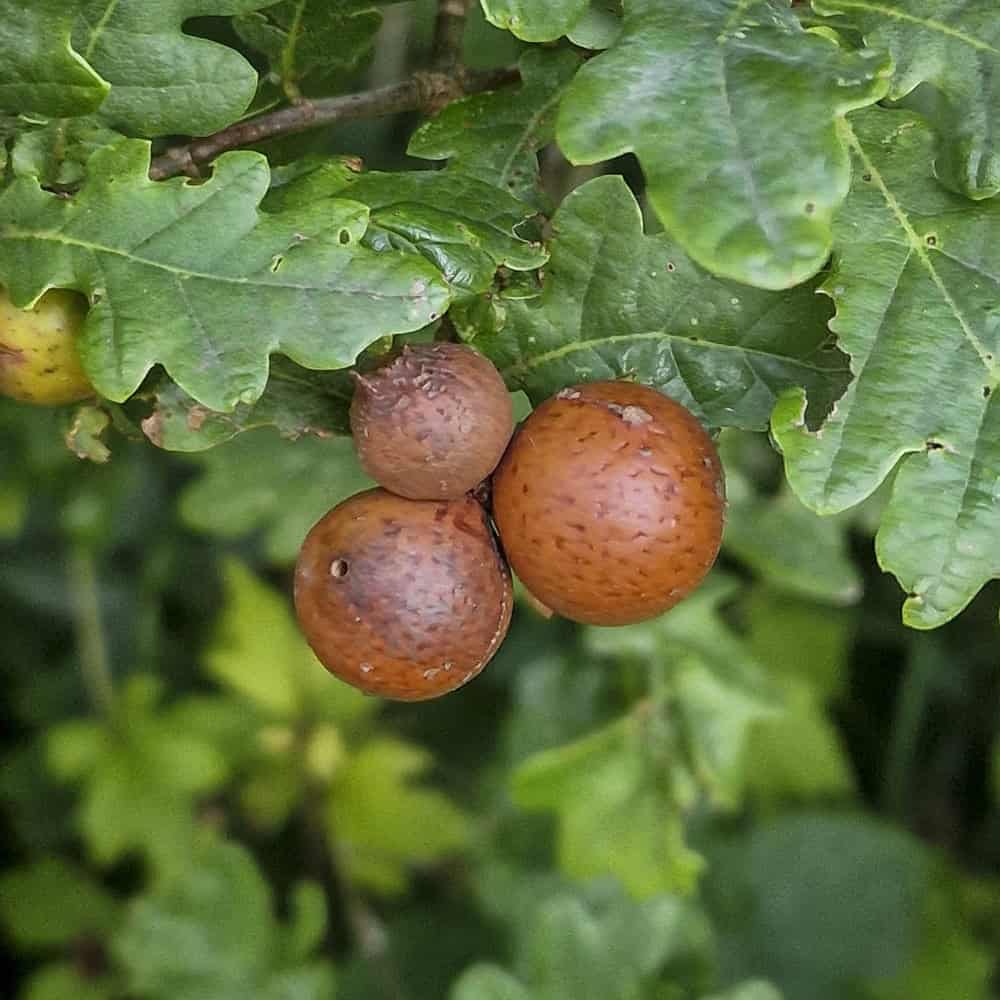
Wasps have to chew their way out of galls.
©Roel Meijer/Shutterstock.com
The crypt gall wasps now attempt to exit the gall in their usual way, i.e. by chewing their way out. However, the parasite within their bodies changes their behavior so that they chew significantly smaller holes than normal. This means that the young crypt gall wasps are effectively stuck. They die and remain partially in the crypt, plugging the emergence hole with their heads. This is a very clever use of the host by the crypt-keeper wasp, who would struggle to bite through the woody material themselves. They are a smaller wasp and can easily get out of the smaller hole, there is just the small problem of a head blocking it!
Climbing Through a Head
In a truly macabre behavior that has been observed in laboratories, the parasitic wasp feeds on the disabled body of the host wasp. Once they have matured into adults, they need to get out. So, they chew through the ‘head plug’ which is a lot easier than chewing through wood. Then they exit the gall and fly away. Some parasitoid wasps allow their hosts to survive but in the case of Euderus set, the host invariably perishes.
This makes crypt-keeper wasps ‘hypermanipulators.’ They manipulate the behavior of another parasite (the crypt gall wasp), which in turn manipulates the behavior of the oak tree into creating galls. If this is blowing your mind, take a moment to think about the poor crypt gall wasp and what is happening to its mind during this process!
Poorly Understood Mind Control
While it’s clear that the presence of the crypt keeper wasp makes the crypt gall wasp behave very differently, the mechanism behind it remains unknown. Some other parasitoid wasps control their hosts’ behavior through chemicals (venom) or possibly via viruses that invade that host’s nervous system. Further research is needed to establish how the crypt keeper wasp makes the crypt gall wasp chew a smaller hole than normal. Research has already established that the crypt keeper wasp will also parasitize some other gall wasp hosts.
Studies have indicated that the type of gall may be crucial when selecting a potential host. The crypt keeper wasp does not have the long, exerted ovipositors seen in some other parasitoid wasps. Therefore, they may be limited to attacking hosts that are not buried deep within a gall nor protected by complex defense structures.
Scientists also want to establish how common this behavior is in other species. Given that parasitoid wasps may represent one of the most species-rich groups of animals on Earth, there could be many other wasps with similarly macabre life cycles that we simply have not yet discovered!