
If you are fascinated by snakes or want to avoid them at all costs, you might be curious to know which rivers in Mississippi have the most snake activity. Mississippi is home to more than 30 snake species, some venomous and some harmless.
Many snakes are aquatic or semi-aquatic, meaning they live near or in the water. In this article, we will explore some of the most snake-infested rivers in Mississippi based on reports and observations from locals and experts.
We will also tell you what kinds of snakes you can expect to find in these rivers and how to stay safe if you encounter them. Whether you are a snake lover or a snake hater, you will find this article informative and intriguing.
So, let’s dive into the world of Mississippi’s slithering residents and discover the most snake-infested rivers in the state.
Water Snakes Found in Mississippi
There are many species of water snakes found in Mississippi. Some of these are venomous, but most are completely harmless to people. Here are some of the most common and recognizable species:
Diamondback Watersnake
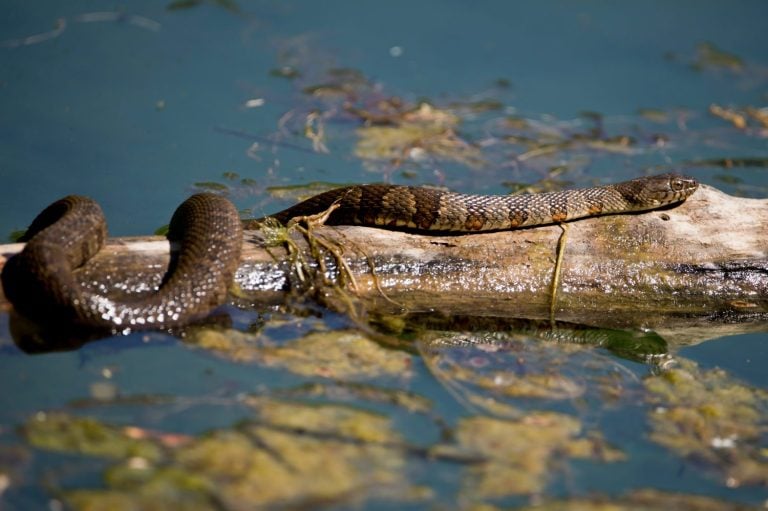
The Diamondback Watersnake is a non-venomous snake throughout the central United States and northern Mexico. It’s particularly prominent in the Mississippi River valley. It’s a large snake, reaching up to 60 inches. Therefore, it can be pretty scary. However, it’s completely harmless to people.
As its name suggests, it’s most well-known for the black diamond pattern along its back. It feeds on a variety of aquatic animals, including fish and frogs. While it is mistaken for the cottonmouth regularly, you can tell the difference due to the rounded pupils and slender head.
The Diamondback watersnake is active during the day and night, depending on the season and temperature. It likes to bask on branches or rocks near the water and will drop into the water if disturbed.
Northern Watersnake
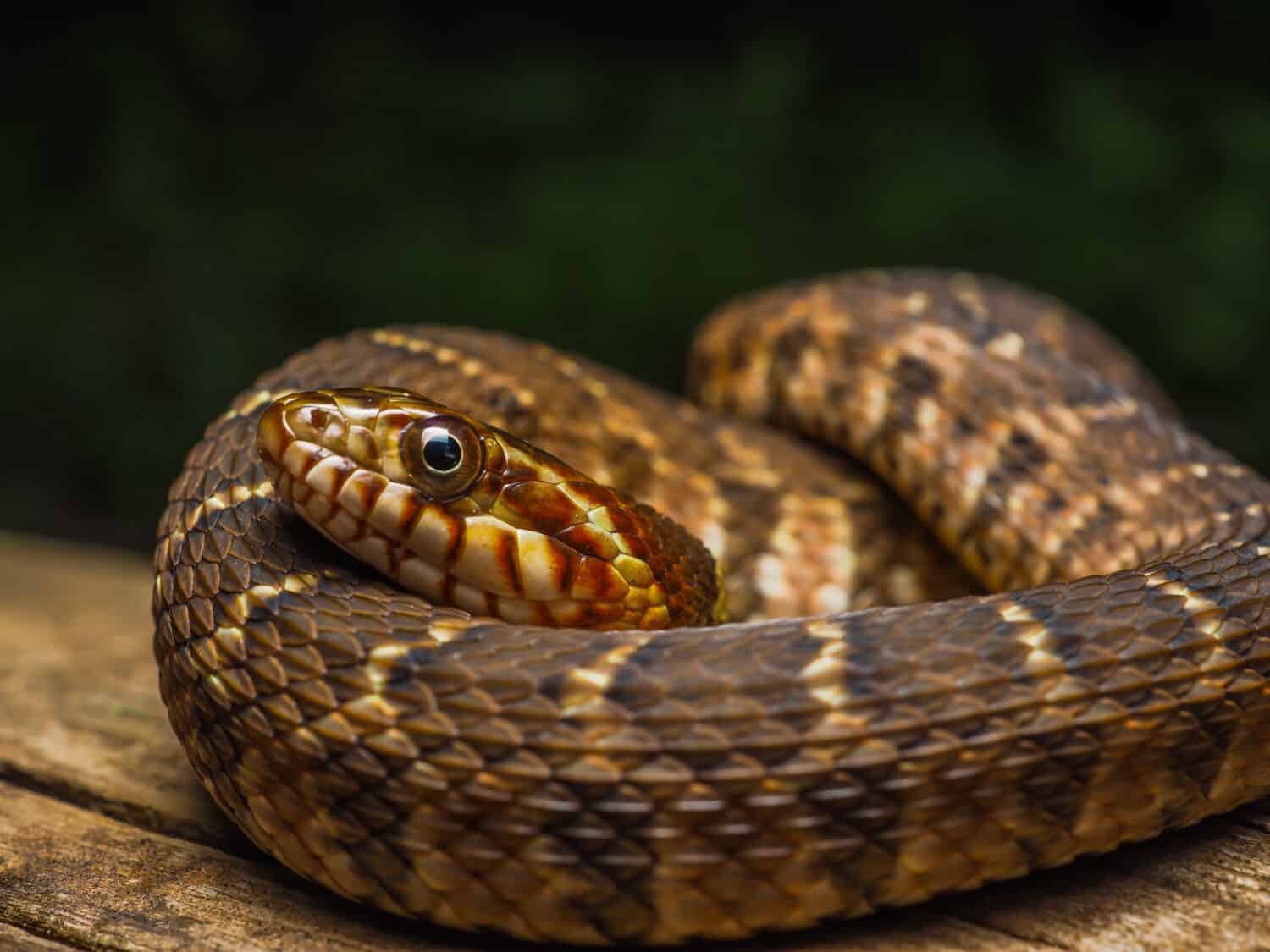
The Northern watersnake is another non-venomous snake that’s found in Mississippi. It has a gray or dark brown body with dark crossbands or blotches. Its markings tend to become faded with age, allowing you to determine the age of the snake. It grows to about 50 inches long and has a rather slender head.
Like most watersnakes, it feeds on amphibians, fish, and other small animals. It’s often mistaken for the cottonmouth, as it spends time in the water. However, it doesn’t have heat-sensing pits and is much more slender.
This snake is active during the day and night. It usually hangs on branches and rocks near the water, dropping if disturbed. It can be aggressive if cornered or handled but is typically very harmless.
Saltmarsh Snake
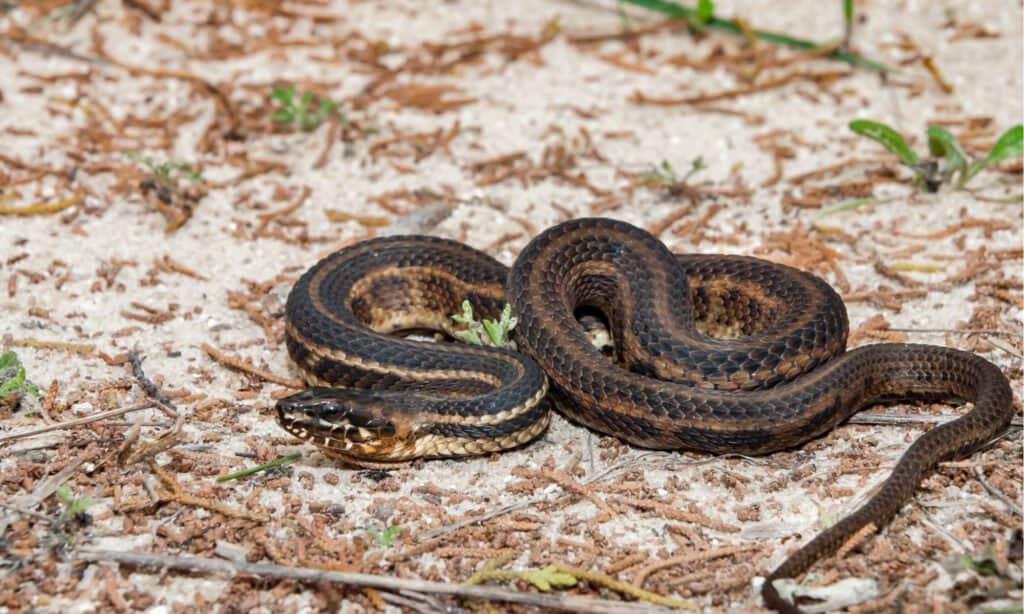
The saltmarsh watersnake can be found in many rivers in Mississippi.
©Jay Ondreicka/Shutterstock.com
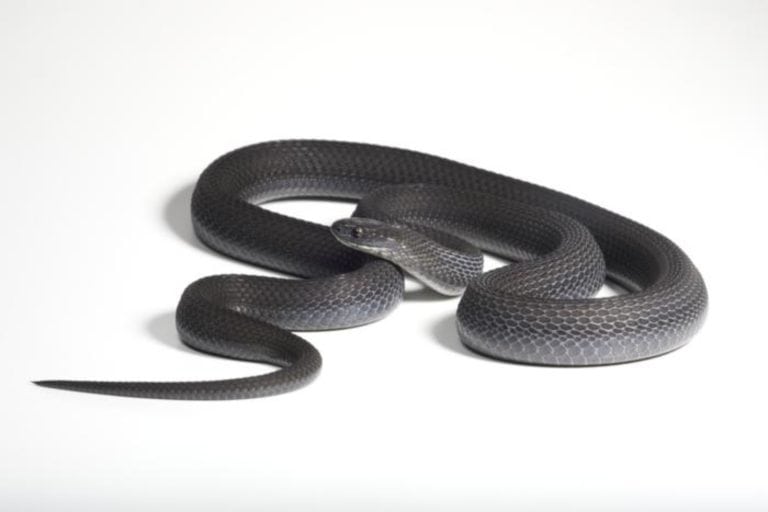
There are three subspecies of saltmarsh snake. The Gulf salt marsh snake is the species found in Mississippi, though. It usually has a gray to dark brown body with darker stripes or bands. They may be broken up into blotches, as well.
This snake grows up to 30 inches, making it smaller than most snakes. It is also rather slender and has very rounded pupils, like most non-venomous snakes. It feeds on fish, crustaceans, and other small aquatic animals and kills them by constriction. You can tell it apart from a cottonmouth due to its lack of heat-sensing pits.
These snakes aren’t aggressive or harmful to humans. They may bite if cornered, but they tend to keep to themselves.
Mississippi Green Watersnake
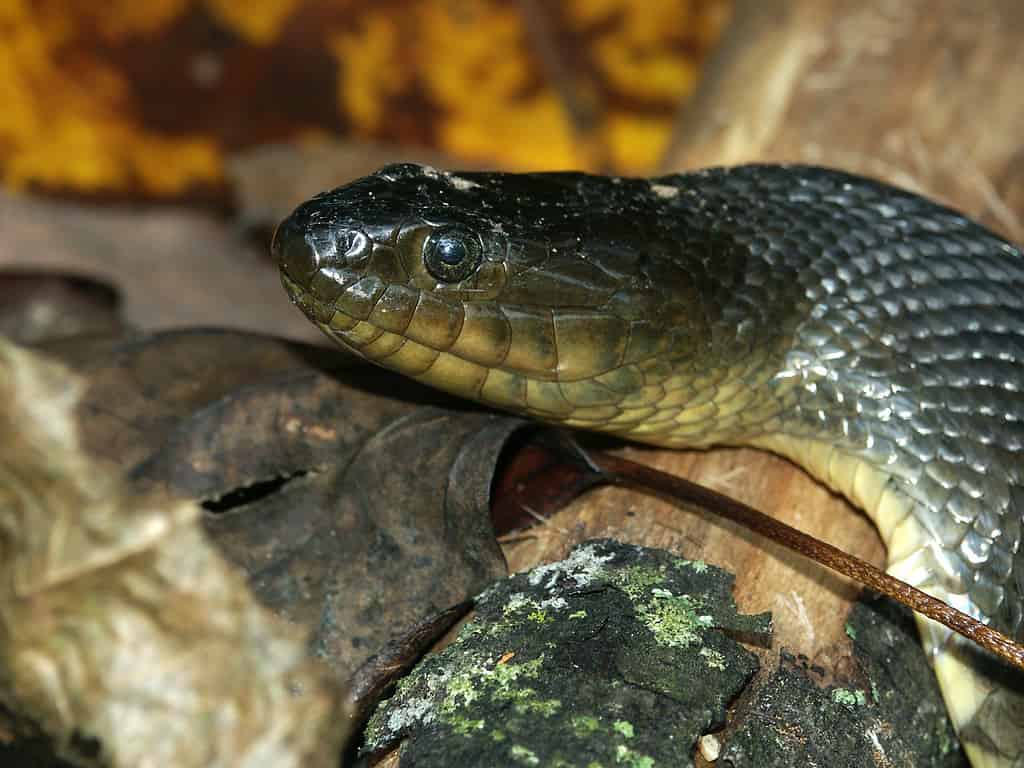
You can only find the Mississippi Green Watersnake in the Pearl River.
©Jason Patrick Ross/Shutterstock.com
The Mississippi Green Watersnake is another non-venomous snake species found in Mississippi. They have medium-sized bodies that are pretty thick and darkly colored. Their olive-green back is typically covered with dark spots or blotches. They grow up to 55 inches, usually.
They eat a range of aquatic animals, including fish and amphibians. These snakes kill crayfish, for instance, and consume them.
This species is endemic to the Pearl River system in Mississippi, which means that is the only place you will find them. They live in marshes, ponds, lakes, and other places with slow-moving water.
They’re generally harmless, but they will bite if threatened. It is best to leave them be.
They are rarer snakes, largely due to their smaller range. It’s currently protected by state law for this reason.
Plain-Belled Watersnake
The plain-belled watersnake is a non-venomous species that you can find throughout Mississippi. It has a plain belly, as you might expect from its name, that’s typically orange or yellow. It’s a mostly patternless snake with a large body. It may have a brown or gray back. Some faint dark blotches are common.
It grows to around 40 inches, so it is smaller than many other snakes on this list. This species has a very slender head with round pupils.
It feeds on aquatic animals, including amphibians and fish. You’ll find it in many different bodies of water, including rivers, lakes, and ponds.
Southern Watersnake
The southern water snake is another species in snake-infested lakes in Mississippi. They’re thick-bodied. It grows very long – up to 60 inches. This species also has a brown or grey body, like many snakes on this list. It usually has dark bands or blotches that can be broken or faded. This species often has a brown or yellow belly.
Like many non-venomous snakes, they have slender heads and round pupils.
You’ll find these snakes in swamps, rivers, ponds, lakes, and even brackish water along the coast. They’re adaptable and hardy, allowing them to live across a large range.
Snake-Infested Rivers in Mississippi
There are several rivers found in Mississippi that may be home to many of the species of watersnake we discussed above. Other species may live near the rivers, even if they don’t technically fall into the “water snake” category.
There is no exact measurement for the number of snakes found in a river. No one goes out and counts them, after all. However, here are some rivers that have frequent snake sightings.
1. Mississippi River
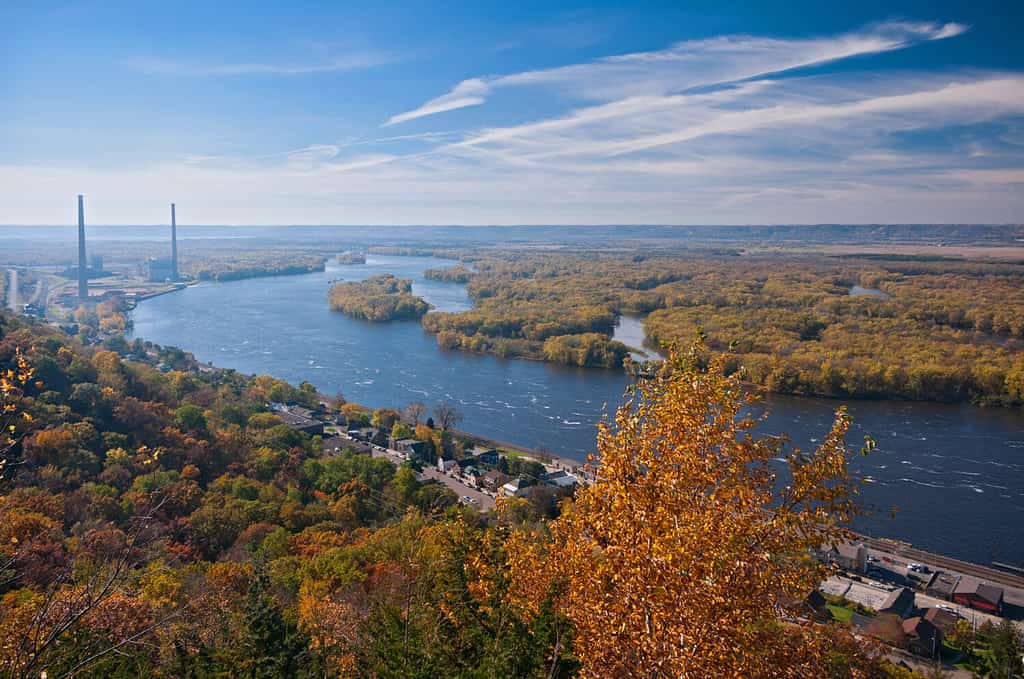
The Mississippi River is home to many snake species.
©Joe Ferrer/Shutterstock.com
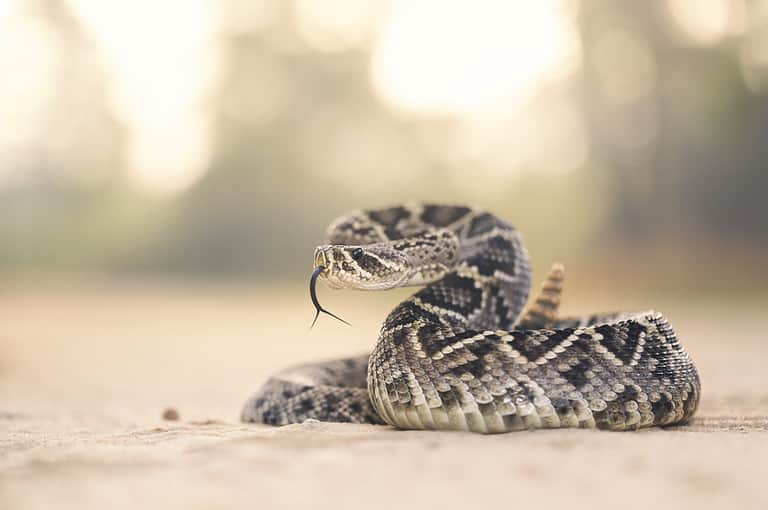
The Mississippi River is one of the largest rivers in the state, so it is home to many wildlife species. Some of these are snakes. For instance, you’ll find the northern water snake in the river. You may also find the timber rattlesnake and cottonmouth around the river, though these aren’t technically water snakes.
This river is arguably one of the most important in North America. It flows through the middle of the continental USA and into the Gulf of Mexico. It’s also the second-longest river in the United States.
2. Arkansas River
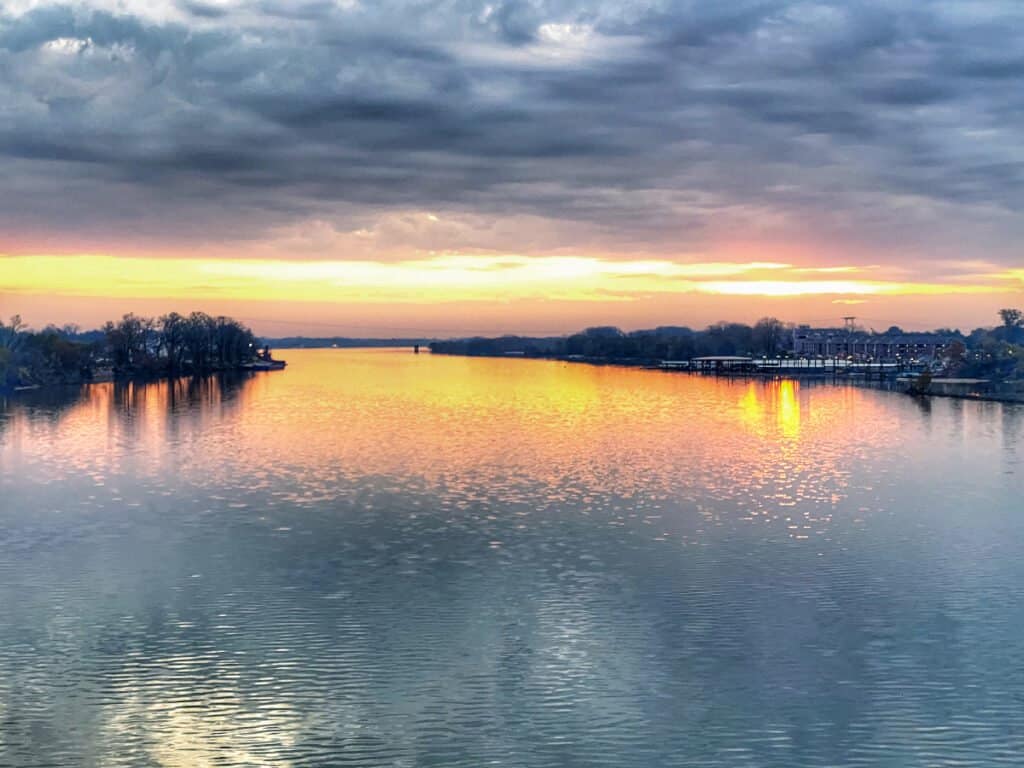
The Arkansas River also runs through Mississippi.
©iStock.com/Michael Dean Shelton
The Arkansas River is a major tributary of the Mississippi River. You’ll find many of the same species, as well as a few different ones. For instance, you’ll find the diamondback water snake and swamp snake. The cottonmouth may also be located in this river, so you do have to watch out for venomous snakes.
3. Pearl River
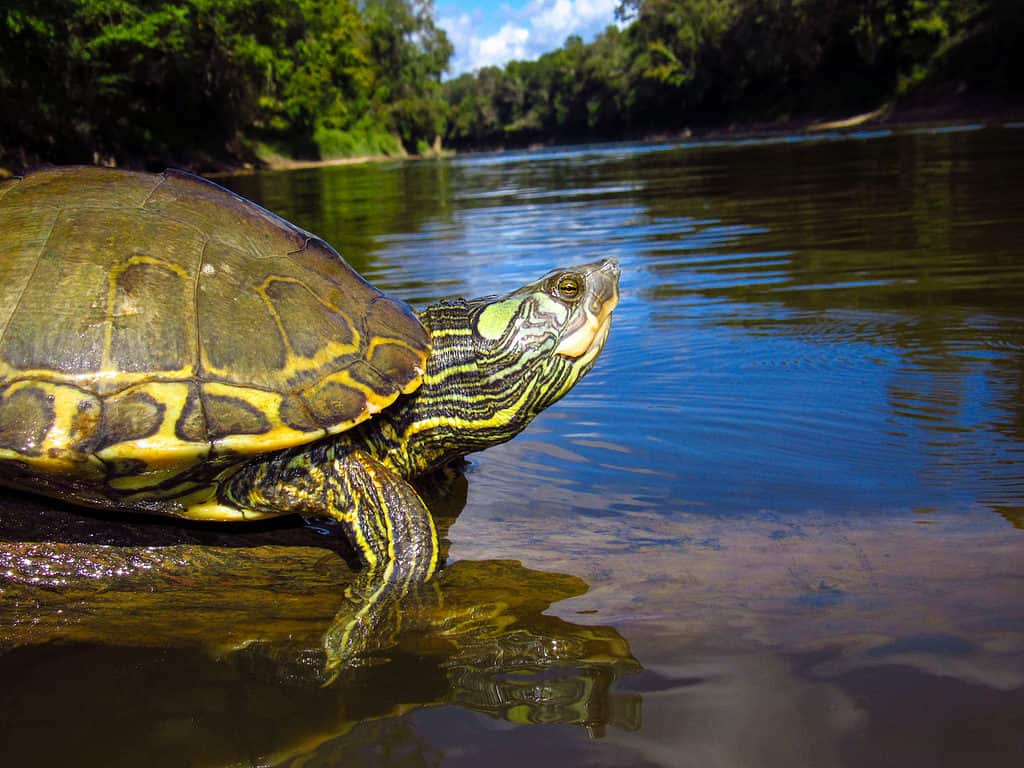
The Pearl River is home to many specialized species.
©Gabbie Berry/Shutterstock.com
The Pearl River forms part of the border between Mississippi and Louisiana. It’s home to several species, including the rare Mississippi green water snake. Of course, you’ll also find some venomous snakes too, such as the cottonmouth.
This river has a meander length of 444 miles and contains large areas of hardwood swamp and cypress warm. It’s home to many wildlife species, including sturgeon and black bears. The mouth of the river creates several types of marsh habitats of different salinities, so you’ll find some rare species.
Summary of the Most Snake-Infested Rivers in Mississippi
| Rank | Lake | Snakes Found |
|---|---|---|
| 1 | Mississippi River | Northern water snake, timber rattlesnake, eastern hognose snake, cottonmouth |
| 2 | Arkansas River | Broad-banded water snake, diamondback water snake, Graham’s crayfish snake, Gulf swampsnake |
| 3 | Pearl River | Rattlesnake, cottonmouth, Mississippi green snake, coral snake |
Other Animals Found Near Rivers in Mississippi
There are tons of other animals in and around the Mississippi River beyond snakes. From fish to mammals, from mussels to insects, the river and its surroundings are home to many species that have adapted to the aquatic environment.
When exploring the river, you may come across various animals, such as otters, coyotes, deer, beavers, muskrats, mink, voles, shrews, opossums, and skunks. All of these creatures play a significant role in the river ecosystem, and each has its distinct behavior. For instance, otters are known for being playful and skilled swimmers who hunt for fish and other prey. Meanwhile, beavers contribute to the ecosystem by constructing dams and lodges, which create wetlands along the river.
Mussels play a crucial role in the river’s ecosystem and possess intriguing life cycles, whereas skunks are equipped with the ability to release a malodorous spray as a defense mechanism against predators.
You can also find more than 120 different kinds of fish in the river, such as catfish, carp, bass, and sturgeon.