
Quick Take
- A sea star's death can be so gruesome it defies belief. It is also the reason California's underwater forests are now on the verge of collapse. See how it unraveled →
- Purple sea urchins have a secret weakness that scientists are now weaponizing to save an entire ecosystem. Discover the fear effect →
- The collapse of one species caused another population to surge by a staggering percentage, and the math alone reveals how quickly nature can unravel. See the 10,000% surge →
Beginning in late 2013 and intensifying through 2014–2015, an extreme marine heatwave known as ‘The Blob’ struck the Pacific Coast. It devastated marine life, killing off vulnerable species crucial to the region’s ecosystem. Sunflower stars (Pycnopodia helianthoides) were particularly affected and met a gruesome end, with 90 to 100% of the population killed in some areas.
The infected sea stars were marred by white spots, contorted limbs, and tissue decay. Sadly, this wasn’t the end for many individuals. These conditions preceded an unnaturally horrifying death as the body of each sea star lost its structural integrity, causing it to liquefy only days after symptoms appeared.
At the time, scientists couldn’t identify the cause. It wasn’t until 2025 that scientists found the culprit: a strain of the bacterium Vibrio pectenicida. By that time, much of California’s underwater habitats—including its kelp forests—were already suffering. Now, more than a decade later, scientists are putting a plan into action to save the “redwoods of the sea” by using one endangered species to save another vulnerable species.
California’s Heatwave Paved the Way for a Predator
When one species falls, it can open the door for another to thrive. The 2013 heatwave, named “The Blob,” affected more than 20 sea star species from Alaska to Mexico, covering a 3,000-mile range. It exacerbated conditions worsened by climate change and already-rising sea temperatures. Scientists later confirmed that marine bacteria, which multiplied unchecked in extreme conditions, played a role in the mass die-off of sunflower stars.
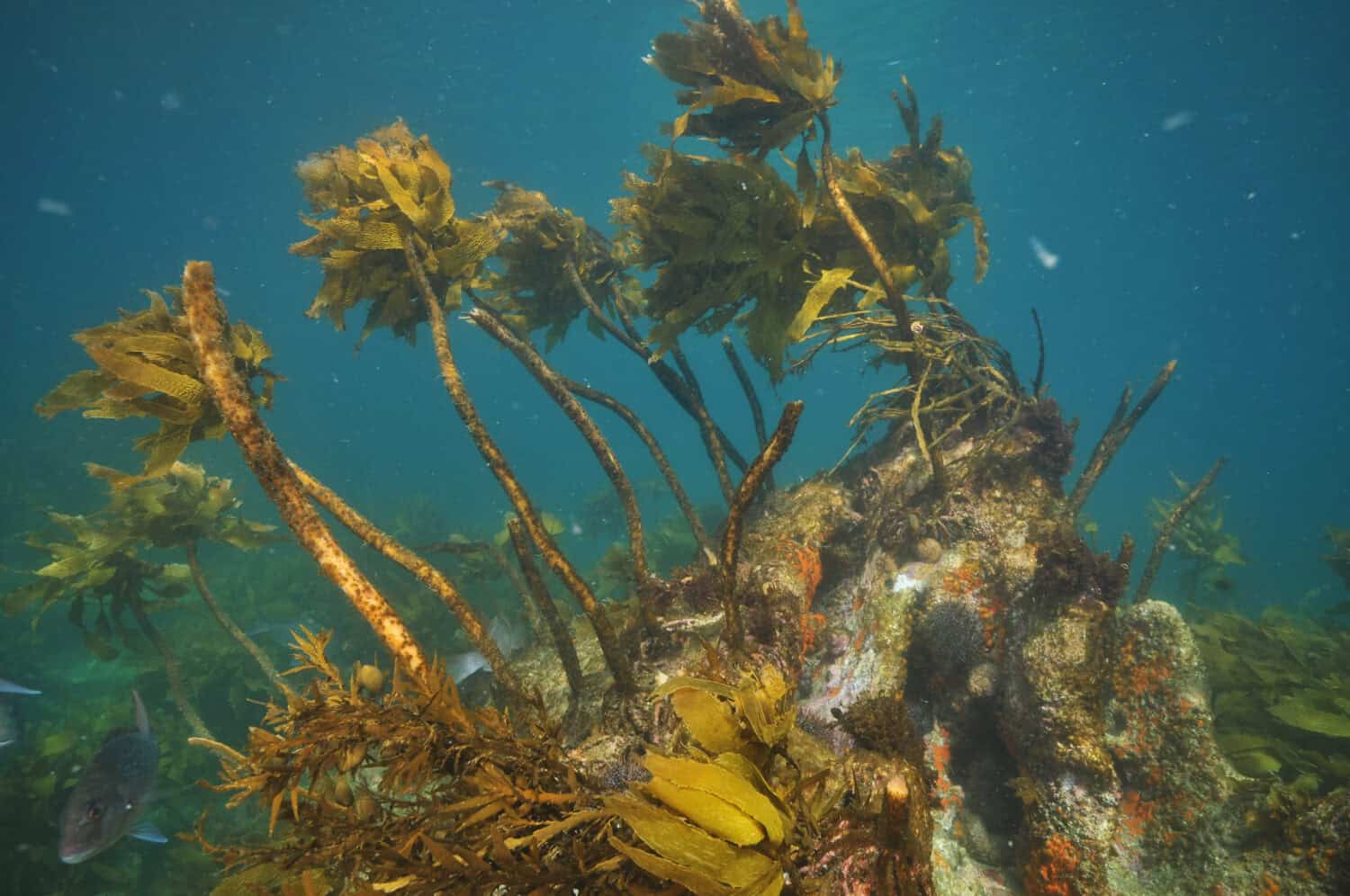
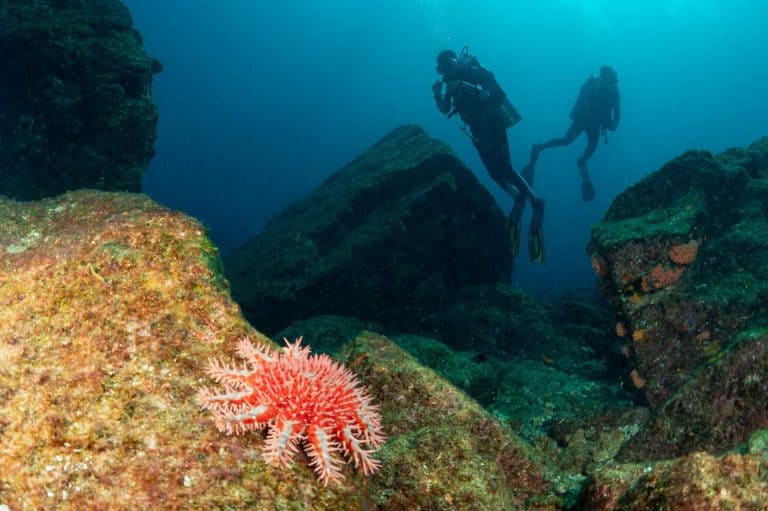
Kelp forests are crucial to mitigating climate change.
©Daniel Poloha/Shutterstock.com
Sunflower stars are the gatekeepers of California’s kelp forests. They eat predators like purple sea urchins, which feed on kelp. When this balance was disrupted, sea urchin populations exploded. Sunflower stars continued to die as sea star wasting disease (SSWD) swept through the Pacific, while their natural prey grew in number.
The following years made it clear that sunflower stars would not rebound. Their numbers were decimated, leaving few individuals left to reproduce. And even if they could, each sunflower star takes 2 to 3 years to reach sexual maturity, time that sea stars did not have. Since 2014, the purple sea urchin population has increased by 10,000% in places like Oregon. A lack of natural predators has further contributed to their growing numbers. This left an indelible mark on kelp forests, which sea urchins rapidly consumed. In December of 2020, the IUCN declared sunflower stars Critically Endangered.
Sunflower Star Laboratory Steps In
As of 2026, Northern California has lost 90% of its bull kelp forests due to purple sea urchin predation. Some estimate this number is even higher, at around 96%. Without an intervention, the world could do nothing but stand by and watch an entire ecosystem collapse. But one nonprofit stands between that grim reality and a chance to save Northern California’s kelp forests.
Sunflower Star Laboratory, co-founded by Ashley Kidd, developed a unique, albeit unusual, method for rebalancing marine ecosystems. Together with her team, Kidd worked to restore the critically endangered sunflower star. Their in-lab efforts showcase the ultimate success in conservation, with the potential to bring a nearly extinct species back from the brink.

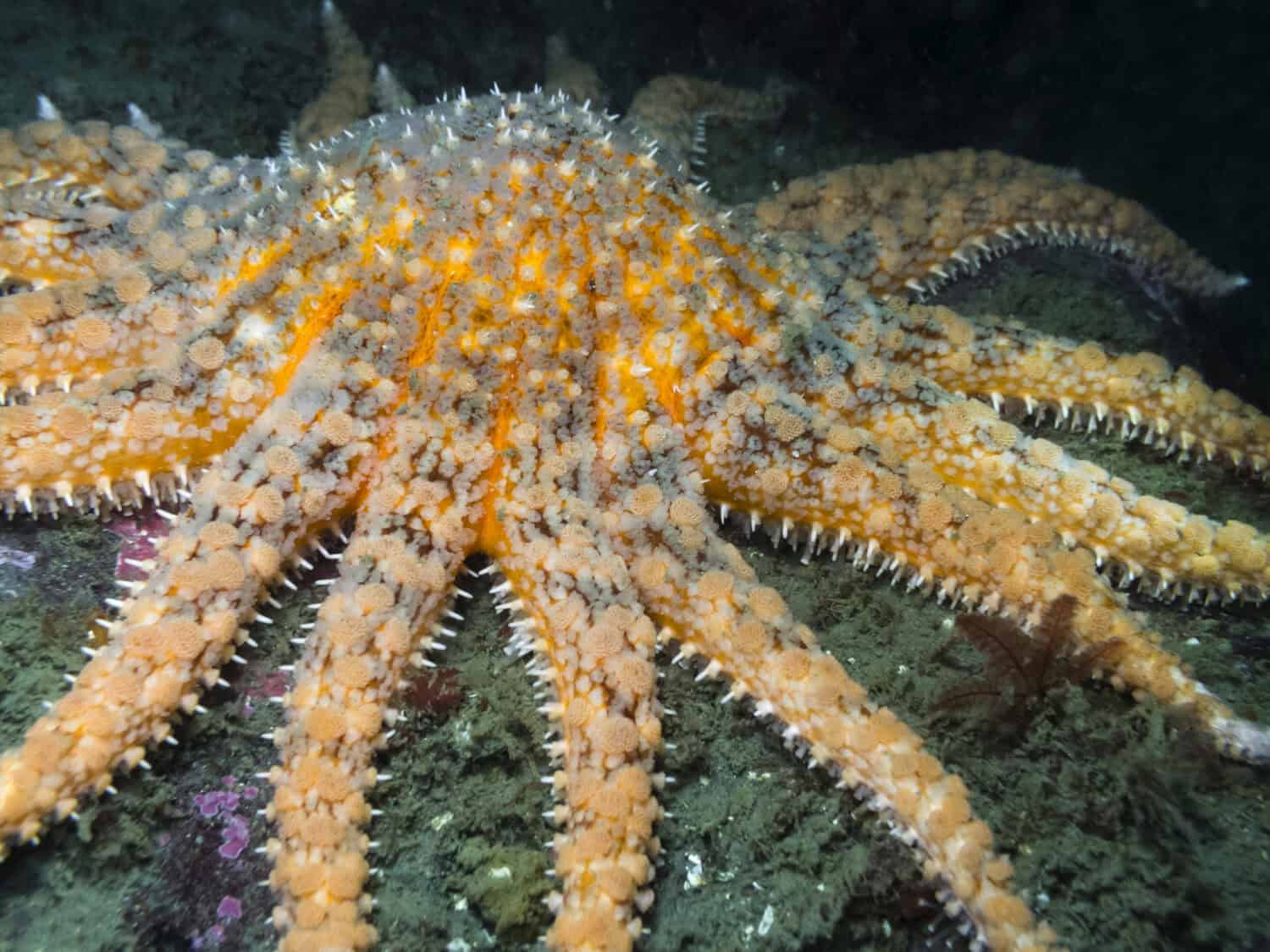
Sunflower stars can grow up to 24 arms and eat up to 4 purple sea urchins per day.
©naturediver/ via Getty Images
While the population once sat at a healthy six billion individuals, it now comes down to the sunflower stars Kidd and her team recently released in California’s remaining kelp forests. On average, one sunflower star consumes 3 to 4 purple sea urchins per day. They use hundreds of tiny feet to secure the urchin before sucking out and eating its soft body. Researchers are now using advanced breeding methods to boost lab-grown sunflower star populations before releasing them into the wild. If successful, purple sea urchins will be driven out of kelp forests.
The Halo of Fear Effect
Sunflower stars and purple sea urchins have a distinct relationship. Purple sea urchins can smell sunflower stars, which instinctively causes them to scatter. As in many predator-prey relationships, the sea urchins naturally fear the sea stars, which easily overwhelm them with their size and inescapable 24-armed reach.
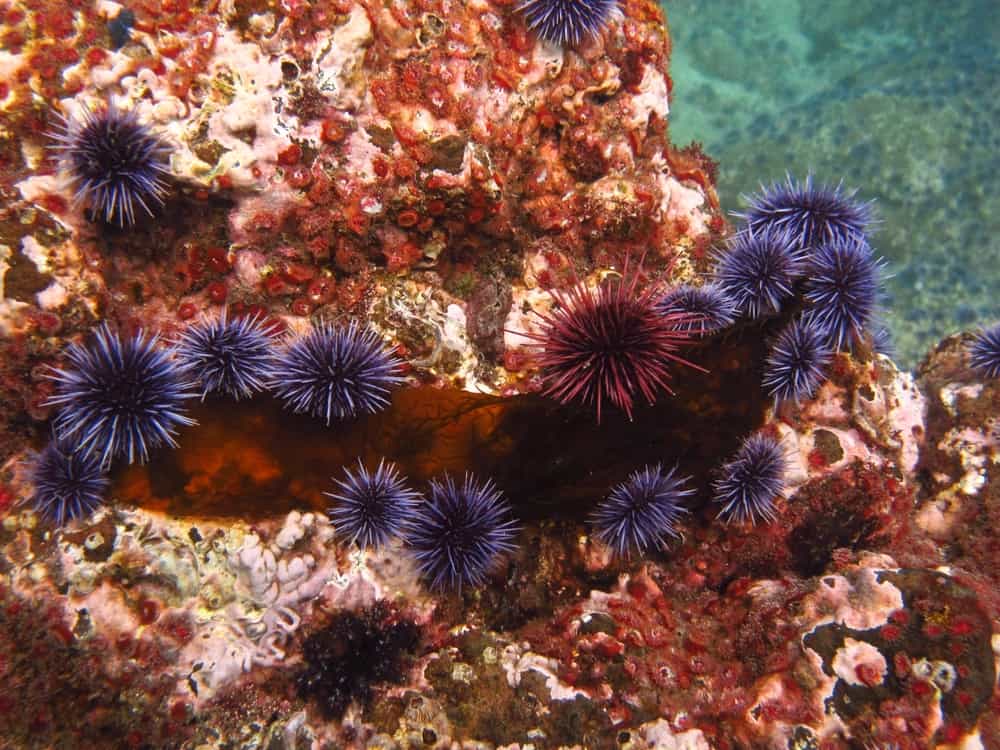
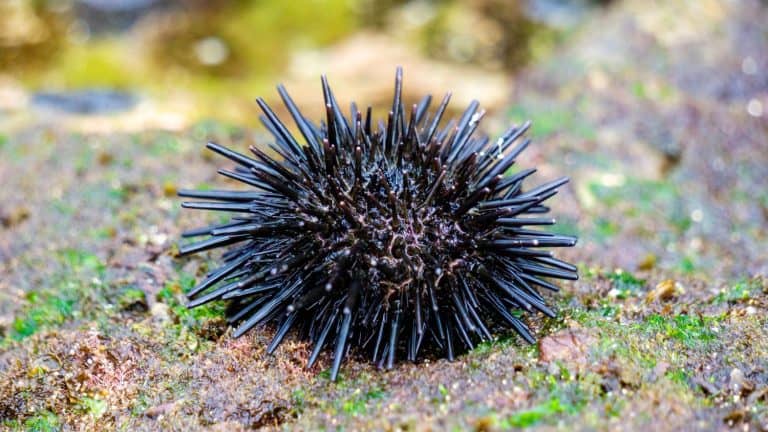
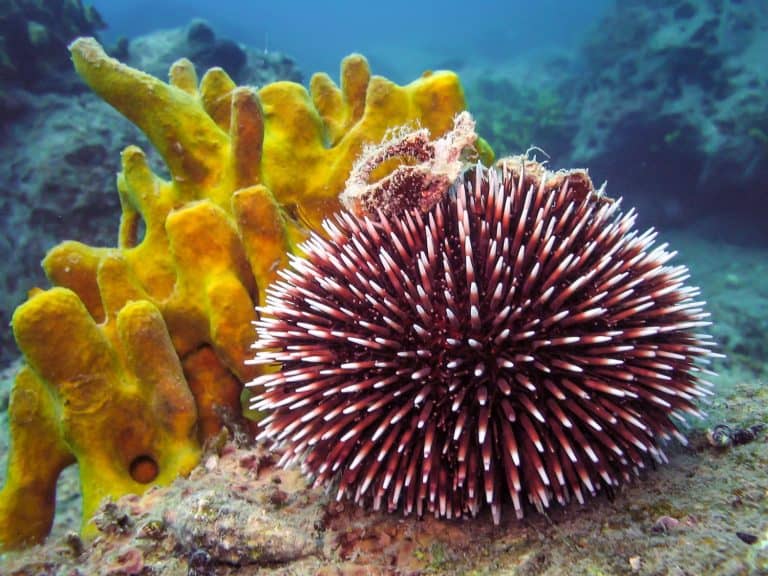
Purple and red sea urchins feed on kelp and can decimate a forest if left unchecked.
©Brandon B/Shutterstock.com
Scientists say this is the key to defending California’s kelp forests. If enough sunflower stars can be relocated and survive, they will restore a critical balance. The initial release is the first in California’s history and is only a trial run. Researchers are releasing sunflower stars to track their movements and determine whether full restoration is an option. So far, the results have been positive: Many sea stars left their underwater cages to explore, indicating little hesitation toward a new environment.
Why Our Future Depends on Saving Kelp Forests
For many, “out of sight, out of mind” applies to many marine ecosystems. It’s easier to realize the importance of trees when we see them every day. Kelp forests play an equally crucial role in the environment, and losing them would ripple worldwide.
Locally, kelp forests provide essential habitats for native marine life. For the sunflower stars that will soon call these forests home, kelp provides food, shelter, and nesting grounds. However, they also feed and protect vulnerable Pacific fish and microorganisms. When healthy, kelp can grow up to 150 feet tall, averaging up to 18 inches per day under ideal conditions. Their massive size reflects how many species they can shelter and, conversely, how many would be displaced without them.
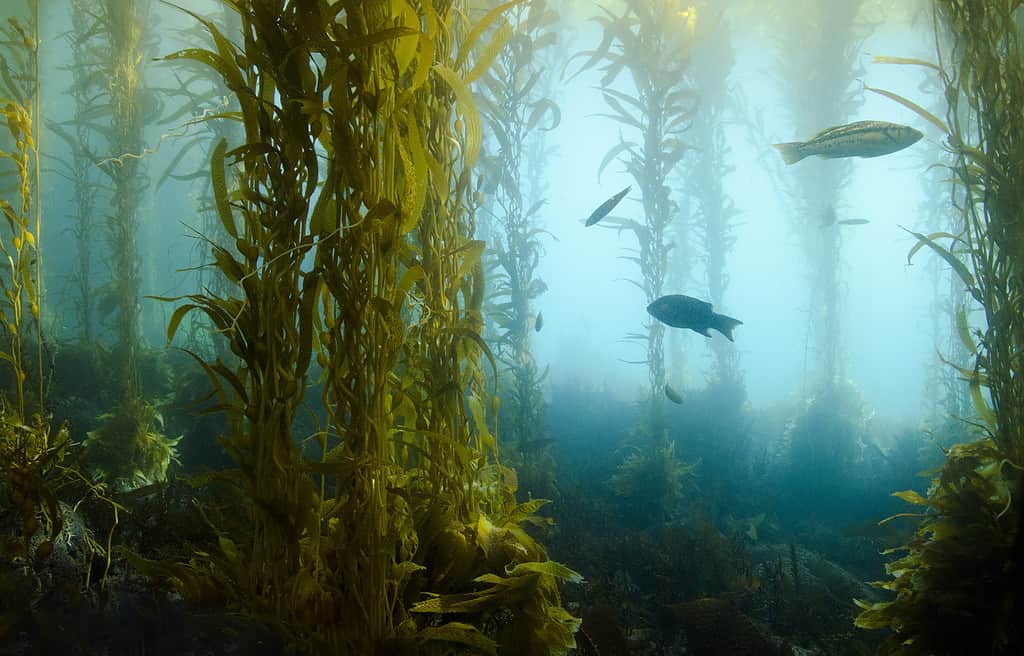
Kelp forests provide essential habitats for more than 1,000 Pacific species.
©iStock.com/Shur_ca
Globally, kelp’s rapid growth requires a tremendous amount of carbon dioxide. Despite living underwater, kelp sequesters significant amounts of CO₂ from the atmosphere. This helps reduce greenhouse gases and counteracts the devastating effects of climate change. Another key benefit is water filtration, which helps prevent diseases and bacteria—such as SSWD—from going unchecked.