
Quick Take
- Warthogs have tusks that seem built for digging, though they don't actually use them that way. See how tusks are used →
- Warthogs have developed an interesting physical workaround just to eat grass, and it is something you would have to see to believe. See the knee-walking adaptation →
- The place warthogs must visit to survive is also the place most likely to get them killed. See the dangers at watering holes →
Common warthogs (Phacochoerus africanus) and desert warthogs (P. aethiopicus) are tough, sparsely haired mammals with large heads, sharp upward-curving tusks, and distinct protective facial warts. Mature warthogs stand 25 to 33 inches tall at the shoulder and weigh between 100 and 330 pounds. Males (boars) are larger than females (sows). They are widespread across sub-Saharan Africa in savannas, grasslands, and woodlands. Although their diet consists primarily of plant matter, warthogs are opportunistic omnivores that will supplement with animal protein. Continue reading to discover everything you need to know about what warthogs eat.
What Foods Do Warthogs Eat?
Warthogs are omnivores whose diet consists primarily of plant matter, including grasses, plants, roots, and bulbs. However, they also eat insects, worms, small mammals, reptiles, and carrion (dead animals), especially during the dry season. A warthog is a member of the pig family, Suidae. There are two species of warthogs, the common warthog and the desert warthog.
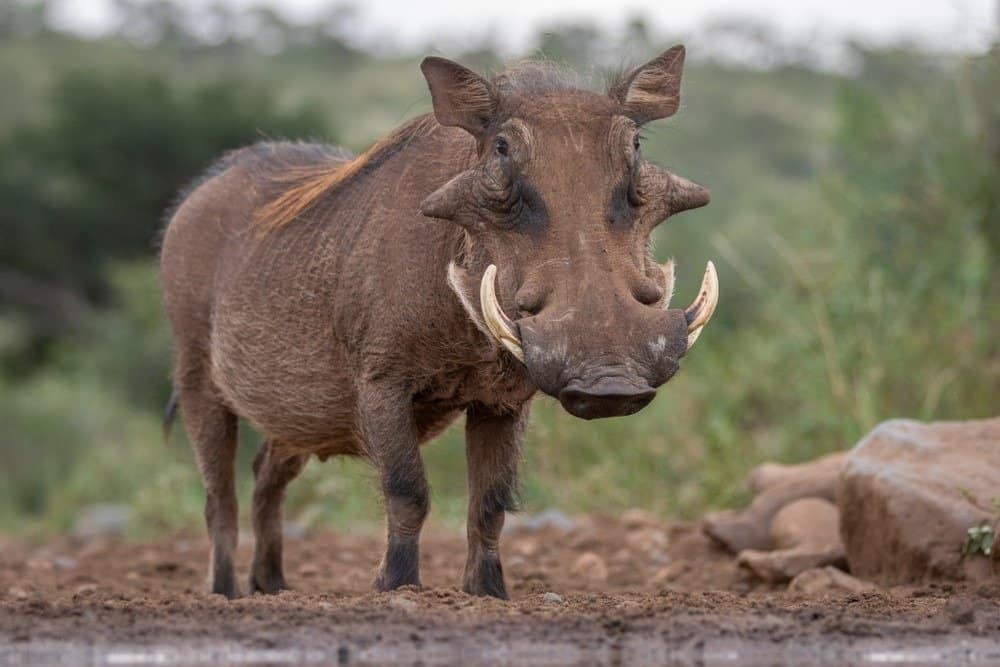
Warthogs are omnivores that eat a variety of foods.
©Wim Hoek/Shutterstock.com
The common warthog is specifically adapted to live on the savanna. Common warthogs are opportunistic omnivores that will eat almost anything. Their diet consists of grasses, roots, berries, and bark, but they also eat fruit, fungi, insects, eggs, and even carrion.
Savanna grasslands experience dry and wet seasons, and common warthogs adapt as the climate changes. During the wet season, common foods include grasses and berries when available. Rain often brings an abundance of food, but in the dry season, common warthogs must dig to find food.
In the dry season, grass dies out, and berries and fruits stop growing. Warthogs are adept at digging and have an excellent sense of smell. Common foods during the dry season include bark, bulbs, roots, and tubers.
Desert warthogs are less widespread than common warthogs and are found in parts of Northern and Southern Somalia, Eastern Ethiopia, and Northern Kenya. Their habitat is primarily desert, and their dietary habits are adapted to these dry environments. Desert warthogs travel in groups, foraging on grasses, plants, flowers, and fruits. They also eat rhizomes, tubers, bulbs, bark, and insects.
Foods that common warthogs and desert warthogs eat include:
- Grasses
- Tubers
- Roots
- Bulbs
- Rhizomes
- Bark
- Insects
- Fruit
- Leaves
- Berries
- Carrion (rarely)
- Dung
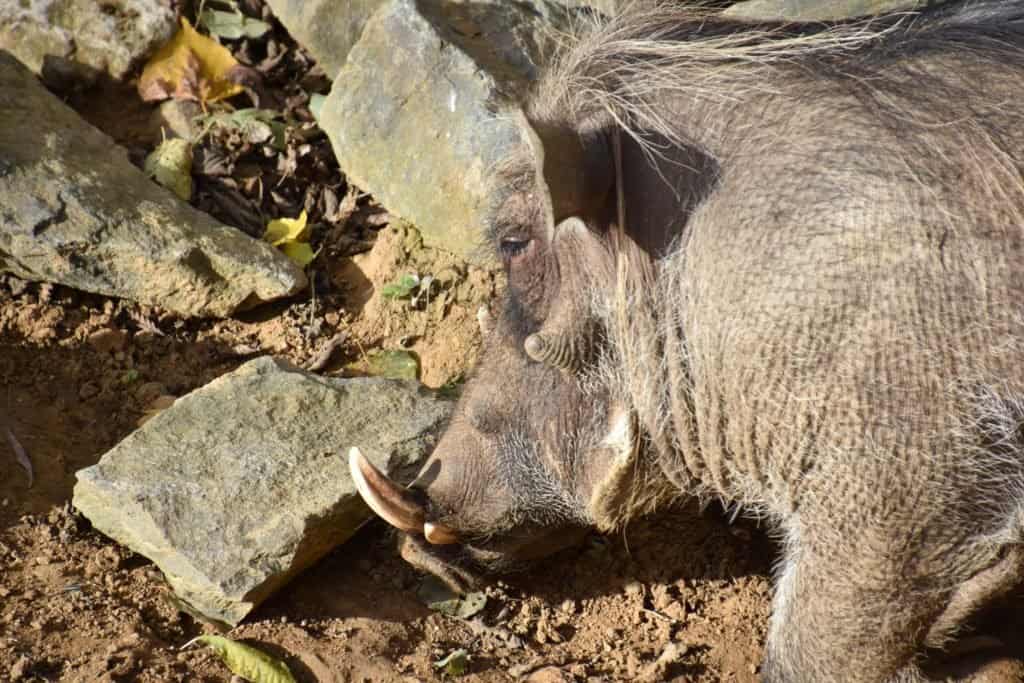
Warthogs are foragers and look for food most of the day.
©Millie Bond – Copyright A-Z Animals
How Do Warthogs Get Their Food?
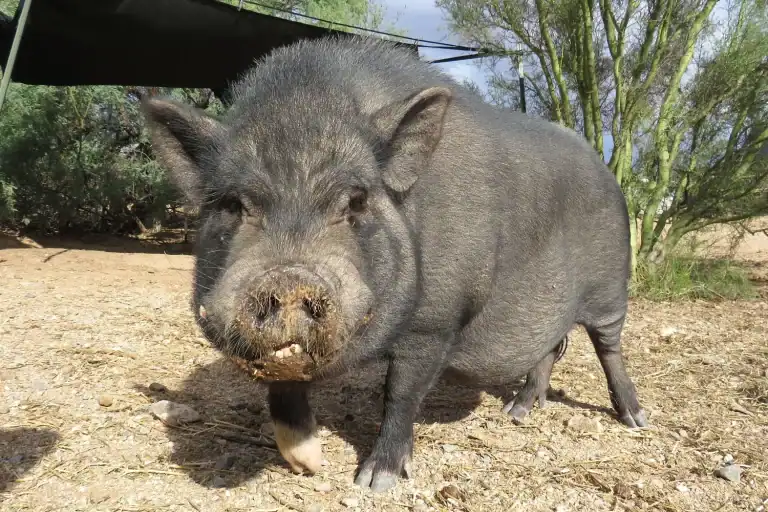
Although all warthogs, including females (sows), have tusks, they rarely use them for digging. Instead, the tusks are primarily used for defense. As fossorial foragers, warthogs rely on their keen sense of smell to detect food beneath the surface, which they then uncover using their snouts and hooves.
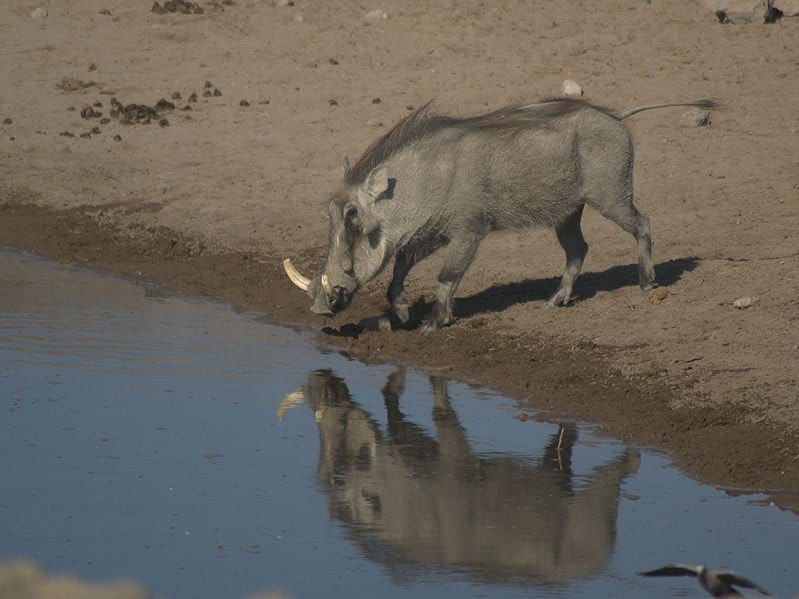
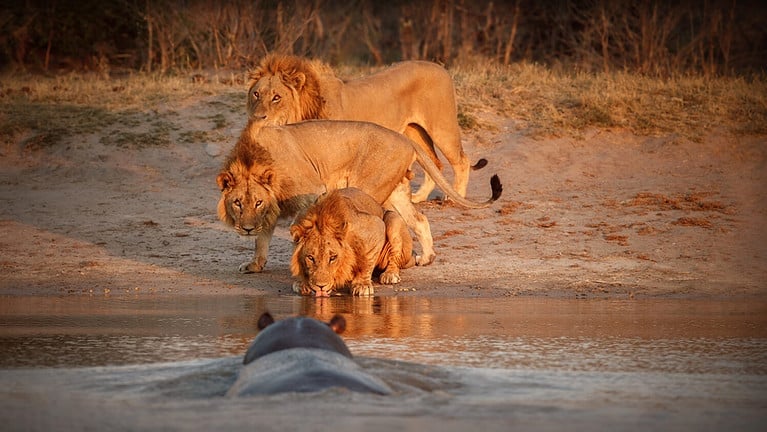
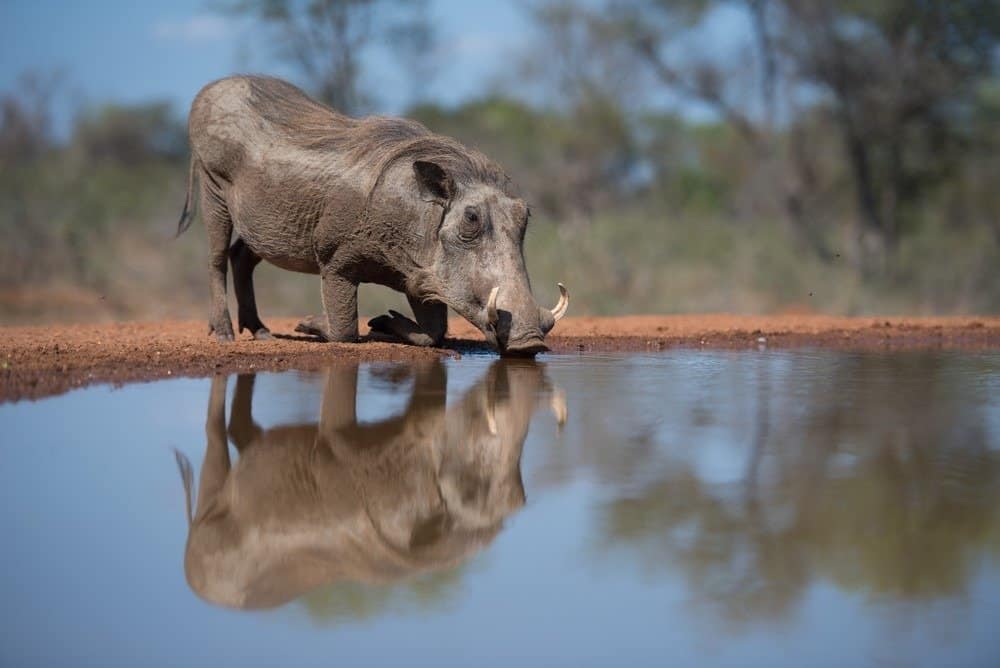
Watering holes are crucial to warthog survival.
Warthogs are incredibly intelligent and have developed special adaptations for obtaining food.
Warthogs have relatively long front legs and short necks, making it difficult for them to reach ground-level grass without bending over awkwardly. This behavior, called knee-walking or kneeling, involves warthogs dropping to their knees (wrists) so they can more easily reach short grasses, bulbs, tubers, and roots. Most warthogs develop thick, calloused pads on their knees, allowing them to remain in this posture comfortably for long periods.
What Animals Eat Warthogs?
Warthogs have many predators. Large cats are the most common predators of both warthog species. Lions, leopards, and cheetahs are the main cats that regularly prey on warthogs. Hyenas are also known to hunt warthogs, but only in packs. Crocodiles regularly prey on warthogs, especially when they are drinking. Watering holes are essential for warthogs, and crocodiles often lurk near the water’s edge, waiting for an unsuspecting animal to approach.