Rabbits can eat pumpkins, but there are several things that you need to keep in mind. Don’t just throw a whole pumpkin into your rabbit’s hutch!
Here’s what you need to know to feed pumpkin to your rabbit safely:
1. Only Some Parts are Safe
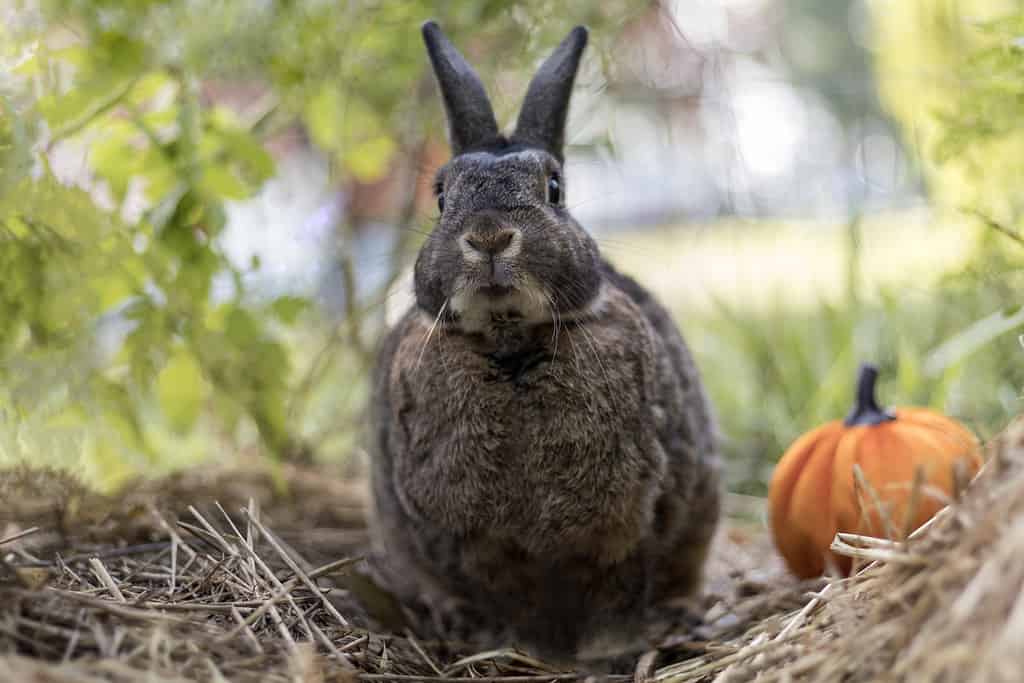
Don’t just let your rabbit munch on a pumpkin from your garden. Some amount of prep is required.
©Rabbitti/iStock via Getty Images
Not every part of the pumpkin is safe for rabbits to eat. The orange flesh of the pumpkin is the safest part for your rabbit to eat. They are a good source of vitamin A, potassium, and fiber. These vitamins and minerals are all beneficial to your rabbit.
Many rabbits also like to chew on the pumpkin’s stem, which is also safe. Providing the stem as a chew toy can also help your rabbit’s teeth stay trimmed.
However, the seeds can be a choking hazard and cause digestive problems. They should be removed before giving the pumpkin to your rabbit. You should also remove the skin, as it can be challenging for your rabbit to digest. It can cause bloating and gas, which can be troublesome for your bunnies.
Canned pumpkin isn’t always safe, either. It often contains extra sugar and added spices, which can harm your rabbit. Always double-check the ingredient list.
2. Introduce Pumpkin Slowly
Don’t start by giving your rabbit tons of pumpkin. It takes a bit for their digestive system to warm up to new foods. Start with a small piece of pumpkin flesh, preferably no bigger than a marble. Monitor your rabbit for any digestive upset, but most are fine with this small amount.
You can increase it if you’d like over several weeks. Always monitor your rabbit when they consume any increased amount of new food.
3. Moderation is Key
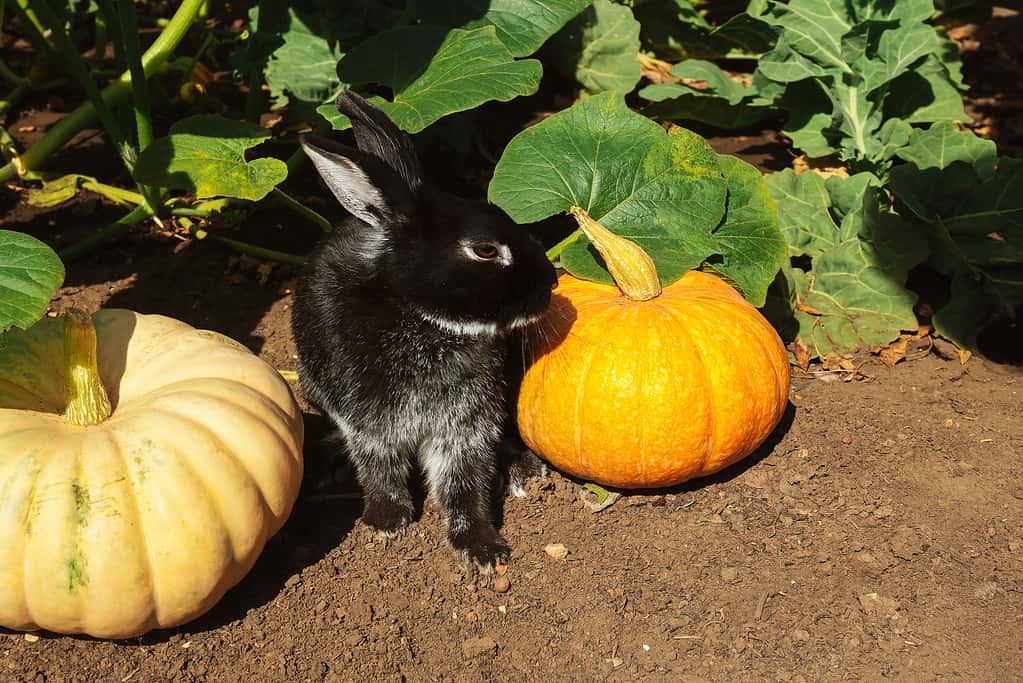
You can use these tips to make any color pumpkin safe for your rabbit to eat.
©Elena Neveditsyna/iStock via Getty Images
Your rabbit cannot live on pumpkin. Therefore, pumpkin should only be used as an occasional treat. It shouldn’t be a regular part of your rabbit’s diet. Too much pumpkin can cause all sorts of digestive issues, including diarrhea.
Furthermore, pumpkin is naturally high in sugar, which your rabbit doesn’t need. It also doesn’t contain all the vitamins and minerals your rabbit needs.
4. Don’t Forget to Wash
Pumpkins can be full of pesticides and dirt, depending on how it was grown. Therefore, it’s important that you wash the pumpkin completely if it is fresh. Canned pumpkin is a little different, as it is washed during processing.
You don’t need to use soap. A light rinsing will do. If you do decide to use soap, be sure that the soap is safe for your rabbit to eat, as there is bound to be some leftover residue.