
Quick Take
- Giving your dog the over-the-counter version of this common human antacid could be a mistake, and most pet owners don't realize why. OTC availability explained →
- There's a counterintuitive reason why keeping your dog on omeprazole too long can actually make their stomach problems worse. Long-term use risks →
- Certain common medications your dog may already be taking can turn omeprazole from a remedy into a risk. Drug interactions to know →
- The timing of when you give omeprazole each day matters more than most pet owners expect, and getting it wrong means the medication may barely work. Timing and administration tips →
Has your vet just prescribed omeprazole (Prilosec®) to your dog with gastritis or acid reflux? If so, you may be wondering how this medication works and how it can help your dog feel better. Continue reading to discover everything you need to know about omeprazole for dogs, including common uses, side effects, dosing, and more.
What Is Omeprazole?
Also known as Prilosec®, Omeprazole belongs to a class of medications called proton pump inhibitors (PPIs). The medication is designed to decrease the amount of acid produced in the stomach. By lowering the acid production in the stomach, this proton-pump inhibitor is used to prevent, manage, or treat many conditions that cause stomach or esophageal irritation.
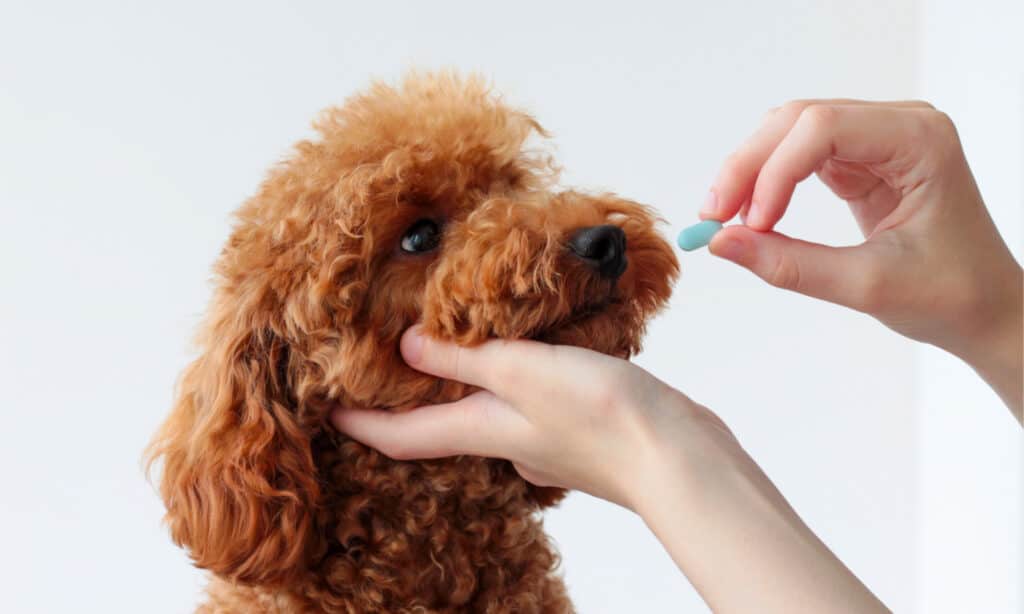
Omeprazole is the active ingredient in the popular over-the-counter medication called Prilosec®.
©Varvara Serebrova/Shutterstock.com
Is Omeprazole Safe For Dogs?
Omeprazole is generally safe for dogs when following your veterinarian’s dosing guidance. Severe side effects and overdose are rare. The most common side effects seen are mild gastrointestinal upsets. Only give your dog the canine form of omeprazole that is available from your vet’s office or has been approved by your veterinary team.
Why Do Dogs Take Omeprazole?
Omeprazole can effectively manage a variety of conditions that cause stomach or esophageal irritation.
Many dogs experience acid reflux, the backflow of stomach acid into the esophagus. This happens quite frequently from minor triggers like eating a very fatty meal, brief periods of stress, or waking up with an empty stomach. Chronic GERD develops when the lower esophageal sphincter stays relaxed too often, and stomach acid damages the esophagus. Young puppies (whose lower esophageal sphincters are still developing), brachycephalic breeds such as pugs and bulldogs, and overweight dogs are at risk for developing GERD.

Although acid reflux is considered fairly common in dogs, true clinical GERD is relatively rare in the canine population.
©Olya Maximenko/Shutterstock.com
Dogs can develop painful stomach ulcers. stomach acid worsens ulcers, so omeprazole can help to decrease acid production to promote healing.
Dogs can develop gastrointestinal irritation from prolonged use of certain medications, especially NSAIDs. Omeprazole can be given to dogs taking NSAIDs or other medications as a preventative measure, or it can be given afterward to manage discomfort.
Dogs with kidney disease often develop gastrointestinal ulcers due to the buildup of toxins in their bloodstream. Omeprazole can help to decrease stomach acid production and limit stomach irritation.
Veterinarian Dr. Amy Nicole Lewis says that it is important to ensure omeprazole is not given for more than four weeks. The goal is not to eliminate the stomach’s ability to produce acid entirely, as stomach acid plays a major role in proper digestion and prevention of bacterial overgrowth.
How Is Omeprazole Given To Dogs?
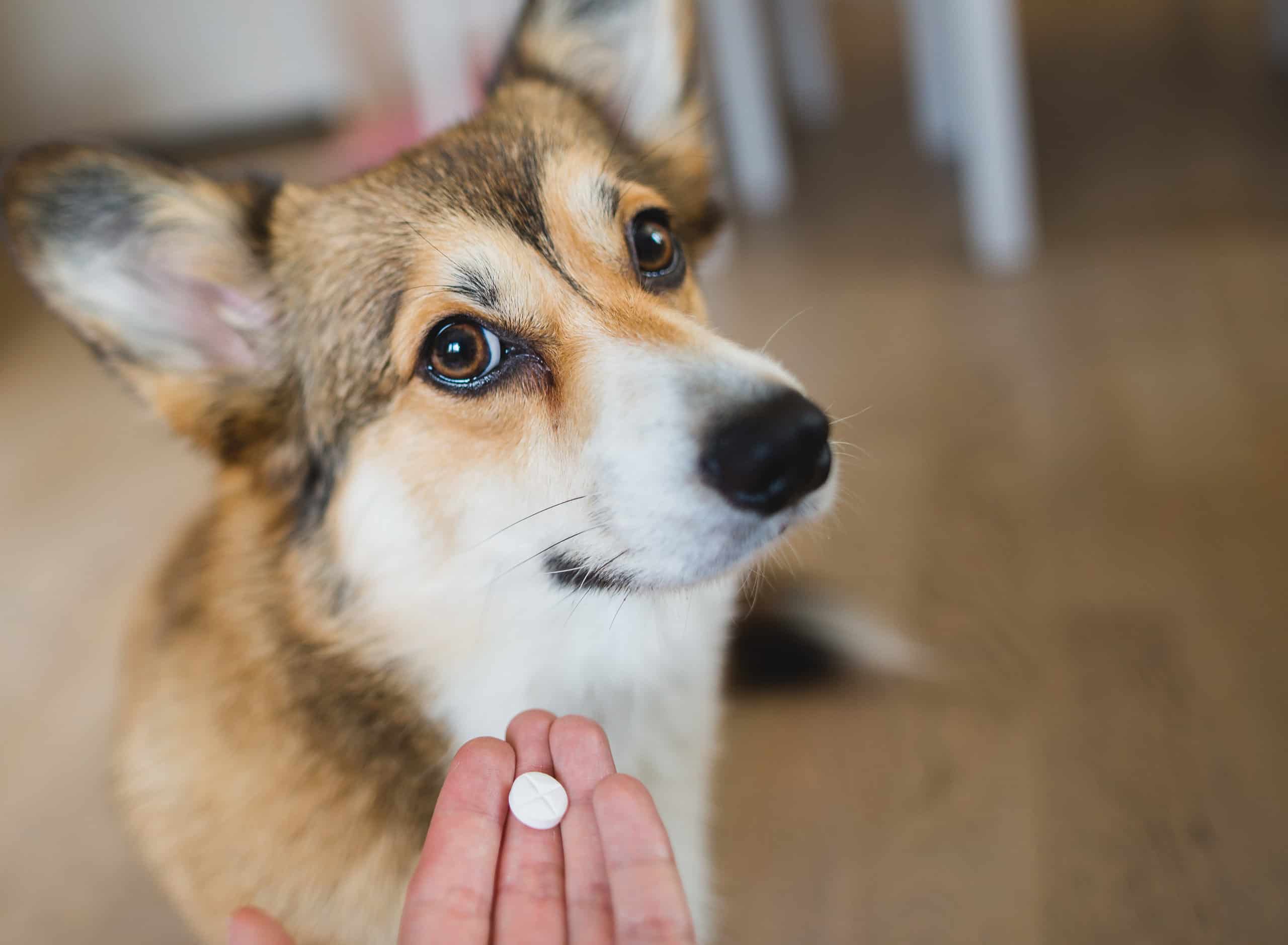
Omeprazole can be given in tablet or capsule form. It is most effective when given on an empty stomach and before the first meal of the day. However, if your dog experiences nausea or vomiting after taking omeprazole, it may be given with a small amount of food instead.

Omeprazole can be used in dogs to treat GERD, stomach ulcers, and gastritis from prolonged medication use.
©iStock.com/Cunaplus_M.Faba
What Is The Dose Of Omeprazole For Dogs?
Never give your dog omeprazole without your veterinarian’s approval.
The standard dose of omeprazole for dogs is 0.5 to 1 mg per kilogram of body weight every 24 hours. The standard dose will vary based on the condition being treated and whether the dog is taking any other medications. This is why it is important to consult your vet before giving this medication to your dog.
Are There Any Side Effects With Omeprazole Use In Dogs?
Omeprazole is a safe medication that rarely causes severe side effects in dogs. However, some dogs have been known to experience mild gastrointestinal symptoms such as vomiting, diarrhea, decreased appetite, lethargy, and increased gas. If your dog experiences any of the listed omeprazole side effects, a veterinary visit is recommended.
Omeprazole does not always interact well with other drugs, so it is important to check for drug interactions before giving it to your dog. Omeprazole drug interactions can occur with certain antibiotics, antifungal medications, benzodiazepines, seizure medications, cyclosporine, and certain vitamins. It’s important to let your vet know if your dog is taking any other medications so they can determine if omeprazole is safe for your dog.
How Do I Get Omeprazole For My Dog?
Omeprazole is a common over-the-counter medication that can be found in most stores and pharmacies, but it’s best to get veterinary approval before giving it to your dog.