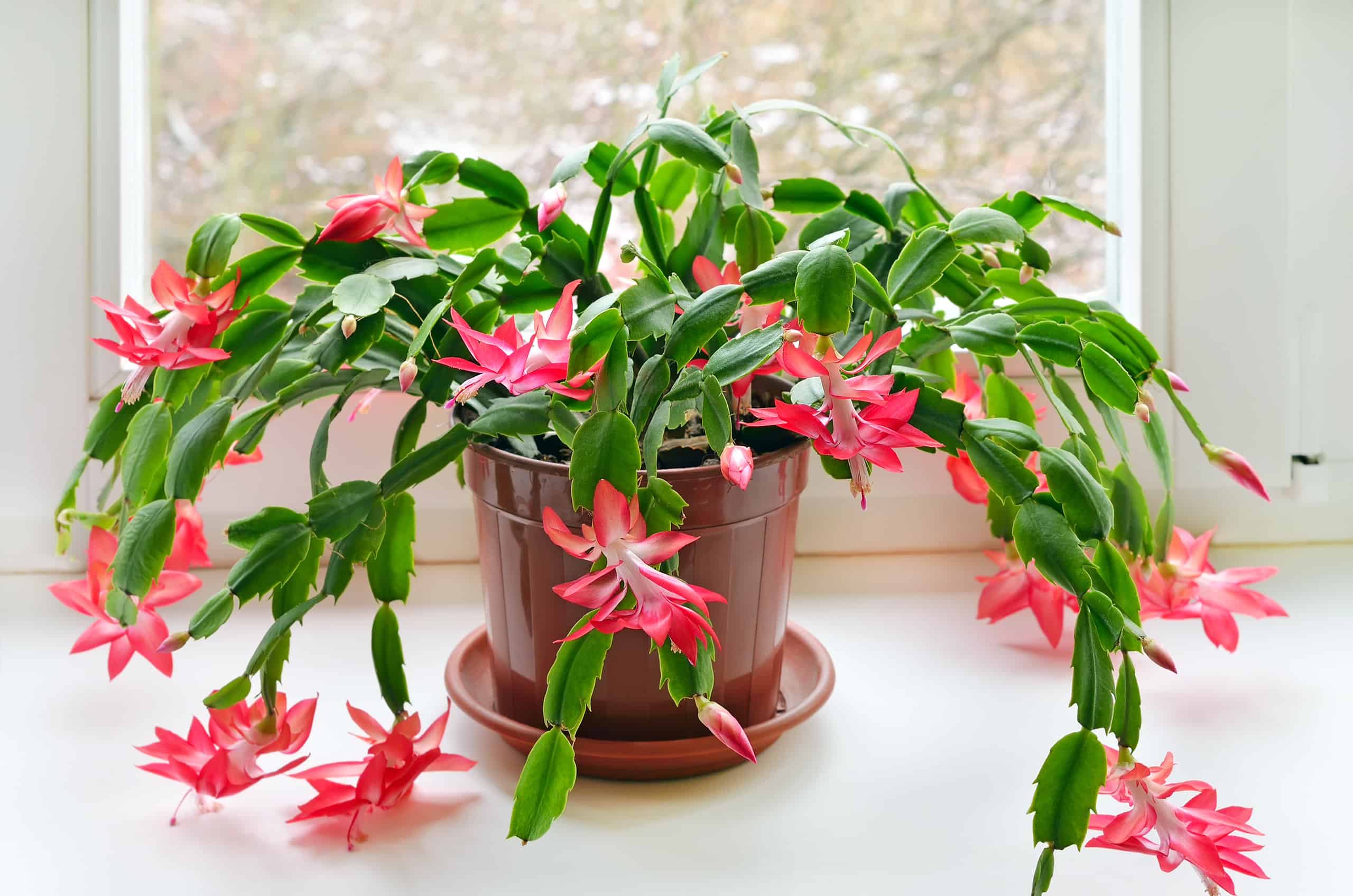

Christmas cacti are beautiful succulents with vibrant flowers. They are popular gifts during the holiday and are unique plants. For instance, the term Christmas cactus can refer to an entire small genus of cacti or a specific species in the genus.
It may surprise you to find out how easy these plants are! They are great for beginners who want to learn how to care for succulents. Follow along to learn more about Christmas cacti, including their origin and how to propagate.
What is a Christmas Cactus?
Christmas cacti are beautiful flowering succulents in the coastal mountains of south-eastern Brazil. There are about 6 to 9 unique species. These cacti mainly grow on trees or rocks in the wild, but they are popular ornamentals. As they grow tall, their stems become thick and woody. While most Christmas cacti are short but wide, they can grow up to 4 feet tall.
Most Holiday cacti we see in nurseries and gardening stores are modern cultivars. Hundreds belong to the following four groups: the Truncata Group, Buckleyi Group, Reginae Group, and Exotica Group.
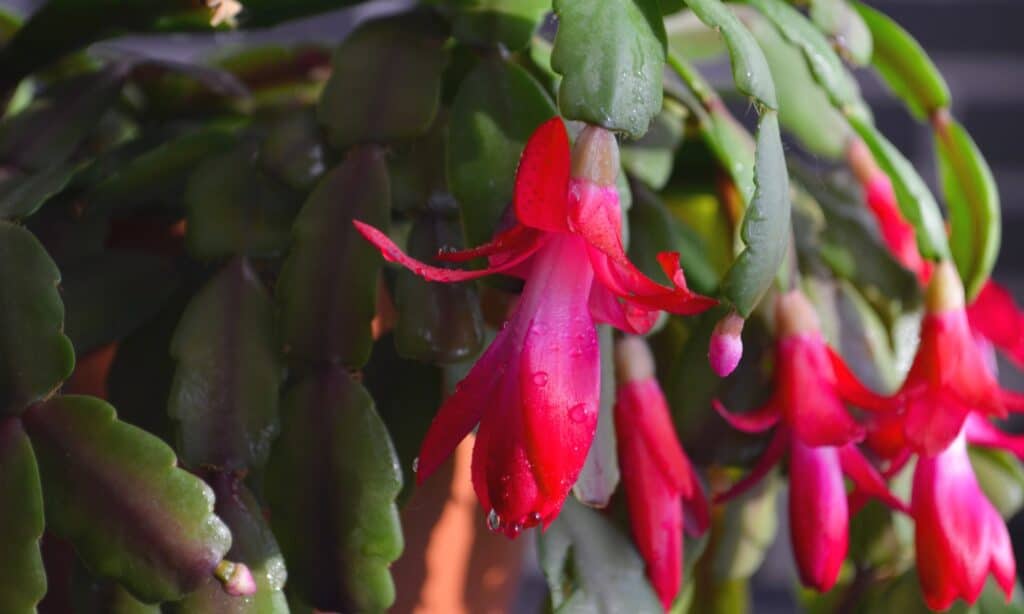
There are at least 6 to 9 species of Christmas cacti found in the wild.
©iStock.com/yes
The Colors of Christmas Cacti
Christmas cacti are beautiful and come in many colors. Most Christmas cacti have vibrant pink and red flowers. However, some flowers are yellow, white, orange, peach, and purple. Interestingly, the Easter cacti variety is more vibrant. Some vibrant red Christmas cacti cultivars include the Dark Marie and Kris-Kringle cacti.
Christmas Gold is a popular white and yellow Christmas cactus with a pink blush center. Peach Parfait is another popular household plant, however, it has orange or peach flowers with purple stamens.
When Will My Christmas Cactus Bloom?
So, when do these cacti bloom? Each cultivar is slightly different, however, as its name suggests, the Christmas cactus blooms in winter close to the Holidays. This stunning plant blooms from November to January. The flowers bloom at the tips of the leaves. However, just because you purchase a Christmas cactus, doesn’t mean it’ll bloom without the right conditions. To enter a flowering period, this plant requires minimal light and watering. The best temperature for this succulent is 50-55 °F to trigger flowering. The flowering period is about 3 to 6 weeks, while the flowers last for about 5 days.
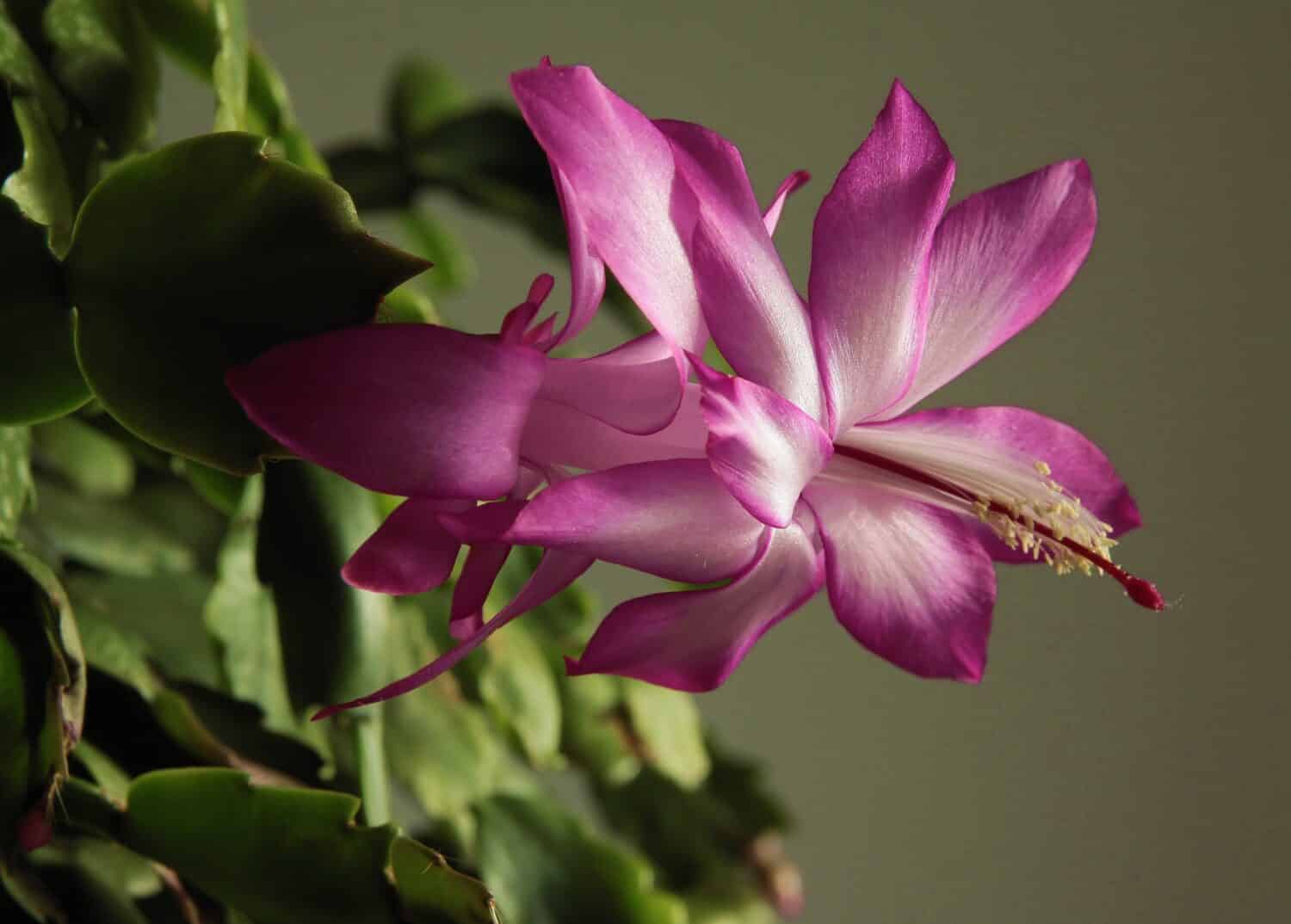
Christmas cacti bloom from November to January.
©Brzostowska/Shutterstock.com
Caring for a Christmas Cactus
Christmas cacti are super popular, and it’s understandable why! These amazing plants are also beginner friendly. They don’t require a lot of water or light. However, some changes are needed right before the blooming period. Follow along to learn more about how to care for this gorgeous succulent.

Christmas cacti are stunning and colorful succulents popular during the holidays.
©Amy Lutz/Shutterstock.com
Water
How much water does a Christmas cactus need? Turns out, not a lot! You should only water your Holiday cactus once every 2 to 3 weeks. This plant enjoys dryness. The easiest way to tell if your cactus needs more water is to stick your finger in the soil to see if it’s wet. If the top 1 to 2-inch layer is dry, it needs some water. Too much water causes soft and wet spots on the stem. The leaves also droop and can start shriveling up.
There are ways to save an over-watered Holiday cactus. If you notice these signs, work fast to get rid of excess water. Empty any excess water. If possible, replant the Holiday cactus in a new container with new soil. Also, trim and clip off any dead or yellowing leaves. That way the plant can focus its energy elsewhere.
It’s not enough to save your plant from over-watering. You have to ensure it doesn’t happen again. Too much moisture causes root rot which leads to diseases and pests. Monitor your watering with a written schedule and ensure the pot has enough drainage so the roots don’t drown.
Sunlight
Surprisingly, despite being succulents, Christmas cacti don’t like direct sunlight. Too much direct sunlight causes wilting and burnt leaves. Instead, Holiday cacti benefit from about 8 to 10 hours of indirect sunlight. In other words, this beautiful flowering succulent is a great houseplant that you can grow near a window. However, it’s important to provide the plant with shade. If the window receives a lot of light, the additional light can stunt the plant’s growth.
The light doesn’t have to be natural either. You can grow Christmas cacti with a plant light indoors. It’s important though to use a timer so that the plant gets about 14 hours of darkness. If you do use an indoor plant light, don’t place the light too close to the Holiday cactus. While it’s more common for a Christmas cactus to suffer from too much light, insufficient light can lead to the plant dropping its flower buds.
Lighting also needs to change depending on the season though. For instance, more darkness is required during the start of the blooming phase as this triggers it. However, when the flowers bloom, more humidity and water are needed.
Nutrition
Some plants thrive with fertilizer, but does this mean you should feed your Holiday cactus nutrients? Not all Christmas cacti will need fertilizer. Typically, these plants can get their nutrients from the soil and the sun. However, when they don’t receive enough nutrients, the plant struggles to flower and bloom. Fertilizers can help, but not just any fertilizer you find in stores.
There are multiple ways to feed your Christmas cactus. Some people use 20-20-20 or 20-10-20 houseplant fertilizers. They are sold in liquid and solid form. While it’s tempting to use as much fertilizer as possible to increase growth, this doesn’t help. Instead, only fertilize your plant about once a month, or as the directions tell you to, during its growing season. However, once the plant forms buds and begins flowering, fertilizer is no longer needed.
Something to know about Christmas cacti is they need a lot of magnesium. Most soils already have the right amount, but when your plant is growing slowly, you can mix a tablespoon of Epsom salts with 1 gallon of water and add it to the plant’s soil.
Soil-Type
Regular potting soil isn’t a good choice when it comes to Christmas cacti. Instead, like other cacti, these plants thrive in well-drained and well-aerated soils. The problem with regular potting soil is that it retains water and quickly becomes heavy. This is great for plants that require a lot of water, but it can lead to root rot in Christmas cacti.
While you can purchase organically rich cactus soil, you can also make your own by mixing different mediums! Most mixtures, both store-bought and homemade, have either perlite or coir.
Propagation
Christmas cacti are one of the easiest plants to propagate and grow. Although you can grow these plants from seed, it’s more common to propagate them. One plant can provide you with many plants to gift to friends!
One of the easiest ways to propagate Christmas cacti is to take cuttings about 1 to 4 segments long. The cutting is typically Y-shaped. While you can take small cuttings only a segment long, they take longer to mature and grow. Gently twist the stem attached to the segment to take the cutting. Yanking the cutting can damage the plant making it difficult to root.
When you have your cuttings, put them aside in a cool and dark area for about 2 to 3 days. This helps the cutting dry the wound. Once dry, place the cutting into a container with fast-draining soil. Although not necessary, you can also rub the cut ends with a rooting hormone. The soil should be moist, but not drowning in water.
Next, place the cutting upright in the container and position it somewhere with indirect bright light. Afterward, all that’s left is to stay patient. These slow-growing beautiful flowering plants can take about a month to root!