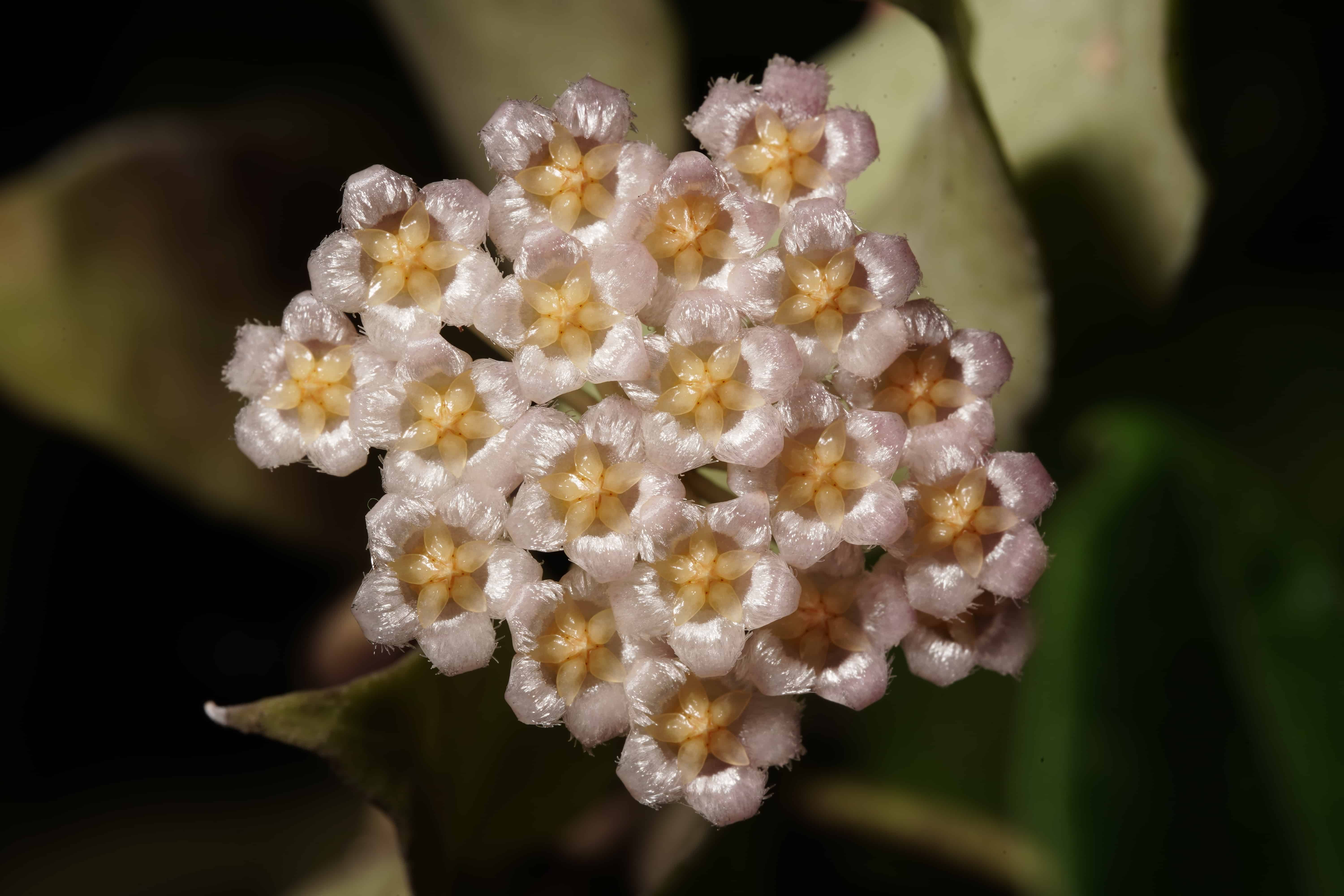

Hoya plants are a popular option for homes and offices. They are also sometimes called wax plants, thanks to their unique foliage. Hoyas have eye-catching leaves and beautiful, fragrant flowers. Join us as we dive into the world of hoya plants. We’ll cover popular varieties, care and growing tips, and a few additional tidbits. Whether you’re a seasoned plant lover or a beginner, this article will equip you with the knowledge you need for your hoya to thrive.
Varieties of Hoya Plants
Hoya plants belong to the Apocynaceae family and are native to tropical regions of Asia, Australia, and Polynesia. There are over 500 known species of hoyas, each with its own unique characteristics and growth habits. Some popular hoya varieties include:
Hoya carnosa
This hoya species is common and quite popular. It is known for its thick, fleshy leaves and clusters of fragrant, star-shaped flowers. There are plenty of H. carnosa cultivars, including the Hoya carnosa ‘Krimson Queen’ with variegated leaves and the Hoya carnosa ‘Compacta’ with tightly clustered leaves.
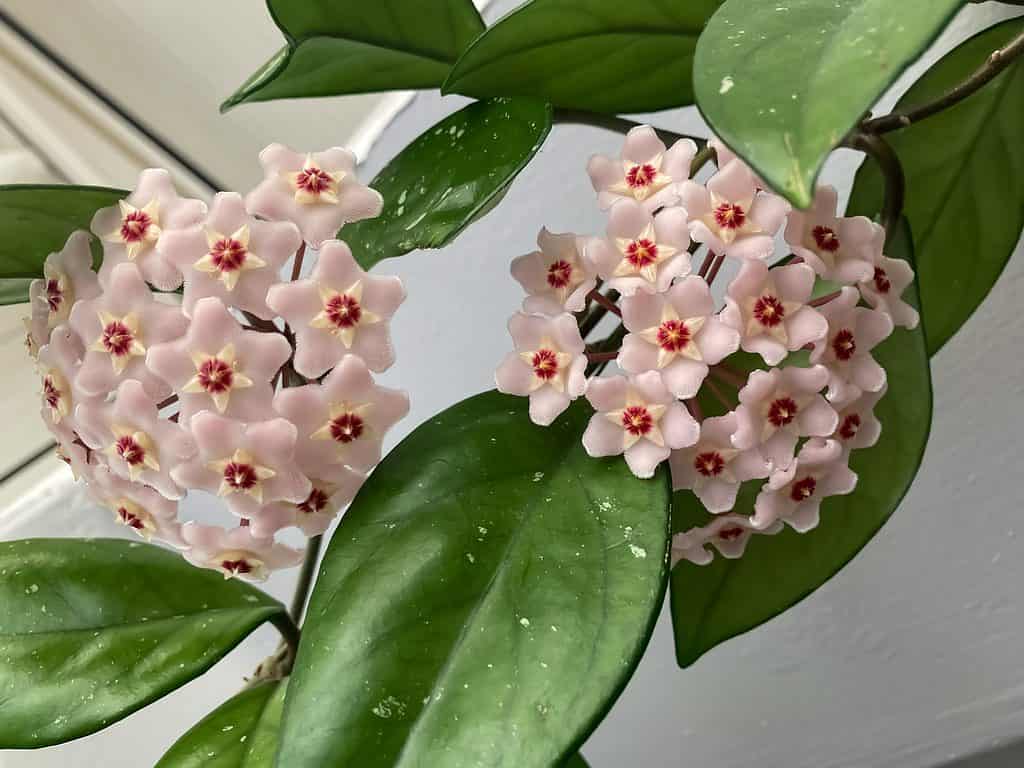
Hoya carnosa flowers are tiny, delicate, and star-shaped. They come in many eye-popping colors and have a very distinctive center.
©gubate/Shutterstock.com
Hoya pubicalyx
This hoya species features elongated, lance-shaped leaves and produces stunning clusters of purple or pink flowers. The Hoya pubicalyx ‘Red Buttons’ is popular due to its dark red flowers.
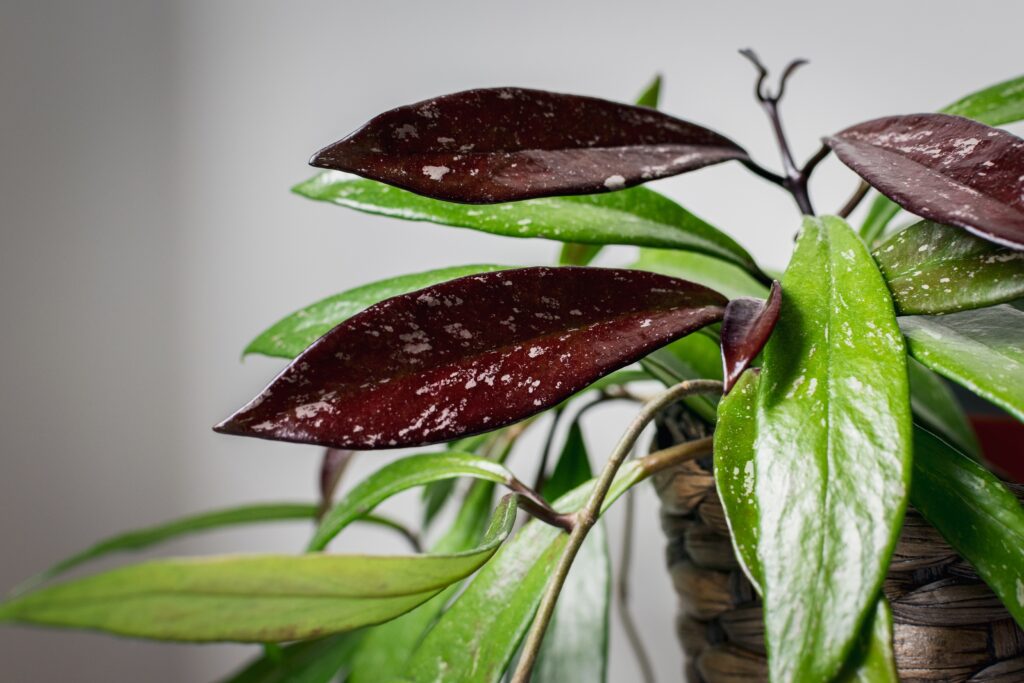
Hoya pubicalyx leaves are lance-shaped and variegated.
©Maritxu/Shutterstock.com
Hoya kerrii
Also known as the sweetheart plant, Hoya kerrii‘s heart-shaped leaves are highly recognizable. It is a common gift that expresses love and affection.
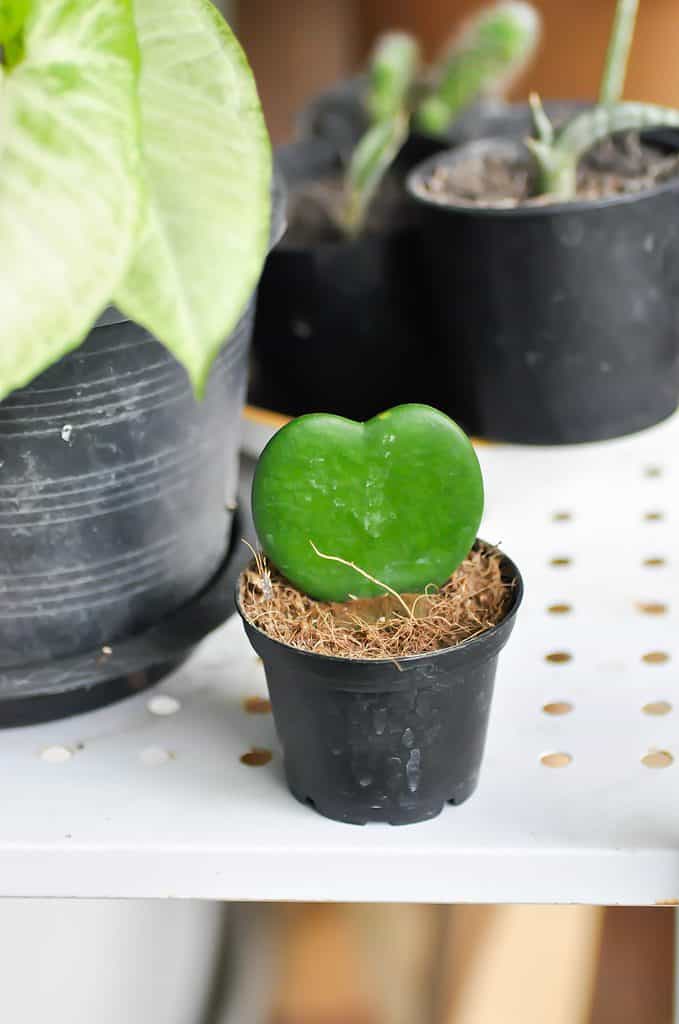
Sweetheart hoya leaves often get propagated as single leaf cuttings to highlight their distinctive shape.
©Job Narinnate/Shutterstock.com
Hoya krohniana
Eskimo hoya is a stunning, variegated variety. Its gorgeous and eye-catching silver leaves make the ideal cascade from a hanging basket.
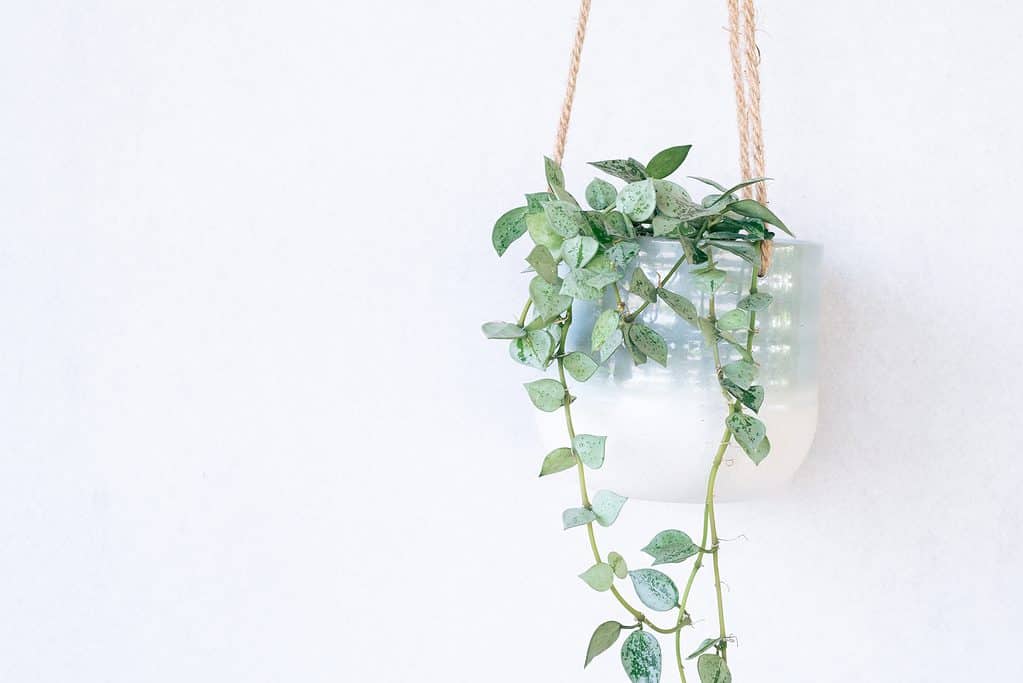
Eskimo hoya is aptly named, thanks to its silver-colored leaves. It makes a gorgeous addition to hanging planters.
©rattiya lamrod/Shutterstock.com
Growing Hoya Plants
Caring for hoya plants is much easier than one may think, given their tropical nature. They primarily need a few key things.
Light
Hoya plants thrive in bright, indirect light. They can tolerate some morning or evening sun, but intense, direct sunlight may scorch their leaves. Place your hoya near a north-facing window or provide filtered light through sheer curtains. They need at least six hours of quality indirect light daily.
If your home or office does not have adequate natural light, feel free to supplement it with an artificial or grow light. But increase the exposure to 8 to 12 hours daily.
Temperature
Hoya plants prefer warm temperatures ranging between roughly 60°F (15°C) and 80°F (27°C). They are sensitive to cold drafts and temperature fluctuations. So it’s essential to keep them in a stable, warm environment. That said, many hoya varieties can tolerate brief stints of colder, but not freezing, temperatures. If you live in a colder region, it may be worth considering one of these varieties.
Humidity
Hoyas appreciate higher humidity levels. If the air in your home is dry, you can increase humidity by placing a tray of water near the plant or using a humidifier. Misting the leaves from time to time can also help provide some moisture.
Soil
Hoya plants require well-draining soil that retains some moisture but doesn’t become waterlogged. A mix of peat moss, perlite, and orchid bark is ideal for promoting good drainage. Speak to your local nursery for help selecting an appropriate soil.
Watering and Fertilizing Hoya Plants
Hoyas require specific care to thrive and start developing their magnificent blossoms.
Watering
Watering hoyas requires a fine balance. Too little water and your plant won’t thrive. But too much water may result in root rot.
Allow the top inch of soil to dry out before watering again. Adjust your watering frequency based on the season and the specific needs of your hoya plant. Typically, hoyas need water more infrequently during the dormant seasons.
Fertilizing
Hoyas benefit from regular feeding during the growing season. That timeframe is typically during spring and summer. Use a balanced, water-soluble fertilizer diluted to half-strength and apply it every two to four weeks. Reduce or cease fertilization during the dormant period in fall and winter. Since hoyas showcase ample stunning foliage, make sure the fertilizer you select has a decent nitrogen level.
Propagation Methods for Hoya Plants
Propagating hoyas is much easier than many think. And that is good news. It means you can easily expand your collection or share your amazing plant finds with friends, family members, or co-workers. There are also multiple avenues toward successful propagation. They include:
Stem Cuttings
One of the most common methods of propagating hoyas is stem cuttings. Select a healthy stem with a few leaves and remove it just below a node. Allow the cutting to callus for a few days, then place it in a well-draining rooting medium. Keep the soil lightly moist and ensure the cutting receives only indirect light. After a few weeks, roots will begin developing. Once they have, feel free to move it to a different (or larger) pot.
Layering
Layering is another effective method for propagating hoya plants. Choose a long, trailing stem and gently wound a section of it by removing a small portion of the outer bark. Apply rooting hormone to the wounded area and bury it in a small pot of moist soil.
Keep the soil consistently moist and wait for roots to form before separating the new plant from the parent.
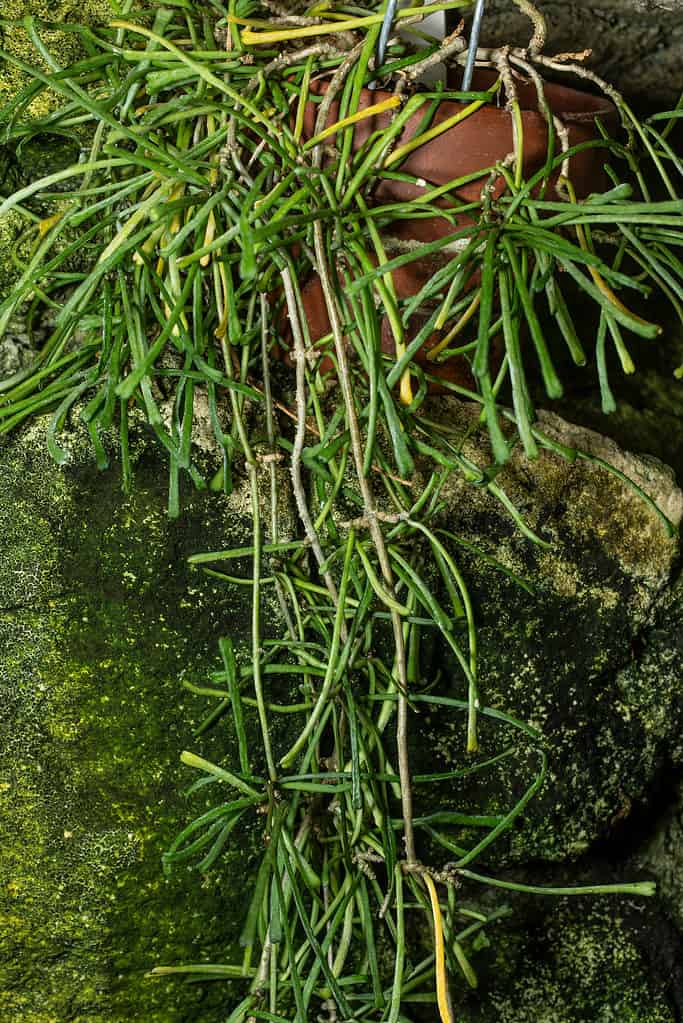
Propagating hoyas, like this Hoya retusa is fairly easy.
©K Hanley CHDPhoto/Shutterstock.com
Common Pests and Diseases
Hoya plants are generally resilient and not prone to many pests and diseases. However, they can occasionally encounter some common issues. Keep an eye out for the following:
Mealybugs
These small insects can infest the leaves and stems of hoya plants. Manually remove them with a cotton swab dipped in rubbing alcohol or use organic insecticidal soap. You may find that the first treatment doesn’t quite catch everything. That’s ok. Repeat treatments as needed until your problem is gone.
Aphids
Aphids are tiny, sap-sucking insects that can cause deformities in hoya leaves. The best remedy for them is insecticidal soap. Make sure to spray underneath the leaves. Aphids love laying their eggs on the underside of plants, making them slightly more difficult to spot.
Root Rot
Hoyas love a relatively moist environment. But it is easy to overdue watering. Overwatering and poor drainage can lead to root rot in hoya plants. To prevent this, ensure proper watering practices and use well-draining soil.
Training and Supporting Hoya Vines
One of the draws of many hoya species is their magnificent vines. The only downside is that, unless you use a hanging basket, those vines need some support.
Training the vines to climb a trellis, moss pole, or small stakes is not challenging. Gently tie the vines to the support using soft plant ties or twine. The plants will learn to stay on their support. However, you may need to add additional ties as the vines grow.
Proper support is vital is it helps promote better growth and flowering.
Hoya Flowers
Hoya plants are renowned for their stunning and often fragrant flowers. Typically, hoya flowers take several years to mature and bloom. But the wait is well worth it.
Successful flowering gets influenced by various factors, including plant maturity, light conditions, temperature, and humidity. To help your plant along, provide optimal growing conditions. Pay close attention to lighting (bright but indirect) to achieve abundant and long-lasting blooms.
Hoyas and Air Purification
In addition to their visual appeal, hoya plants also offer air-purifying benefits. Hoyas can help remove toxins from the air and improve indoor air quality. Their ability to absorb carbon dioxide and release oxygen makes them an excellent choice for enhancing the atmosphere in your home or office.