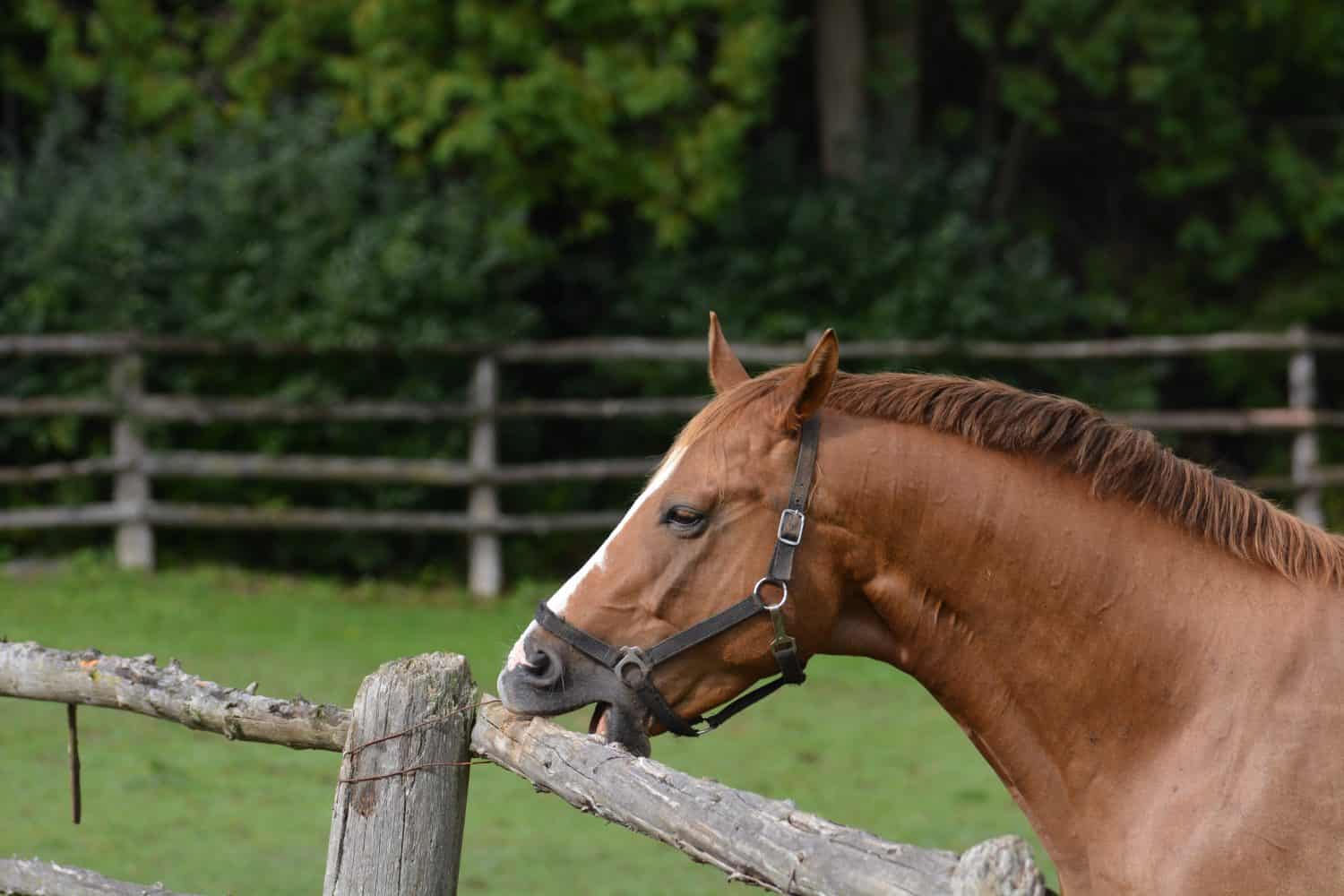

Domestic horses sometimes engage in stereotyped behaviors (a repetitive movement that appears to have no purpose or function.) In horses, these behaviors may include cribbing, pawing, head shaking, weaving, and windsucking. Today, we’re taking a closer look at the compulsive behavior of horse cribbing, also known as windsucking or crib-biting.
In the video above from My Horse University (MHU), two horses are behaving in a strange manner. You can watch as they place their top teeth on the top of a wooden post and pull backward, taking air into their lungs and letting out a grunting sound. The two horses each take turns performing the behavior. This is horse cribbing or crib-biting. Why do horses do it, and can it lead to problems?
This post was updated on November 6, 2025 to clarify that recent evidence does not point to cribbing as a learned behavior.
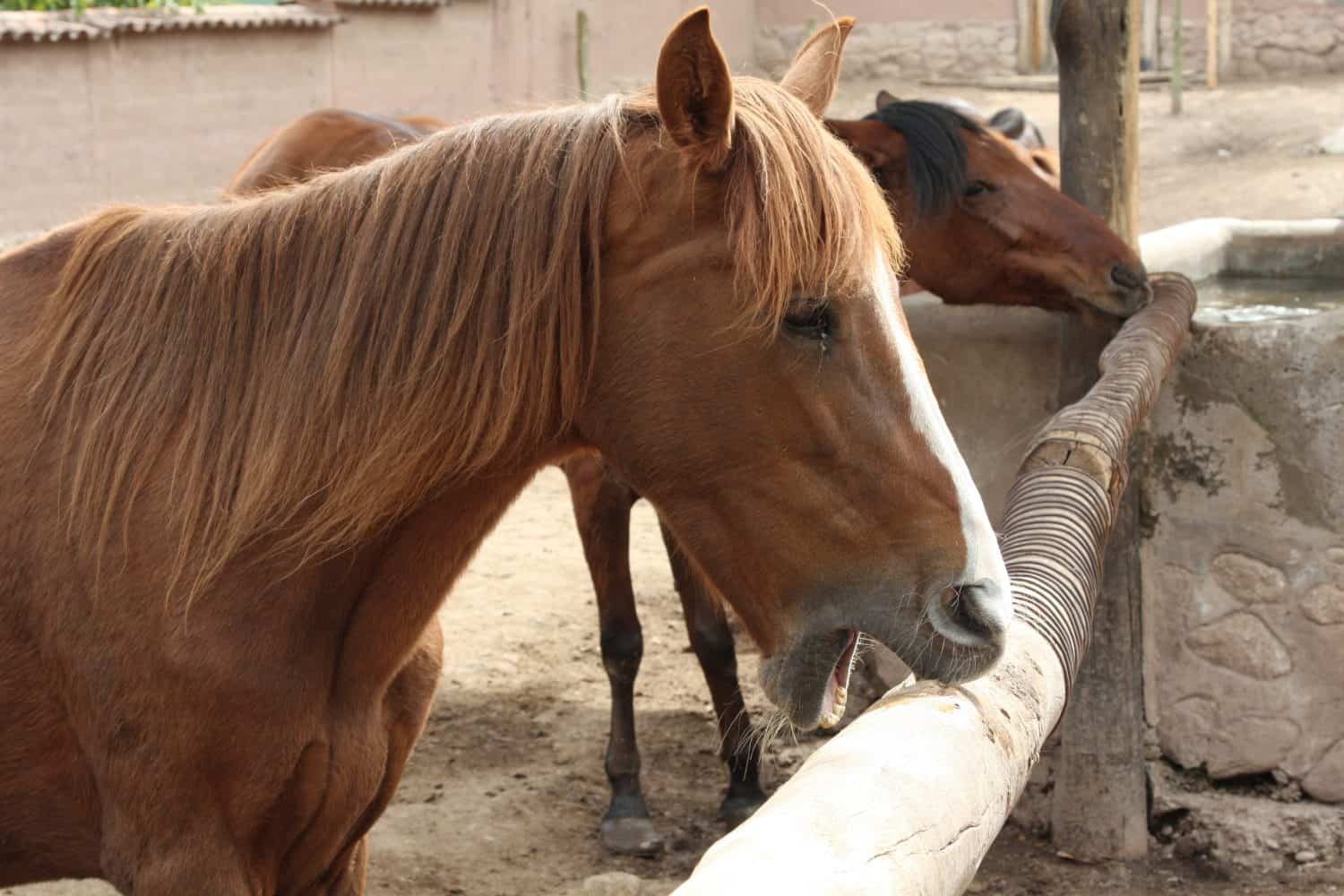
Horses can pick up bad habits, such as cribbing, when they are anxious or stressed.
©Thomas Barrat/Shutterstock.com
What Problems Can Arise When Horses Crib?
Horse cribbing is an unwanted behavior among horse owners because it can lead to various physical problems. Horses that crib may cause damage to their teeth due to excessive wear. It’s also thought to be associated with abnormal muscle development in their necks. Horses that crib excessively may do this behavior in place of their regular activities. If the horse is busy cribbing rather than grazing, the behavior can result in unhealthy weight loss. Research has found cribbing horses to be at a higher risk for arthritis in the temporohyoid joint, gastric ulcers, and colic.
What Causes Horse Cribbing?
Like other stereotyped behaviors, there can be various reasons why a horse might learn to crib and experts really aren’t sure the exact cause. Some people have theorized that a horse may learn to crib by watching other horses. However, research shows very little evidence that cribbing is a learned behavior. For instance, one study found only about 1% of horses developed cribbing after exposure to a crib-biter. The strange behavior may also occur as a result of boredom, isolation, cramped quarters, or when a horse is under stress or feeling frustrated. There could also be a genetic component in some horses that are more likely to engage in compulsive behaviors. My Horse University suggests that limiting a horse’s opportunity to forage in the pasture or not giving the horses a chance to socialize with other horses can also lead to stressed and obsessive behaviors, like cribbing.
How to Treat or Prevent Horse Cribbing?
Experts agree that once a horse has begun cribbing, it’s incredibly hard to stop the behavior. However, horse owners have found that by keeping their horses entertained they may crib less often. Note that some of the so-called “preventative measures” to stop horse cribbing can create even more stress and should be avoided. My Horse University recommends allowing horses to forage, giving them plenty of time to roam in the field, and letting them socialize with other horses. These positive behaviors may not stop cribbing altogether but can cut down on the frequency.
When a horse is cribbing, it’s important to have a full health exam by a veterinarian. The vet can make sure there are no underlying conditions and check for gastric ulcers.