The next time you declare that you are “freezing to death,” spare a thought for the wood frog who gets so cold in winter that its heart stops beating – but it does not die. Once the spring thaw arrives, they recover and start moving around again. The process lasts several months but in the above clip, you can see it speeded up to just a few minutes. Let’s explore how the wood frog manages to survive such extreme conditions.
Where Does the Wood Frog Live?

©Marek Mierzejewski/Shutterstock.com
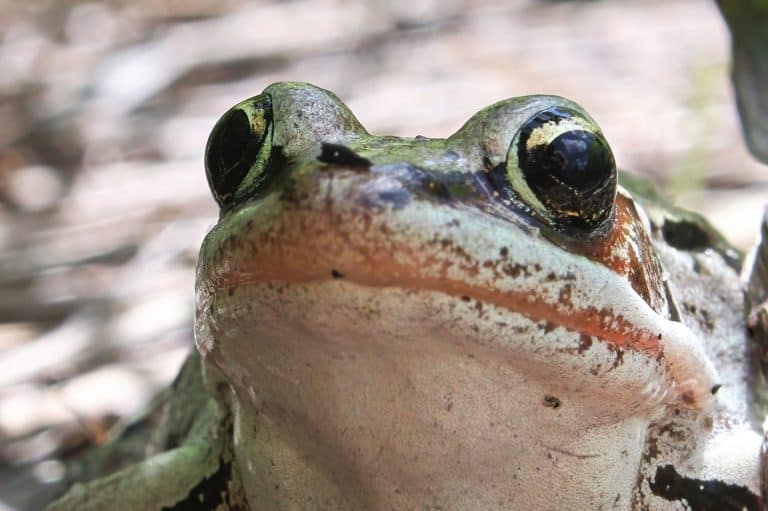
Wood frogs (Lithobates sylvaticus) are generally around 3 inches long with brown or grey bumpy skin. Their distinguishing features are a black ‘robber’s mask’ on their face and a green-yellow abdomen.
They live in what is termed the Nearctic region. This stretches from northern Georgia and eastern/central Alabama through the northern United States across Canada. In these areas the winters are harsh and temperatures of minus 50 degrees Fahrenheit are not unusual. Wood frogs have managed to survive further north than any other North American amphibian which reduces the competition they have to face for food and resources. However, they are a cold-blooded animal and so the lengths they have to go to to stay alive in these conditions are quite extraordinary.
They make their homes in forests but can also live in thickets, tundra, wet meadows, and bogs. They feed on small invertebrates, especially spiders. In the clip, you can see the frog preparing for winter by nestling into the leaf litter on a forest floor (which affords very little insulation) and allowing itself to freeze!
Spending Winter With a Wood Frog
Wood frogs experience very little of the winter because they are frozen solid for the coldest eight months of the year. This is a high-risk strategy! If ice crystals form inside their body, they can cause a lot of damage. This includes puncturing blood vessels, cell dehydration (as water leaves the cells to form ice), and damage to cell internal structures and membranes. Most animals that find themselves in very cold conditions literally freeze to death but the wood frog does not. These incredible creatures are still alive despite the fact they are not moving or breathing and that their heart has stopped beating.
How Wood Frogs Survive Being Frozen
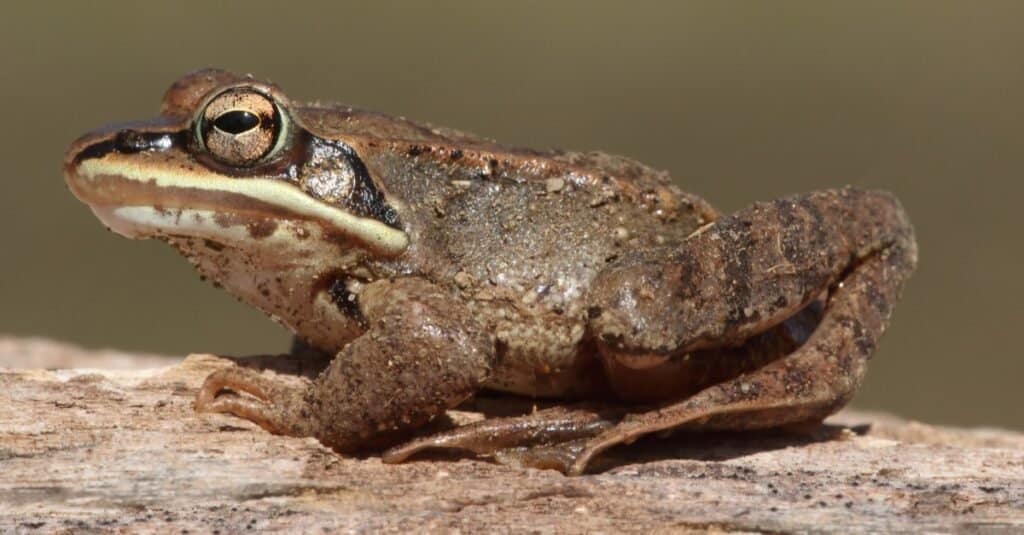
The wood frog lives farther north than any other North American amphibian. Glucose in the frog’s cells protects its body from damage caused by freezing, although nearly a third of the body fluids can be frozen without killing it.
©Steve Byland/Shutterstock.com
These amazing frogs can survive these conditions because their body produces a kind of natural anti-freeze. It is a combination of glucose (produced by the liver) and the chemicals found in urine. This natural antifreeze stops excess water from being drawn out of the cells and therefore protects them from being damaged. Up to two-thirds of the frog’s body can be frozen but it will still survive. With the arrival of the spring thaw, water re-enters the frog’s cells and their heart starts beating again. It takes around two days for them to recover enough to head out to find a well-deserved meal.