B
Species Profile

Bearded Dragon

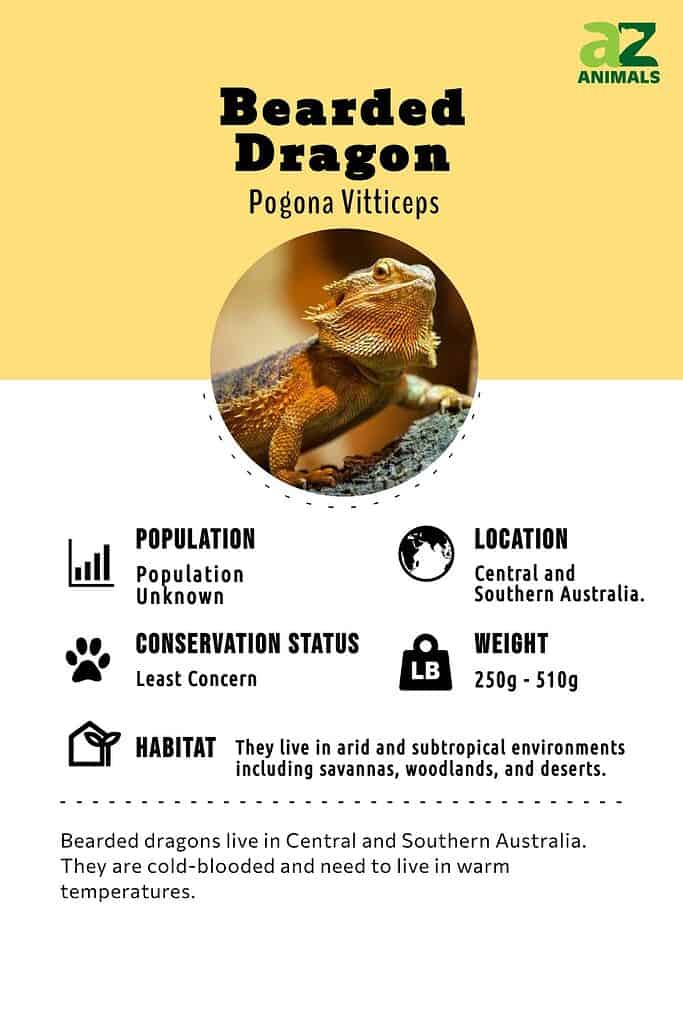
Pogona vitticeps

Big beard. Bold basker.
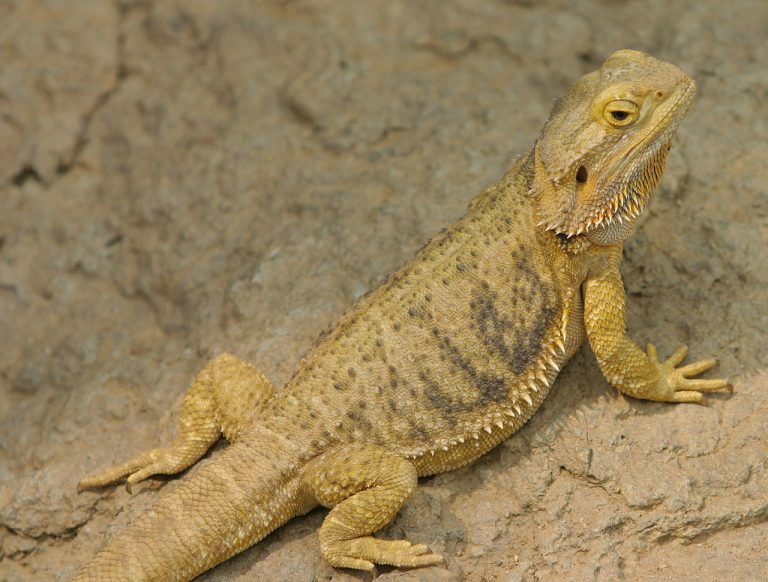
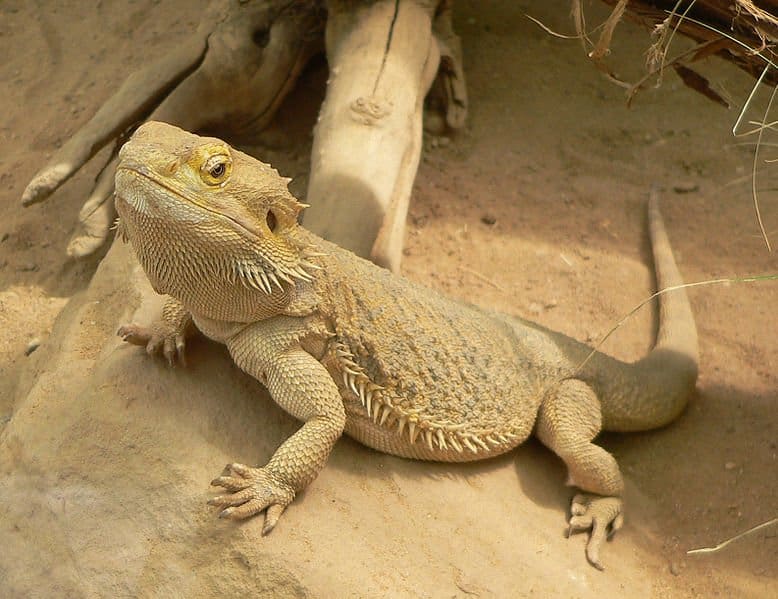
Fir0002/Flagstaffotos / Creative Commons

Bearded Dragon Distribution

Click a location to explore more animals from that region

Endemic Species
Loading map...

Found in 1 country

Bearded dragon (Pogona barbata) - friendliest reptile

At a Glance

Wild Species
Also Known As Bearded dragon, Beardie, Bearded lizard, Australian bearded dragon
Diet Omnivore
Activity Diurnal+
Lifespan 6 years
Weight 0.65 lbs
Status Least Concern
Did You Know?

Adults commonly reach ~40-60 cm total length (tail included) (Cogger, 2014; Wilson & Swan, 2021).

Scientific Classification

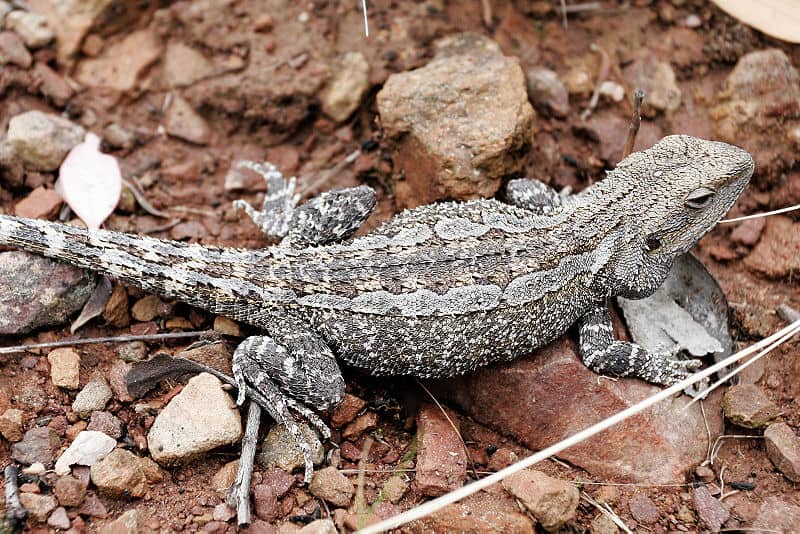
A medium-sized agamid lizard native to arid and semi-arid inland Australia; globally popular as a captive pet. Noted for its expandable, spiky throat “beard,” basking behavior, and variable coloration.

Kingdom
Animalia
Phylum
Chordata
Class
Reptilia
Order
Squamata
Family
Agamidae
Genus
Pogona
Species
Pogona vitticeps

Distinguishing Features

  • Expandable dark throat ‘beard’ with spiny scales used in displays
  • Broad triangular head; robust body and spiky lateral scales
  • Behavioral displays such as head-bobbing and arm-waving
  • Diurnal basking lizard; often seen elevated on logs/rocks

Physical Measurements

Males and females differ in size

Length
1 ft 8 in (1 ft 4 in – 1 ft 12 in)
1 ft 7 in (1 ft 4 in – 1 ft 10 in)
Weight
1 lbs (1 lbs – 2 lbs)
1 lbs (1 lbs – 1 lbs)
Tail Length
11 in (8 in – 1 ft 1 in)
Top Speed
4 mph
Sprint speed ~2.0 m/s

Appearance

Primary Colors
Secondary Colors
Skin Type Pogona vitticeps has dry keratinized skin with small granular scales, keeled spiny 'beard' scales, and enlarged flank spines. Triangular head with big cranial scales and visible tympanum. Lives in arid areas and basks.
Distinctive Features
  • Medium-sized agamid lizard; adults typically ~40-60 cm total length (tail included), commonly cited maximum ~60 cm for Pogona vitticeps (e.g., Cogger, Reptiles & Amphibians of Australia).
  • Triangular head with pronounced supraorbital ridges; short, robust neck and body; long tail forming a substantial fraction of total length.
  • Expandable, spiky gular 'beard' (enlarged throat scales) that can be flared and darkened; used in threat and courtship displays.
  • Characteristic display behaviors used for identification: head bobbing (often by males), gaping with beard flare, and 'arm waving' (a slow circular wave, commonly in juveniles/subordinates) during social interactions.
  • Strong basking behavior for thermoregulation in open arid habitats; can darken body/beard to increase heat absorption and lighten when avoiding overheating.
  • Rows of lateral spines and a generally 'spiny' appearance (but not an iguana or chameleon); digits adapted for terrestrial locomotion and climbing low shrubs/rocks.

Sexual Dimorphism

Sexes are similar in overall coloration/pattern but differ on average in body proportions and display structures/behaviors. Adult males typically develop more prominent femoral/precloacal pores and hemipenal bulges, and are more conspicuous in territorial display (head-bobbing and beard darkening).

  • Typically larger head and broader jowls relative to body size; more robust cranial proportions in mature males.
  • More prominent hemipenal bulges at the tail base (paired swellings) visible in adults; used for sexing.
  • Femoral/precloacal pores generally larger and more distinct in adult males (often visible as a row of enlarged pores on the ventral thighs/near cloaca).
  • More frequent/intense territorial and courtship displays: repeated head-bobs, beard flare with darkening (often to near-black), and stance elevation.
  • Generally smaller head/jowls relative to body size; hemipenal bulges absent (tail base typically more uniformly tapered).
  • Femoral/precloacal pores usually smaller/less conspicuous than males.
  • More likely to show receptivity/submission signaling such as arm-waving in social contexts (behavior varies by individual and situation).
  • Gravid females may show abdominal distension; females can lay multiple clutches in a breeding season under favorable conditions.

Did You Know?

Adults commonly reach ~40-60 cm total length (tail included) (Cogger, 2014; Wilson & Swan, 2021).

Females can lay multiple clutches per season-often ~11-30 eggs per clutch, with up to ~3 clutches in a good year (reported in field/husbandry literature; e.g., Bartlett & Bartlett).

Like many desert reptiles, they excrete nitrogen mainly as uric acid (a white paste), conserving water-one reason they thrive in semi-arid habitats.

They communicate with a surprisingly rich "body language": beard-darkening, beard flaring, head bobs, push-ups, and the iconic slow "arm wave."

Juveniles are typically more insect-heavy in diet, while adults tend to be more omnivorous (more plant matter), a common ontogenetic shift in Pogona.

They can enter a winter slow-down ("brumation") in cooler months-activity and appetite drop markedly while they shelter in burrows or crevices.

Unique Adaptations

  • Expandable, spiny "beard" (gular region) that can be flared to appear larger; spines add a defensive, intimidating silhouette (diagnostic for Pogona vitticeps).
  • Robust, triangular head and laterally compressible body: enables effective threat displays and helps regulate heat exchange by changing exposed surface area.
  • Color modulation (within limits): can darken body/beard to absorb more heat during basking and lighten to reduce heat gain-useful in arid-zone thermoregulation.
  • Parietal (pineal) eye on top of the head: light-sensing organ aiding circadian/seasonal cues and predator awareness from above (common in many lizards, present in Pogona).
  • Water-conserving physiology: uricotelic waste (uric acid) reduces water loss-key for inland Australia's arid and semi-arid climates.
  • Acrodont dentition (agamid trait): teeth are fused to the jaw margin, suited to gripping/processing a mixed omnivorous diet (insects + plant material).

Interesting Behaviors

  • Basking and posture shifts: climbs to exposed perches (fence posts, shrubs, logs) and changes body angle to regulate solar heat gain in open habitats.
  • Beard display: expands the gular (throat) region and can darken it; used in courtship, territoriality, and threat signaling.
  • Head bobbing: rapid, rhythmic head movements-often by males during dominance/courtship; can also appear in social spacing disputes.
  • Arm waving: slow, deliberate forelimb wave-commonly interpreted as a submissive/appeasement signal in social encounters.
  • Mouth gaping while basking: a thermoregulatory behavior that increases evaporative cooling when body temperatures rise.
  • Brumation (seasonal dormancy): reduced movement/feeding and increased sheltering during cooler periods; in captivity often mirrors photoperiod/temperature changes.
  • Opportunistic omnivory: actively stalks moving prey (insects, other small animals) but also browses flowers, leaves, and fruit when available.

Cultural Significance

Pogona vitticeps, the well-known pet bearded dragon, is a common arid-zone lizard in Australian inland towns. Captive-bred color morphs made it many people’s first handled reptile and helped show reptiles can be calm and expressive. Its taxonomy moved from Amphibolurus to Pogona, reflecting active Australian reptile research.

Myths & Legends

Central Australian Aboriginal 'Lizard Dreaming' stories describe ancestral lizard beings shaping places, tracks, water and law. Not tied to one Linnaean species, they can include spiny agamids like the Central Bearded Dragon (Pogona vitticeps).

In contemporary Australian vernacular, "bearded dragon" imagery is sometimes used as a friendly desert emblem-appearing in school mascots, local signage, and outreach materials-drawing on the animal's calm basking demeanor and expressive throat "beard."

Many keepers tell an origin story that captive Central Bearded Dragons (Pogona vitticeps) came from a few founders taken before Australia tightened export rules; the tale warns to support captive breeding and legal trade.

The scientific name is sometimes treated as a mini "word-legend": vitticeps is Latin for "striped head," reflecting early descriptions and reinforcing the tradition of naming animals by standout markings in classical natural history.

Conservation Status

LC Least Concern

Widespread and abundant in the wild.

Population Stable

Protected Under

  • Australia: protected as native wildlife under state/territory nature conservation and wildlife legislation (permits typically required for take/keep in relevant jurisdictions).
  • Australia (Commonwealth): export of native wildlife is regulated under the Environment Protection and Biodiversity Conservation Act 1999 (wildlife trade provisions); Pogona vitticeps is not listed as a threatened species under the EPBC threatened species schedules.

Life Cycle

Birth 20 hatchlings
Lifespan 6 years

Lifespan

In the Wild
3–8 years
In Captivity
8–18 years

Reproduction

Mating System Polygynandry
Social Structure Solitary
Breeding Pattern Transient
Fertilization Internal Fertilization
Birth Type Internal_fertilization

Behavior & Ecology

Social Aggregation Group: 1
Activity Diurnal, Matutinal, Vespertine
Diet Omnivore ants and other abundant ground-dwelling insects
Seasonal Hibernates

Temperament

Intraspecific social tolerance is generally low among adults; males show the highest aggression and territoriality, particularly during the breeding season (Cogger 2014; Wilson & Swan 2017).
Ritual fights are common in Pogona vitticeps: rivals use displays (beard darkening/expansion, head-bobbing, body postures) to avoid contact, but fights can escalate to biting and tail or limb injury.
Juveniles/subadults can be less overtly territorial than adult males but still show dominance interactions and food/basking-site competition (Wilson & Swan 2017).
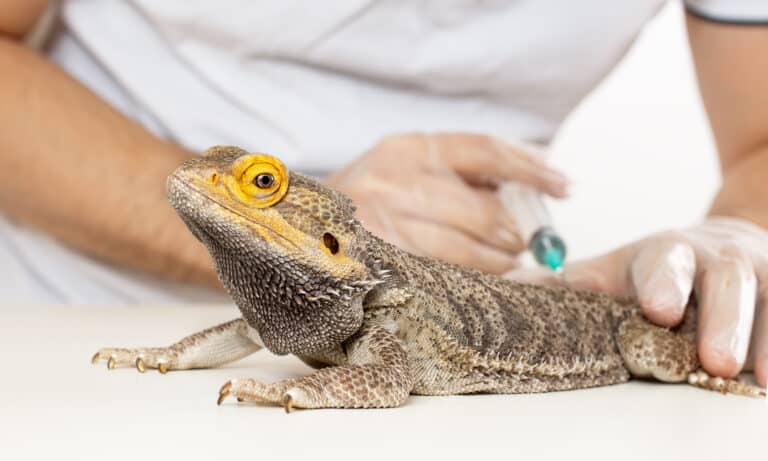
Pogona vitticeps is usually calm with other species (including humans in captivity) unless threatened; when stressed or restrained it shows defenses like gaping, hissing, and black beard, per vets and field guides.

Communication

Hissing/audible exhalation during threat displays Commonly reported for P. vitticeps in field and captive observations; summarized in Wilson & Swan 2017
Visual signaling is the dominant channel: beard expansion and darkening Often to near-black), head-bobbing, push-up/body-raising displays, lateral body compression, and gaping are used in threat, dominance, and courtship contexts (well documented for Pogona and other Australian agamids; see general syntheses in Cogger 2014; Wilson & Swan 2017, and behavioral literature on agamid display signaling
Submission/appeasement display: slow 'arm-waving' Often by females/juveniles toward dominant individuals) and body flattening to reduce aggression likelihood (widely documented in P. vitticeps husbandry/field accounts; summarized in Wilson & Swan 2017
Color change Context-dependent darkening/paling beyond the beard) used in thermoregulation and signaling state (stress/arousal), with rapid changes during interactions (reported in natural history accounts; Cogger 2014
Tactile/agonistic contact: chasing, mounting during mating, and biting in escalated disputes Wilson & Swan 2017
Chemical/olfactory cues: investigation via tongue-flicking and scent-related behaviors General squamate modality); likely contributes to mate/conspecific assessment even though visual displays predominate (Cogger 2014

Habitat

Biomes:
Desert Hot Temperate Grassland Savanna
Terrain:
Plains Plateau Hilly Rocky Sandy Valley
Elevation: Up to 2952 ft 9 in

Ecological Role

Omnivorous mesopredator and opportunistic herbivore in arid/semi-arid Australian ecosystems.

Regulates populations of ground-dwelling insects (notably ants/termites and other arthropods) Consumes and potentially disperses seeds from eaten fruits (opportunistic frugivory) Transfers energy between trophic levels (invertebrates/plants to higher predators that prey on bearded dragons) Contributes to nutrient cycling via fecal deposition across its home range

Diet Details

Other Foods:
flowers Soft leaves and shoots Fruits and berries Seeds

Human Interaction

Domestication Status

Semi domesticated

Central bearded dragon (Pogona vitticeps) is semi-domesticated from captive breeding for temper and color. Native to arid inland Australia, captive-bred dragons handle well and show beard darkening, gaping, flattening, head-bobbing and arm wave. They live about 8–15 years, are pets and used in science, and face threats like road deaths and Salmonella.

Danger Level

Low
  • Zoonotic Salmonella exposure from feces/contaminated surfaces (primary meaningful human-health risk; higher risk for children <5, elderly, immunocompromised).
  • Minor bite/scratch risk during handling or feeding (usually superficial; more likely if startled or mistaken for food).
  • Allergy/asthma triggers in some people from feeder insects or enclosure substrates rather than the lizard itself.
  • Heat/UV equipment burn/fire risk if husbandry equipment is improperly installed (indirect risk associated with keeping the species).

As a Pet

Suitable as Pet

Legality: Central Bearded Dragon (Pogona vitticeps) is generally legal as a pet in much of the US, Canada, and Europe if captive-bred. Some places ban reptiles (e.g., Hawaii) or have local rules. Australia needs state or territory permits and bans export.

Care Level: Moderate

Purchase Cost: $40 - $300
Lifetime Cost: $2,000 - $6,000

Economic Value

Uses:
Companion animal/pet trade Captive breeding and color-morph market Veterinary services (exotics) Manufacture/retail of terrariums, UVB lighting, heaters, substrates, feeders Education/outreach animals for schools, zoos, nature centers
Products:
  • Captive-bred bearded dragons (standard and color morph lines)
  • Terrariums/enclosures (typically 75-120+ gallon equivalents for adults)
  • UVB fluorescent/LED systems and fixtures
  • Heat lamps/ceramic heat emitters, thermostats, temperature monitoring equipment
  • Commercial diets and supplements (calcium/vitamin D3), live feeder insect production (crickets/roaches/worms)
  • Veterinary diagnostics and treatment for common captive issues (metabolic bone disease prevention/treatment, parasites, dystocia, stomatitis)

Relationships

Predators 8

Brown Falcon Falco berigora
Nankeen Kestrel Falco cenchroides
Wedge-tailed Eagle Aquila audax
Sand Goanna Varanus gouldii
Mulga Snake
Mulga Snake Pseudechis australis
Eastern Brown Snake
Eastern Brown Snake Pseudonaja textilis
Feral cat
Feral cat Felis catus
Red Fox
Red Fox Vulpes vulpes

Related Species 10

Eastern Bearded Dragon Pogona barbata Shared Genus
Rankin's Dragon Pogona henrylawsoni Shared Genus
Western Bearded Dragon Pogona minor Shared Genus
Nullarbor Bearded Dragon Pogona nullarbor Shared Genus
Mitchell's Bearded Dragon Pogona mitchelli Shared Genus
Kimberley Bearded Dragon Pogona microlepidota Shared Genus
Jacky Dragon Amphibolurus muricatus Shared Family
Eastern Water Dragon Intellagama lesueurii Shared Family
Frill-necked Lizard
Frill-necked Lizard Chlamydosaurus kingii Shared Family
Central Netted Dragon Ctenophorus nuchalis Shared Family

Ecological Equivalents 4

Animals that fill a similar ecological role in their ecosystem

Thorny Devil
Thorny Devil Moloch horridus Arid-zone, diurnal agamid lizard that basks and forages on the ground in semi-arid to arid inland areas. Pogona vitticeps is a broad omnivore (eating more plant matter with age), unlike the ant-specialist M. horridus; P. vitticeps adults reach about 60 cm.
Shingleback Skink Tiliqua rugosa Large-bodied, diurnal lizard of semi-arid Australia that occupies open habitats with available refuges; an opportunistic omnivore like adult P. vitticeps, it basks frequently and brumates during cold seasons.
Military Dragon Ctenophorus isolepis Pogona vitticeps is a medium arid-zone lizard that lives on open sandy or stony ground, is diurnal, hunts insects, basks in the sun, and is larger and more omnivorous than many Ctenophorus species; it often perches to watch and warm up.
Collared Lizard Crotaphytus collaris Not closely related. Day-active, sun-basking, open-area lizard that uses head bobs and poses; eats mostly insects and some small vertebrates; combines sit-and-wait and active hunting; uses quick bursts and raised perches.

“A bearded dragon can change the color of its beard according to its mood”

Bearded dragons live in Central and Southern Australia.

They are omnivores that can live to be 15 years or older. This animal uses the beard of spines under its chin to communicate its moods to other animals. A bearded dragon is cold-blooded, so it needs to live in warm temperatures.

This reptile is a popular pet because it’s affectionate and curious. Learn about the most friendly wild animals in the world here.

5 Bearded Dragon Facts
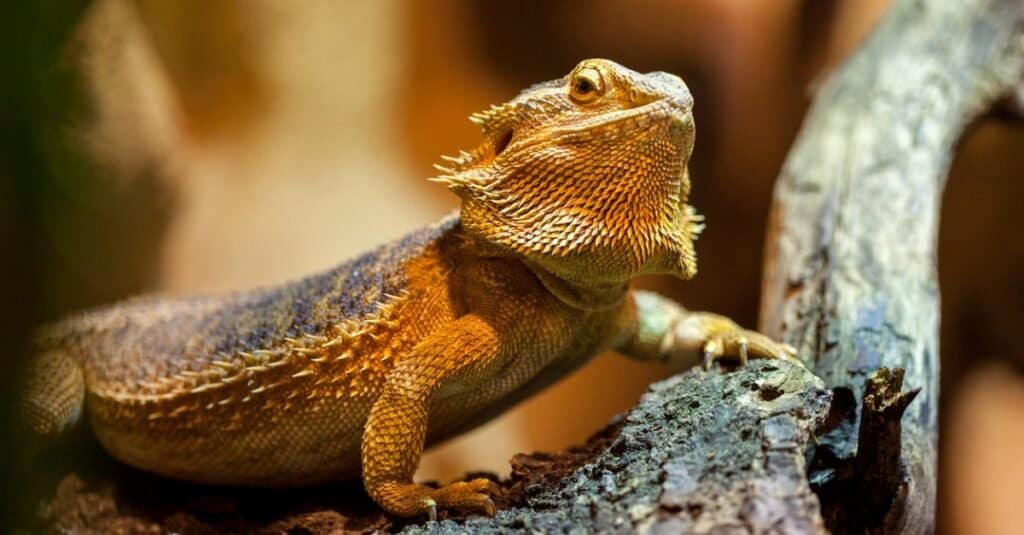
lizards with spikes bearded dragon

Some bearded dragons can grow up to 2 feet long

• A bearded dragon can grow to be 2 feet long

• Some bearded dragons go into a type of hibernation in cold weather

• Bearded dragons live in woodlands, deserts, and savannas

• These reptiles lay on rocks to sun themselves and raise their body temperature

Evolution and Origins of Bearded Dragons

Bearded dragons are a type of lizard that originated from the common reptilian trunk about 250 million years ago. This branch of ancient reptilians is actually much older than the branch that would eventually lead to the dinosaurs and birds.

In fact, One ancestor, Pogona barbata, had a lot of yellow pigment in its mouth so any Pogona today with the same characteristic has at least some P. barbata bloodline.

These days, Bearded dragons are now found in many deserts and other dry climates in Australia.

Scientific Name
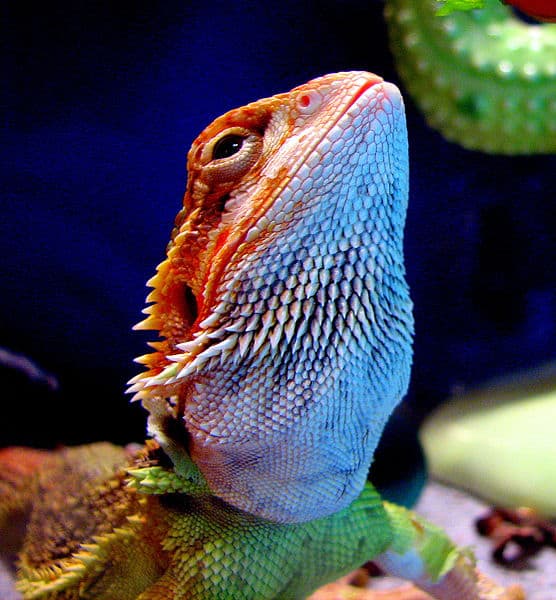
The bearded dragon’s scientific name is Pogona Vitticeps

The bearded dragon is this reptile’s common name while its scientific name is Pogona Vitticeps. Look a little further into the taxonomy of this reptile and you’ll see it belongs to the Agamidae family and its classification is Reptilia.

The scientific name of this animal comes from the Greek words Pogona (Pogon) meaning beard and Vitticeps meaning striped beard.

List of Types of Bearded Dragons
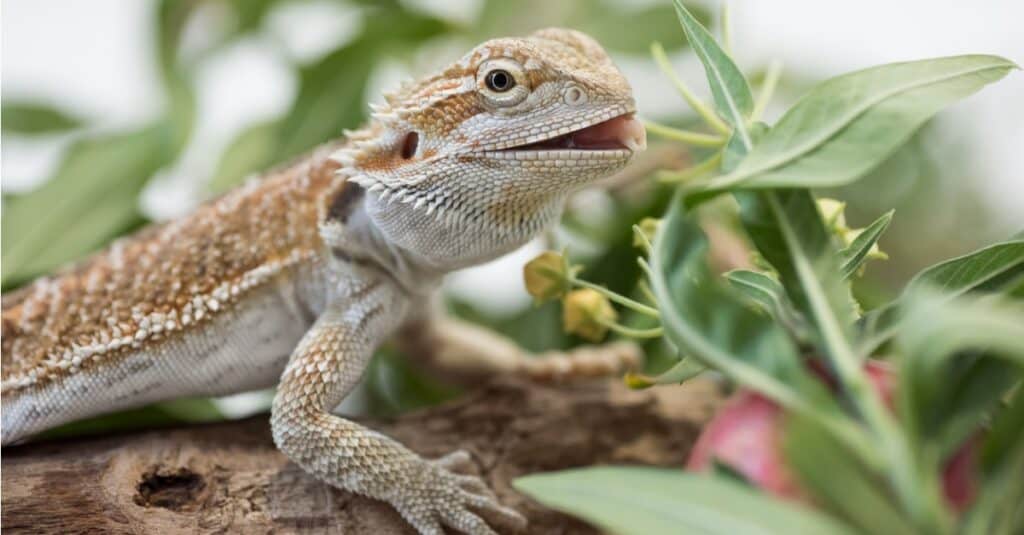
bearded dragon eating plant

The central bearded dragon (Pogona vitticeps)

Central Bearded Dragon: The central bearded dragon (Pogona vitticeps) is also known as the inland bearded dragon. It is also the most common species found as a pet.

Eastern Bearded Dragon: The eastern bearded dragon (Pogona barbata), also known as the common bearded dragon or simply bearded lizard. Despite being a member of the toxic-bearing species, they are non-venomous however, they can bite.

Rankin’s Dragon Pogona Minor Dragon: Rankin’s dragon (Pogona henrylawsoni) is a species of Australian agamid lizard. It may also be called the pygmy bearded dragon. They are a smaller cousin of the common bearded dragon and are just as friendly.

Pogona Minor Dragon: Pogona minor minima, the Abrolhos bearded dragon or Abrolhos dwarf bearded dragon, is an agamid lizard. They produce relatively large clutches of eggs (about 30 eggs at once!)

List of Bearded Dragon Morphs

  1. Classic/Standard
  2. Leatherback
  3. Translucent
  4. Hypomelanistic
  5. Dunner
  6. German Giant
  7. Silkback
  8. Witblits
  9. Zero
  10. Wero
  11. Paradox

Appearance and Behavior

Bearded dragon (Pogona barbata) - friendliest reptile

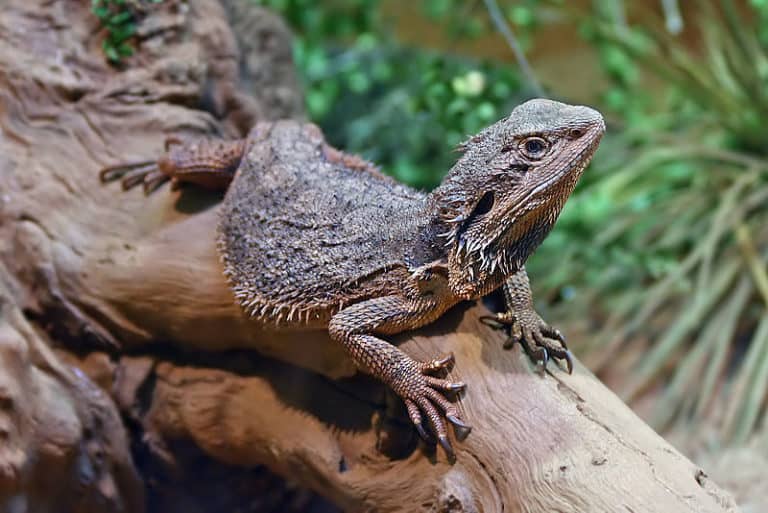
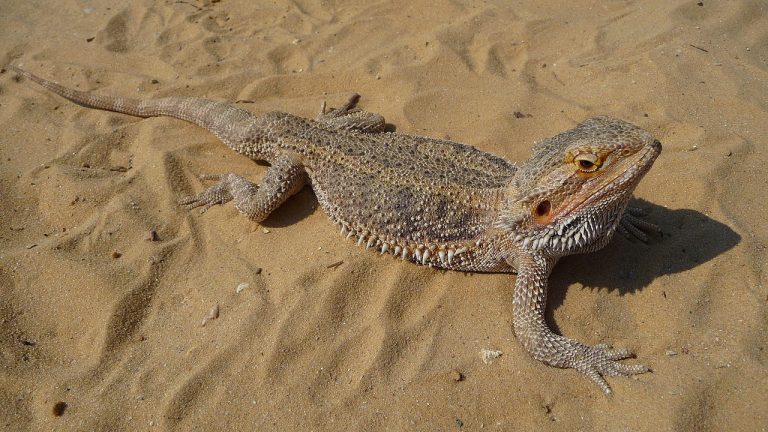
Bearded dragons have ear holes on the sides of their triangular head

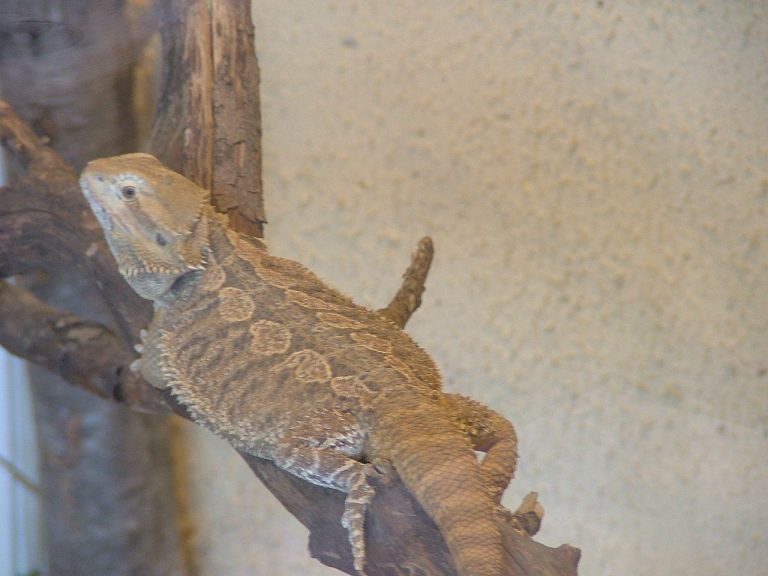
A bearded dragon has yellowish, tan skin. It has a long body with a tail measuring more than half of its total length. A bearded dragon can measure up to 2 feet in length including its tail. An adult bearded dragon can weigh up to 18 ounces. Grab 2 cans of soup from your kitchen pantry and imagine that a bearded dragon’s weight is equal to about a can and a half.

This reptile has spines under its chin and along the sides of its body. Also, it has ear holes on the sides of its triangular head. A bearded dragon has four sturdy legs and sharp claws that help it to climb trees.

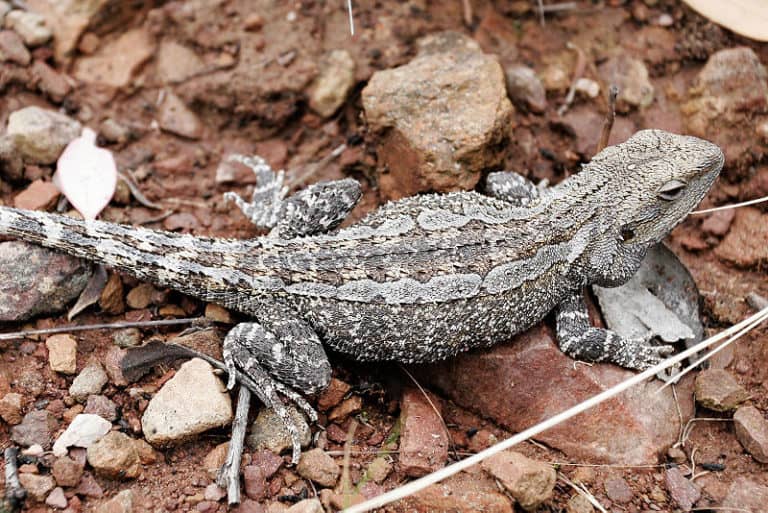
A bearded dragon protects itself from predators by changing color and blending into its environment. Plus, its scales and spiny skin help to protect it when a predator like a snake or a hawk tries to grab it. When this animal feels threatened, it puffs up its spiny beard and opens its mouth to make itself appear larger to enemies.

Bearded dragons are shy, solitary animals except during mating season. They can be aggressive only when they feel their territory is being threatened. Also, males can be aggressive while choosing a mate.

The spiny beard of a bearded dragon helps it to communicate in many ways. When this reptile changes the color of its beard and quickly bobs its head it is trying to show dominance over another male. When a bearded dragon bobs its head slowly and raises one of its legs, it is showing that it’s not a threat to another dragon in the area.

Habitat
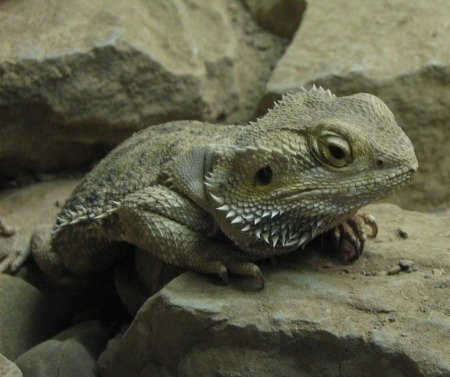
Bearded Dragon On A Rock
There are 8 species of bearded dragons

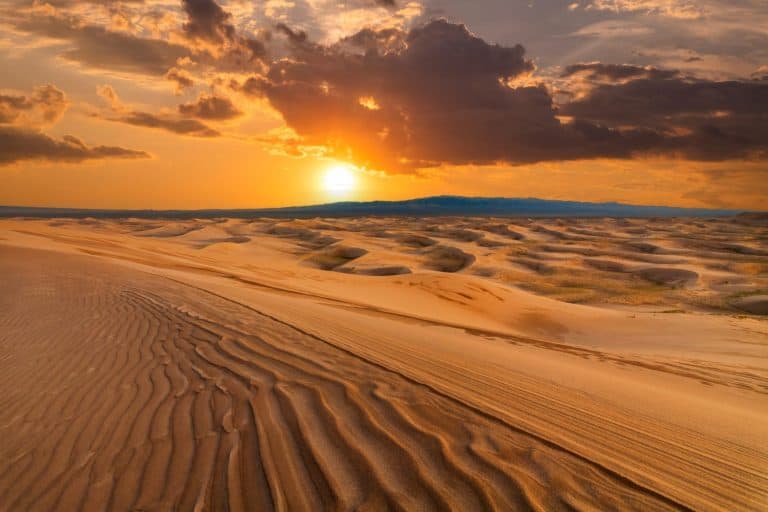
There are 8 species of bearded dragons that live across the continent of Australia. They live in arid and subtropical environments including savannas, woodlands, and deserts. Lots of bearded dragons climb into trees and sit on branches to sun themselves.

Being up so high allows them to be on the lookout for predators in the area. Plus, they can change skin color blending in with the branch they’re sitting on. Other bearded dragons sun themselves on rocks. If this reptile sees a predator while sunning itself on a rock, it scurries into a crack between rocks to hide underground.

When the cold weather season starts in the autumn, bearded dragons go into a type of hibernation called brumation. While in brumation, this reptile is not completely asleep like a bear would be. The difference is it doesn’t eat during this period but does drink water to stay hydrated.

Diet
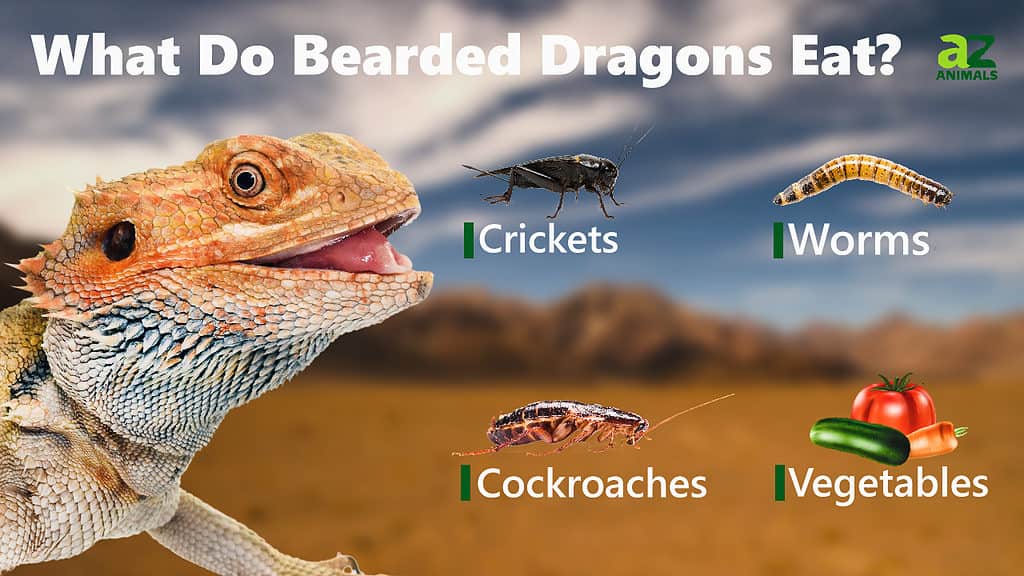
what do bearded dragon's eat
Bearded dragon’s eat mealworms, crickets, cockroaches, and vegetables

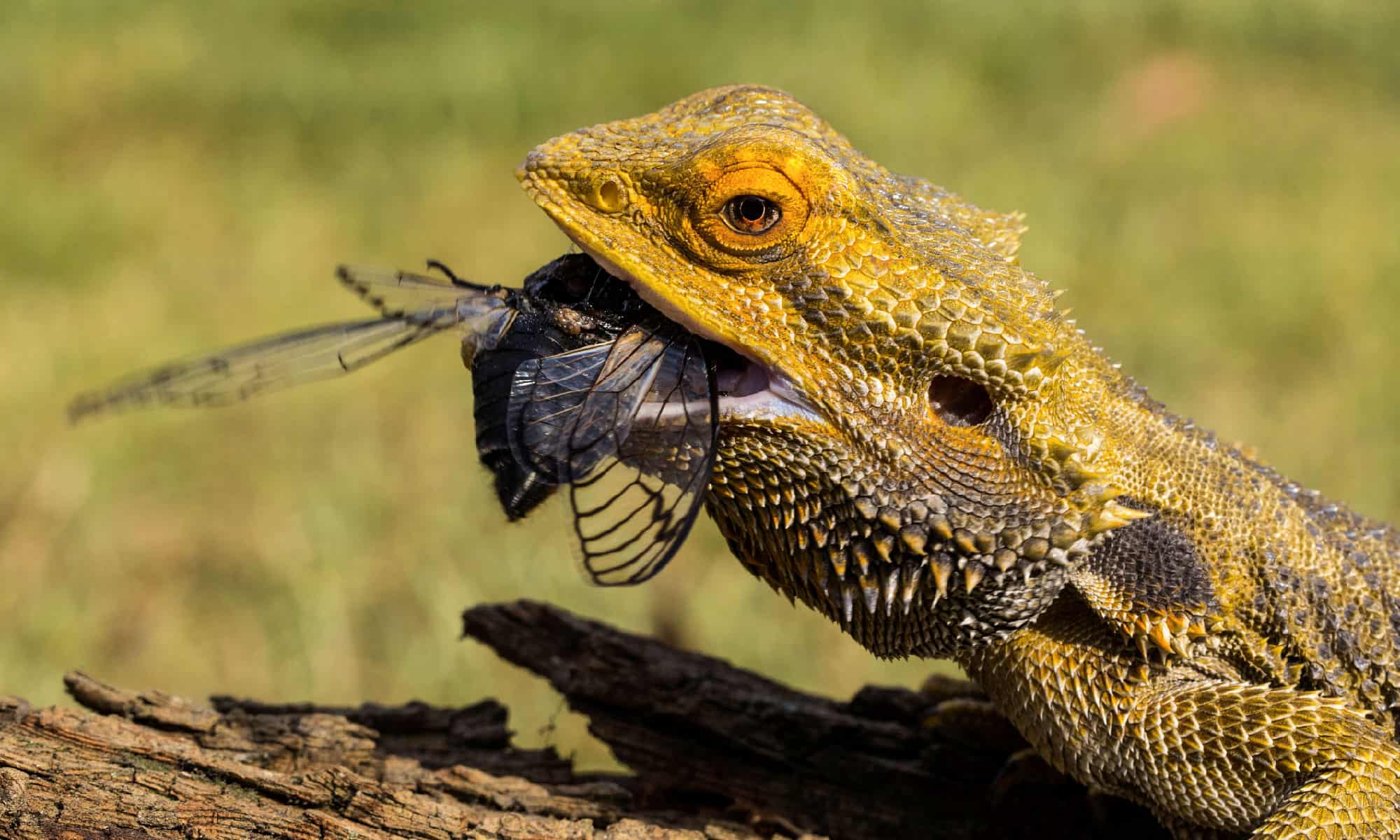
Bearded dragons are omnivores. They are not picky about their diet. They eat insects such as cockroaches, crickets, and locusts. In addition, they will snack on flowers, fruit, and leaves. Some bearded dragons eat lizards and small rodents such as mice.

These reptiles eat about once a day. If an adult bearded dragon is hunting crickets, it may eat 2 or 3 large ones. A baby bearded dragon that is growing quickly is likely to eat more than an adult reptile.

Fireflies and other insects that glow in the dark are poisonous to bearded iguanas. The chemical in a firefly’s body that makes it glow is harmful to a bearded dragon. In addition, bearded dragons do eat fruit, however, avocados are poisonous to them. For a complete list of foods bearded dragons eat, check out our “What Do Bearded Dragons Eat?” page.

Predators and Threats

Snakes, birds, dingoes, goannas, and crocodiles are all predators of a bearded dragon. An owl may fly down to a branch to grab a bearded dragon that’s sunning itself. Or, a dingo may capture a bearded dragon that’s lying on a rock to get some sun in the afternoon. Though a bearded dragon can run up to 9 miles an hour, it isn’t as fast as some of its predators.

The habitat of bearded dragons is threatened. When trees are cut down or land cleared, bearded dragons have no place to live. Also, some bearded dragons are caught and sold as exotic pets in other countries. This reduces the population in the wild. Fortunately, there are preserves in Australia where bearded dragons are cared for and protected from both of these threats. Their official conservation status is Least Concern.
Reproduction, Babies, and Lifespan

Bearded dragons mate in the spring and summertime. During mating season, a male bearded dragon bobs its head and stamps its feet to attract a female.

A female can lay from 11 to 30 eggs at a time. After mating with one male, a female may lay two or three different groups of eggs that number 11 to 30. A female bearded dragon may lay 9 groups or clutches of eggs in one year. The gestation period of this reptile is 55 to 75 days. This is a lot shorter than an iguana’s which is 90 to 120 days.

It’s possible for the sex of a bearded dragon to change while it’s incubating. A developing male can develop into a female bearded dragon if the temperature during incubation is especially hot.

It takes about three days for a baby bearded dragon to break out of its egg. Its birth weight is around one ounce and it’ll be about 3 to 4 inches long. A baby bearded dragon that is 4 inches in length is just a little longer than a crayon.

Baby bearded dragons are sometimes called hatchlings. Once a female bearded dragon lays her eggs, she doesn’t see them again. They are on their own immediately after they hatch.

Bearded dragons live for about 15 years. Pet bearded dragons may live a little longer because of the lack of threat from predators. These reptiles are sometimes vulnerable to respiratory infections and parasites but otherwise live healthy lives if they take in enough nutrition. The oldest bearded dragon is listed in the Guinness Book of World Records. This bearded dragon named Sebastian lived to be 18 years old. He died in 2016 in England.
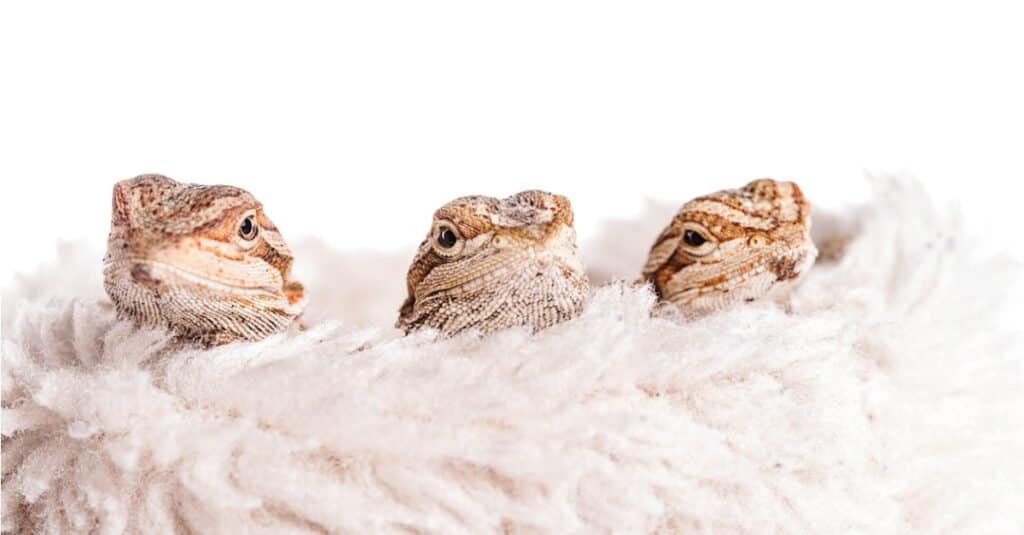
baby-bearded-dragon-siblings

Baby bearded dragons

Male vs Female

There are several key differences between male and female bearded dragons, Males are typically about 20% larger in terms of weight. Most importantly, male bearded dragons will have two hemipenal bulges. There is where the sex organs of male bearded dragons are kept. In females, there will be a single bulge that’s centered on their bodies.

Population
Bearded Dragon is the least concern as the official conservation statues

The official conservation status of the bearded dragon is Least Concern. The population of these reptiles remains steady in Australia. Plus, there are over 900 bearded dragons living in zoos throughout the world. There are laws in Australia protecting bearded dragons from poachers who capture them and try to ship them out of the country. Today, many bearded dragons are bred outside of Australia.

Bearded Dragon as a Pet
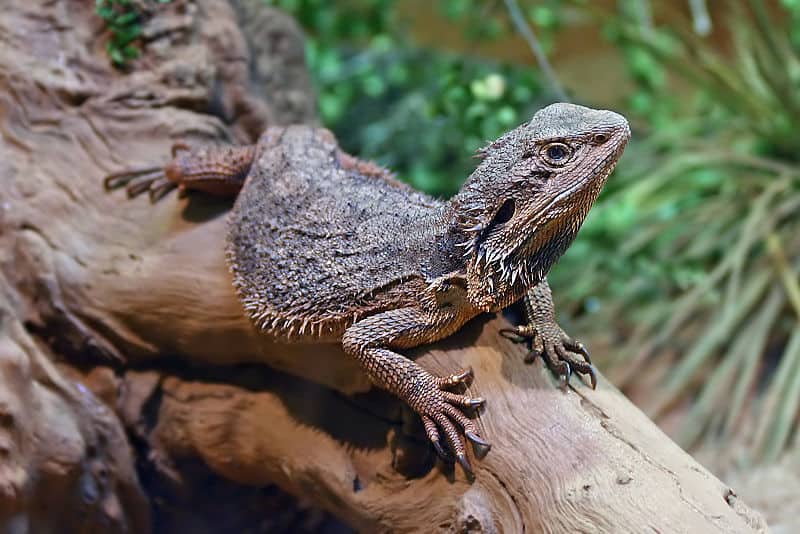
pet bearded dragon

A pet bearded dragon makes a great family addition.

Bearded dragons are one of the more popular choices for pet lizards. In captivity, they generally grow up to 24″ long and live 10 years on average. When young, they eat an even mix of plants and insects, and as they mature their diet goes heavily plant-based, with only about 10% insects.

A terrarium of a minimum of 40 gallons would be needed to create a good habitat for your pet, and factors to take into account would include: heating, substrate, lighting, humidity, temperature, and decor.

View all 453 animals that start with B
How to say Bearded Dragon in ...
German
Bartagamen
English
Bearded Dragon
Esperanto
Barba agamo
Japanese
アゴヒゲトカゲ属
Dutch
Baardagame
Swedish
Skäggagam

Sources

  1. David Burnie, Dorling Kindersley (2011) Animal, The Definitive Visual Guide To The World's Wildlife / Accessed November 25, 2008
  2. Tom Jackson, Lorenz Books (2007) The World Encyclopedia Of Animals / Accessed November 25, 2008
  3. David Burnie, Kingfisher (2011) The Kingfisher Animal Encyclopedia / Accessed November 25, 2008
  4. Richard Mackay, University of California Press (2009) The Atlas Of Endangered Species / Accessed November 25, 2008
  5. David Burnie, Dorling Kindersley (2008) Illustrated Encyclopedia Of Animals / Accessed November 25, 2008
  6. Dorling Kindersley (2006) Dorling Kindersley Encyclopedia Of Animals / Accessed November 25, 2008
Rebecca Bales

About the Author

Rebecca Bales

Rebecca is an experienced Professional Freelancer with nearly a decade of expertise in writing SEO Content, Digital Illustrations, and Graphic Design. When not engrossed in her creative endeavors, Rebecca dedicates her time to cycling and filming her nature adventures. When not focused on her passion for creating and crafting optimized materials, she harbors a deep fascination and love for cats, jumping spiders, and pet rats.
Connect:

Thank you for reading! Have some feedback for us?


Bearded Dragon FAQs (Frequently Asked Questions)

Bearded dragons are omnivores. They eat insects, fruit, leaves and sometimes rodents. What a bearded dragon eats depends on the food source available in the area. If there is a shortage of insects due to weather conditions, a bearded dragon may eat dry leaves for nourishment.