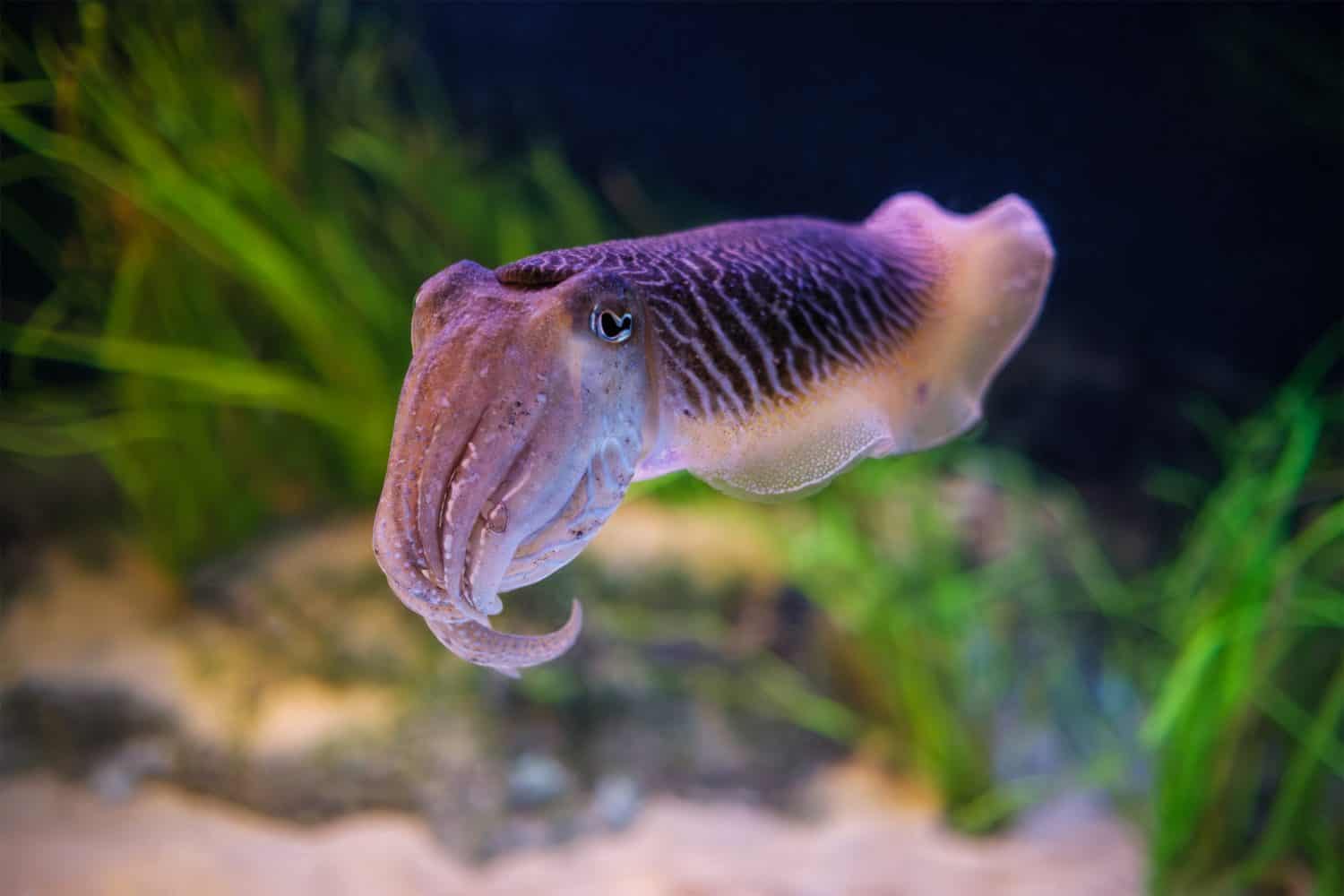
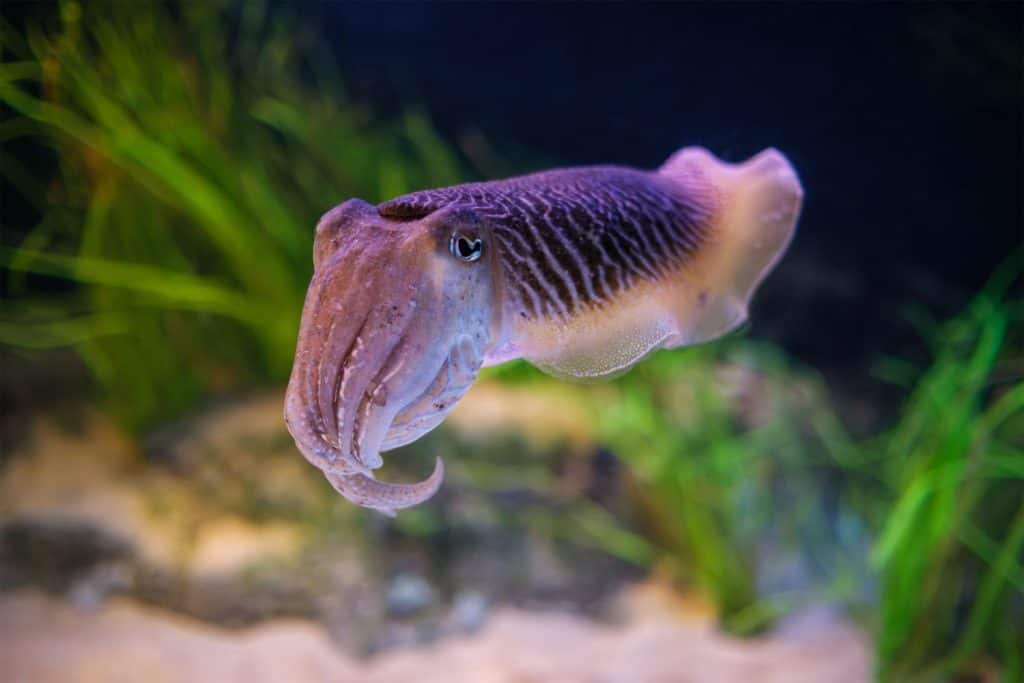
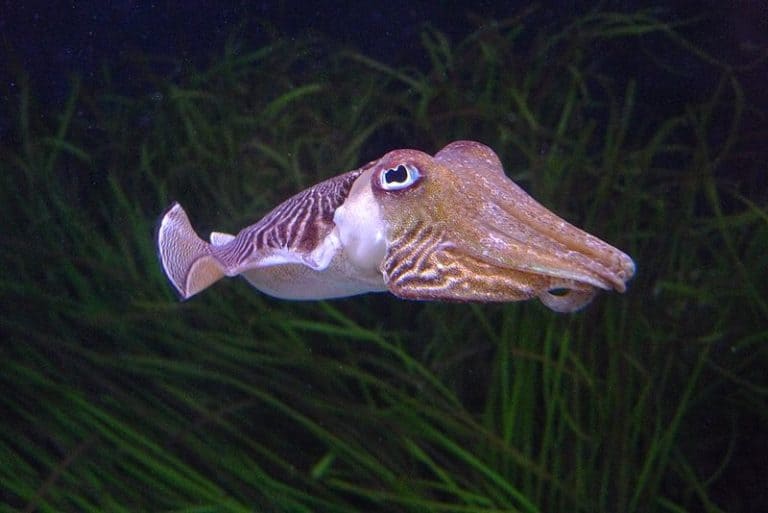
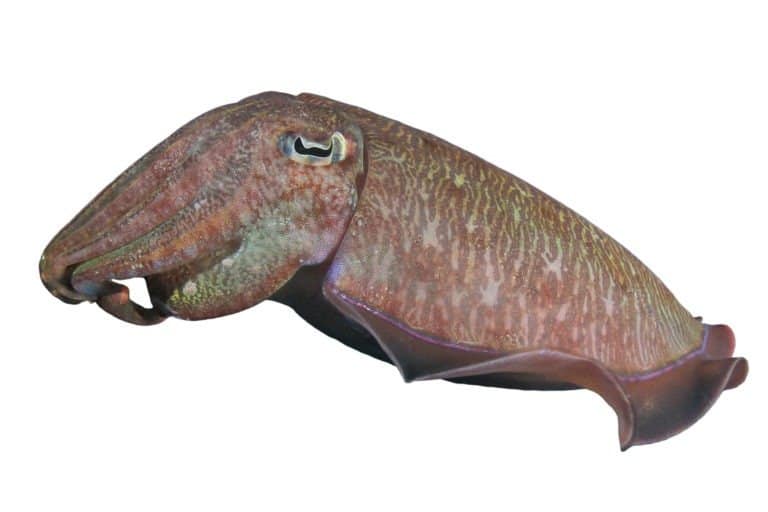
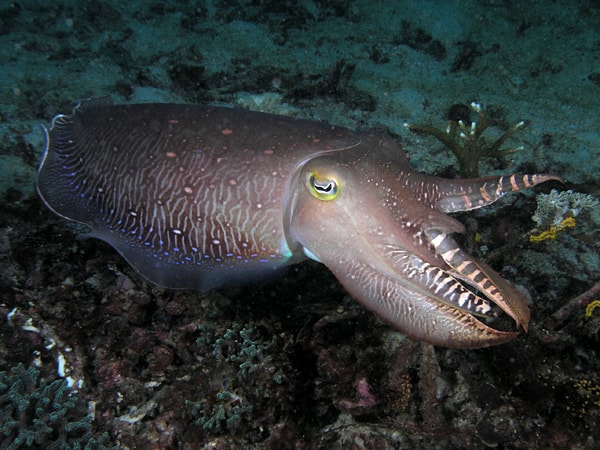
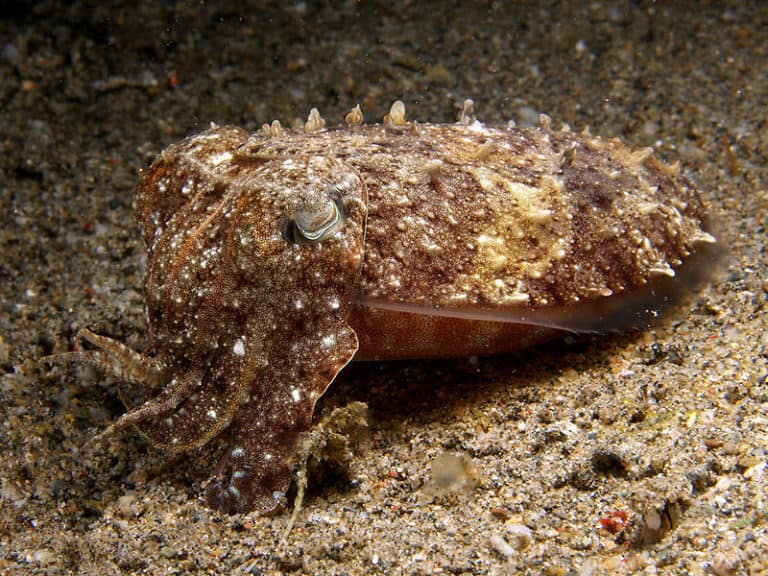





Despite the name, cuttlefish is not really a fish at all, but a type of cephalopod. This puts it in the same class as the squid, nautilus, and octopus. It is often said that the cephalopods resemble aliens on Earth in the sense that they’re a remarkably intelligent but very different type of lifeform from us. They last shared a common ancestor with land animals some hundreds of millions of years ago.
Cuttlefish are some of the most ancient living creatures of the sea.
©Nick Hobgood / Creative Commons – Original
5 Incredible Cuttlefish Facts
- All cuttlefish feature a thick internal shell called a cuttlebone, from which the name obviously derives. The cuttlebone is composed of the mineral aragonite with calcium, carbon, and oxygen atoms.
- Cuttlefish (order Sepiida) are believed to have originated in the late Cretaceous period, around 100 million years ago. Their ancestors likely came from an extinct cephalopod order known as the Belemnitida, which had a more robust internal skeleton.
- The ink of the cuttlefish has been used as both dye and medicine throughout human history.
- With its curvy W-shaped eye, this fish has the remarkable ability to perceive extremely high contrasts in light that is normally invisible to the human eye. Contrast is the difference between white and dark light. As a tradeoff, however, the cuttlefish is unable to see color.
- A few cuttlefish species are able to produce toxic venom to ward off predators.
Classification and Scientific Name
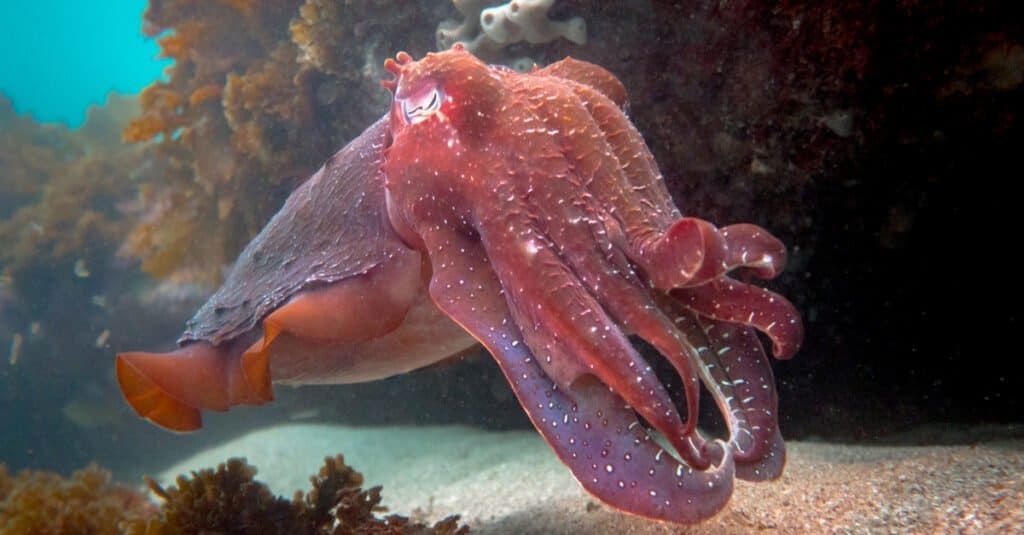
Not all Sepiida are sepia; many come in different vibrant colors.
©Ste Everington/Shutterstock.com
Cuttlefish is classified in the order Sepiida. The term Sepiida derives from the Greek and Latin word sepia, which is a reference to the name of the dye produced from its ink. Sepia is now the English word for a type of reddish-brown color.
Notable Species
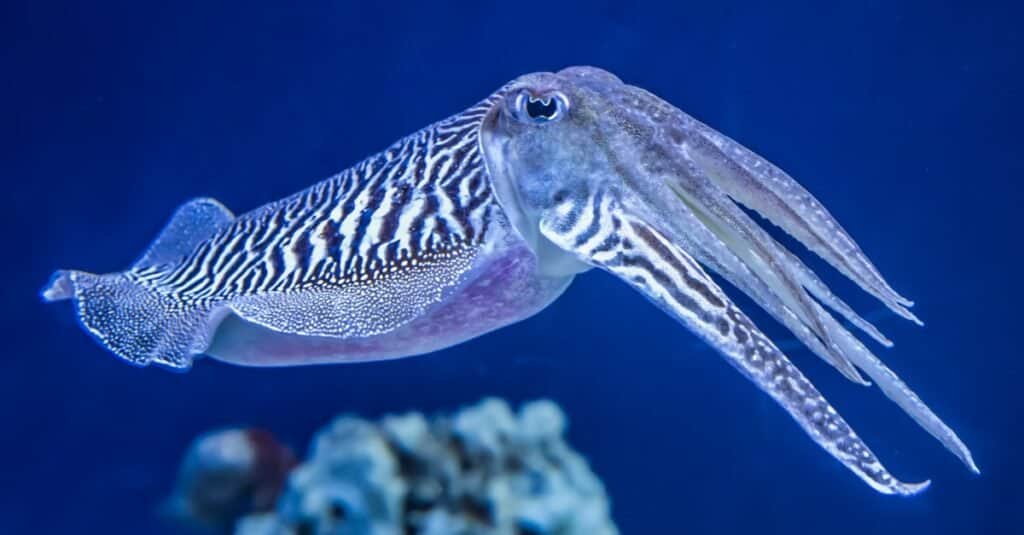
The Common Cuttlefish (Sepia officinalis) is generally found in the eastern North Atlantic and Mediterranean Sea.
©David A Litman/Shutterstock.com
There are approximately 120 species of cuttlefish still alive. Here is just a small sample of them:
- Common Cuttlefish (Sepia officinalis): As the name implies, this is one of the most widespread species of cuttlefish in the world. Measuring no more than 19 inches in size, the common cuttlefish primarily inhabits the waters of the Mediterranean Sea, North Sea, and Baltic Sea.
- Pharaoh Cuttlefish (Sepia pharaonis): This is a large species of cuttlefish that inhabits the Pacific region between Japan and Australia and as far west as the Red Sea. It is commonly hunted in the Philippines, India, and Persia for food.
- Flamboyant Cuttlefish (Metasepia pfefferi): This species is well-named for the rather bright and exuberant pattern of colors on its mantle. Endemic to the waters of Australia and Southeast Asia, this species produces an acid that makes it unsuitable for human consumption. This small species is only a few inches in length.
Evolution
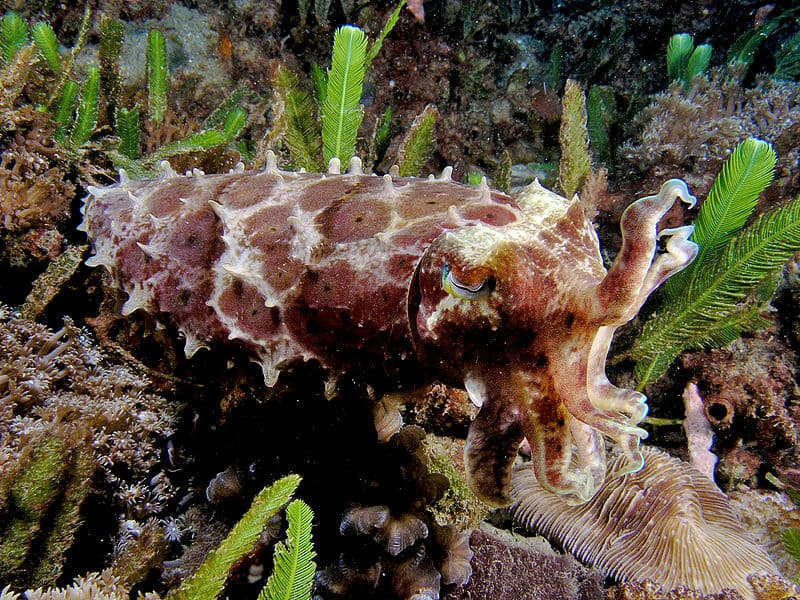
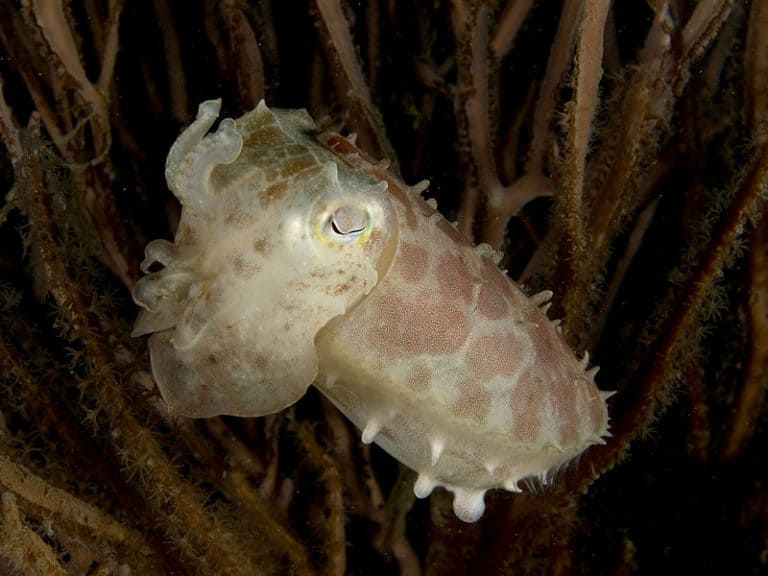
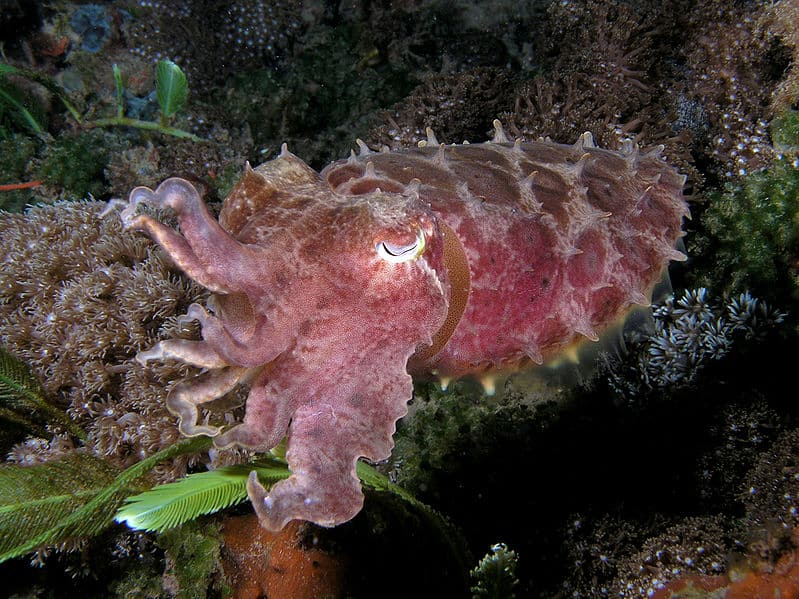
Cuttlefish have evolved to be masters of disguise.
©Nick Hobgood / Creative Commons – Original
Cuttlefish are some of the most ancient living creatures that swim the oceans today. Scientists believe the first cuttlefish began to emerge from their progenitors sometime 500 million years ago. Early cuttlefish greatly resembled their cousin, the nautilus, being encased in a similar protective shell. Soon, ancient cuttlefish began to develop the trait of camouflage, fine-tuning and perfecting their tactics for blending in with their environment for millions of years until shells were no longer necessary for their survival.
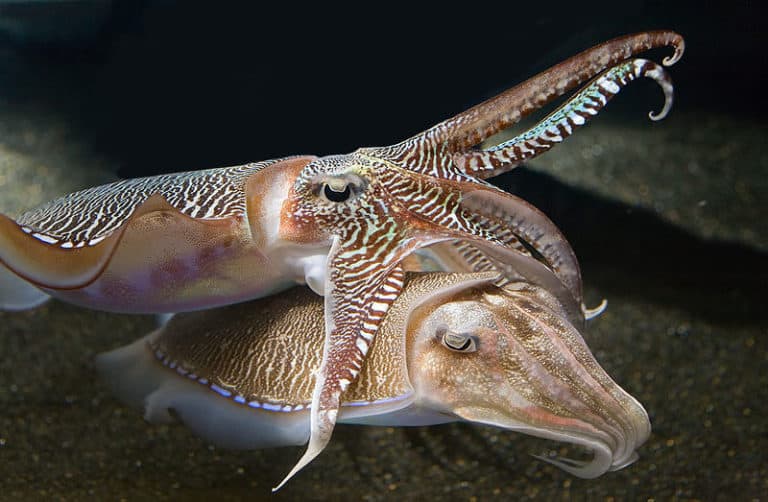
‘Cuttlefish can use their camouflage by activating the chromatophores on their skin — these are specialized cells that control pigmentation. Some species have up to several million chromatophores. In addition to defending themselves from predators, cuttlefish have also evolved to use their color-changing skin for communicating with other members of their species, with males often showcasing a complex pageant of color patterns in order to attract a mate.
Appearance and Behavior
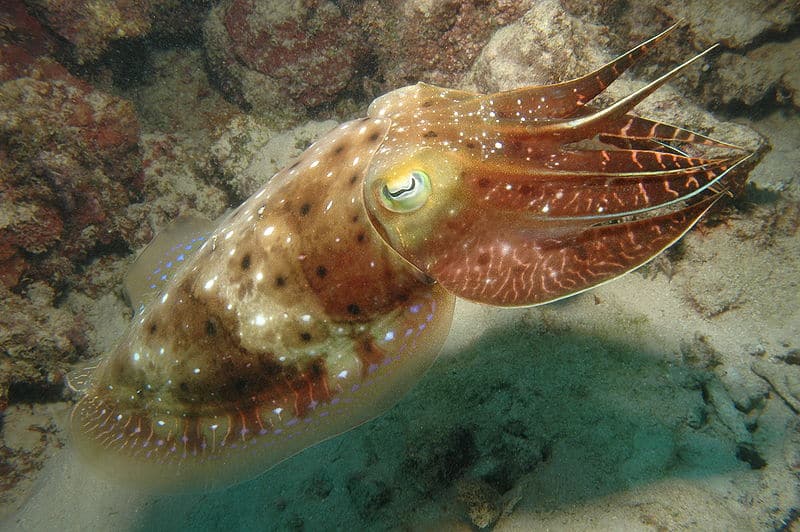
Cuttlefish have three hearts.
©Leonard Low / Creative Commons – Original
One look at this fish will tell you that it’s a true cephalopod. Its body resembles the closely related squid and octopus, except it is much smaller in size. The smallest cuttlefish species only measures an inch or two. The largest species is the Australian giant cuttlefish, which can measure up to 20 inches and weigh up to 22 pounds, though most individuals are much lighter.
The cuttlefish is characterized by the gas-filled internal cuttlebone (which actually provides buoyancy and control rather than protection), a long and relatively flat body, a parrot-like beak, and long fins running along both sides. It also features eight arms and two tentacles containing a series of suction pads that are used to capture prey. The arms and tentacles can be withdrawn into two pouches at any time. Cuttlefish are also one of the few animals that have multiple hearts. In total, they have three different hearts.
Two of those hearts supply blue-green blood to its gills, while the third supplies oxygen to the rest of its body. Why is its blood blue-green instead of red? Cuttlefish blood contains hemocyanin, which itself contains copper, rather than hemoglobin, which contains iron.
The cuttlefish moves at incredible speeds through the water via jet propulsion. It does this by sucking in water through a body cavity and then expelling the water out with its powerful muscles. The fins allow it to maneuver at high speeds. This method of transportation is necessary to evade very fast and agile predators.
Another incredible ability is the color change. The cuttlefish’s body contains millions of small pigment cells called chromatophores that allow the creature to alter its color and pattern at any time. When the cuttlefish flexes its muscles, the pigment is released into the outer skin to blend in with the surroundings. This is used for many purposes, such as to camouflage itself, attract mates, and communicate with other cuttlefish. The color change may also serve the purpose of stunning prey with quick and debilitating flashes.
The cuttlefish has a rather large brain-to-body size compared to most invertebrates. Studies reveal that it is capable of various degrees of problem-solving and object manipulation. This intelligence may be necessary to manipulate the incredibly complex tentacles and arms, which contain a large number of neurons like the brain.
Cuttlefish Distribution, Population, and Habitat
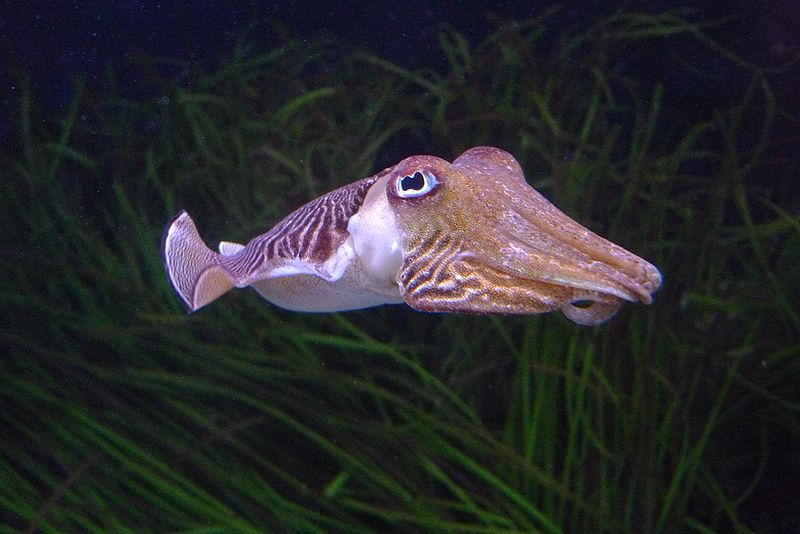
Cuttlefish are found around every continent but North and South America and Antarctica.
©David Sim from London, United Kingdom, CC BY 2.0, via Wikimedia Commons – Original / License
The cuttlefish is found throughout the oceans and seas of Europe, Africa, Asia, and Australia, but it is absent from the Americas. Throughout its natural range, this animal exhibits a yearly migratory pattern. In the summer, it inhabits the coastal waters in tropical or temperate regions. In the winter, it migrates to the deeper water of the oceans.
According to the IUCN Red List, which keeps track of the conservation status of many animals, data about population numbers is unfortunately not available for many cuttlefish species. When data is known, almost all species are categorized as least concern. Only a few species are at risk of endangerment.
Diet
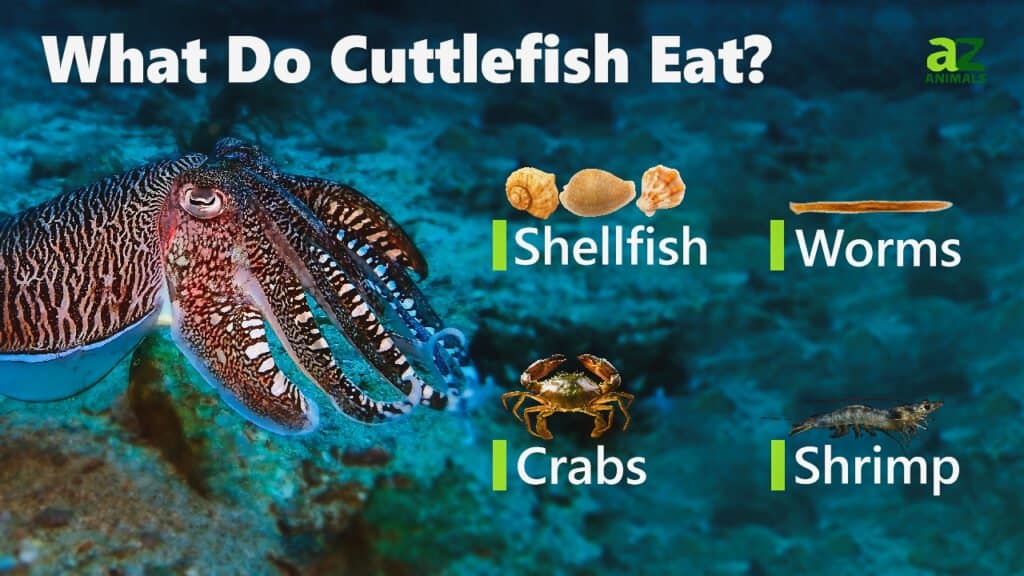
The cuttlefish has a rather simple diet consisting of fish, crab, and other mollusks. Larger cuttlefish also tend to prey on juveniles or smaller species of cuttlefish. They use the beak located in the mantle between their arms to crack open the tough shells of their prey and feast on the tasty meat within.
Cuttlefish Predators
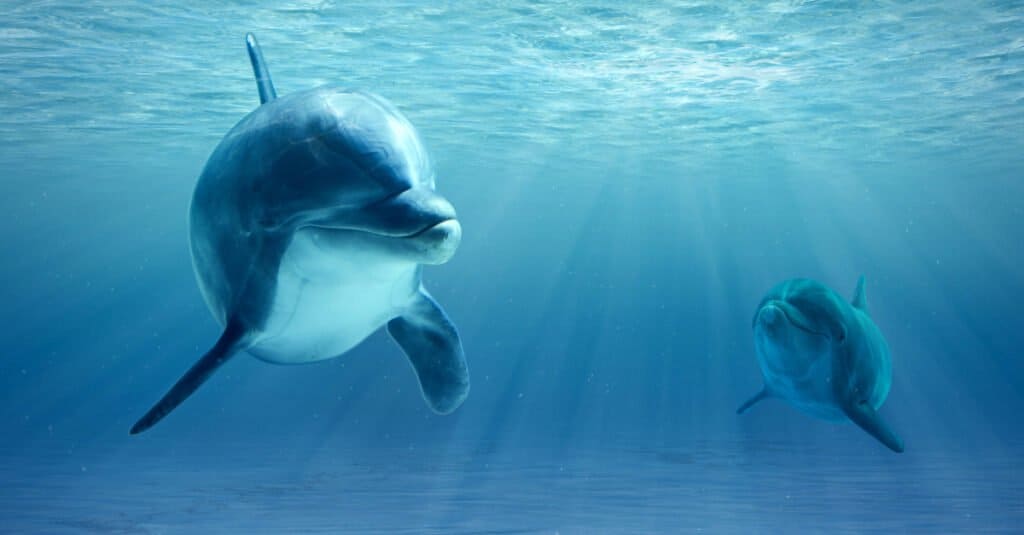
Dolphins regularly feed on cuttlefish and other cephalopods.
©marshalgonz/Shutterstock.com
Due to its small size, the cuttlefish is hunted by all kinds of larger fish, dolphins, seals, birds, and other mollusks. But it does have several defensive mechanisms to help it survive. When threatened, the cuttlefish can release a cloud of ink to confuse predators and then make its daring escape. The speed is a distinct advantage over slower predators. The venom of some species also provides a valuable defense.
Reproduction and Lifespan
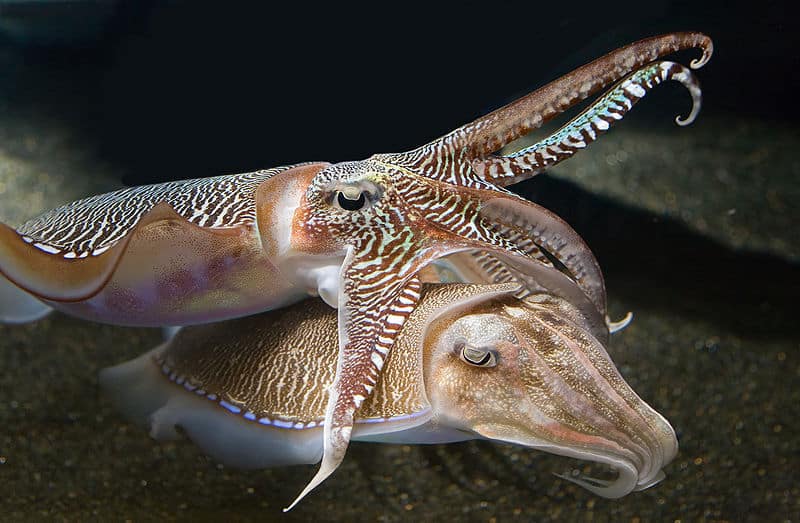
Cuttlefish usually only live 1-2 years.
©Rainer Zenz / Creative Commons – Original
The cuttlefish has a very organized and straightforward reproduction cycle. During the breeding season, which lasts between the spring and summer of every year, the male puts on a brilliant mating display in which it transforms colors and patterns to impress the female. Once accepted, the male uses its modified arm to transfer sperm into the female’s mantle near the mouth to fertilize the eggs.
The impregnated female then deposits 100 to 300 eggs at a time on rocks, seaweed, or other surfaces. She alone watches over the eggs until they hatch after a period of one or two months on average. Shortly after their duties are fulfilled, both the male and female will die, ceding the way to the next generation. Cuttlefish reach sexual maturity after a period lasting up to 18 months, but their life expectancy is a mere one or two years of age. This means they tend to perish after only a single mating season.
Cuttlefish in Fishing and Cooking
Cuttlefish is a popular dish throughout the coastal regions of Europe and East Asia. It is prepared in various ways: breaded, deep fried, grilled, or shredded. The ink can be served alone or with the rest of the cuttlefish as well.
Cuttlefish Pictures
View all of our Cuttlefish pictures in the gallery.

David Sim from London, United Kingdom, CC BY 2.0, via Wikimedia Commons
How to say Cuttlefish in ...
Sources
- Britannica / Accessed November 8, 2019
- Thought Co. / Accessed November 8, 2019
- PBS / Accessed November 8, 2019