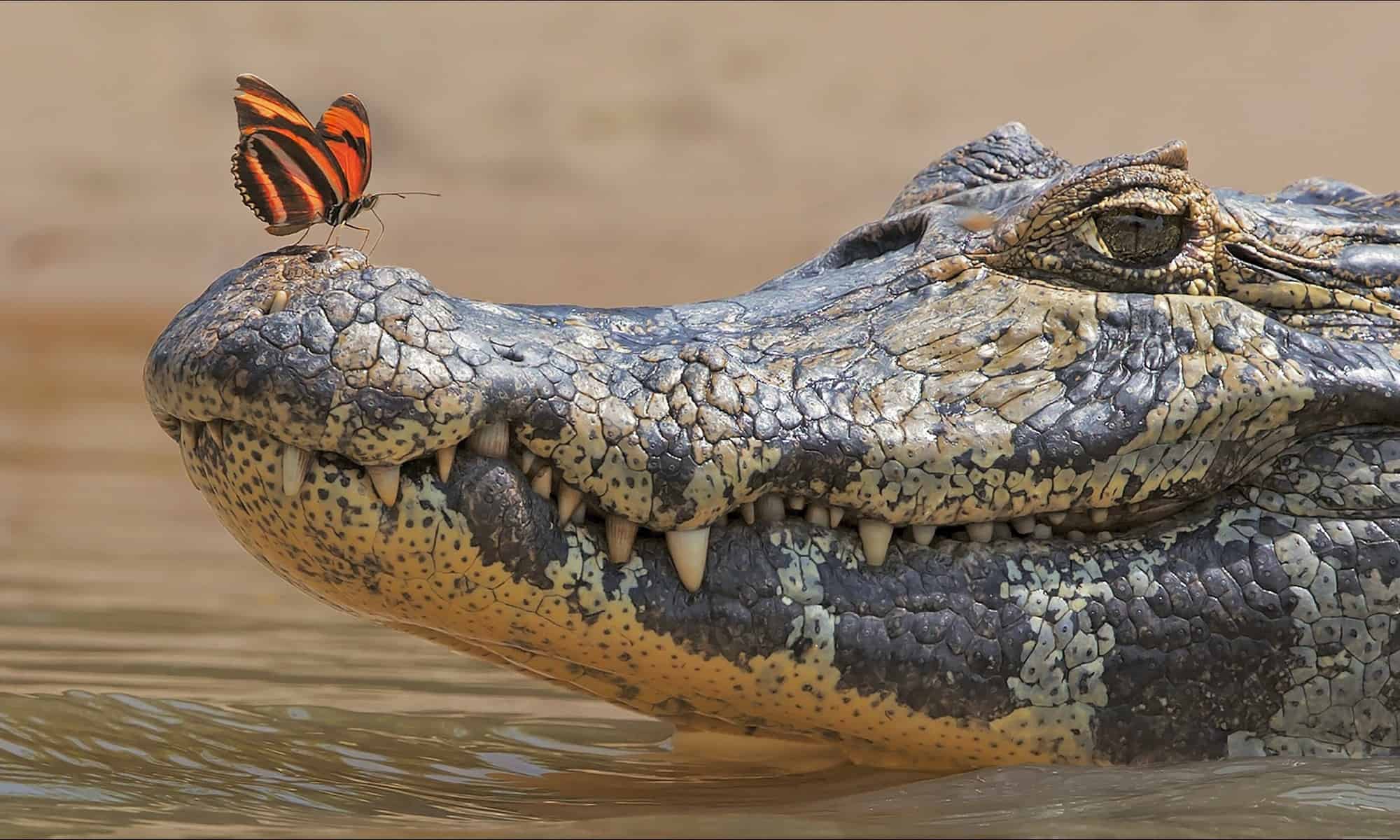

Home to various tourist spots and exciting places, Mississippi is undoubtedly one of the best destinations for recreation and vacation. It’s also home to a wide variety of wildlife, both large and small. Of all the species of wildlife living here, one that stands out is the alligator. We all know that these carnivorous reptiles are known for their speed and strength in hunting and may grow to incredibly large sizes, but did you know there might be a particularly large alligator lurking in Mississippi?
Today, we’re going to talk about the biggest alligator found in Mississippi, some alligator-infested places within the state, the current status of alligators, and more amazing facts about these fierce and unique reptiles.
What is the Biggest Alligator Found in Mississippi?
Adult alligators usually grow from eight to 15 feet long. Among the approximately 30,000 alligators thriving within the state of Mississippi, 20% are over ten feet long. Alligators in Mississippi can grow particularly large due to a combination of factors, including hunting regulations (meaning they’re able to thrive and reach larger sizes), habitat quality, and food availability.
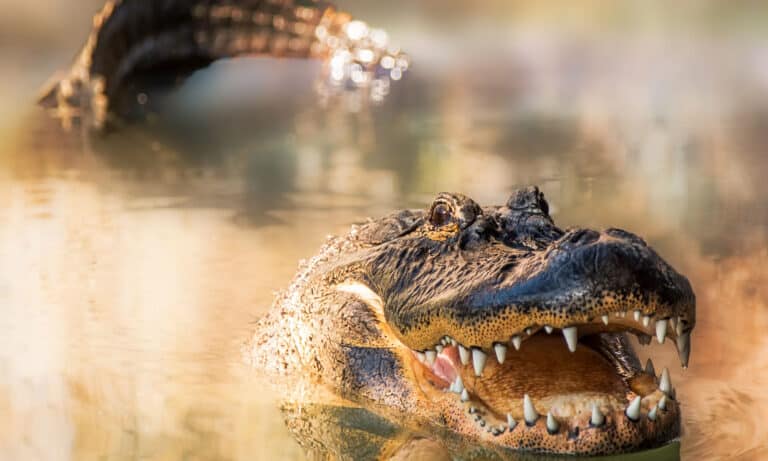
The biggest alligator found in Mississippi was captured in August 2023 by a group of hunters. The alligator measured 14 feet, 3 inches in length and weighed 802.5 pounds, making it the largest alligator ever caught in the state.
Where are Alligators in Mississippi?
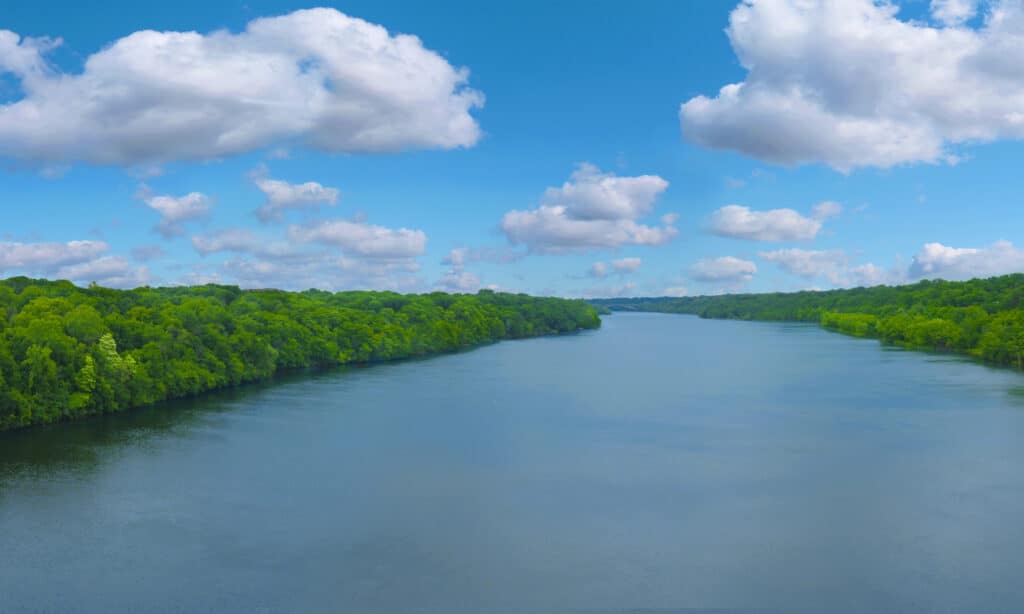
The Mississippi River is one of the places where alligators can be easily spotted.
©Milen Mkv/Shutterstock.com
Alligators are found in almost every county, but southeast Mississippi holds the record for the most alligator populations, with 25% of all Mississippi’s alligators found here. Although abundant everywhere in Mississippi, alligators are primarily found in counties such as Jackson, Harrison, Hancock, and the Pascagoula River System. Its basin is the most extensive drainage in North America, serving as a habitat for most alligators. The Mississippi River is also one of the places where alligators can be easily spotted.
How Many Alligators are There in Mississippi?
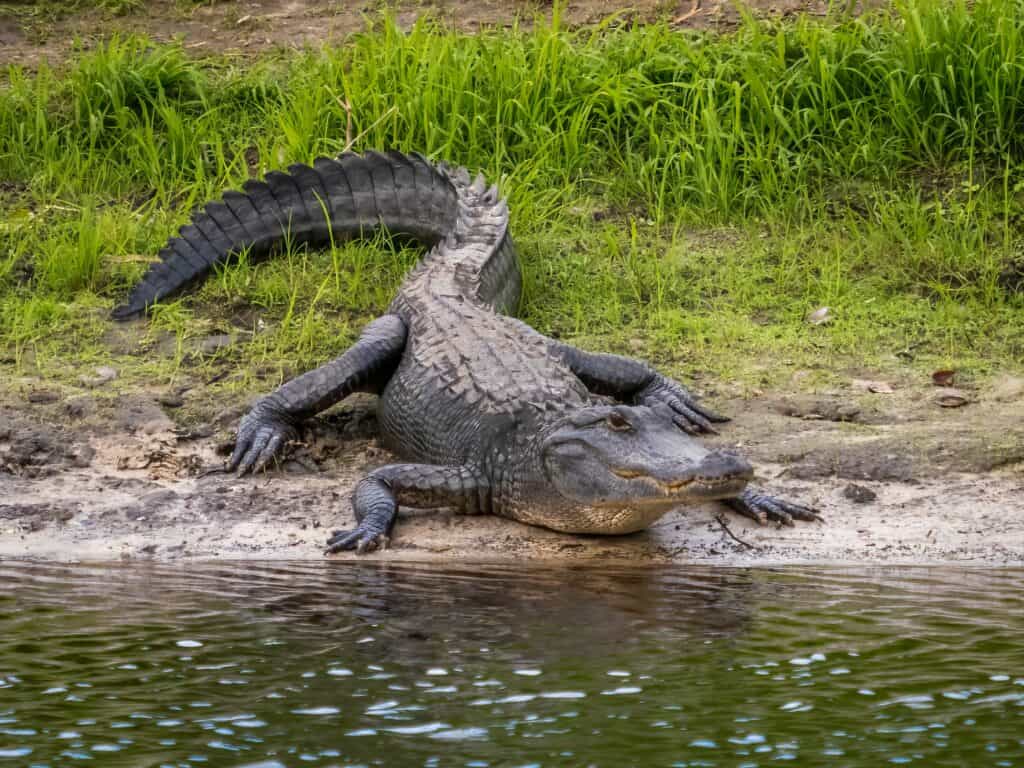
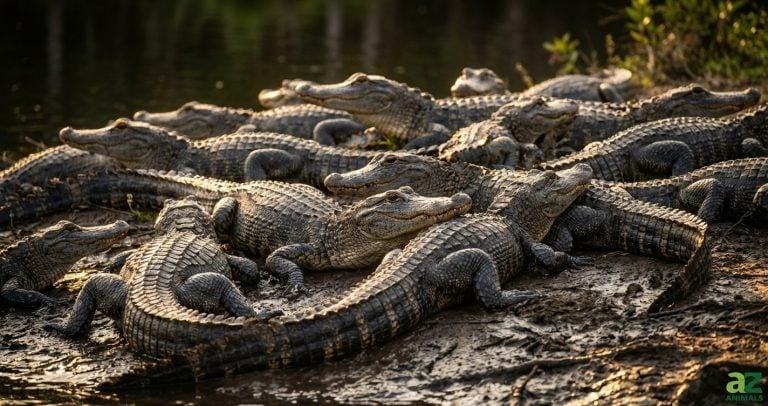
An estimated number of 32,000 to 38,000 alligators were found in Mississippi.
©Jim Schwabel/Shutterstock.com
An estimated number of 32,000 to 38,000 alligators live in Mississippi. There are also approximately 408,000 acres of prime alligator habitat within the state. Although fourteen Mississippi counties have reported no alligators, nuisance alligators in northern counties such as Coahoma, Lafayette, and Itawamba have been reported.
Jackson County has the highest estimated number of alligators, with about 7,500, or 24% of all alligators in Mississippi, thriving in its 57,000-acre area. Other highly populated counties with alligators include Hancock, with 3,900 or 12% of the state’s total, and Rankin, with 2,400 alligators, or 7.4% of the state’s total.
Do Alligators in Mississippi Attack Humans?
There are no records of fatal alligator attacks in Mississippi, although there are some instances where bites and minor injuries have occurred. Some state laws sometimes prohibit feeding an alligator, as it can turn into a dangerous situation. Although people know that feeding alligators is illegal and would cause them to have a dangerous interaction with the reptiles, some people have been reported to feed them unintentionally. An alligator might see a human as its potential prey if it is being fed too frequently.
Earlier, it was mentioned that the Mississippi River is one of the alligator-infested places in Mississippi. Alligators are nocturnal and hunt primarily at night, so it’s best to avoid swimming in the river during these hours. Other than alligators, the Mississippi River is also home to other dangerous animals, such as the cottonmouth snake.
What to Do if You See an Alligator
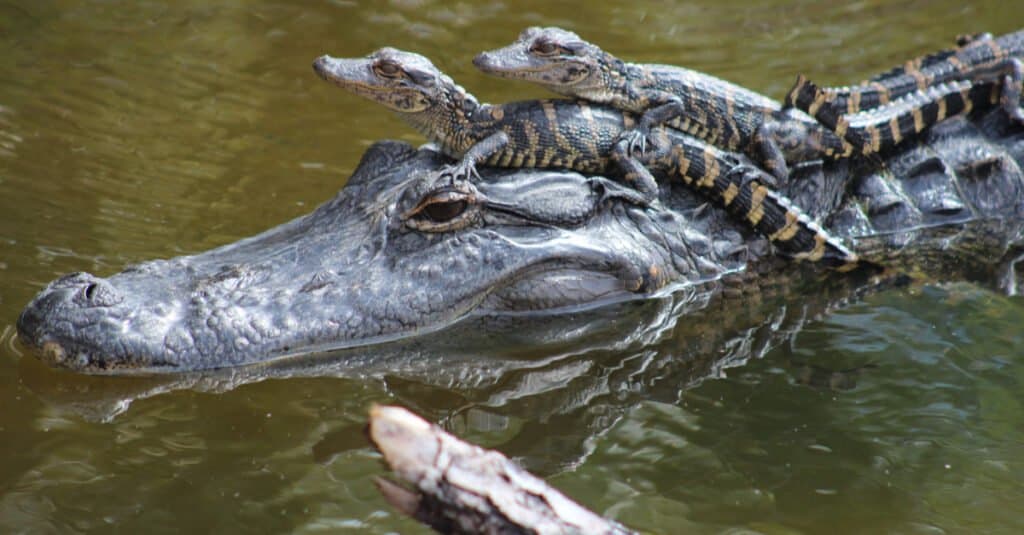
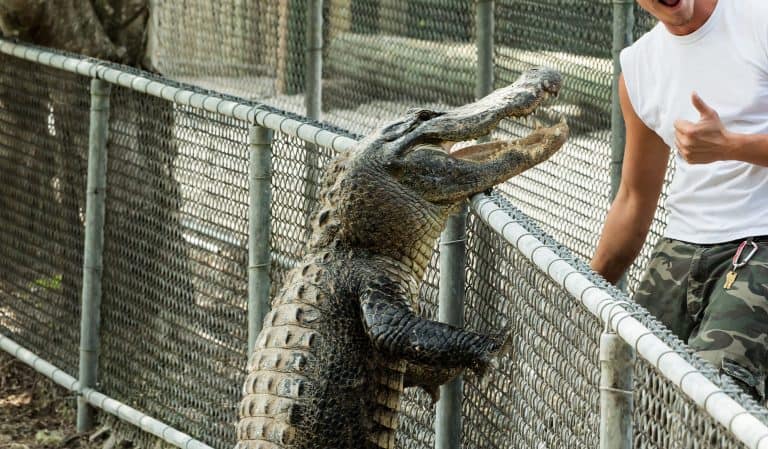
It is strictly prohibited to approach alligators, as they might initiate a dangerous attack.
©Marc Pletcher/Shutterstock.com
Suppose you are a tourist just enjoying your time and suddenly see an alligator swimming in the water or basking in the sun on land. In that case, it is advised that you call and report it to the authorities immediately. It is strictly prohibited to approach these ferocious creatures, as they might initiate a dangerous attack that could result in serious injury.
However, alligator sightings are usually not a problem unless they show no fear of humans and appear as a threat to humans, pets, or even livestock. Then, they need to be removed immediately by those who have the authority to do so.
Other Facts About Alligators
While almost everyone knows alligators, there’s still plenty to learn about them. Here are some facts about alligators that will pique your interest in these ferocious reptiles.
- Alligators’ eyes glow in the dark because they also have the same structure as cats’ eyes, reflecting light to develop a sense of night vision. If their eyes are caught by a flashlight or glimpsed by a bright light, alligators’ eyes will have a red glow. You can also determine how big an alligator is by looking at the distance between its eyes: the farther the distance, the bigger the gator.
- We all know that alligators are mainly carnivores, right? But these fierce reptiles are also occasionally known to snack on different fruits, such as oranges, lemons, limes, wild grapes, and other citrus fruits.
- Alligators are ancient animals, with American alligators having existed for 84 million years. They are also more closely related to dinosaurs than any other reptiles.
- Alligators can’t survive in saltwater, unlike crocodiles.
- The sex of a baby alligator is determined by temperature. If the nest is raised in a warm setting, chances are a male alligator will be born, while cold temperatures will produce a female alligator.