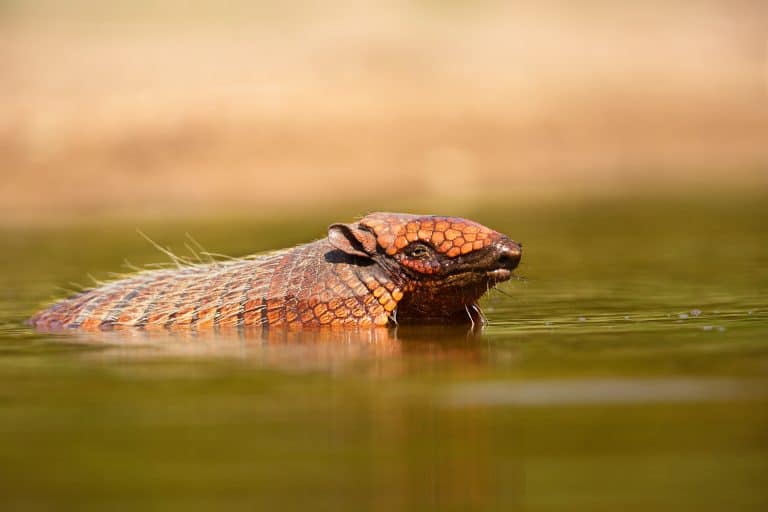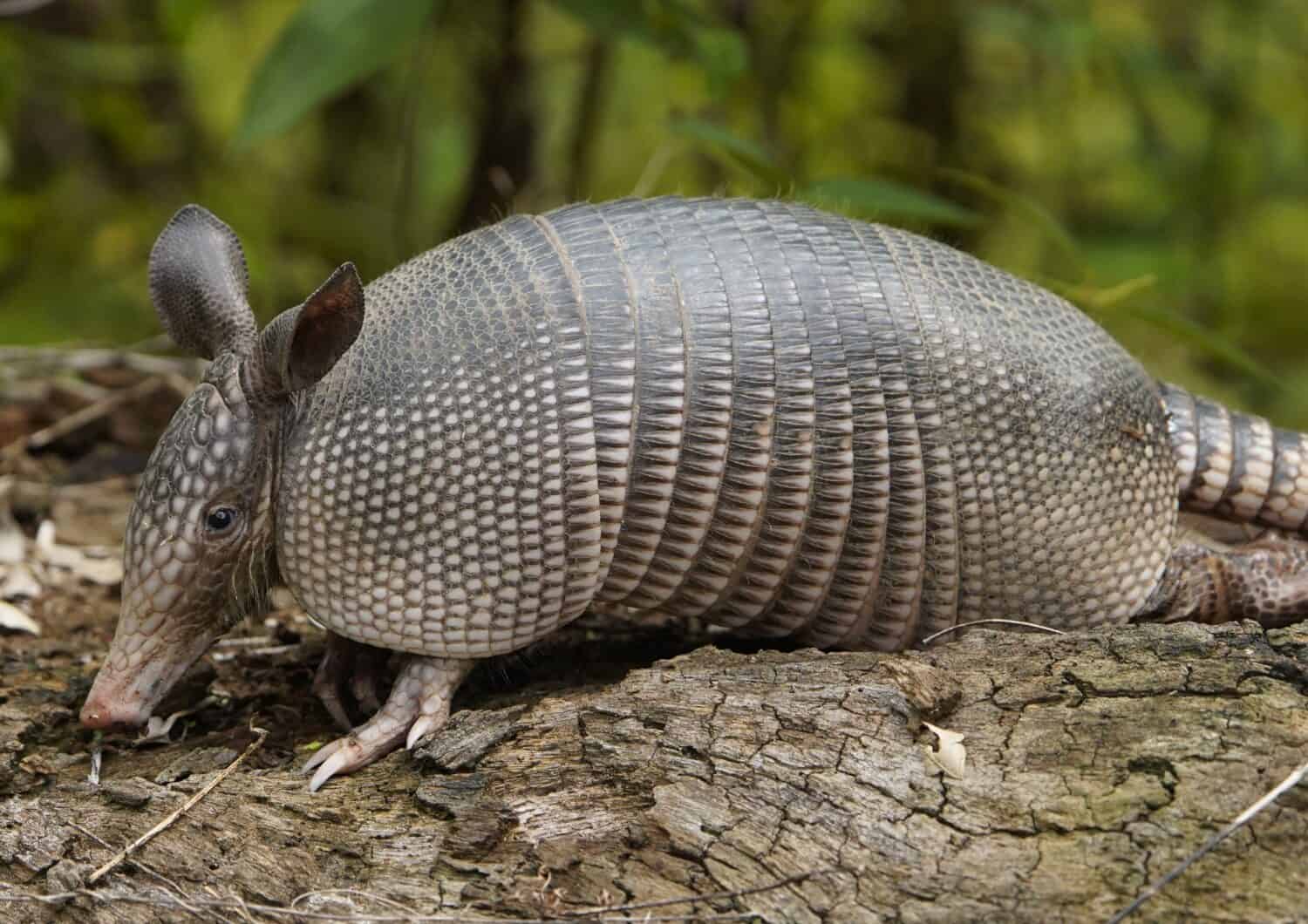

Nine-banded armadillos (Dasypus novemcinctus) are the only armadillo species inhabiting the United States. Once found only in the southwest, armadillos are now headed north. Populations can now be found as far north as Iowa, but why? As the weather warms due to our changing climate, suitable habitat for armadillos is expanding. As a result, northern states are becoming more hospitable to these armored animals. Keep reading to learn more about why armadillos are headed north.
Armadillo Expansion
This isn’t the first time armadillos have moved with the changing climate, though. The animal has a long history of expansion. The first recorded evidence of armadillo expansion in the U.S. dates back to 1849, when the animals were first observed in Texas. Texas became known as the armadillo’s home state, and the animal became a symbolic emblem for the people of Texas.
From there, armadillos have continued to expand northward and eastward. A recent study showed that armadillo populations are now established in 17 states, including Texas, Florida, Louisiana, Mississippi, Alabama, Georgia, Tennessee, Kentucky, North Carolina, South Carolina, Indiana, Illinois, Iowa, Kansas, Missouri, Arkansas, and Oklahoma.
Scientists have also seen reports of armadillos appearing in Michigan, Ohio, Nebraska, and Virginia. Given the warming climate and their history of expansion, armadillos will likely continue moving northward. In fact, researchers believe that the armadillo has the potential to continue to expand its geographic range, especially in the eastern U.S.
What Keeps Armadillos Moving?
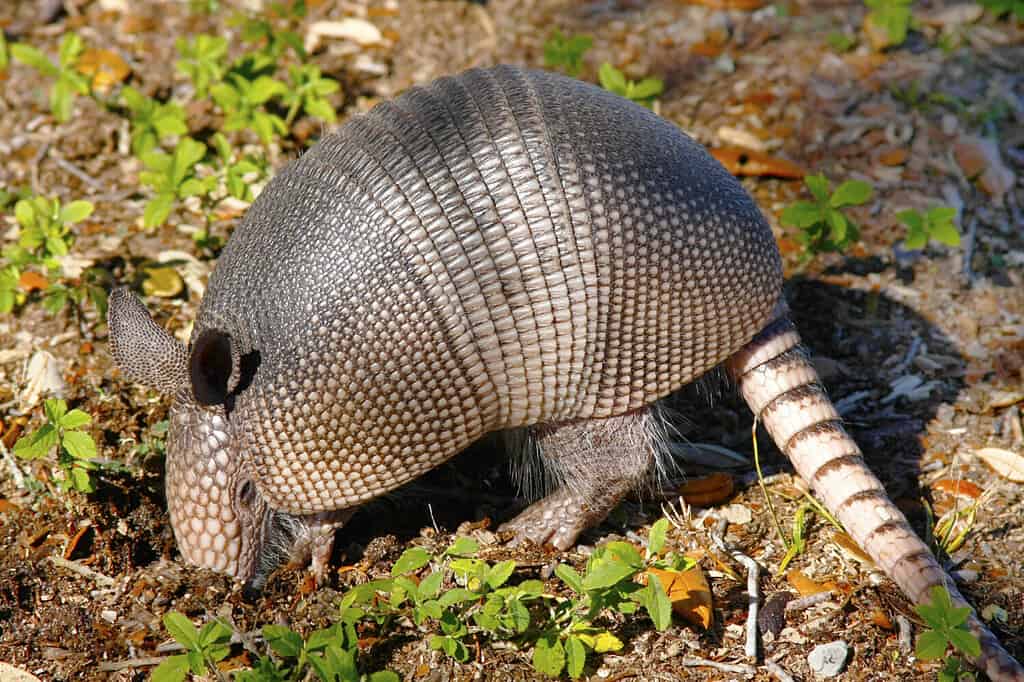
Armadillos use their long snouts to forage underground for insects and other invertebrates.
©Steve Bower/Shutterstock.com
As the climate becomes warmer further north, armadillos are increasingly finding favorable living conditions and an abundance of food. Armadillos typically inhabit warm grassland and forest habitats with soft soil for digging. They also prefer to be close to water. They use their long snouts to forage underground for invertebrates such as worms, grubs, spiders, snails, beetles, and cockroaches, among other insects. Researchers note that when the winters are milder, insects like worms and grubs remain closer to the surface, where they are easier to find.
Even a mild winter could be fatal for an armadillo, though, as they are extremely sensitive to the cold. Armadillos have low body temperatures, low metabolic rates, and an insufficient ability to thermoregulate. They also have little body hair, having only small clusters of hair on their heads and undersides, which are not covered in armor-like plates. Even in southern states, cold stress is often the cause of armadillo mortality. Yet, scientists now believe that armadillos can survive as long as the average minimum temperature does not drop below around 17°F.
However, at some point, they will no longer be able to expand due to the lack of a favorable climate. During the winter, northern states frequently experience days of sub-zero temperatures and freezing precipitation. This not only hinders the armadillo’s ability to dig a burrow in the ground, but it also inhibits foraging. Even with lower energy requirements due to their lower metabolic rates, they cannot generate enough heat to maintain their core body temperature without having plentiful food. Therefore, there is a range limit beyond which armadillos cannot survive to establish a population.