
Quick Take
- Axolotls can regrow organs that most animals can't survive losing, yet that same superpower comes with a fragility that catches most new owners off guard. See the fragility details →
- The purchase price is often the smallest expense, and the real costs of owning an axolotl add up in ways most buyers never anticipate. Explore the real costs →
- Some states go further than merely regulating axolotls by banning them outright, and one state has a rule so unusual it surprises even experienced hobbyists. Check legal restrictions →
- Getting the water wrong is the fastest way to harm your axolotl, and the mistake most owners make isn't what you'd expect. Get the water requirements →
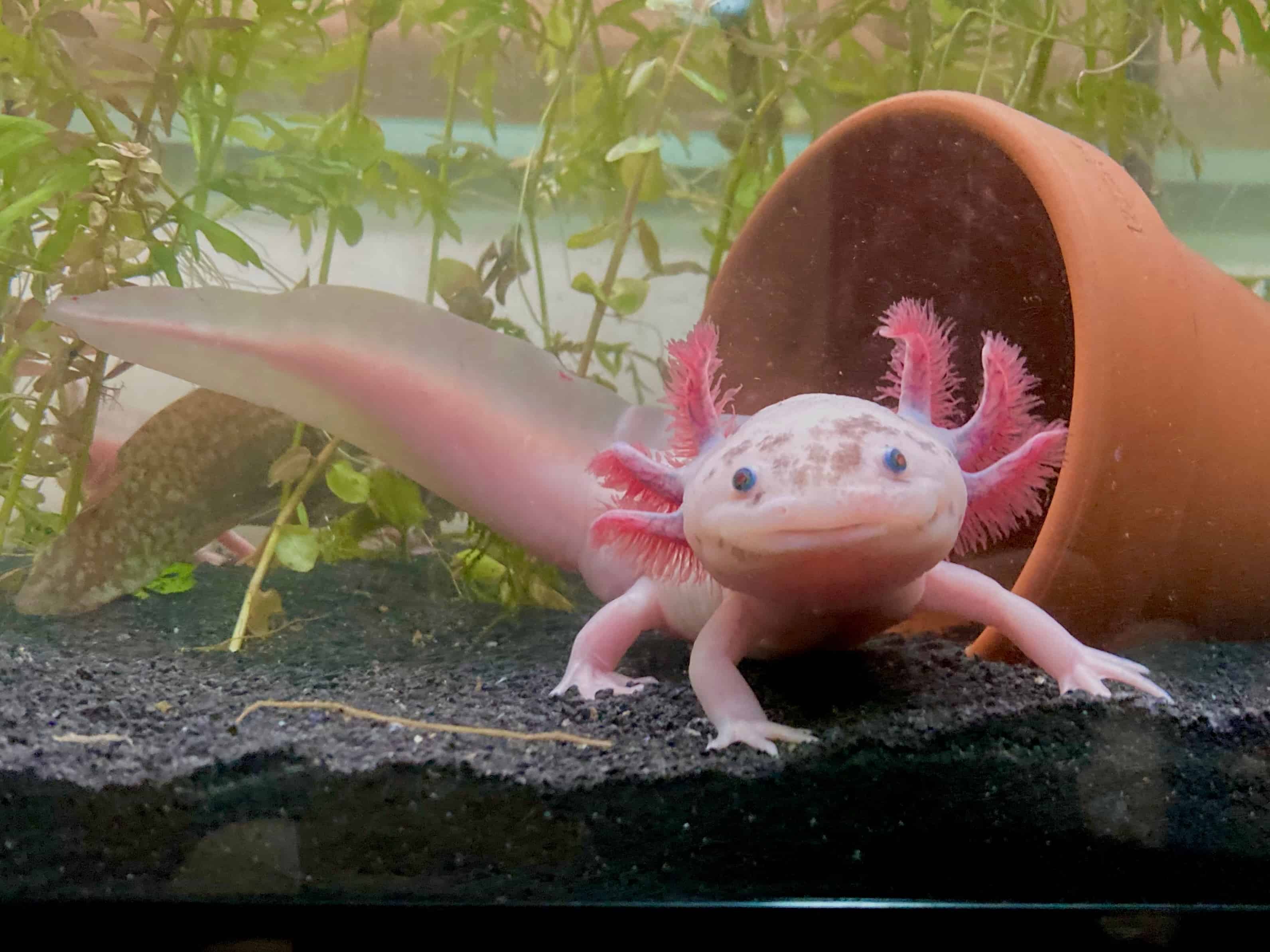
Axolotls (Ambystoma mexicanum) are salamanders that never go through metamorphosis. These unique amphibians were historically native to two lakes in Mexico City, Lake Xochimilco and Lake Chalco, although today they are found only in the remnants of Lake Xochimilco. Due to pollution, invasive species, and overdevelopment, their habit is in decline.
Thankfully, their populations have increased through conservation and their popularity in the pet trade. In recent years, axolotls have become well-loved pets amongst herpetology hobbyists. Yet how do you care for these animals, and do they make good pets for beginners and experts alike? Explore how to keep axolotls in captivity, from the cost to purchase your pet to what supplies you’ll need and what they should eat to stay healthy and happy.
Do Axolotls Make Good Pets?
Axolotls can make great pets, but they aren’t ideal for new pet owners who have no experience with keeping amphibians. They can’t be handled or removed from the water, and they must be housed in 20+ gallon tanks with treated, filtered water to survive. Though they can tolerate slight shifts in temperature and water quality from time to time, they have extremely sensitive skin.
Of course, this isn’t to say that beginners can’t necessarily keep axolotls as pets. Just be advised that they are not the easiest amphibians to keep in captivity. Aside from having sensitive skin, their bodies are made of a mix of cartilage and bone, retaining more cartilage than many other vertebrates due to their neotenic nature. This makes them quite fragile and prone to injuries and illnesses, despite their regenerative abilities. The axolotl can regenerate its spinal cord, ovaries, lung tissue, jaw, and skin. They are even able to do this with parts of their brain and heart and continue to do so for life.
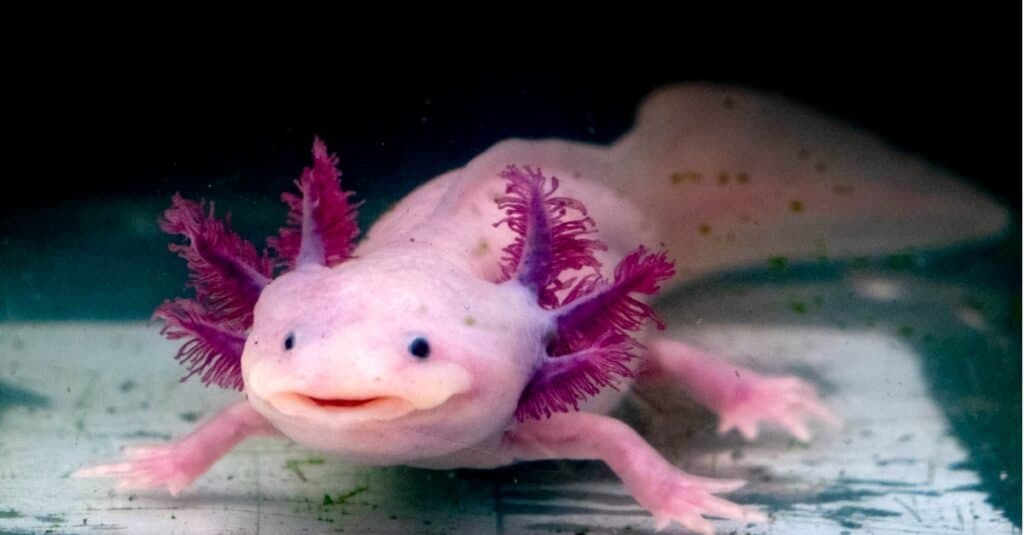
Though they can be somewhat challenging pets, axolotls are becoming more common in the pet trade.
©iStock.com/izanbar
Another important thing to note is it can be difficult to find exotic pet veterinarians willing to treat axolotls. Due to their rarity and unusual biological traits, many vets simply lack the knowledge or experience needed to treat them professionally.
Finally, be sure to check the legality of owning axolotls as pets in your state or country. California, Maine, New Jersey, and Virginia all notably prohibit the ownership of them. Although they are legal in New Mexico, it is illegal to import them from other states. Some locations also require permits to own axolotls. Make sure you adopt your axolotl pet from a reputable amphibian/reptile/exotic pet breeder rather than a pet shop. In general, breeders tend to be more knowledgeable and engage in more ethical practices than chain pet stores.
How Much Do Pet Axolotls Cost?
The cost of a single axolotl pet ranges from around $40 to $150. This largely depends on the color and morph or variation you purchase, as some are far rarer and more difficult to breed than others. Common morphs like wild type, leucistic, and albino can range from $40 to $85. Uncommon variants like lavender, copper, or melanoid axolotls can cost $80 to $150 depending on their lineage. Rare or one-of-a-kind morphs can exceed $300.
Keep in mind this is only one part of the total cost of your axolotl’s care. Other likely costs include an enclosure, a water filter, substrate, vet visits, and food. In general, thanks to their recent popularity in the pet trade, a common axolotl pet is fairly inexpensive to purchase. They are regularly sold by amphibian and reptile breeders for less than $100 each, unless the pet axolotl is a particularly rare variant.

You can purchase a reasonably priced axolotl from many reputable breeders.
©Iva Dimova/Shutterstock.com
However, the axolotl itself is only a small part of the total cost of caring for and housing one of these animals. They can live for over 10 years in captivity, making them fairly long-term exotic pets. Their initial enclosure setup usually costs somewhere between $200 and $500 for a tank, water filter, substrate, and tank decorations.
It is also important to keep in mind the recurring costs of caring for an axolotl. This includes food, replacement substrate, vet check-ups, and treatment for any illnesses or injuries. You may need to replace your water filter over time. You’ll also need to repair or replace your enclosure if it leaks or you accidentally damage it. It’s a good idea to keep a “pet fund” to deal with any emergencies as they occur.
What Supplies Do Pet Axolotls Need?
You’ll need to keep your axolotl in an aquarium enclosure with slightly cooler than room temperature water, a water filter, substrate, and very minimal tank decor. They do best in 20+ gallon enclosures and should live alone, as they can be territorial.
Compared to most other common pet amphibians, the enclosure setup for an axolotl pet is fairly minimal. Aside from substrate and a hiding spot or two, they don’t need much in the way of furnishings. In fact, their skin is so sensitive that their enclosures shouldn’t contain any objects with sharp or textured surfaces.
The most important part of your axolotl pet tank is the temperature and condition of the water. Axolotls are prefer cool water, thriving best at temperatures between 60°F to 68°F. Additionally, you’ll need to treat the water in their enclosure with a water conditioner. This will remove harmful substances like chlorine and make it safe for their sensitive gills and skin. The water’s pH level should be between 6.5 and 8.0 at all times, with an ideal range of 7.4 to 7.6.

Axolotl enclosures are quite simple to set up and maintain, though they require frequent cleanings.
©Alex inkfusion/Shutterstock.com
Your axolotl’s tank will also benefit from a slow-moving water filter. Changing the water completely can stress them out, so partial water changes weekly are preferable. Be sure to spot-clean the tank daily for waste and uneaten food.
The bottom of your axolotl’s tank should have a thin layer of substrate, ideally very fine, aquarium-safe sand or large, smooth river rocks. Your axolotl may accidentally consume substrates like gravel and pebbles. Provide your axolotl with dark hiding spots, as they are light-sensitive.
If you opt for tank decor, be very careful and selective about it. Again, anything with sharp edges or rough surfaces can be dangerous, and you should also avoid anything small enough for your axolotl to accidentally swallow.
What Do Axolotls Eat?
Axolotls are carnivores. In captivity, they should primarily eat brine shrimp, water fleas, worms such as nightcrawlers and blackworms, and a small amount of raw beef and liver. Commercial pellet food is also available from pet shops and online retailers.
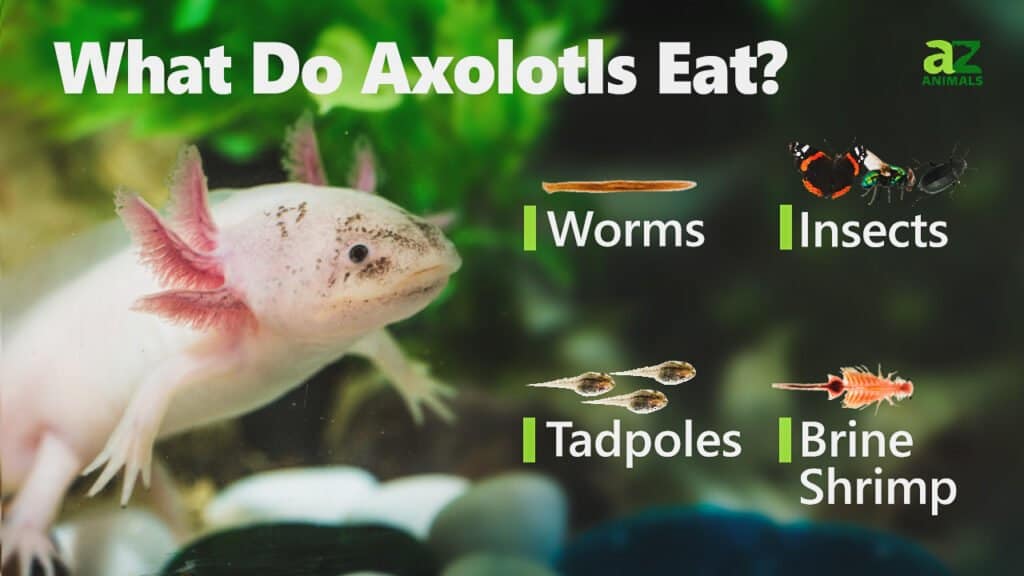
When it comes to your pet axolotl’s feeding schedule, offer adults (over 7 inches and 9 months old) as much as they will eat in about one hour two to three times a week. Babies and juveniles can eat slightly more often. Hatchlings may need to eat twice a day or every day. Juveniles may need to eat every day or every other day depending on their condition. Adult axolotls have a slower metabolism, so they need a few “off days” from eating to digest their food, and daily feedings aren’t necessary.
The best way to feed an axolotl is to simply drop small pieces of food directly into its tank. Axolotls are bottom feeders, so they favor food that sinks to the bottom of the tank. Keep any food items smaller than the width of the space between the axolotl’s eyes to prevent choking or digestive issues. Axolotls cannot chew their food. To avoid directly handling their food with your hands, use tweezers or forceps.