
Quick Take
- A 16-pound badger once pulled off a feat that left scientists genuinely stunned, and the remarkable thing is that it had nothing to do with fighting. See the stunning feat →
- Badgers have forged an unlikely hunting alliance with one of their fiercest rivals, and both sides benefit from it. Explore the coyote alliance →
- Badgers have a built-in piece of anatomy that most mammals simply don't have, one that solves a problem you'd never think to worry about. Discover the hidden eyelid →
- A structural quirk in a badger's skull makes it nearly impossible to stop one from biting down, regardless of the circumstances. Examine the jaw structure →
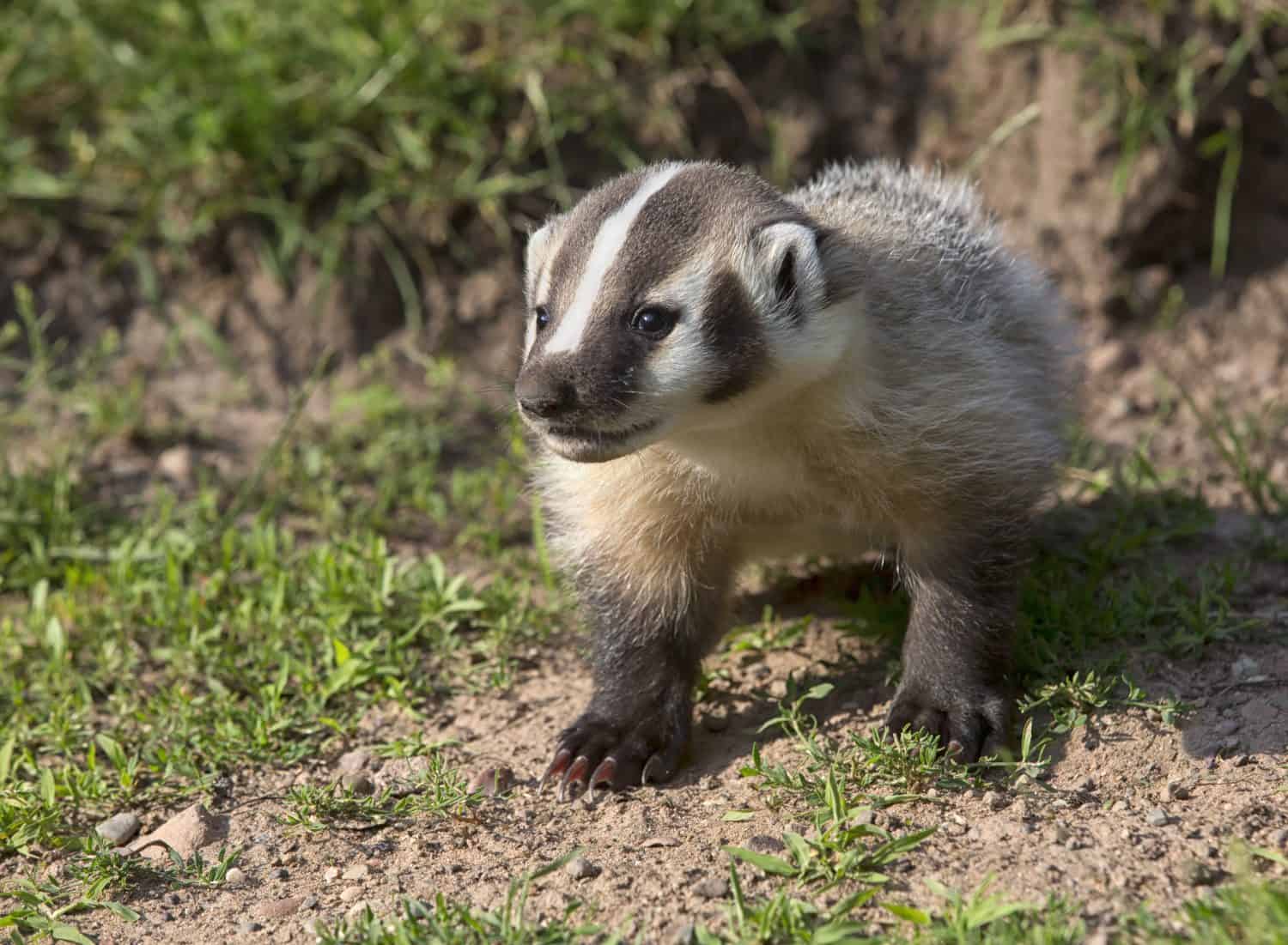
Badgers are sturdy, short-legged mammals belonging to the family Mustelidae. Of the approximately 11 badger species worldwide, the American badger (Taxidea taxus) is the only species found on the continent. Badgers are expert diggers with long, sharp claws. The average American badger is 23 to 35 inches in length and weighs between 13 and 30 pounds. The American badger maintains a widespread distribution across North America, primarily in the open grasslands, prairies, and shrub-steppe environments of the Western and Central United States, Northern Mexico, and Southwestern Canada. Continue reading to discover 9 incredible facts about badgers.
European Badgers Are Larger
While American and European badgers (Meles meles) share strong digging claws, stocky builds, and nocturnal habits, they belong to different taxonomical subfamilies and differ significantly in appearance, behavior, and social structure. The European badger, which is larger and heavier, weighs 20 to 40 pounds and is 25 to 45 inches long. European badgers have a black-and-white striped face and grizzled gray body.
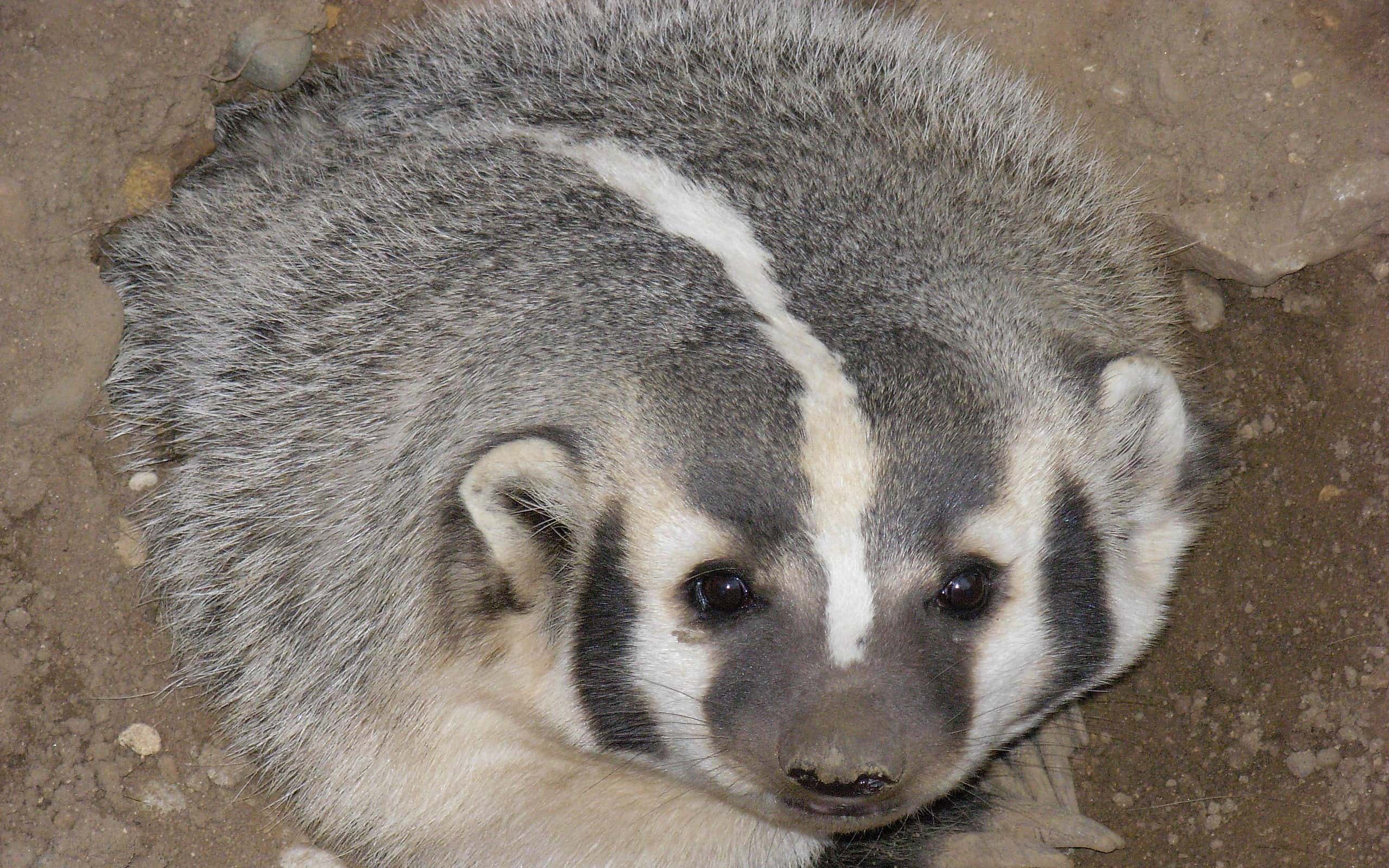
An adult American badger can weigh as much as 30 pounds.
©Jonathunder, CC BY-SA 3.0, via Wikimedia Commons – Original / License
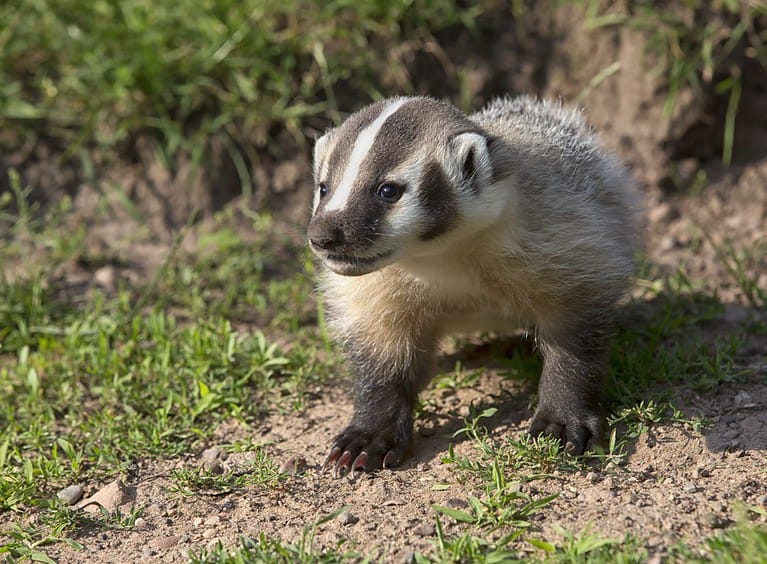
The smaller American badger is 20 to 30 inches long and weighs between 14 and 30 pounds. The American badger has a flatter profile and a distinctive white stripe running from its nose down its back, accented by black patches on its cheeks.
American Badgers Are Solitary Creatures
While the American badger is a strictly solitary animal, other global species like the European badger are highly social and live in communal groups called clans inside massive, shared underground tunnel networks known as setts.

European badgers are social animals that live in groups called clans.
©Martin Prochazkacz/Shutterstock.com
American badgers live in individual subterranean dens, which they dig themselves using their long, sharp front claws. Because American badgers are strictly solitary animals, each badger occupies its own home range and maintains several underground burrows at a time.
Badgers rarely stay in the same den for more than a few days, frequently digging new ones as they move around to hunt. The only exceptions to this solo living arrangement occur during the summer breeding season when a male and female temporarily share a den, or while a mother badger raises her pups inside a larger, more complex nursery burrow.
Badgers Are Built for Defense
All badger species, including the American badger, are ready to fight. Their thick fur and muscular necks help them fend off even the strongest predators. They have multiple defense mechanisms, one of which is vocalization. If an American badger feels threatened, it will make its presence known. They vocalize when under duress by growling and hissing.
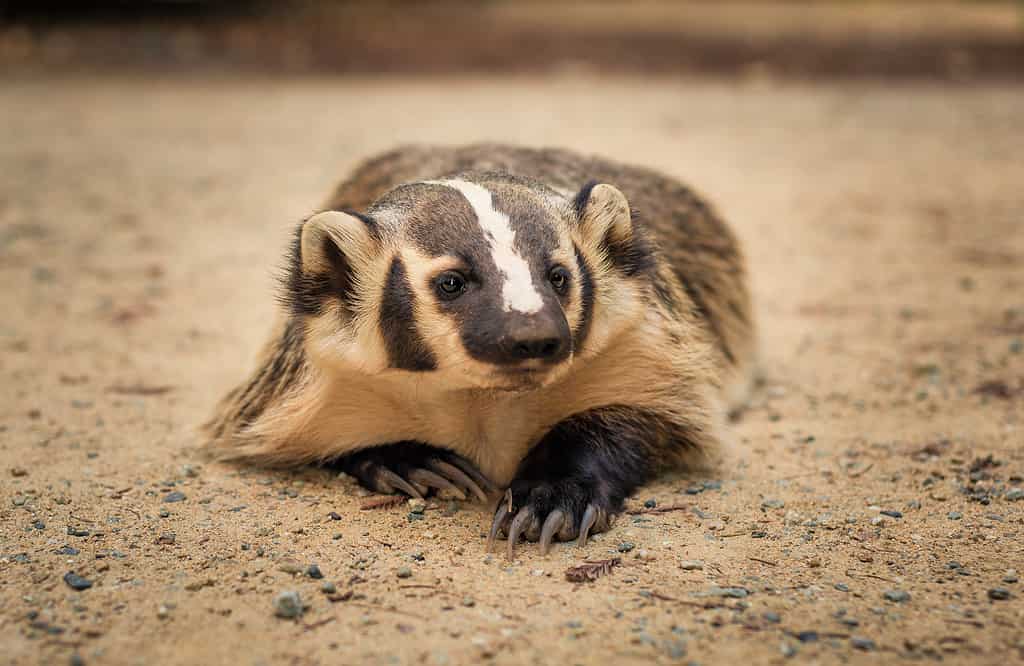
Badgers have razor-sharp claws.
©Photography by Adri/ via Getty Images
Badgers can also emit an unpleasant musky odor. This defensive odor isn’t as strong as a skunk‘s, but it can still do the trick. Badgers also have long, curved claws that can be used as weapons. Although their massive front claws evolved as tools for excavating hard ground, they also serve as incredibly dangerous defensive weapons when a badger is cornered or feels threatened.
A Badger Once Buried an Entire Calf Carcass
A badger in Utah once buried an entire calf carcass. This is the first recorded occurrence of an American badger burying such a large animal. Scientists were amazed as they watched the 16-pound badger spend four days burying a 50-pound calf carcass
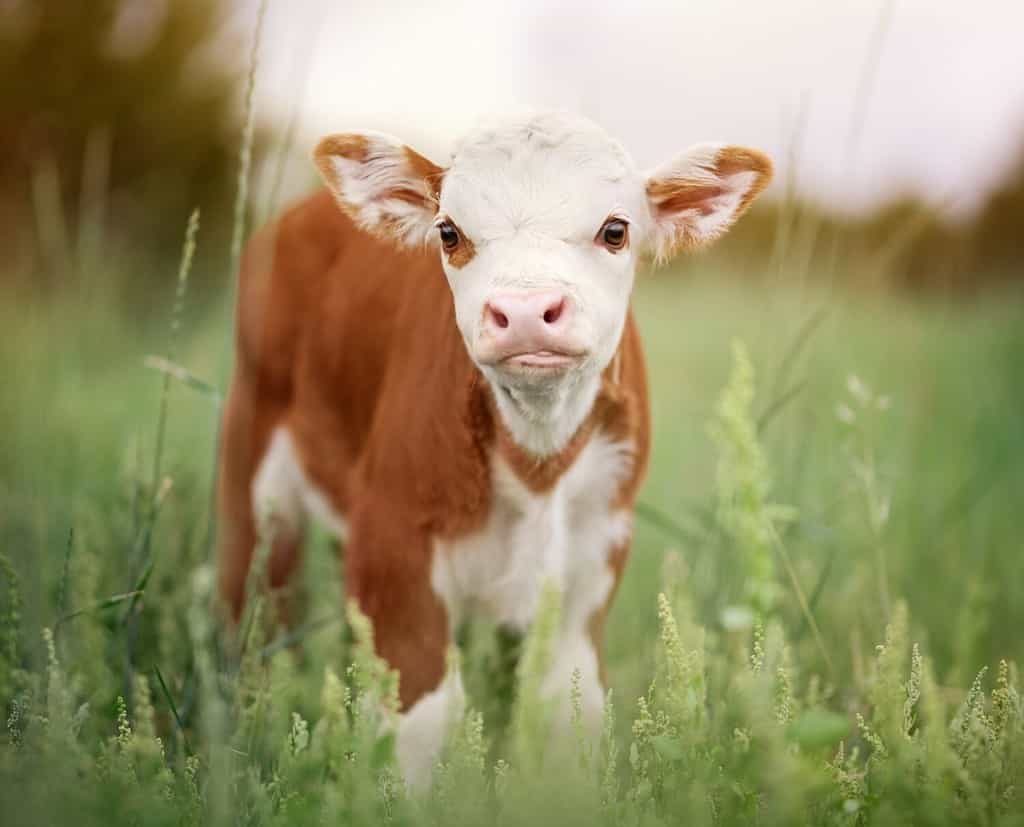
People in Utah were astounded that a badger could bury a 50-pound calf.
©KatieDamonPhoto/Shutterstock.com
Badgers are omnivores, eating a varied diet that includes prairie dogs, groundhogs, and insects. Sometimes, badgers will cache food. Because badgers are masterful diggers, they use the earth as a natural refrigerator to preserve their extra food and to hide it from competing scavengers like coyotes, foxes, and vultures. That’s what the Utah badger was doing when it buried the calf.
Badgers Cooperatively Hunt With Coyotes
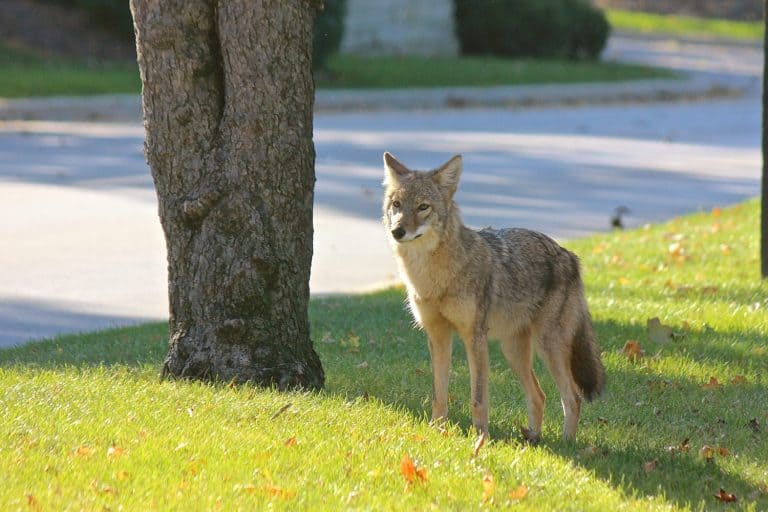
In certain parts of the United States, you can find badgers and coyotes hunting together. However, these alliances are temporary and mutually beneficial, allowing different species to work together to meet their primary needs.
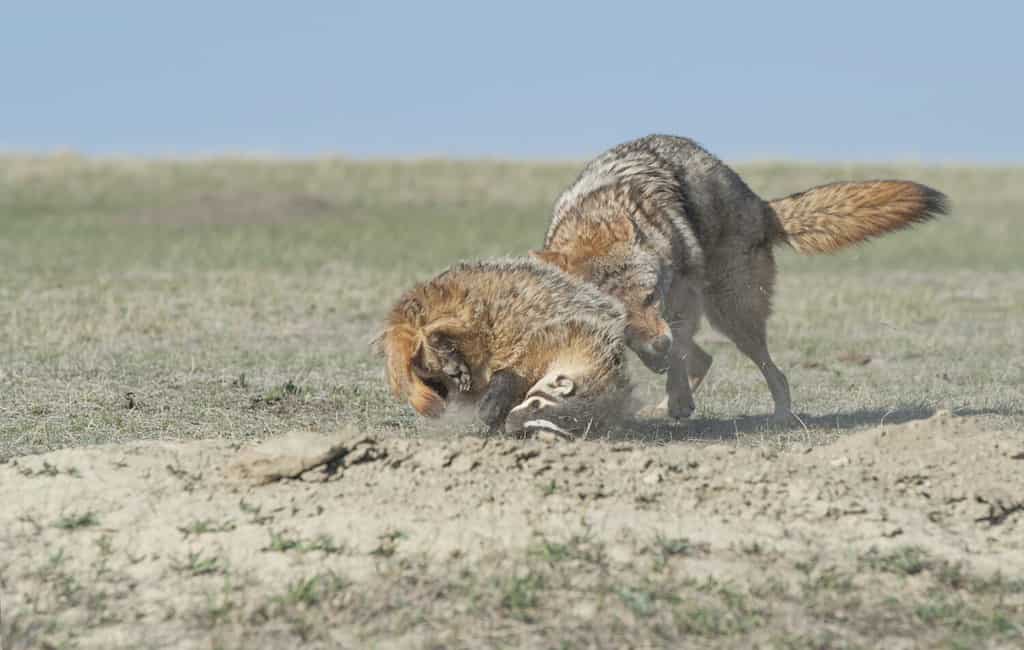
Although most of their interactions help both of them or are neutral, coyotes and badgers can sometimes tussle over prey.
©outdoorsman/Shutterstock.com
Badgers take advantage of prey that is flushed out by the coyote. When the coyote drives prey underground, the badger is waiting. While the badger digs underground to flush out burrowing rodents like ground squirrels and prairie dogs, the fast-running coyote waits above ground to catch any fleeing prey that escapes the badger’s tunnel.
Badgers Are Nocturnal
As nocturnal predators, badgers sleep during the day in cozy dark dens. During the depths of winter, an American badger may enter a state of torpor, sleeping for days or even weeks at a time. When a badger enters a deep sleep, whether it lasts days or weeks, it’s known as torpor. During torpor, the badger’s heartbeat slows down and it enters a hibernating-like state.
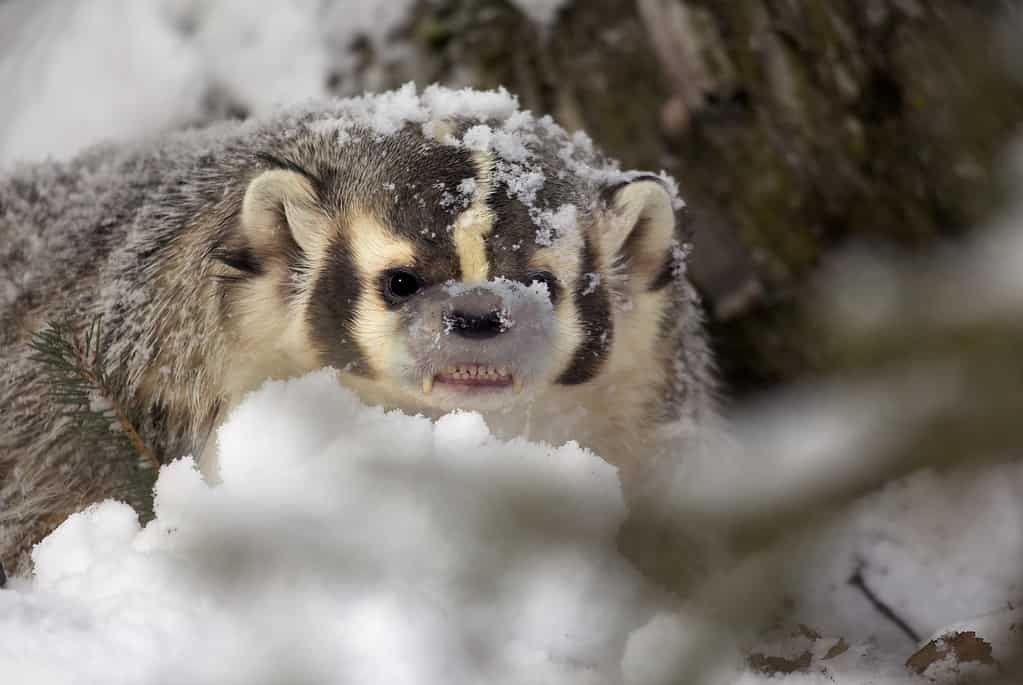
Badgers will venture out on sunny winter days, resuming their torpor during colder periods.
©moose henderson/iStock via Getty Images
Badgers Are Promiscuous
While some animal species are monogamous, badgers are promiscuous. By mating with multiple partners, they increase the chances of passing on their genes. The mating season for badgers usually starts in late summer and continues until early fall. Badgers remain single until the mating season rolls around. When it begins, it’s typical for males and females to have multiple partners.
Badgers Have a Third Eyelid
Badgers are fossorial creatures, meaning that they spend a lot of their time digging below ground. Their underground habitat has led to one of the most incredible badger adaptations: a third eyelid.
In addition to their upper and lower eyelids, badgers have a transparent third eyelid that protects their eyes from dirt while they dig their underground burrows. They also have thick guard hairs in their nostrils and ears to keep out dirt and debris.
A Badger’s Jaw Cannot Be Dislocated
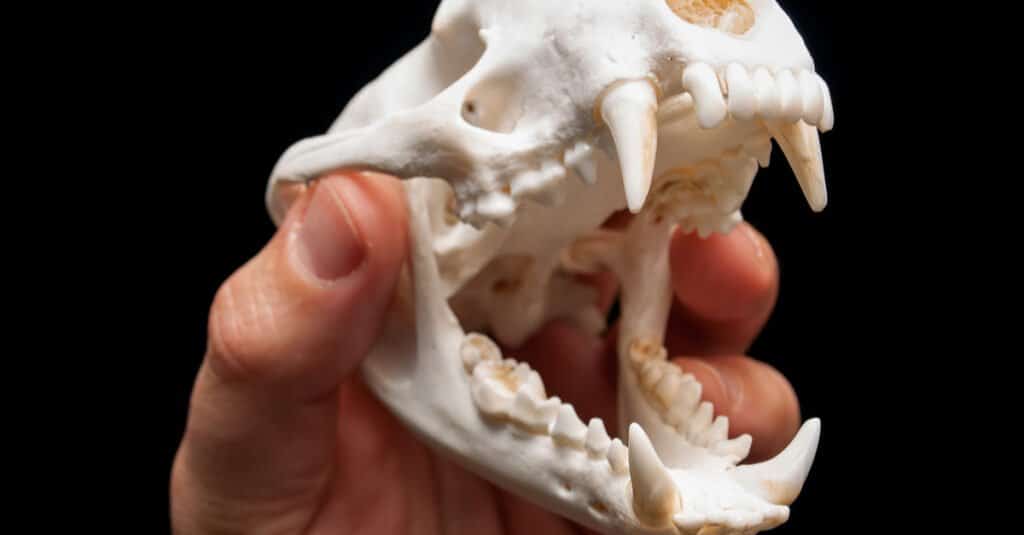
You can’t dislocate a badger’s jaw.
©Sinisa Botas/Shutterstock.com
Badgers have impressive jaws. Both American and European badgers have a unique jaw structure. The jaw sits in the skull with a special notch that locks the lower mandible into place, making it impossible to dislocate a badger’s jaw.
Badgers need strong jaws to capture and dislodge prey, such as prairie dogs. A prairie dog will use its strong legs to push against walls and wedge itself into place. Thankfully, the badger’s specialized jaw and stout neck help it dislodge its quarry almost every time.