








Quick Take
- This shaggy French hunting dog is the secret ancestor of some of the world's most popular breeds, yet most people have never heard of it. See related breeds →
- Its nickname is 'mud dog,' and that reputation comes with a catch that could be a dealbreaker for some owners. See the mud dog trade-offs →
- Standard obedience training doesn't work on this breed, and the reason why is more interesting than you'd expect. Explore training challenges →
- The Barbet looks nearly identical to another well-known water dog, but one key difference makes each breed suited to very different households. Compare the two breeds →
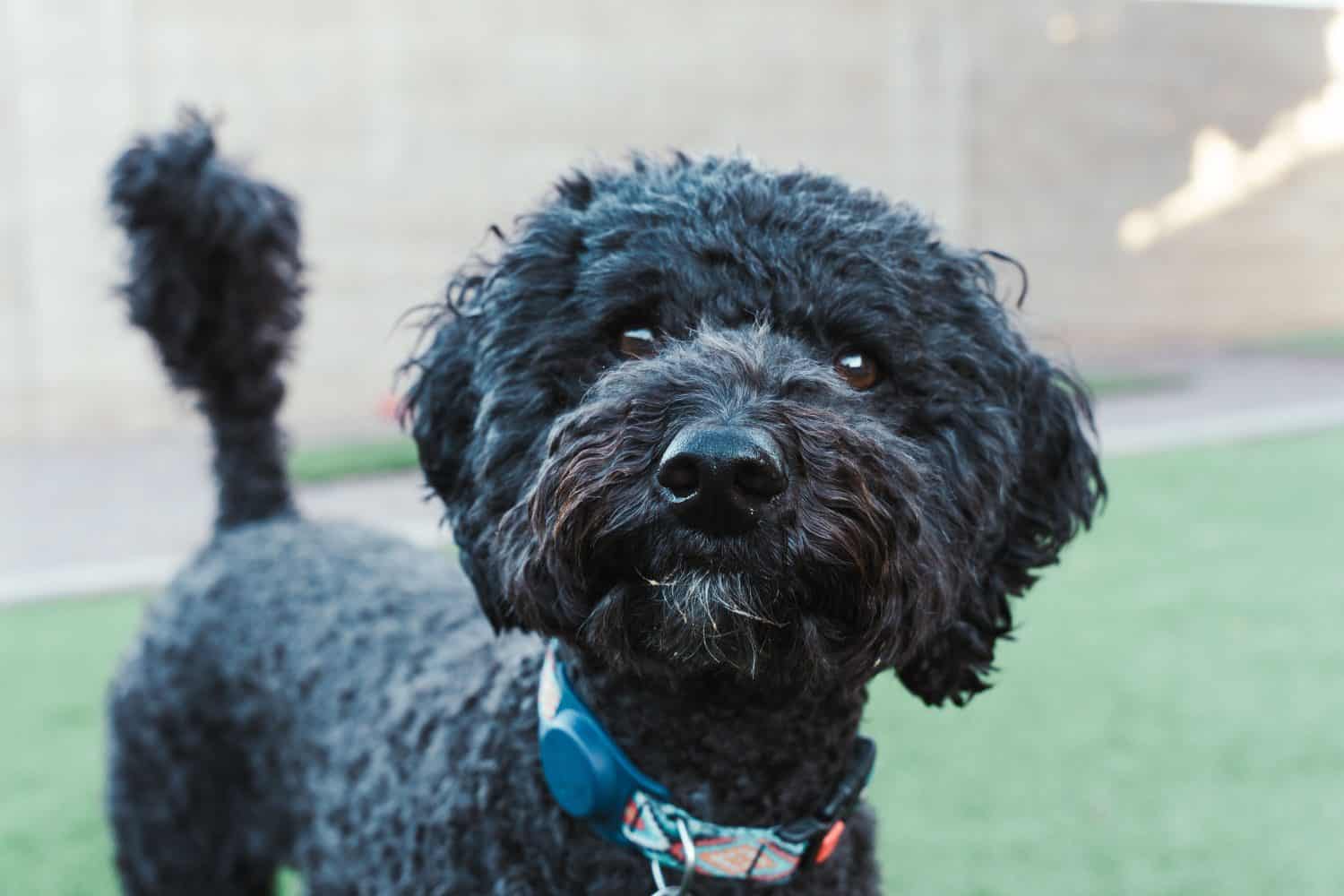
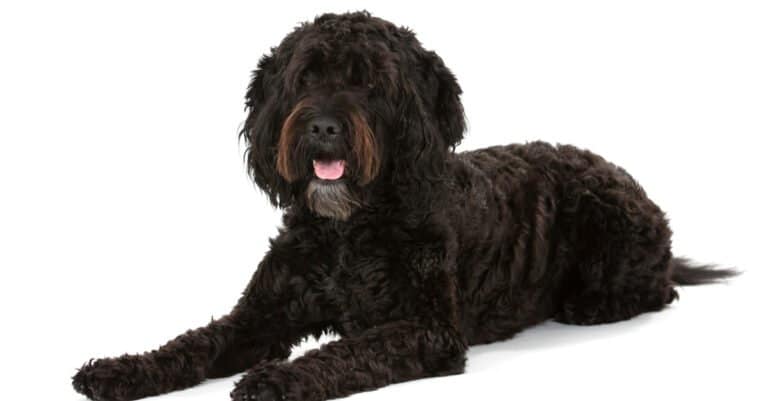
Dating back to the 16th century France, the Barbet was bred to retrieve ducks and other waterfowl on hunting trips. The Barbet is believed to be an ancestor of several breeds, including the poodle, Bichon Frise, and Briard. This dog’s thick, wavy coat is designed to repel water as it dives into lakes, streams, or swamps to complete its retrieving work. This intelligent, agile breed belongs to the sporting group.
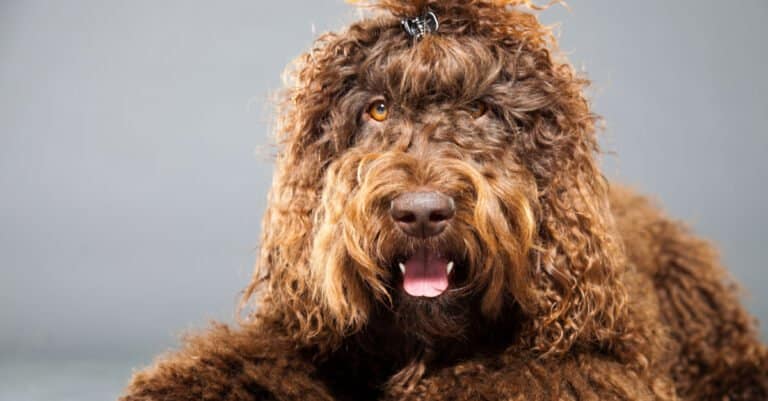
Part of this dog’s charm is that it looks like it has a beard! A family looking for a friendly, playful dog with an even temperament should give the Barbet close consideration.

3 Pros and Cons of Owning a Barbet
| Pros | Cons |
|---|---|
| Little shedding activity: Despite having a thick coat, this canine is known to shed very little hair. | Grooming attention is essential: This dog’s coat needs a thorough brushing twice each week. Also, taking it to a groomer three or four times a year for a trim is necessary to keep its coat in healthy shape. |
| Good for family members with allergies: This dog can’t be categorized as hypoallergenic. But its low-shedding coat and minimal dander won’t aggravate the allergies of people in a household. | Needs a special approach to training: Obedience training requires an owner to make the process fun to keep the attention of this curious, smart dog. Repetitive lessons aren’t effective with this breed. |
| Loves to play: This dog is a favorable choice for a family with kids who like to run around and play with a shaggy dog. | Loves mud and water: Its nickname is ‘mud dog.’ They enjoy jumping, running, and swimming through muddy water. This can be an issue for an owner who wants to keep a dog clean. |
Size and Weight
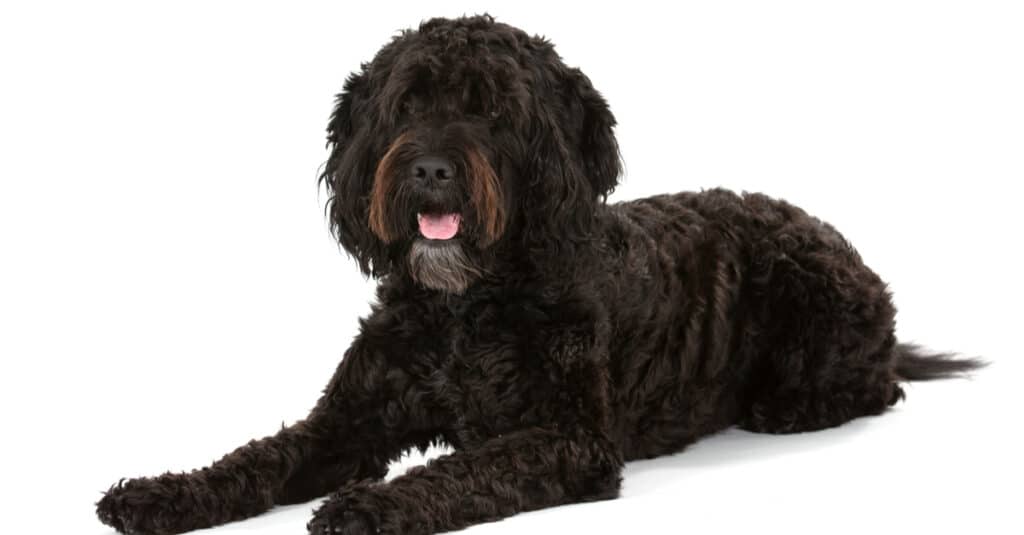
Barbets are considered to be grown-ups at 18 months old.
©Jne Valokuvaus/Shutterstock.com
The Barbet is categorized as a medium-sized dog with a wavy, thick coat of hair. Males of this breed grow to be 26 inches tall, measured from their paws to the top of their head. Females are 24 inches high. When they reach adulthood, a male weighs as much as 62 lbs., while females can reach 51 lbs. These puppies weigh an average of nine pounds at the age of eight weeks. They are considered adult dogs at 18 months old.
Common Health Issues
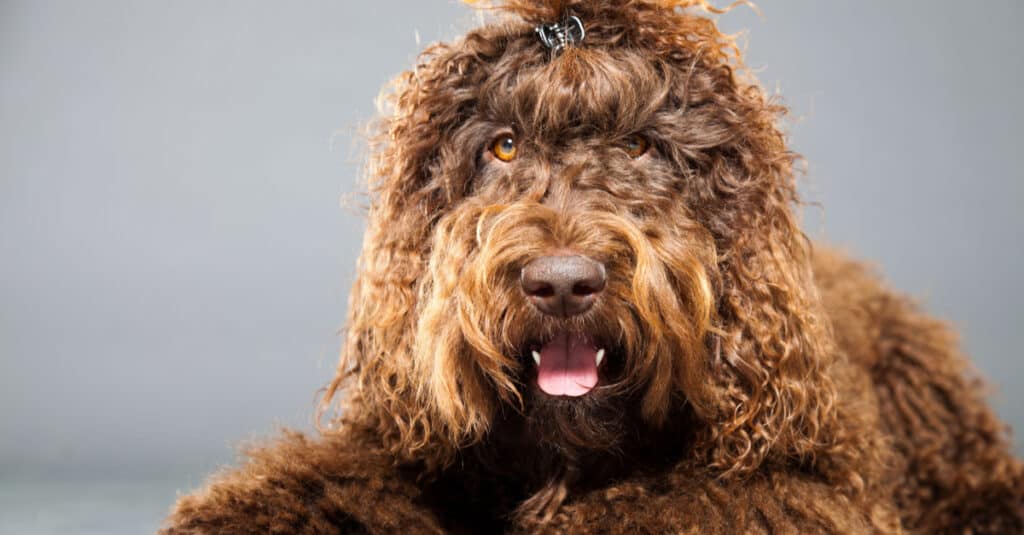
Barbets are generally healthy, although they may suffer from elbow dysplasia.
©Ysbrand Cosijn/Shutterstock.com
Compared with many other breeds, the Barbet doesn’t have a lot of health issues to consider. But there are some to keep in mind, such as progressive retinal atrophy (PRA). When a dog has this condition, the cells in its eyes deteriorate, which eventually results in blindness. This condition is very difficult for owners to detect in their dogs. However, dogs with this condition may be hesitant to walk around in the dark.
Elbow dysplasia is a health issue for some of these dogs as well. This is when the dog’s elbow joint doesn’t fit together correctly. Surgery may be needed for a severe instance of elbow dysplasia. Hip dysplasia is caused by a hip joint that has slipped out of its proper position. It manifests as limping and hopping in this active breed. Sometimes the treatment for hip dysplasia is a change in diet to decrease weight. In other cases, surgery is needed to correct the issue.
Temperament & Behavior
Retrieving waterfowl from lakes, streams, or swamps was the original purpose of this breed. And it served that purpose with gusto! Leaping into muddy water is still one of its favorite things to do.
A household that adds a Barbet to the family is going to get a smart canine with a sweet personality and a love of adventure. Plus, if there’s a swimming pool, lake, or even a creek on the property, family members are sure to be entertained by this four-legged, expert swimmer. Its mischievous personality is one of this breed’s most endearing traits.
Barbet vs. Portuguese Waterdog
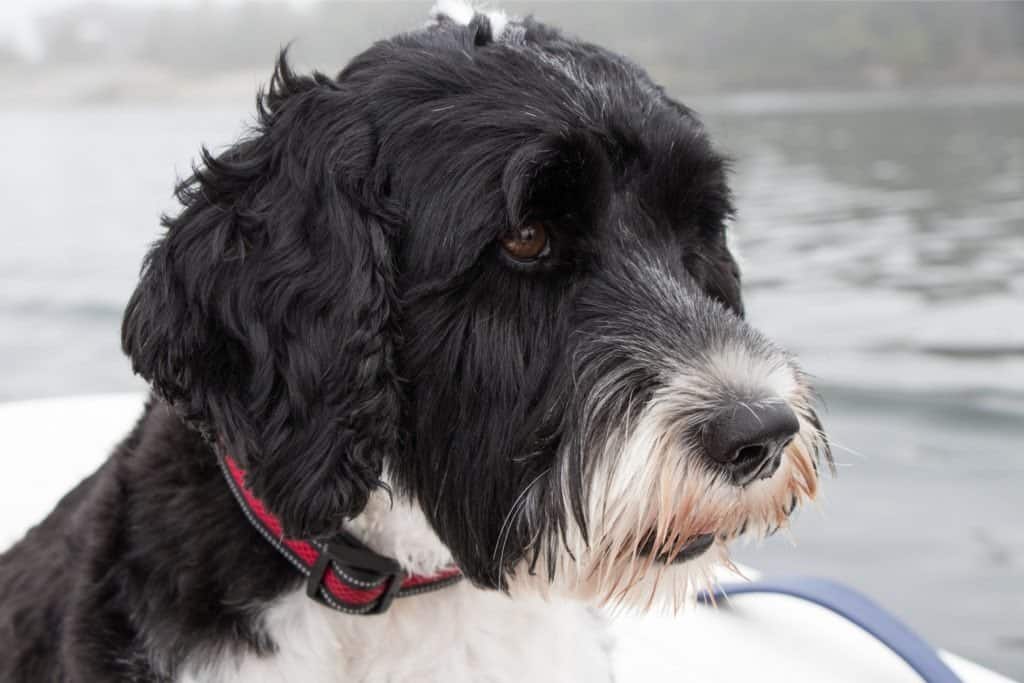
Although Portuguese Waterdogs bear a close resemblance to Barbets, they’re taller and more adaptable.
©Lynda McFaul/Shutterstock.com
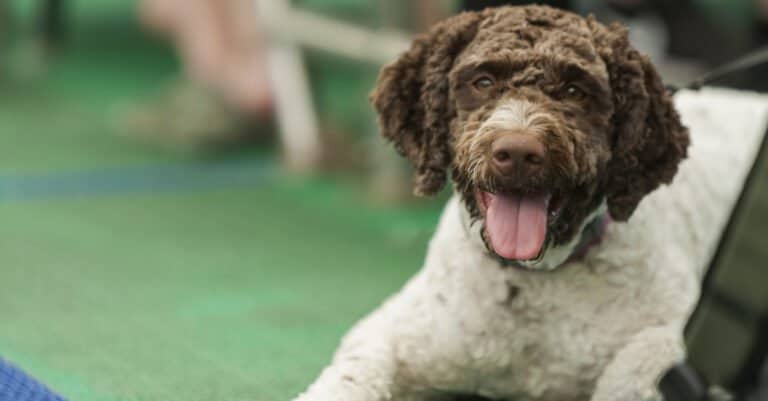
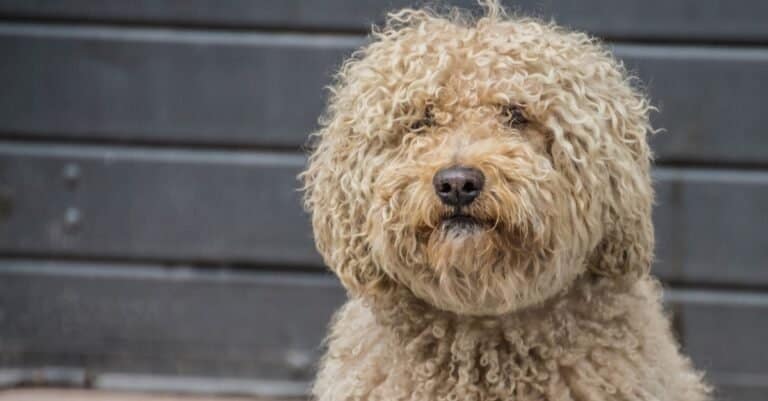
The Barbet and the Portuguese Waterdog are so similar in appearance that they could easily be mistaken for one another. They both have that wavy, thick coat made for repelling the water they love to splash around in. The coats of both of these dogs shed very little but require regular grooming maintenance to stay in great condition. In addition, the lifespan of both breeds is about the same. Of course, there are some differences, too.
When it comes to size, adult Barbets and Portuguese Waterdogs fall into about the same weight range. But the Portuguese Waterdog is a little taller. A Barbet has a greater variety of coat colors than a Portuguese Waterdog. The Portuguese Waterdog has a more adaptable nature and is a better choice for owners who live in apartments. The cost of Portuguese Water Dog puppies and Barbet puppies from breeders is generally similar, with both typically ranging from $2,500 to $4,500, depending on lineage and breeder.
How to Take Care of a Barbet
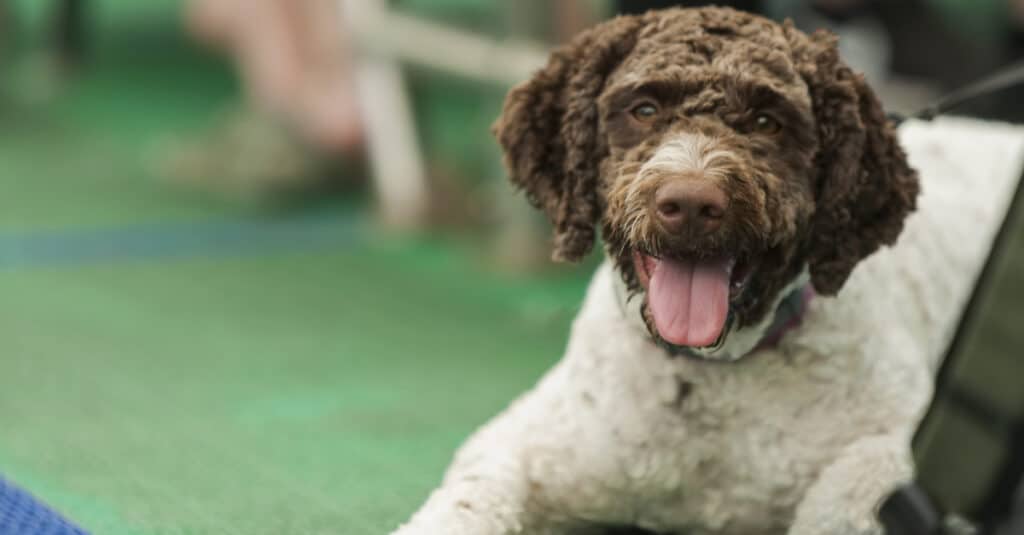
Barbets require weekly brushing and food rich in omega 3 and 6 fatty acids for a healthy coat.
©mazarekic/Shutterstock.com
Providing the right daily care for a pet means being aware of its dietary, health, grooming, and exercise needs. Whether an owner buys a Barbet puppy from a breeder or adopts a fully grown dog, the care it gets must be appropriate for its stage of life.
The Best Dog Food
The nutrients in the daily diet of this breed can help to fight off illness and maintain its overall health. The food given to a puppy is different from the food given to a fully grown dog. Consider this dietary guide:
Barbet puppy food: As a puppy grows, it needs Omega-3 and 6 fatty acids to nourish its thick coat as well as its skin. Those fatty acids also nourish a puppy’s developing brain and support vision development. Lean protein in a puppy’s diet supports the development of tissue, bones, muscles, and joints. Carbohydrates boost a puppy’s energy level for exploring its environment. Calcium strengthens their bones, claws, and teeth.
Barbet adult dog food: Salmon, turkey, brown rice, and other lean proteins in an adult dog’s food continue to nourish its muscles and joints. This is important for a breed that may develop joint issues. Keeping this dog’s eyes healthy with Vitamin A can help guard against PRA. Vitamin A is also an antioxidant, helping to protect the dog against disease. Carbohydrates in the daily diet support an adult dog’s high energy level so it can exercise and maintain a normal weight.
Although Barbets tend to enjoy good health, it can’t hurt to hunt down a dog food that helps prevent the most likely health issues, including progressive retinal atrophy, hip dysplasia, and elbow dysplasia.

The Barbet is nicknamed “mud dog” because they love activities in muddy water.
©Maria Sivtseva/Shutterstock.com
Maintenance and Grooming
How much does a Barbet shed? These dogs shed very little. Brushing them twice a week with a slicker brush is an efficient way to remove loose hair.
This dog has a fast-growing coat. So, taking it to a groomer three or four times a year helps keep its hair trimmed and makes weekly grooming maintenance easier.
Training
These dogs are so intelligent that they get bored very easily. Consequently, making the training sessions fun and giving the canine abundant encouragement is going to make obedience training easier.
Exercise
These canines have a high energy level and need 30 to 60 minutes of daily exercise. Setting up an agility course of tunnels, jumps, and bridges in the backyard is one way to keep this dog active. They’re a familiar sight at agility competitions due to their eagerness to learn and adventurous spirit. Jogging around the neighborhood and visits to the dog park are other sources of exercise.
Apartment living is not a good fit for this breed due to its need for space.
Puppies
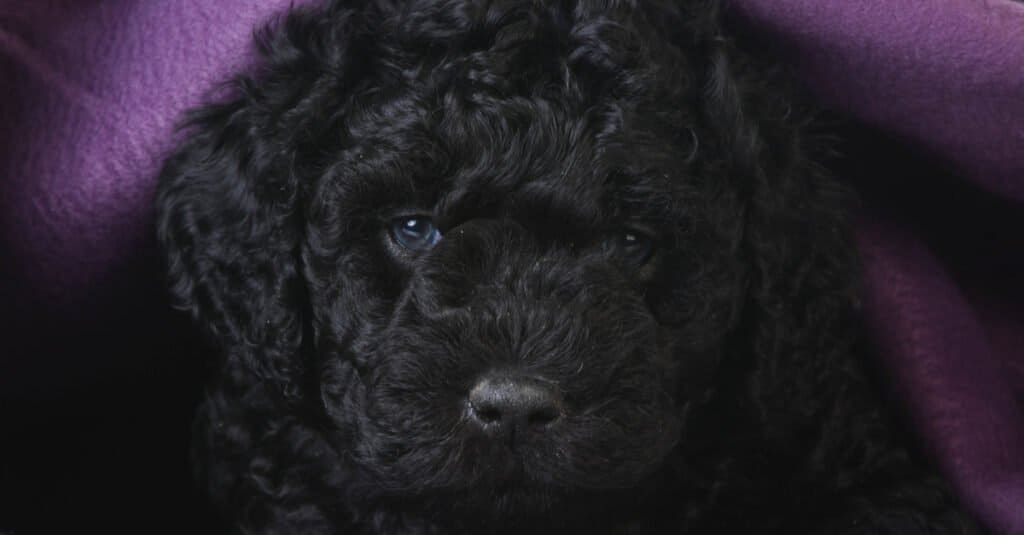
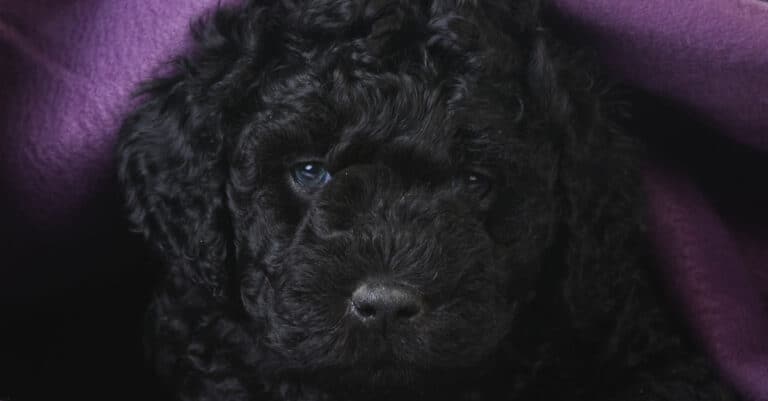
Barbets get along well with children and make for great family pets.
©WilleeCole Photography/Shutterstock.com
Socializing this puppy is essential. Socialization teaches it how to behave around children and other pets. This dog has a natural tendency to chase, and socialization can help it learn when chasing is appropriate.
Children
This dog gets along well with children. Children should always be taught to treat dogs with respect.
Dogs Similar to Barbet
The standard poodle, Briard, and Bichon Frise are all similar to the Barbet.
- Standard Poodle: This dog shares a high energy level and friendly temperament with the Barbet. But the standard poodle has many more coat colors than the ‘mud dog.’
- Briard: Both dogs originated in France, have a high energy level, and share a sweet temperament. However, the briard weighs more and is taller than the Barbet.
- Bichon Frise: This dog is much smaller than a Barbet. But they both have a quick mind as well as a playful temperament.
Barbet Pictures
View all of our Barbet pictures in the gallery.

WilleeCole Photography/Shutterstock.com
Sources
- Barbet Club of America / Accessed October 3, 2021
- thesprucePets / Accessed October 3, 2021
- Texas A&M Veterinary Medical Teaching Hospital / Accessed October 3, 2021
- American Kennel Club / Accessed October 3, 2021
- Wikipedia / Accessed October 3, 2021