


B
Species Profile

Beagle Shepherd

Canis lupus familiaris

Nose of a hound, heart of a guardian
KatherineHouseham/Shutterstock.com

Beagle Shepherd Distribution

Domesticated Species

Found Worldwide

Domestic dog (Canis lupus familiaris): domesticated from gray wolf ancestry with domestication origins in Eurasia (exact location debated). Today it occurs worldwide through human association, transport, and breeding, including in urban, suburban, rural, and agricultural areas wherever people live.

Size Comparison

Human 5'8"
Beagle Shepherd 1 ft 8 in

Beagle Shepherd stands at 29% of average human height.

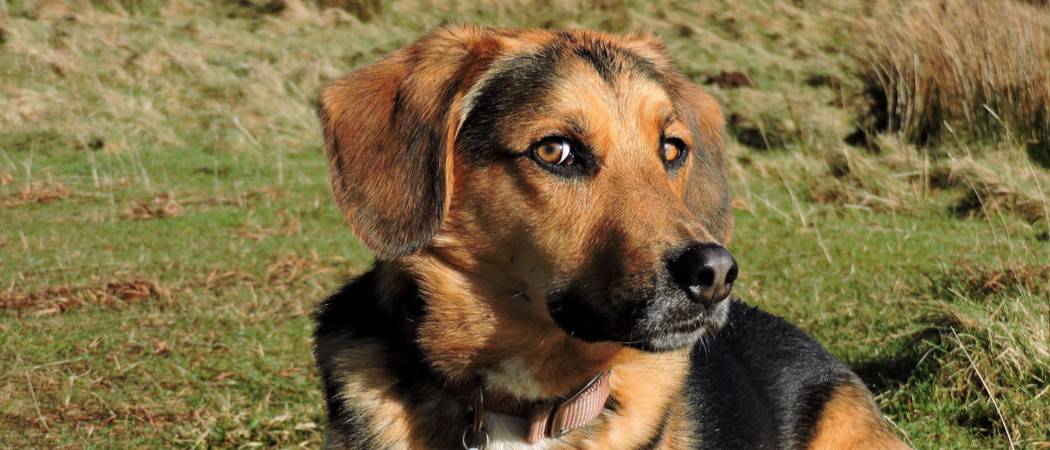
Beagle Shepherd close-up

At a Glance

Domesticated
Also Known As Dog, Domestic dog, Domestic canine, Canine, Hound, Pooch, Pup, Man's best friend
Diet Omnivore
Activity Diurnal+
Lifespan 5 years
Weight 32 lbs
Status Not Evaluated
Did You Know?

Not a standardized kennel-club breed-offspring can look and behave quite differently even within one litter.

Scientific Classification

A domestic dog mixed breed typically produced by crossing a Beagle with a German Shepherd Dog; not a formally standardized kennel-club breed.

Kingdom
Animalia
Phylum
Chordata
Class
Mammalia
Order
Carnivora
Family
Canidae
Genus
Canis
Species
Canis lupus familiaris

Distinguishing Features

  • Medium-to-large dog with variable appearance combining Beagle traits (short coat, hound coloration, scent-hound head/ears) and German Shepherd traits (longer muzzle, athletic build, sometimes semi-erect ears)
  • Strong scent interest and tracking tendency (Beagle influence) with potential for higher trainability/guarding behaviors (GSD influence)
  • Coat and size highly variable due to mixed ancestry

Physical Measurements

Males and females differ in size

Height
1 ft 10 in (1 ft 6 in – 2 ft 2 in)
1 ft 8 in (1 ft 4 in – 1 ft 12 in)
Length
3 ft 8 in (3 ft 1 in – 4 ft 3 in)
3 ft 5 in (2 ft 11 in – 4 ft 1 in)
Weight
57 lbs (40 lbs – 75 lbs)
44 lbs (26 lbs – 66 lbs)
Tail Length
1 ft 1 in (10 in – 1 ft 4 in)
11 in (8 in – 1 ft 2 in)
Top Speed
28 mph
About 45 km/h sprint

Appearance

Primary Colors
Secondary Colors
Skin Type Canis lupus familiaris is a mammal with fur. Coat usually short to medium and dense, a double coat in shepherd lines. Some have sleeker beagle-like coats. Sheds seasonally; some lines get skin irritation or allergies.
Distinctive Features
  • Domestic dog mixed-breed (not a standardized kennel-club breed and not a wild species): appearance and size can vary widely between individuals depending on which parent traits dominate.
  • Typical build is athletic and medium-to-large with a deeper chest and longer legs than a pure Beagle; head/muzzle may range from Beagle-like (softer stop, longer ears) to more shepherd-like (wedge head, stronger muzzle).
  • Ears are variable: may be semi-pricked/one-up-one-down/pricked (shepherd influence) or longer and more pendant (beagle influence).
  • Tail often carried level or slightly raised; may be bushier if the shepherd coat dominates; some retain a white tail tip typical of scent hounds.
  • Behavioral tendencies often combine strong scenting/tracking drive (Beagle) with higher trainability/alertness/protective watchfulness (German Shepherd); enrichment needs are high (nose work + obedience/structured tasks).
  • Care requirements commonly include regular exercise (daily vigorous activity), mental work (tracking games, puzzle feeding, training), and consistent recall/lead management due to scent-chasing tendencies.
  • Grooming needs vary by coat: if double-coated, expect frequent shedding and benefit from weekly brushing (more during seasonal blows).
  • Canis lupus familiaris may inherit parent breeds' problems: hip and elbow dysplasia, back strain, chronic ear infections, skin allergies, obesity if not exercised, and bloat; screening and preventive care are advised.

Sexual Dimorphism

Moderate sexual dimorphism typical of domestic dogs; males often appear larger and more broad-headed, but overlap is substantial and individual variation is high in this mix.

  • Often heavier bone and broader skull/muzzle; thicker neck/forequarters.
  • May show a more pronounced ruff/neck fur if double-coated.
  • Often slightly smaller and more refined head/neck; may appear leaner at the same condition score.
  • Coat/markings are not reliably sex-linked in this mix.

Did You Know?

Not a standardized kennel-club breed-offspring can look and behave quite differently even within one litter.

Often nicknamed "Beagle Shepherd," combining Beagle scent-hound instincts with German Shepherd biddability and vigilance.

Many inherit a powerful "nose-to-ground" mode from the Beagle side, making scent games unusually rewarding.

Coat can range from Beagle-like short and sleek to a thicker, Shepherd-like double coat that sheds seasonally.

Voice varies: some are classic Beagle "bay"/howlers; others are more Shepherd-like alert barkers.

Because they're mixes, health risk is best estimated by screening for common Beagle and German Shepherd conditions, not by a single breed standard.

Unique Adaptations

  • Exceptional olfaction (dog-wide trait) often expressed strongly via Beagle lineage-great for scent work, tracking, and nose games.
  • Athletic endurance and efficient gait, commonly influenced by German Shepherd structure-suited to longer, purposeful walks or hikes.
  • High trainability potential: many respond well to marker training and structured tasks, reflecting Shepherd working-dog selection.
  • Cold/wet tolerance may be higher in individuals with a denser Shepherd-like undercoat; heat tolerance may be better in shorter-coated individuals-plan care based on the actual coat.
  • Flexible "generalist" companion profile: mixed genetics can yield a dog that adapts to diverse roles (family pet, active partner, scent-sport novice), though temperament still varies by individual.

Interesting Behaviors

  • Scent-lock tracking: once on an odor trail, they may tune out distractions-use a long line and reward check-ins.
  • Alert-and-investigate routine: they often notice new sounds/people quickly, then follow with intense sniffing to "confirm."
  • Problem-solving for food: many become expert counter-surfers or puzzle-toy pros if under-stimulated.
  • Pack-oriented shadowing: may follow family members room-to-room, a common companion-dog behavior amplified by Shepherd heritage.
  • Vocal communication: baying/howling (Beagle-leaning) or sharp alert barking (Shepherd-leaning), sometimes both depending on context.
  • Patrol patterns: some develop "property loops" in yards or on walks, especially if they inherit Shepherd watchfulness.

Cultural Significance

The Beagle‑German Shepherd mix, a domestic dog (Canis lupus familiaris), blends a scent hound's tracking joy with a herding dog's ease of training and alertness. It shows dogs' roles as hunters, guards, and companions; owners should focus on training, play, and regular vet checks.

Myths & Legends

Greek mythology tells of Laelaps, a legendary dog destined always to catch its quarry; the paradox chase of Laelaps pursuing the uncatchable Teumessian fox became a famous tale of fate and inevitability.

In Norse mythology, the wolf Fenrir-offspring of Loki-was prophesied to break free and play a central role in Ragnarök, embodying the awe and fear wolves inspired in medieval Scandinavia.

Ancient Egyptian tradition features Anubis, a jackal-headed deity who guided souls and oversaw mummification-linking canids with protection and the afterlife.

British folklore includes spectral black dogs such as Black Shuck, an ominous hound-like apparition said to haunt roads and coasts, a story that helped shape later "ghost dog" traditions.

A well-known modern historical anecdote: Rin Tin Tin, a German Shepherd rescued from a WWI battlefield, became a major Hollywood star in the 1920s, cementing the breed's image as heroic and intelligent.

A long standing Beagle court legend tells of 'Pocket Beagles,' tiny hounds said to be kept in Tudor England and linked to Elizabeth I, showing people's long love for small scent hounds.

Conservation Status

NE Not Evaluated

Has not yet been evaluated against the criteria.

Population Stable

Life Cycle

Birth 6 pups
Lifespan 5 years

Lifespan

In the Wild
2–10 years
In Captivity
8–15 years

Reproduction

Mating System Polygynandry
Social Structure Managed Domestic
Breeding Pattern Not Applicable
Fertilization Managed Selective
Birth Type Internal_fertilization

Canis lupus familiaris mating is flexible and depends on human management. Free-ranging dogs are often polygynandrous (females and males mate with many partners). Owned dogs are human-controlled (paired, confined, often sterilized). Cooperative care is not typical.

Behavior & Ecology

Social Pack Group: 4
Activity Diurnal, Crepuscular, Cathemeral
Diet Omnivore Meat-based foods and strong-smelling, palatable treats are often highly preferred; individual preferences vary by dog and prior diet.

Temperament

Highly social with family; often affectionate and people-oriented (domestic dog context vs wild canid independence)
Intelligent and trainable; can show Shepherd-like responsiveness to structured cues and tasks
Scent-driven, curious, and prone to tracking/foraging behavior (Beagle influence); may follow odors and ignore recalls without training
Alert and watchful; may bark at novel stimuli (Shepherd influence), with variability from friendly greeter to reserved watchdog
Moderate to high energy; benefits from daily aerobic exercise plus nosework/mental enrichment to prevent boredom behaviors
Potential prey drive/chase tendency (small animals, fast movement), especially if Beagle traits are strong
Can be mouthy as a young dog; benefits from bite-inhibition work and appropriate chew outlets
Temperament is highly variable; domestic dogs are typically social and capable of forming strong affiliative bonds with humans, but specific traits differ substantially among breeds and individuals.
Care requirements: consistent positive-reinforcement training, early socialization, secure fencing/leash reliability; enrichment emphasizing scent games and obedience/impulse control
Watch for hip and elbow dysplasia and degenerative myelopathy from Shepherd lines, ear infections (otitis) from floppy Beagle ears, obesity if inactive, and anxiety; keep joints, weight, and ears checked.

Communication

Barking Alert, demand, excitement
Bay/howl-like vocalization More likely with Beagle influence, especially when tracking or frustrated
Whining Attention, stress, anticipation
Growling Resource guarding, discomfort, play-context dependent
Grumbling/"talking" vocalizations Low-level social sounds in some individuals
Scent marking and intensive sniffing/ground tracking Notably strong in this cross
Body posture and weight shifts Stiffening, leaning, play bow
Facial expressions and ear/tail carriage Ear set varies; tail height and wag style signal arousal
Eye contact/averted gaze to regulate social distance with humans and dogs
Pawing/nudging and physical contact seeking for affiliation or attention
Mouthing/licking during greeting and play Requires guidance for polite interaction
Resource-guarding signals (hovering over items, freezing) that should be addressed with management and training if present

Habitat

Biomes:
Temperate Forest Temperate Grassland Boreal Forest (Taiga) Tundra Alpine Mediterranean Savanna Desert Hot Desert Cold Tropical Dry Forest Tropical Rainforest Freshwater Wetland Marine +8
Terrain:
Plains Hilly Valley Coastal Mountainous Island Riverine +1
Elevation: Up to 16404 ft 3 in

Ecological Role

Human-associated companion animal; locally can function as a subsidized mesopredator/scavenger, with ecological impacts largely determined by supervision and confinement rather than natural predation.

Companionship and human well-being support Working roles in some individuals (tracking/scent work, detection, service/therapy support) Localized pest deterrence/control (rodent harassment) when supervised Potential negative ecological impact if free-roaming (wildlife predation/disturbance), mitigated by responsible ownership (leash, containment, proper feeding)

Diet Details

Main Prey:
Commercial complete dog food Meat Household foods and table scraps Scavenged food waste/refuse
Other Foods:
Fruits Vegetables Cooked grains and starches Edible plant scraps

Human Interaction

Domestication Status

Domesticated

Domestic dogs (Canis lupus familiaris) are fully domesticated canids that came from gray wolf ancestors through a long shared history with people. Domestication led to less fear and aggression, more social tolerance and better communication with humans, and roles like hunting, guarding, herding, and companionship. Today many breeds and mixed dogs vary by ancestry and selection.

Danger Level

Moderate
  • Bite/scratch risk typical of medium-to-large dogs, elevated if under-socialized, fearful, or poorly managed
  • Prey drive/chase behavior (may pursue small animals; can cause accidental injury during high arousal)
  • Guarding/protective tendencies may appear from German Shepherd ancestry (can lead to reactivity if not trained)
  • Strong pulling/bolting on leash (risk of falls/injuries to handlers without training/equipment)

As a Pet

Suitable as Pet

Legality: Usually legal to keep as a pet where domestic dogs are allowed. Rules can include bans after attacks, leash laws, licenses, shots, registration, and housing or insurance rules that may target shepherd-type dogs.

Care Level: Experienced

Purchase Cost: Up to $800
Lifetime Cost: $18,000 - $45,000

Economic Value

Uses:
Companion animal industry Veterinary services Training and behavior services Pet food and supplies Animal shelters and rescue Working and sport activities (limited, individual-dependent)
Products:
  • companionship and family pet roles
  • adoption fees/rescue services
  • basic to advanced obedience training
  • scent work/nosework and tracking (often strong due to Beagle lineage; variable by individual)
  • general-purpose active companion (hiking, running, outdoor recreation)

Relationships

The beagle shepherd is another hybrid breed that has emerged from the recent frenzy of designer dog creation. As is typical of such efforts, the originator of the breed is not fully known or acknowledged.

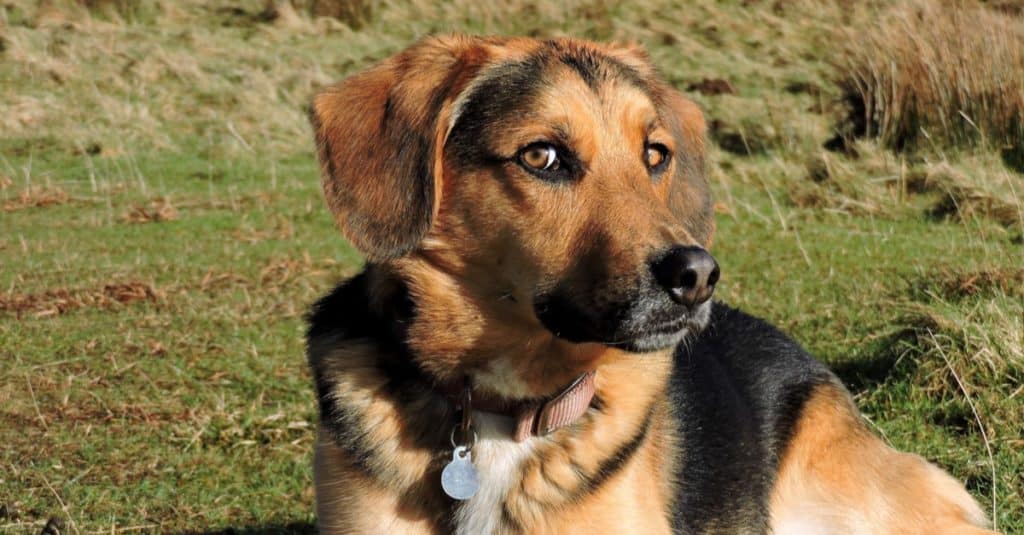
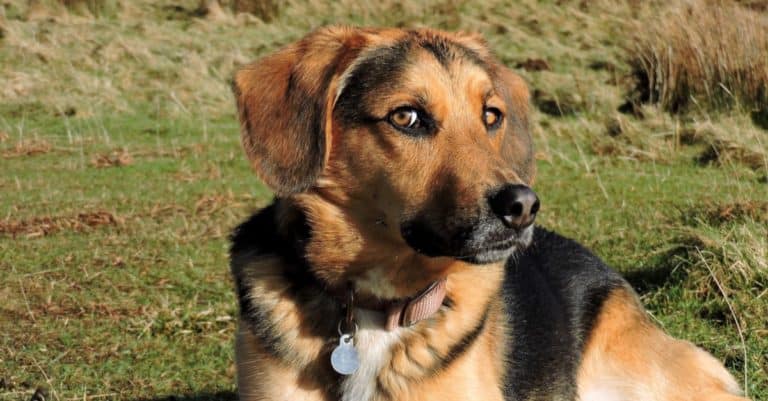
In any event, a beagle shepherd can resemble a sort of paper doll-style creature that has a very definite German shepherd body and a very obvious beagle head and floppy ears placed on top of it. It is not unattractive by any means, but it distinctly shows the evidence of the dog’s crossbreeding.

The history of the beagle may go back to the 5th century Greece. These dogs hunted in search of foxes, rabbits, and other small prey. In the 1500s, beagles became well-known in England as they hunted in packs with English gentlemen in search of deer, rabbits, and foxes. This dog’s persistence, excellent sense of smell, and loud howling bark made it a helpful companion for hunters. 

Originally bred, starting in 1899, by Max von Stephanitz to assist shepherds by using various herding breeds, the German Shepherd is an exceptionally intelligent working dog breed. They excel as guardians in positions of service and make for loving and loyal additions to the family.

With the beagle as a hunting hound and the German shepherd as a guard and herd dog, the crossbreed tends to take some of the protective edge off the shepherd and replace it with the happy-go-lucky genetics of the beagle, yet the beagle’s keen instinct to hunt via scent remains a very dominant trait.

3 Pros And Cons of Ownership

ProsCons
Nobody is ever going to sneak up on you as long as you have this dog around. The Beagle’s signature baying and the Shepherd’s acute sense of hearing combine to create the perfect intrusion alarm for your property.Due to its shepherd heritage of guarding and its beagle heritage of alerting, this is a dog that will bark at almost anything. It can, of course, be trained not to bark as much as it is bred to, but it will never be a quiet dog.
Anything you want to teach this dog, it has the mental faculties and the innate desire to learn, and it will not forget what it has been taught.This breed is not wired for living a solitary life. It cannot be left alone for long without it baying and becoming somewhat destructive. It must have a companion dog or the presence of a human to keep its character in proper balance.
This dog is a superior family companion, especially with children old enough to play until they drop.Hunting on the scent means that it is prone to getting on the track of something and following it despite commands or other negative stimuli. Out in public, it may well disappear if it is not kept firmly on a leash.
Beagle Shepherd lying in field

The beagle shepherd is a noisy, busy dog that can learn anything you teach it.

Size And Weight

Unlike many designer crossbreeds, the Beagle Shepherd has proven to be something of a wildcard when it comes to size and weight. Consider that a male beagle might be 12 to 15 inches high and 20 to 30 pounds in weight. An adult German shepherd male can clock in at anywhere from 24 to 26 inches in height and 65 to 90 pounds in weight.

Beagle shepherds thus have a very wide range of body sizes. The normal expectation is that they will come in at anywhere from 16 to 24 inches tall and 22 to 56 pounds in weight. Females run slightly smaller, with about 15 to 22 inches in height and 22 to 49 pounds in weight. Even that “average” covers a very broad range and it is possible to find beagle shepherds at the low end of the beagle range or the high end of the German shepherd range. The overall size is much less predictable with the beagle shepherd than is seen in other designer dogs.

Common Health Issues

While one of the main benefits of a designer crossbreed over a long-established purebred is that it has greater genetic diversity to fight off inherited health problems, the beagle shepherd has some definite health concerns. Like most other dogs, these are often geriatric in nature.

Things such as obesity from overfeeding and under-exercising are not breed-specific, nor are the possibilities of cataracts later in life. The same goes for that most canine of diseases known as hip dysplasia or degeneration of the hip bones. Epilepsy is a factor in both breeds, but this can generally be treated with medication.

On the German shepherd side of the family, the main risks come from various forms of intestinal tract issues that are more common in these dogs than in the overall population. These can include such things as pancreatic troubles, bloat, and anal functioning problems.

Temperament

This dog combines many admirable traits, which can produce a very desirable mix of characteristics. The German shepherd’s loyalty and alertness to danger combine with the beagle’s temperament of playfulness and high energy.

It also carries some downside risks in the wrong environment. Beagles like to talk and were bred to hunt smaller creatures. This can lead to issues with barking and also represents a danger to other neighborhood or household pets that may not have proper socialization with their new family member. They like to chew on things, so it is very important to make sure that they always have something proper to chew on or else they will select something else.

Care

Apart from what one would do for any dog, some things require particular emphasis when caring for this breed. Due to their beagle-like ears, they need regular examination and care to guard against ear infections.

Their high-energy personality manifests itself in two ways. First off, they require a high degree of exercise. This means plenty of rough-housing as well as regular and strenuous walks that should include at least some amount of actual running.

Secondly, they require near-constant companionship. You cannot leave one of these dogs alone for any appreciable length of time without risking trouble in the form of separation anxiety of one sort or another. They may howl, they may chew, and they may run around and break things. If you cannot be with your dog, you must have other dogs to keep it in line while you are away.

Best Dog Food

This breed burns a lot of calories. As a result, it should be fed high-quality dog food in quantities of about 1 ½ cups per meal twice a day. So long as they exercise, occasional treats or table scraps can work.

At regular appointments, discuss the ideal diet with the vet to address any health concerns. Try to seek out food with specific ingredients and nutrients that cater to this breed’s range of potential conditions.

Maintenance And Grooming

Beagle coat genetics seem to predominate. This means that the breed is relatively low maintenance so far as grooming is concerned. The dog will shed, particularly in the spring when it sloughs off its winter coat. A regular program of brushing about 2 or 3 times a week is sufficient to keep things untangled and the blood circulating properly.

Training

One of the best things about a Beagle Shepherd is that it is an easy dog to train in most ordinary things, yet it is also very intelligent and playful, so it is also possible to instruct it in more elaborate tricks with relative ease.

The one thing to avoid when training one of these dogs is punishment. They have long memories and have held grudges for some time from mistreatment. Patient repetition and a judicious award of treats will bring large rewards in terms of a very entertaining animal.

Exercise

Beagle Shepherds not only need a lot of exercise, but they also need variation in their exercises. If trapped in a continuous rut, they will soon become bored and unresponsive. It is thus necessary to include more than just a casual walk as their daily regimen. Running, walking, jumping, and playing should be part of their normal schedule. A short walk or run is not enough. They require a good mile-and-a-half or two miles of exercise daily in order to keep them in peak condition.

Puppies

Beagle Shepherd puppies need three things. Owners must carefully instruct them on what is proper to chew on and what is not proper to chew. It is also best to work with them on when and how much they should bark under various circumstances. The Beagle is meant to hunt and to constantly announce its presence. This instinct can get out of hand in an urban or suburban setting. They must also be very carefully introduced to other house pets so that they recognize them as part of the family from an early age. Otherwise, their hunting instinct may kick in at unwelcome times and focus on unwanted targets.

Children

This is a very good dog for children due to its indefatigable energy and playfulness. It can, however, grow to a larger size than expected. This can lead to unintentional injuries resulting from a mix of big, happy dogs and small, happy children trying to occupy the same space and time.

Dogs Similar To Beagle Shepherds

  • Shepadoodle: Although it will produce a longer-haired specimen, the poodle shepherd cross, sometimes called a Shepadoodle, offers many of the same attractive features of the beagle shepherd but without the same level of worries about barking.
  • Shollie: If you are looking for something larger, then a German shepherd and border collie mix might be good. This produces a much larger dog but comes with the caveat that it is not really an indoor dog at all.
  • German Shepherd Australian Shepherd Mix: The Australian shepherd and German shepherd mix produces an excellent dog that is again not really the size for indoor living, but has more of the protective and herding instincts of its two shepherd parents. Losing the beagle instinct for hunting and howling is not necessarily a bad trade-off unless you use your animal on the hunt.
View all 453 animals that start with B

Sources

  1. Your Dogs World / Accessed April 17, 2021
  2. The Happy Puppy Site / Accessed April 17, 2021
  3. Alpha Paw / Accessed April 17, 2021
  4. Dog Breed Info / Accessed April 17, 2021
  5. Green Garage Blog / Accessed April 17, 2021
  6. All Shepherd / Accessed April 17, 2021
Thank you for reading! Have some feedback for us?


Beagle Shepherd FAQs (Frequently Asked Questions)

A Beagle Shepherd is a cross between the two recognized breeds of German Shepherd and Beagle. The dog is generally colored black or brown with red, white, liver, tan, or blue patches. They can be a solid color, two-color, or three-color dogs. So far as size is concerned, the breed can be anywhere from small Beagle size to large German Shepherd size. There are limited guarantees when it comes to the size of the hybrid, even if the parents are known.