




B
Species Profile

Beago

Canis lupus familiaris

Big heart, bigger nose.
iStock.com/kbombcarpenter

Beago Distribution

Click a location to explore more animals from that region

Origin Location

This map shows the native origin of the Beago. As a domesticated species, they are now found worldwide.

Loading map...

Size Comparison

Human 5'8"
Beago 1 ft 7 in

Beago stands at 28% of average human height.

Animal Body Part, Animal Eye, Anthropomorphic Face, Australia, Australian Culture

At a Glance

Domesticated
Also Known As dog, domestic dog, domesticated dog, canine, pooch, pup, puppy, man's best friend
Diet Omnivore
Activity Cathemeral+
Lifespan 12 years
Weight 100 lbs
Status Not Evaluated
Did You Know?

Beagos are "designer" mixed-breed dogs (Beagle × Golden Retriever), so siblings can look and act quite different.

Scientific Classification

The Beago is a hybrid (designer) domestic dog produced by crossing a Beagle with a Golden Retriever. As with most mixed-breed dogs, appearance and temperament can vary widely between individuals.

Kingdom
Animalia
Phylum
Chordata
Class
Mammalia
Order
Carnivora
Family
Canidae
Genus
Canis
Species
Canis lupus

Distinguishing Features

  • Medium-sized dog; often combines Beagle hound features (ears, scent-drive) with retriever build/coat traits
  • Temperament frequently described as friendly and social; energy level often moderate to high
  • Coat and coloration variable depending on parental traits (may be short-to-medium length)

Physical Measurements

Males and females differ in size

Height
1 ft 8 in (1 ft 3 in – 1 ft 12 in)
1 ft 7 in (1 ft 3 in – 1 ft 10 in)
Length
3 ft 2 in (2 ft 6 in – 3 ft 9 in)
2 ft 4 in (1 ft 12 in – 2 ft 9 in)
Weight
51 lbs (31 lbs – 71 lbs)
49 lbs (31 lbs – 66 lbs)
Tail Length
11 in (8 in – 1 ft 2 in)
11 in (8 in – 1 ft 1 in)
Top Speed
28 mph
Moderate running speed

Appearance

Primary Colors
Secondary Colors
Skin Type Canis lupus familiaris skin: short-to-moderate coat follicle density; pigmentation usually follows coat pattern. Some dogs may get mild sensitivity or allergies (itchiness, hot spots), especially if part Golden Retriever or ears hold moisture.
Distinctive Features
  • Domestic dog (Canis lupus familiaris) hybrid: a Beagle × Golden Retriever mix-distinct from the base species/wild-type canid by greater coat/pattern variability, generally smaller size than wolves, shorter/broader muzzle options, and more pronounced human-directed social traits.
  • Overall build commonly medium and athletic; chest and ribcage may be hound-like (Beagle) or more robust/retriever-like. Adult size is not fixed and can vary notably between first-generation and multigenerational mixes.
  • Head and muzzle vary: may have a Beagle-like rounded skull with a defined stop and moderate muzzle, or a more retriever-like broader head and longer muzzle. Eyes often brown with a friendly, attentive expression.
  • Ears typically drop/flop; ear leather and set can resemble either parent. Floppy ears increase risk of moisture retention and recurrent otitis (ear infections) without routine cleaning/drying.
  • Coat length and texture are variable: can be short and dense (Beagle-leaning), medium with some feathering on tail/legs/chest (Golden-leaning), or intermediate. Many have a double coat with seasonal shedding.
  • Tail may be Beagle-like (upright 'flag' with white tip) or retriever-like (thicker, carried level).
  • Behavioral tendencies often combine scent-driven curiosity (Beagle) with biddability/people-orientation (Golden). Many individuals benefit from scent games plus retrieval/play training; recall can be challenging if strong hound drive is present.
  • Health issues to watch (risk varies by line): hip and elbow dysplasia, obesity, ear infections, allergies and hot spots, hypothyroidism, epilepsy (seen in Beagles), and eye problems like PRA or cataracts.
  • Regular exercise (daily walks, play; safe off‑leash time), mental games (nose work, puzzle feeders, obedience), watch weight (measure meals, limit treats), groom by coat (weekly brushing, more in shed), clean ears and brush teeth.
  • Because Canis lupus familiaris is not an officially defined breed, expect wide variation in color, coat, size, and temperament; check the specific dog, its parents, and health tests rather than one typical profile.

Sexual Dimorphism

Typically mild sexual dimorphism as in many domestic dogs: males often trend slightly larger and more muscular, while females may be a bit smaller and finer-boned. Extent varies with genetics (which parent traits dominate) and whether the dog is altered.

  • Slightly broader head and thicker neck/shoulders in some individuals
  • May carry more overall muscle mass and heavier bone, especially if Golden Retriever traits are strong
  • Occasionally more pronounced 'ruff'/feathering impression in medium coats (individual-dependent)
  • Slightly lighter frame and narrower head/neck in some individuals
  • May appear more streamlined/athletic when Beagle traits dominate
  • Coat/feathering can be similar to males; differences are usually subtle and individual-specific

Did You Know?

Beagos are "designer" mixed-breed dogs (Beagle × Golden Retriever), so siblings can look and act quite different.

Many inherit the Beagle's powerful nose-scent games can tire them out faster than walks.

Some Beagos "talk" like Beagles (baying/voicing), while others are quieter like many Golden Retrievers.

Retrieving is common: a soft mouth and love of carrying toys may come from Golden Retriever ancestry.

Coats range from short-and-dense (Beagle-like) to medium/feathered (Golden-like), sometimes with Beagle tricolor patterns.

They're typically very people-oriented; separation-related stress can appear if left alone too long.

Food motivation is often high-great for training, but it also raises obesity risk if portions aren't managed.

Unique Adaptations

  • Domestic-dog traits vs. the base species (gray wolf, Canis lupus): reduced fear/aggression thresholds toward humans, prolonged juvenile social behavior, and strong responsiveness to human cues.
  • Olfactory specialization (Beagle influence): high scent motivation and persistence, useful for scentwork-style enrichment.
  • Retrieving/handler focus (Golden influence): many show strong affiliative behavior and a desire to carry/bring items back.
  • Athletic "middle build" potential: often combines Beagle agility with Golden stamina, though adult size varies by lineage.
  • Coat variability: can inherit water-resistant undercoat (Golden) or easier-care short coat (Beagle), affecting grooming needs and weather tolerance.

Interesting Behaviors

  • Scent-trailing "nose down" walks: they may zig-zag, follow ground scent, and ignore distractions when a smell is interesting.
  • Retrieval-and-parade: picking up objects and trotting around proudly, sometimes inviting a chase game.
  • Baying/alert vocalizations: some inherit Beagle-style baying or "aroo," especially when excited or on a scent.
  • Shadowing and social check-ins: following family members room-to-room, typical of many companion-oriented dogs.
  • Counter-surfing and scavenging: a scent-driven tendency to investigate food smells-management and training help.
  • Play style variability: some are bouncy retrievers (fetch-focused), others are nose-led explorers (sniff-focused).

Cultural Significance

The Beago (Canis lupus familiaris), a modern family mix, blends Beagle and Golden Retriever traits. Beagles link to British scent hound hunting and media; Golden Retrievers from Scotland are gentle, trainable, and used as service dogs.

Myths & Legends

Anubis, the jackal-headed guardian of Egyptian mortuary rites, exemplifies a long tradition of canid figures guiding and protecting souls-an ancient backdrop to humanity's reverence for doglike companions.

In Norse mythology, the monstrous wolf Fenrir is bound by the magical ribbon Gleipnir, a story that shaped European imaginings of wolves and their power-contrasting the domestic dog's role as ally.

In Greek tradition, Hecate is accompanied by dogs, and their presence at crossroads and liminal spaces fed enduring superstitions about dogs sensing the unseen.

A popular historical tale once claimed Golden Retrievers descended from Russian circus dogs; while the breed's documented development is tied to Scottish gundogs at Guisachan, the story itself became part of Golden Retriever folklore.

Golden Retriever origin lore often centers on Lord Tweedmouth's careful breeding for a steady, soft-mouthed retriever in 19th-century Scotland-an anecdote repeatedly retold as a foundation story of the breed.

Beagle name-and-origin stories are debated in tradition: some trace "Beagle" to words meaning "small," reflecting old tales of tiny hounds kept for hunting on foot in Britain.

Conservation Status

NE Not Evaluated

Has not yet been evaluated against the criteria.

Population Stable

Life Cycle

Birth 6 pups
Lifespan 12 years

Lifespan

In the Wild
10–13 years
In Captivity
9–15 years

Reproduction

Mating System Polygynandry
Social Structure Managed Domestic
Breeding Pattern Serial
Fertilization Managed Selective
Birth Type Internal_fertilization

Beago (Beagle × Golden Retriever) mating is polygynandry under human management: breeders choose mates and may use timed matings or artificial insemination. Pairings are serial across heats, and cooperative breeding (other dogs helping) is usually absent.

Behavior & Ecology

Social Pack Group: 4
Activity Cathemeral, Diurnal, Crepuscular
Diet Omnivore meat-based diets (especially poultry)

Temperament

Highly social and affiliative; typically friendly with familiar people and often dog-social when well socialized (retriever influence).
Scent-driven, exploratory, and prone to following odors; recall reliability can be challenging without structured training (beagle influence).
Playful and energetic; benefits from daily aerobic exercise plus scent-work/foraging enrichment; under-stimulation can lead to nuisance barking, chewing, or digging.
Food-motivated and trainable, but can be distractible outdoors; positive reinforcement and impulse-control routines are usually most effective.
Generally gentle; may be exuberant with greetings/jumping if not trained. Variation across the HUB is high: individuals can range from calm, eager-to-please to more independent, vocal, and persistent.
Watch weight (obesity risk in food-motivated dogs), keep regular exercise, and watch for hip/elbow dysplasia, ear infections (drop-eared dogs), allergies, hypothyroidism, and bloat in deep-chested dogs—see a vet.

Communication

Barking Alert/excitement
Baying/long hound vocalizations More common in beagle-leaning individuals
Whining Attention/appeasement
Growling Warning/play
Howling Less common, can occur with arousal or sirens
Tail carriage and wag patterns Arousal/affiliation
Ear and facial expression changes Attention/stress
Body posture and freezing/piloerection Threat assessment
Play bow, bouncing gait, and pawing Play solicitation
Licking/muzzle nuzzling Appeasement/affiliation
Scent marking (urination, ground sniffing) and intensive sniffing as information-gathering
Mouth-carrying/bringing objects Retriever-leaning communication and bonding

Habitat

Biomes:
Temperate Forest Boreal Forest (Taiga) Temperate Grassland Tundra Alpine Mediterranean Desert Hot Desert Cold Savanna Tropical Dry Forest Tropical Rainforest Freshwater Wetland Marine +8
Terrain:
Plains Hilly Valley Coastal Island
Elevation: Up to 16404 ft 3 in

Ecological Role

Human-associated omnivore and companion animal; in free-ranging contexts, an opportunistic mesopredator and scavenger. Compared with wolves, domestic dogs are ecologically tied to people and typically exert localized, opportunistic predation pressure rather than cooperative big-game hunting.

localized pest suppression (rodent deterrence/occasional predation) scavenging of discarded food in free-ranging situations (can reduce some organic waste but also creates conflict/health risks) nutrient redistribution via feces in human-modified landscapes socio-ecological services to humans (companionship; potential therapy/service work depending on individual temperament)

Diet Details

Main Prey:
Small rodents Rabbit Ground-nesting birds and eggs Lizards Insects and other small invertebrates
Other Foods:
Grasses Berries Fallen fruit Root vegetables and plant scraps Cooked grains

Human Interaction

Domestication Status

Domesticated

Canis lupus familiaris were domesticated from wolves over thousands of years for tameness, teamwork, and work with people. The Beago (Beagle × Golden Retriever) is a modern mix, often friendly, trainable, and with a strong nose. It needs daily exercise, scent games, secure fencing, and training. Watch for hip problems, ear infections, obesity, and higher cancer risk from Golden lines.

Danger Level

Moderate
  • Bite risk typical of domestic dogs, increased by poor socialization, fear, pain, rough handling, or inadequate supervision with children
  • Chasing/knocking over small children due to excitement and moderate-to-high energy
  • Zoonotic risks typical of dogs if not vaccinated/treated (e.g., rabies exposure risk where vaccination is lacking; intestinal parasites) and allergen exposure (dander)
  • Roaming/scent-tracking behavior can create traffic hazards and conflict with other animals if containment/training is inadequate

As a Pet

Suitable as Pet

Legality: Legal where domestic dogs are allowed. May need local license, rabies vaccine, and leash. Local laws, landlords or insurers can add limits. Beago (Canis lupus familiaris) is a dog hybrid, not a wolf-hybrid, so those rules usually do not apply.

Care Level: Moderate

Purchase Cost: $200 - $1,500
Lifetime Cost: $15,000 - $35,000

Economic Value

Uses:
Companion animal (pet industry) Training/behavior services Veterinary and preventive healthcare Breeding (designer mixes and small-scale kennels) Working/service potential (limited but possible for therapy, detection, assistance depending on individual)
Products:
  • adoption fees or purchase price for puppies/adults
  • spay/neuter, vaccinations, parasite prevention
  • food, treats, enrichment toys (often higher due to food motivation)
  • training classes (puppy, manners, recall; scentwork as enrichment)
  • grooming supplies/services (variable by coat type)
  • pet insurance or emergency veterinary care

Breed a Golden Retriever with a Beagle, and the result is a Beago! This crossbreed originated back in the 1980s. Beagos claim some of the most appealing features of each of their parents. They belong to the hybrid group.

Beagos are energetic, friendly, and even-tempered dogs. They get along well with children, adults, and other pets in a household.

3 Pros and Cons of Owning a Beago

ProsCons
An easy grooming routine:
The grooming routine of a Beago is fairly quick and easy.
Moderate shedding:
This dog sheds a moderate amount of hair that increases a little (temporarily) with the change of seasons.
Good with kids:
Beagos are friendly, affectionate dogs that interact well with young children.
Not apartment-friendly:
A Beago is a little too big to do well in an apartment setting.
Loyal watchdogs:
This hybrid dog is good at alerting a household to someone at the door or on the property.
Possible howling activity:
Beagles are known for their echoing howls, so it wouldn’t be uncommon for a Beago to also howl.
Beagle looking up

Beagos may howl like their parent breed, Beagles.

Evolution and Origins

As a hybrid, designer breed, the Beago’s exact origins are unknown, but it’s believed that it was developed in the 1980s in the U.S. Both of the Beago’s parent breeds, the Beagle and the Golden Retriever, are hunting dogs with an excellent sense of smell.

The Beagle may be able to trace its lineage to ancient Greece, where small beagle-like pack-hounds were used to hunt rabbits, hares, foxes, and badgers. The modern-day beagle’s descendants are thought to have been Talbot Hounds, large scenthounds that were brought by William the Conqueror into Britain during the 11th century, and possibly the Irish Kerry beagle, a now-extinct breed that was similar to the Bloodhound. By the 16th century, packs of hounds were used by English nobility to hunt deer and hares and as gun dogs, flushing game for hunters.

The Golden Retriever was developed in the 19th century in the Scottish Highlands by Dudley Marjoribanks (who later became Baron Tweedmouth) by crossbreeding Flat-Coated Retrievers with dog breeds including the Tweed Water Spaniel, Red Setter, Labrador Retriever, and Bloodhound. The Golden Retriever is used as a gundog in the field and for the retrieval of birds such as grouse and partridge. These dogs are frequent competitors at dog shows and are trained to be guide and therapy dogs.

Due to the traits of agility and intelligence received from these two sporting parent breeds, Beagos often compete in dog sports such as competitive obedience and agility, and are used in search and rescue operations and drug detection work.
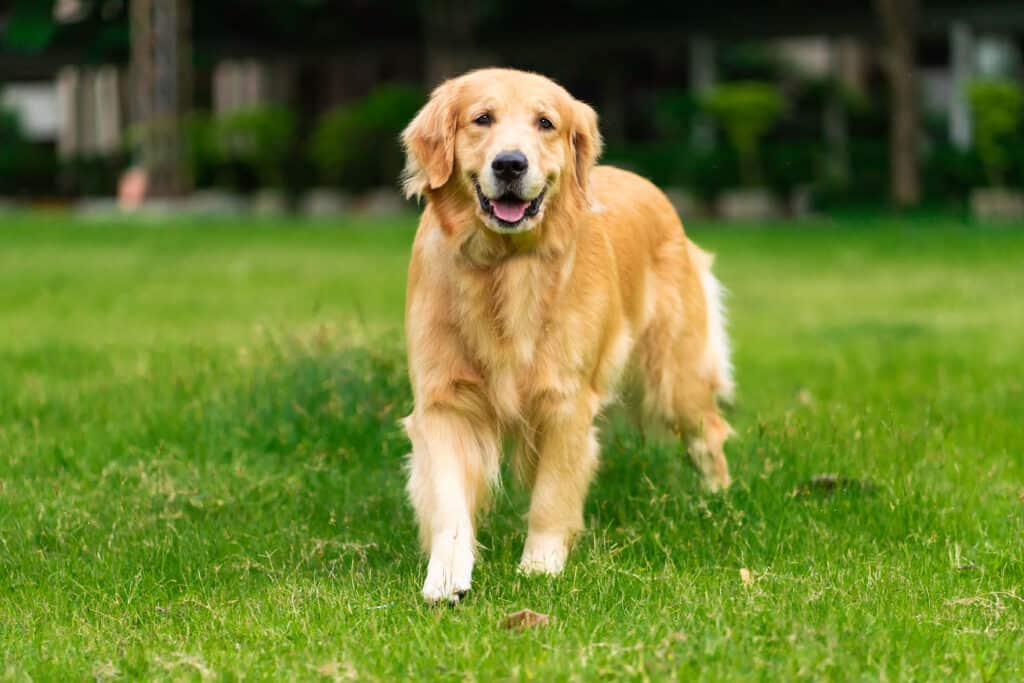
Golden retriever stands on the grass and looks forward

Beago parent breed, the Golden Retriever, originated in Scotland in the 1800s.

Size and Weight

In terms of height, a male Beago can grow as tall as 20 inches, whereas a female can reach a height of 19 inches. A male Beago can weigh as much as 55 pounds, while a female Beago weighs up to 45 pounds. A 9-week-old Beago puppy weighs approximately 8 pounds. These hybrid dogs are considered fully grown at 18 months, but the canine continues to mature until it’s around 3 years old.

Common Health Issues

Like most dogs, Beagos have some common health issues. One example is elbow dysplasia. Elbow dysplasia is when a dog’s elbow joint doesn’t fit together properly, causing the animal to limp. This condition can range from mild to severe. Sometimes medication can be adequate treatment, but surgery is also an option.

A second common health issue of this Beago is known as pulmonic stenosis. Essentially, pulmonic stenosis is a defective heart valve. A veterinarian checking a Beago with this condition is likely to hear a heart murmur. Surgery is the treatment for this condition. A third common health issue of this hybrid dog, and its parent breed, the Beagle, is cataracts. A cataract takes the form of cloudiness in one or both of a dog’s eyes. Cataracts can cause a dog to lose its eyesight. Surgery may be necessary depending on the severity of the cataract.
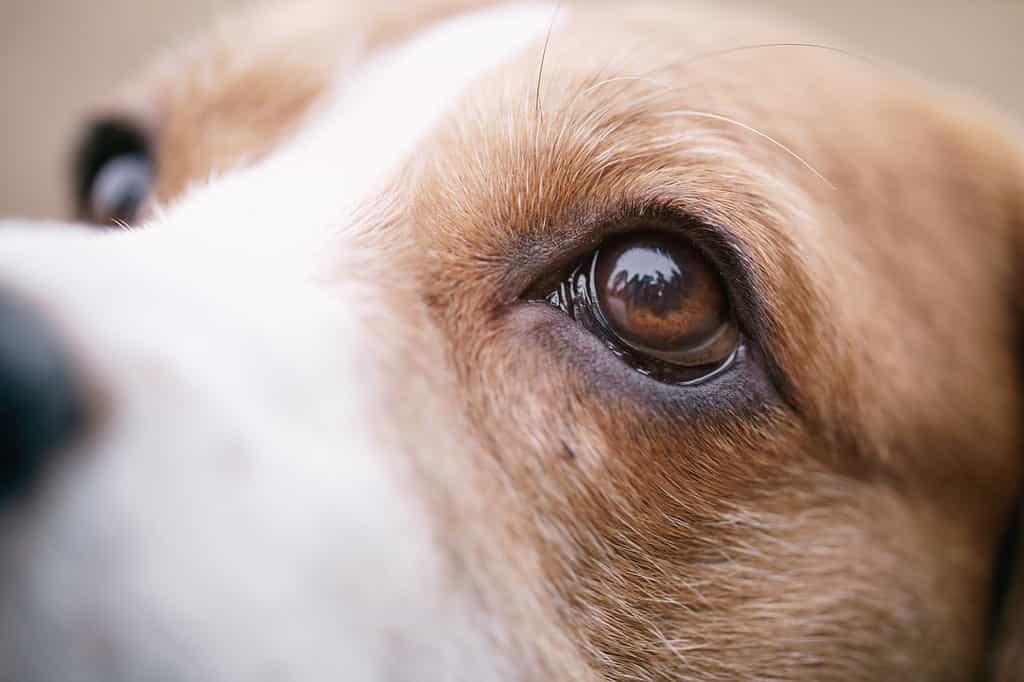
closeup portrait of tricolor beagle dog, focus on the eye

Like its parent breed, the Beagle, Beagos are prone to eye conditions such as cataracts.

Temperament and Behavior

The playful behavior of a Beago is just one of the things that make this hybrid so popular. They love to play fetch, hide-and-seek, and other games with their family members. They have a love of swimming as well. So, if an owner has a swimming pool, the Beago is likely to try it out! This crossbreed has an easygoing personality along with a lot of energy.

Both the Beagle and the Golden Retriever breeds are known to get along with kids. So, it’s not surprising that Beagos interact well with the children in a family. One of their most prized traits is loyalty. They are loving and protective of their family.
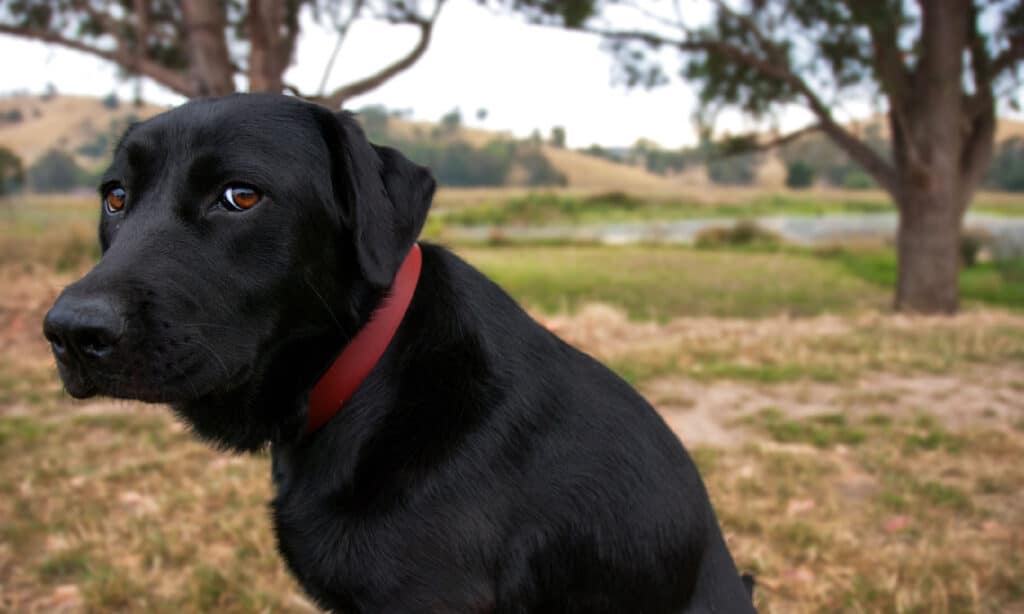
Animal Body Part, Animal Eye, Anthropomorphic Face, Australia, Australian Culture

The Beago is known to be a loyal, easygoing breed.

How to Take Care of a Beago

Being aware of the dietary, grooming, exercise, and healthcare requirements of a pet helps an owner to take excellent care of it. Whether someone gets a Beago puppy or an adult dog, taking this hybrid’s specific needs into account can help this canine lead a healthy life.

The Best Dog Food for Beagos

Beago puppies and adult dogs need different nutrients in their daily meals. These nutrients can sometimes help to fend off common health issues. Look at some factors to consider when planning a Beago’s diet. Also, be aware of their heart disease risk and the dangers of legumes in dog food, and discuss these with your vet to see if legume-free dog food is the best bet.

Puppy food: DHA in the form of Omega-3 fatty acids is essential in a puppy’s diet. It supports the development of the brain and the central nervous system. Protein contributes to the strengthening of joints and muscles. Calcium is necessary for developing strong bones and teeth. Calcium is especially important for a hybrid dog prone to elbow dysplasia. Easily digestible carbohydrates give Beago puppies the energy they need to explore their environment.

Adult dog food: A maturing Beago needs protein to support bone and joint health. Lean fat gives these dogs the energy to run and play while not adding extra weight. Calcium maintains the health of their teeth, bones, and nails. Vitamin A supports eye health, which may fend off the development of cataracts. Omega-6 acids support the health of a Beago’s coat. Fiber assists with proper digestion.

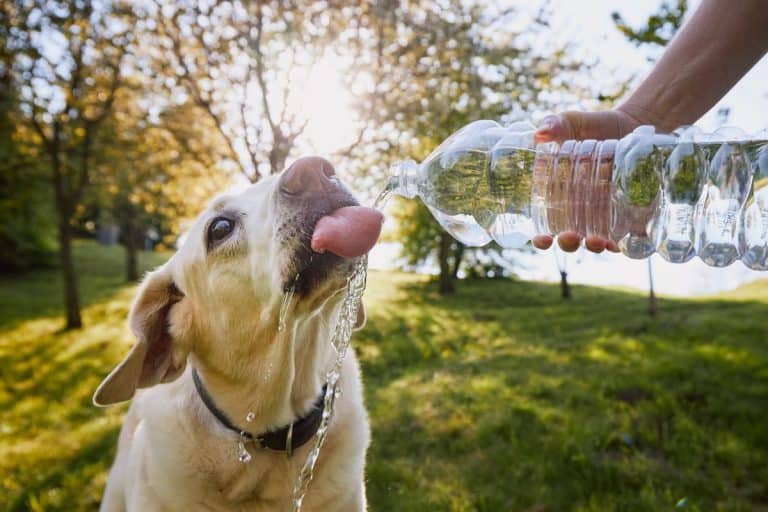
Owners should be sure their dog has access to fresh, clean water at all times. Water not only hydrates, but it also helps with the digestion of meals.

Maintenance and Grooming

How much do Beagos shed? They shed a moderate amount of hair. Both the Beagle and the Golden Retriever are moderate shedders, so this comes as no surprise.

The grooming routine for this crossbreed consists of brushing it two or three times each week. A slicker brush is a valuable grooming tool because it moves through the short to medium-length hair of this dog to remove tangles fairly easily. If the Beago takes after its Beagle parent, then it will have short hair. If it takes after its Golden Retriever parent, then the hybrid will have hair that’s medium length. A grooming glove is excellent for going over the hair on the legs, face, and tail of the dog.

Another part of the grooming routine should include the dog’s ears. Clean the underside of their ears along with the visible areas. A soft cloth and warm water are sufficient for cleaning their ears unless a veterinarian prescribes a special cleaning solution.

These dogs can develop environmental allergies that appear as redness or dryness of the skin. A veterinarian can help to determine the cause of the allergies and prescribe a topical ointment to soothe the irritated skin.
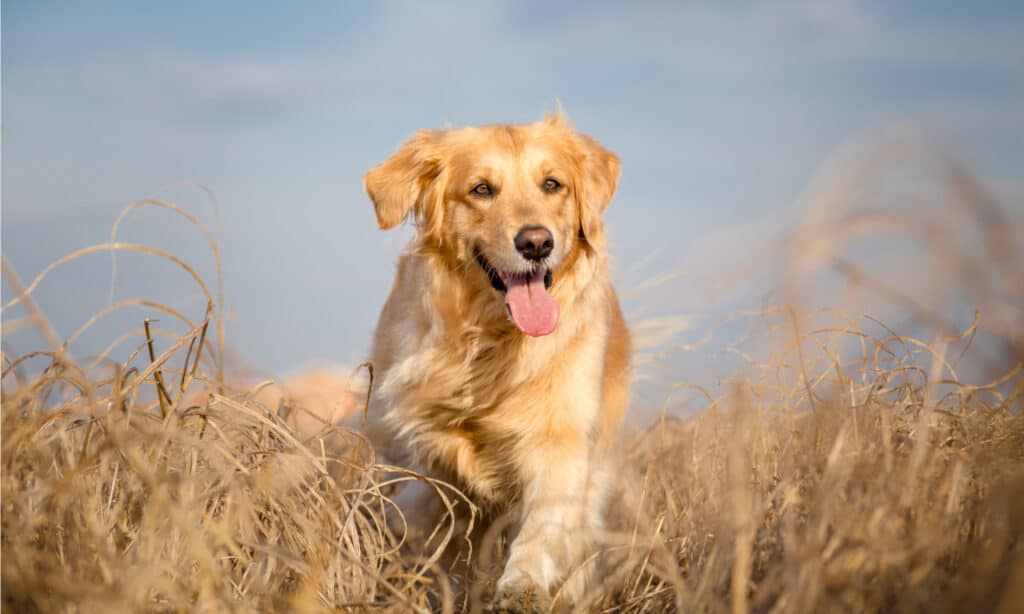
royal canin golden retriever

If a Beago takes after its Golden Retriever parent, then it will have hair that’s medium length.

Training

These dogs can be somewhat challenging to train. They can be distracted by the scents flowing all around them. An owner who is patient and uses treats, as well as praise, is going to have success training this dog. A Beagle can be challenging to train, which is part of the reason why a Beago can be the same way.
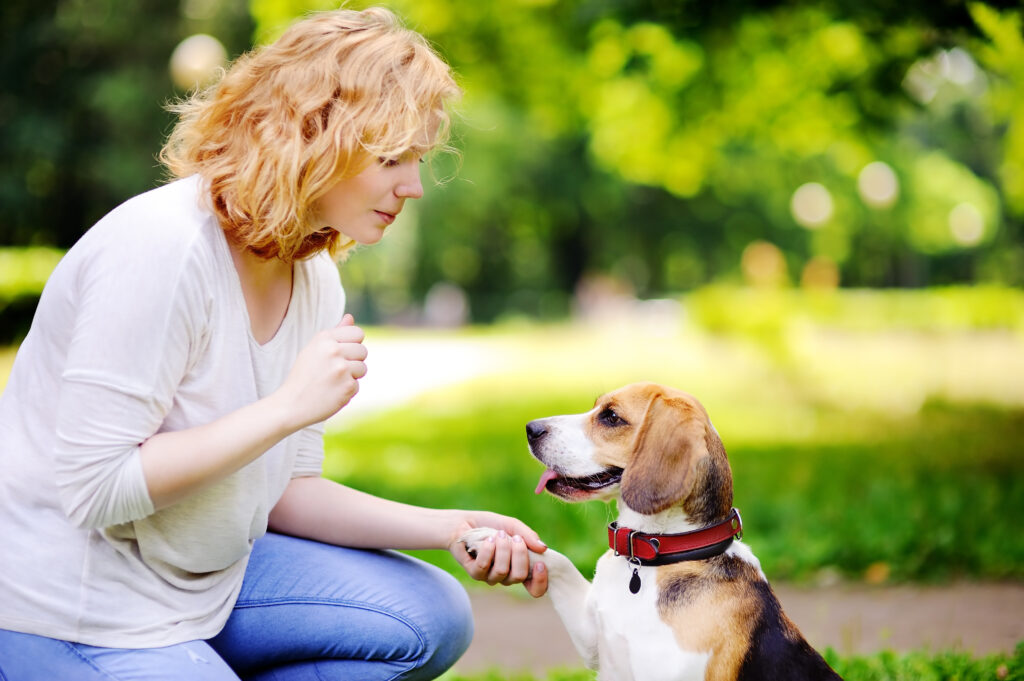
Young woman with Beagle dog in the summer park. Obedient pet with his owner practicing paw command

Beagos may be like parent breed Beagles and be challenging to train.

Exercise

These dogs need around 60 minutes of exercise per day. They love to run, jump, and explore the world around them. This activity supports their physical as well as emotional health. A walk in the woods, a run around a local pond, or a trip to a dog park are all great ways to give this hybrid dog exercise. A dog park is an especially good idea because they get along with other dogs.

This dog is not suitable for apartment life. They are medium to large in size, so they would not be able to move freely in an apartment setting. A home with a backyard is a better option for this pooch.

Puppies

Puppies need lots of space to run around, but they tend to be carried away by a scent. So, providing a large fenced-in space for them to explore is important for their safety.

puppy labrador retriever

Beago puppies require plenty of room to run around.

Beago and Children

These dogs are known to be good with children, like their parent breed Golden Retrievers. They are playful and affectionate. As a bonus, they are sturdy dogs, so they are always ready for an energetic game of chase, hide-and-seek, or fetch. A Beago purchased from a breeder or adopted from a rescue organization would love to be with a family that has children.

Dog Facts for Kids

Like their parent breed, Golden Retrievers, Beagos are good with children.

Dogs Similar to Beagos

Other dogs similar to Beagos include Flat-Coated Retrievers, Boglen Terriers, and Beagadors.

  • Flat-Coated Retriever: Beagos and Flat-Coated Retrievers are both good with children and can have black coats, but Flat-Coated Retrievers weigh more than Beagos.
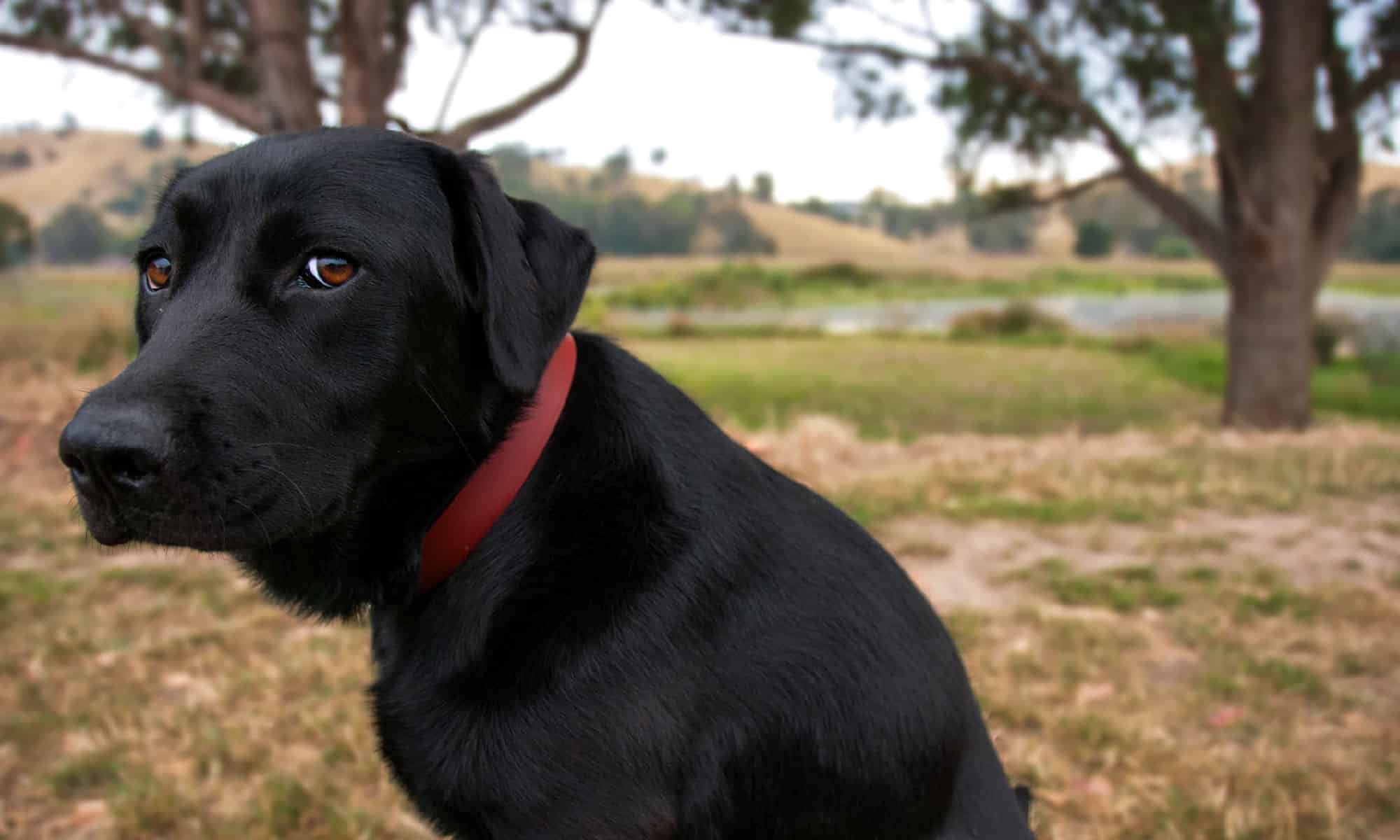
  • Boglen Terrier: Both Boglen Terriers and Beagos can have black in their coats and be challenging to obedience train. One difference is Beagos tend to be a larger hybrid dog.
  • Beagador: Beagadors and Beagos both have moderate shedding activity and are approximately the same size, fully grown. However, Beagadors are easier to train.
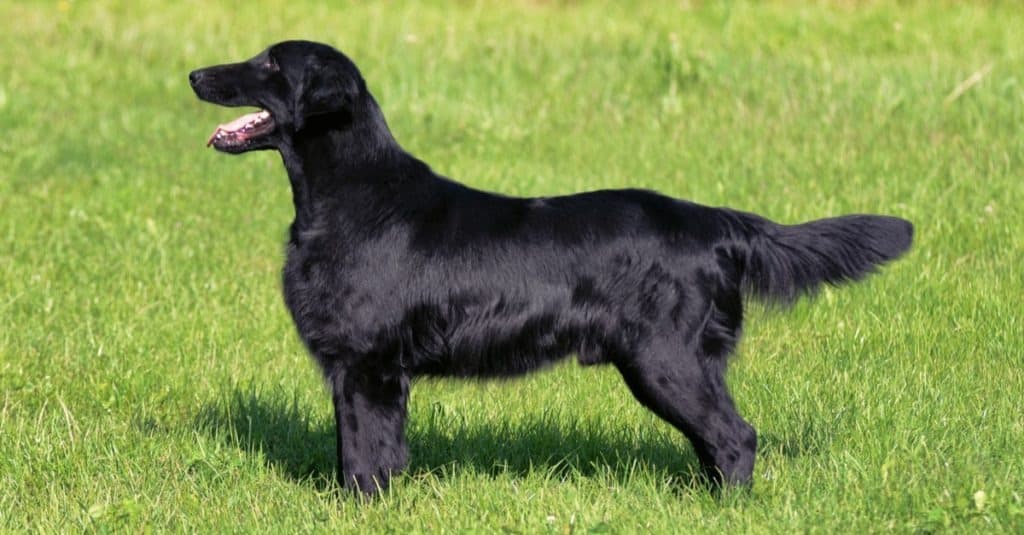
Flat-Coated Retriever standing in the meadow

Like Beagos, Flat-Coated Retrievers can have black coats and are good with children.

View all 453 animals that start with B

Sources

  1. Cornell University / Accessed April 17, 2021
  2. The Happy Puppy Site / Accessed April 17, 2021
Catherine Gin

About the Author

Catherine Gin

Catherine Gin has more than 15 years of experience working as an editor for digital, print and social media. She grew up in Australia with an alphabet of interesting animals, from echidnas and funnel-web spiders to kookaburras and quokkas, as well as beautiful native plants including bottlebrushes and gum trees. Being based in the U.S. for a decade has expanded Catherine's knowledge of flora and fauna, and she and her husband hope to have a hobby farm and vegetable garden in future.

Thank you for reading! Have some feedback for us?


Beago FAQs (Frequently Asked Questions)

A Beago is a crossbreed of a Golden Retriever and a Beagle. This hybrid dog has an easygoing temperament and a playful personality. It can have a coat that is tri-colored like a Beagle or brown like a Golden Retriever. Additionally, they can have a coat that’s a mixture of black, white, red, or cream. They have moderate shedding activity and a low maintenance grooming routine.