

B
Species Profile

Berger Blanc Suisse

Canis lupus familiaris

Snow-white coat, shepherd-smart heart
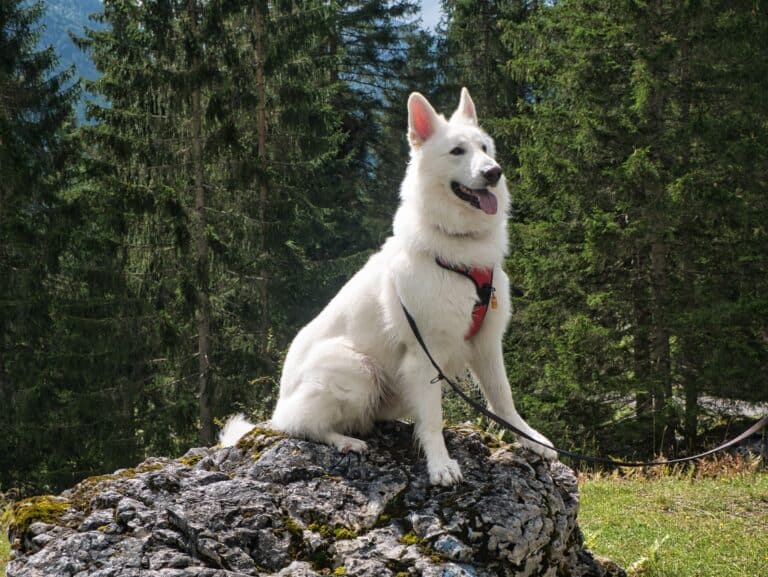
anetapics/Shutterstock.com

Berger Blanc Suisse Distribution

Domesticated Species

Found Worldwide

Size Comparison

Human 5'8"
Berger Blanc Suisse 1 ft 12 in

Berger Blanc Suisse stands at 35% of average human height.

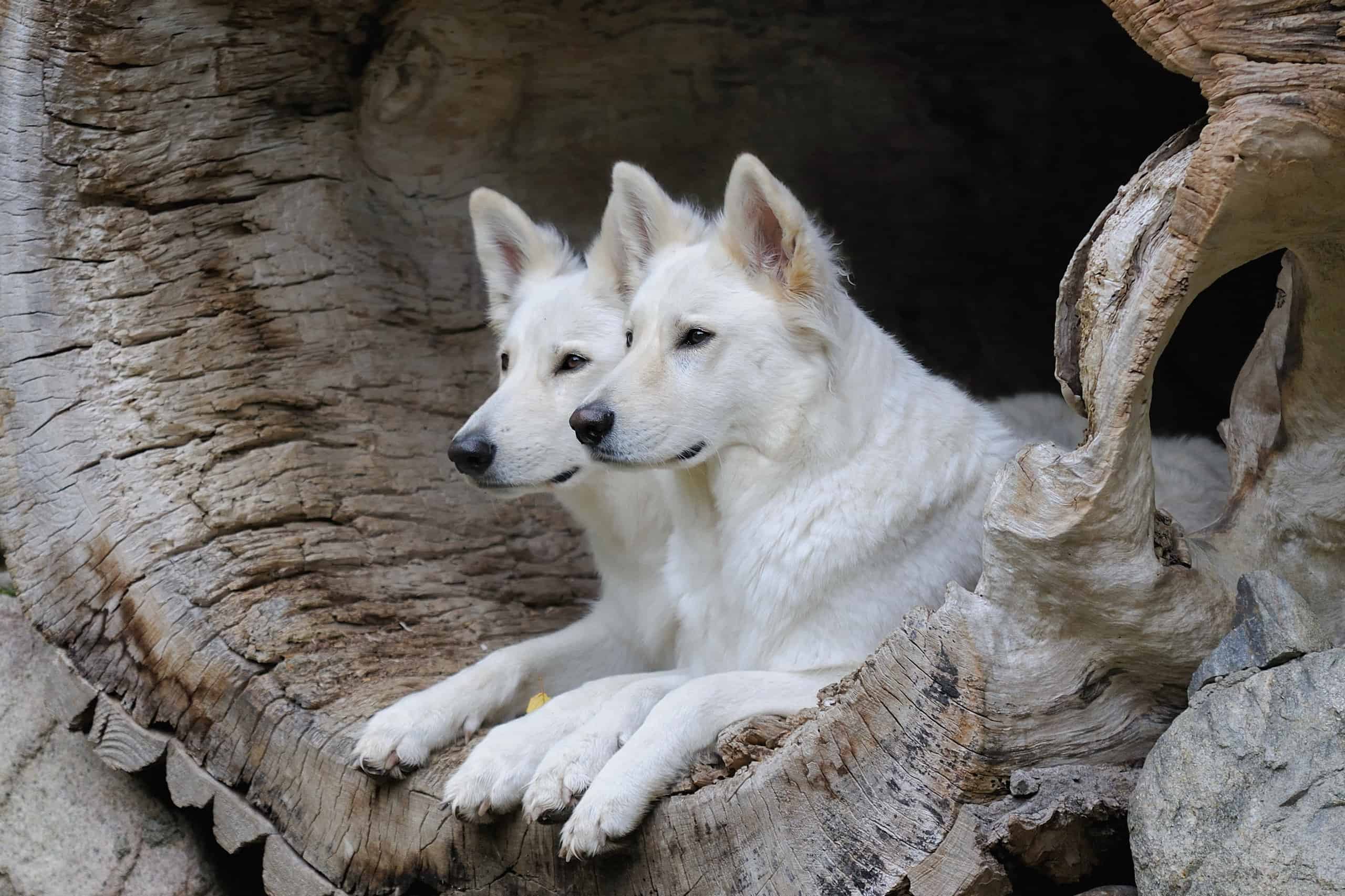
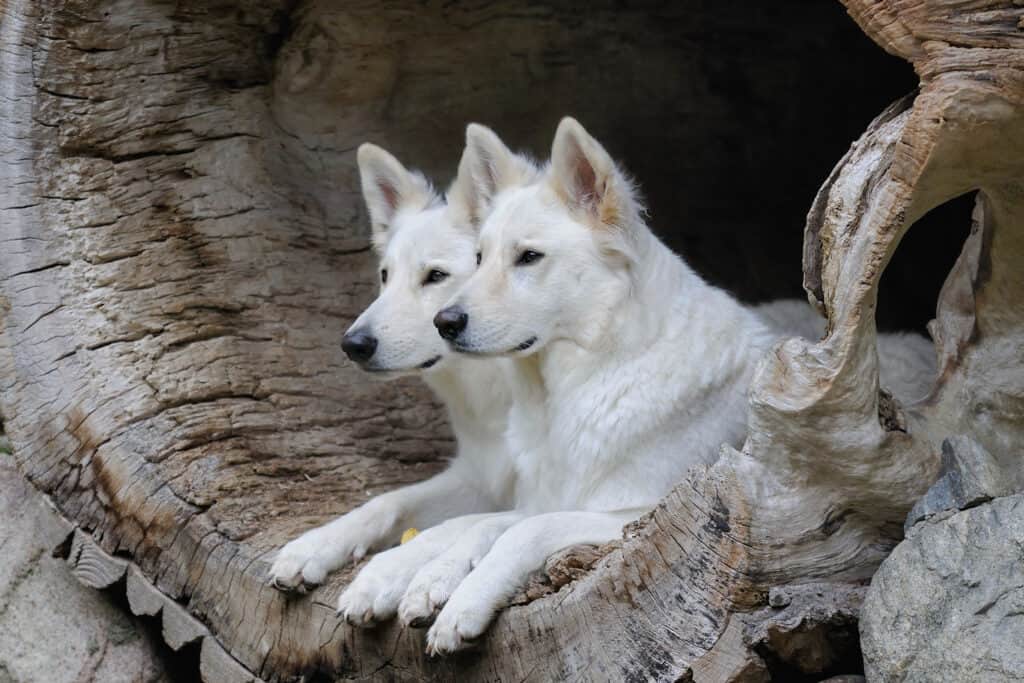
A pair of Berger Blanc Suisse staring out of a hollow log

At a Glance

Domesticated
Also Known As dog, domestic dog, pet dog, canine, pooch, pup, puppy, man's best friend
Diet Omnivore
Activity Diurnal+
Lifespan 12 years
Weight 40 lbs
Status Not Evaluated
Did You Know?

Despite its wolf-like look, it's a fully domestic dog breed (not a wolf hybrid) shaped by selective breeding from German Shepherd ancestry.

Scientific Classification

A medium-to-large herding/working dog breed recognized by major registries (e.g., FCI) for its white coat, shepherd-dog build, and trainable, people-oriented temperament.

Kingdom
Animalia
Phylum
Chordata
Class
Mammalia
Order
Carnivora
Family
Canidae
Genus
Canis
Species
Canis lupus familiaris

Distinguishing Features

  • White double coat (medium to long), often with a thick undercoat
  • Shepherd-dog silhouette: athletic build, erect ears, long muzzle
  • Typically dark eyes and nose pigment contrasting with white coat
  • Bred for trainability and stable temperament; commonly used in sport/working roles and as a companion

Physical Measurements

Males and females differ in size

Height
2 ft (1 ft 11 in – 2 ft 2 in)
1 ft 11 in (1 ft 10 in – 2 ft)
Length
3 ft 7 in (3 ft 1 in – 3 ft 9 in)
Weight
77 lbs (66 lbs – 88 lbs)
66 lbs (55 lbs – 77 lbs)
Tail Length
1 ft 4 in (1 ft 2 in – 1 ft 6 in)
Top Speed
31 mph
Athletic sprint speed varies

Appearance

Primary Colors
Secondary Colors
Skin Type Mammal skin with a thick double coat: a weatherproof outer coat and warm undercoat. Skin often dark. Needs regular brushing, more in heavy seasonal shedding, and checks for dryness or irritation.
Distinctive Features
  • Medium-to-large, athletic shepherd build with deep chest and level topline; built for herding/working and endurance rather than heavy mastiff-type mass.
  • Erect, triangular ears set high; alert expression typical of shepherd breeds.
  • Dense white double coat; may be medium or long (often with feathering on tail/legs in longer coats).
  • Almond-shaped, usually dark eyes; strong dark facial pigment preferred for contrast (nose/lips/eye rims).
  • Bushy, saber-like tail carried low at rest with gentle curve; not tightly curled.
  • People-oriented, highly trainable working temperament (common roles: companion, obedience, sport, service/working activities) distinguishing it from wild canids and many less-biddable breeds.
  • Breed-specific health considerations (seen in shepherd lines): risk of hip/elbow dysplasia; occasional degenerative myelopathy in related shepherd populations; sensitivity to digestive/skin allergies in some individuals-responsible breeding, joint-friendly conditioning, and weight management are important.
  • Exercise/handling needs typical of a working shepherd: daily physical activity plus structured mental work; coat requires routine grooming and thorough drying after bathing to prevent undercoat-related skin issues.

Sexual Dimorphism

As in many medium-to-large domestic dog breeds, males are typically larger and more robust through head, neck, and bone; females are generally slightly lighter-framed and more refined, while both retain the same white coat and erect-eared shepherd profile.

  • Larger overall size; broader skull and stronger neck/shoulders.
  • Heavier bone and more pronounced ruff in longer-coated males is common.
  • Slightly smaller, more refined head and lighter overall frame.
  • Often a more streamlined outline while maintaining the athletic shepherd proportions.

Did You Know?

Despite its wolf-like look, it's a fully domestic dog breed (not a wolf hybrid) shaped by selective breeding from German Shepherd ancestry.

The breed's signature white coat comes from genetics that mask coat pigment (commonly linked to the recessive "e/e" at the E locus), not albinism-nose/eye pigment is typically dark.

In many countries it was long known as the White Shepherd; Switzerland later established it as a separate, standardized breed that was recognized internationally as the White Swiss Shepherd Dog.

FCI recognition arrived in the early 2000s (provisionally in 2002; later full recognition), making it a relatively "new" internationally standardized shepherd breed.

It's popular in obedience, rally, tracking, scent work, and as an active family companion-often described as softer-tempered than many German Shepherd Dogs while still highly trainable.

That bright coat isn't just aesthetics: it can make the dog easier to see at dusk or in snow, a practical perk for outdoor work and training.

Unique Adaptations

  • White double coat (dense undercoat + harsher outer coat) supports thermoregulation in colder conditions; seasonal shedding can be heavy.
  • Athletic shepherd build and efficient trot support endurance-useful for long training sessions, hikes, and canine sport work.
  • Erect ears and strong auditory attention aid environmental awareness; many are quick to notice distant sounds and movement.
  • Strong learning capacity and handler focus (a hallmark of many working-line shepherds) makes them adaptable to diverse tasks, from obedience to therapy-style work when well socialized.
  • Coat-color genetics typically preserve normal eye and skin pigmentation, distinguishing the breed from true albinism.

Interesting Behaviors

  • "Velcro dog" bonding: commonly follows its person from room to room and prefers being included in daily routines.
  • Herding-style control: may circle, "body block," or gently steer people/pets-especially during excitement-reflecting its pastoral roots.
  • Alert posture and watchfulness: upright ears, scanning, and quick "check-ins" with the handler are common in novel environments.
  • High biddability: often thrives on structured training games (retrieves, targeting, scent puzzles) and can become restless without a job.
  • Sensitive to tension: many individuals respond strongly to household mood and do best with calm, consistent handling.
  • Play patterns that mimic work: chase-and-return games, tug with rules, and search games often satisfy working-drive needs better than free running alone.

Cultural Significance

From white German Shepherd lines, the White Swiss Shepherd Dog is a modern European shepherd breed. It shows people's long bond with working dogs—guarding flocks, helping handlers, and now family pets and sport dogs. Swiss breeding and kennel clubs kept the type.

Myths & Legends

European farm tradition prized light-colored herding dogs because farmers could more easily tell them from wolves and other predators in dim light—a common rural story explaining why "white shepherd" dogs were valued.

A story says white-coated German Shepherd lines, once banned by some breed groups, were kept by breeders and finally given an official place in Switzerland, forming the White Swiss Shepherd dog (Canis lupus familiaris) identity.

In Alpine and rural folklore, white dogs are seen as guardian animals; their pale coats remind people of snow, purity, and protection, making white shepherd dogs memorable long before official breed recognition.

Conservation Status

NE Not Evaluated

Has not yet been evaluated against the criteria.

Population Stable

Life Cycle

Birth 6 pups
Lifespan 12 years

Lifespan

In the Wild
10–13 years
In Captivity
8–16 years

Reproduction

Mating System Polygyny
Social Structure Managed Domestic
Breeding Pattern Transient
Fertilization Managed Selective
Birth Type Managed_selective

Canis lupus familiaris registered breeds have human-managed, planned breeding. Popular sires may father many litters (polygyny-like). Breeders choose mates; mating can be natural or assisted with internal fertilization. Pairs are short-term; mother (dam) and humans rear pups.

Behavior & Ecology

Social Pack Group: 3
Activity Diurnal, Crepuscular, Cathemeral
Diet Omnivore Meat-based foods and high-protein training treats (e.g., cooked lean meat or freeze-dried liver).

Temperament

People-oriented and handler-focused; typically seeks proximity and guidance from familiar humans (more so than the base species' independence).
Highly trainable and biddable; responds best to reward-based methods-harsh corrections can increase avoidance, shut-down behavior, or defensive reactivity in sensitive individuals.
Alert and watchful with a protective tendency; commonly reserved with strangers rather than indiscriminately friendly. Early socialization strongly influences adult confidence (breed-wide variation).
Canis lupus familiaris (dogs) need regular exercise and mental games—training, play, scent work, puzzles. Too little stimulation can cause barking, pacing, or chewing. Needs differ by breed, age, individual.
Generally social with other dogs when well socialized, but may prefer familiar dogs and calm play styles; can be reactive if repeatedly crowded or if greetings are chaotic.
Behavior concerns can include separation-related distress, fearfulness, or noise sensitivity in some individuals. Gradual exposure, predictable routines, and reward-based training can help, and persistent problems may warrant guidance from a veterinarian or qualified behavior professional.
Health and discomfort can affect behavior and sociability in any dog. Pain, skin disease, gastrointestinal illness, and other medical problems may reduce tolerance or increase irritability; veterinary evaluation is important when behavior changes occur.
Care needs vary by breed, coat, age, and activity. Most dogs (Canis lupus familiaris) need daily exercise, mental games, steady training, coat grooming, and safe containment plus recall training to prevent roaming.

Communication

Barking Alert/territorial, excitement, demand barking if under-stimulated
Whining/whimpering Attention-seeking, stress, separation-related distress
Growling Warning/defensive, resource guarding in some individuals
Howling Less frequent than in wolves but present; can be triggered by sirens or social facilitation
Play vocalizations Short barks, yips
Visual signals: ear position, tail carriage, piloerection, and direct vs averted gaze are important cues in dog communication.
Body language: play bows, pawing, leaning, nudging; may 'shadow' or herd by circling/blocking movement when excited.
Scent communication: urine marking, sniff investigations, ground scratching; more routine in intact individuals but present across sexes.
Tactile social behaviors: licking, muzzle nuzzling, contact resting; strong affiliative bonding with household members is common.
Human-directed signals: offering sits/downs, bringing toys/leads, and checking back (eye contact) for guidance are common in many pet dogs, especially when reinforced through training.

Habitat

Biomes:
Temperate Forest Temperate Grassland Boreal Forest (Taiga) Tundra Alpine Mediterranean Desert Hot Desert Cold Savanna Tropical Dry Forest Tropical Rainforest Freshwater Wetland Marine Temperate Rainforest +9
Terrain:
Plains Hilly Mountainous Plateau Valley Coastal Island Riverine +2
Elevation: Up to 16404 ft 3 in

Ecological Role

Human-associated omnivore and working companion (herding/guardian/training partner) with minimal independent ecological niche compared to wild wolves.

Supports human livelihoods via herding/working roles Can provide localized pest deterrence (rodents) when managed Acts as a human-mediated consumer of animal and plant-derived foods, with ecological impact primarily determined by ownership/management (leash control, waste management)

Diet Details

Main Prey:
Livestock-derived meats Fish Eggs Small mammals
Other Foods:
Cooked grains Starchy vegetables Non-starchy vegetables Fruits and berries

Human Interaction

Domestication Status

Domesticated

Canis lupus familiaris were domesticated from gray wolves in a long joint history with people at least ~15,000 years ago, favoring less fear, strong social bonds, high trainability, and cooperative work. The White Swiss Shepherd Dog came from white German Shepherd lines and is FCI-recognized. It is white-coated, shepherd-built, people-oriented, highly trainable, and used for herding, sport, and therapy.

Danger Level

Low
  • Bite or knock-down risk exists due to medium-large size and strength, especially if under-socialized, fearful, or poorly managed around children and strangers.
  • Herding tendencies can manifest as chasing, body-blocking, or nipping at heels during play if not redirected.
  • Protective/alert behavior can escalate into reactive barking or defensive behavior if the dog is stressed, unsocialized, or handled inconsistently.
  • As with all dogs, risk increases with pain/illness (e.g., orthopedic discomfort) and improper interaction (cornering, rough handling, resource guarding triggers).

As a Pet

Suitable as Pet

Legality: Canis lupus familiaris, the domestic dog, is usually legal to own. Some limits come from housing, insurance, HOA rules, local dangerous-dog laws, or being wrongly labeled German Shepherd or wolf-like. Always check local and rental/insurance lists.

Care Level: Moderate

Purchase Cost: $100 - $2,500
Lifetime Cost: $18,000 - $45,000

Economic Value

Uses:
Companion animal market Working/herding services Dog sports and training services Service/assistance and therapy-dog pathways (temperament-dependent) Professional grooming and pet care services Veterinary and preventive healthcare
Products:
  • breeding and puppy sales/adoption fees
  • training classes (basic obedience to advanced sport work)
  • working trials/club memberships and event entries
  • leashes, harnesses, crates, enrichment equipment
  • premium diets and supplements (as chosen by owners)
  • grooming services for double-coat maintenance
  • veterinary screening (hips/elbows), genetic testing, preventive care

Relationships

The Berger Blanc Suisse, called the White Swiss Shepherd or Snowy Shepherd in English, traces its roots back to the Thuringian shepherd dog, named for the region of Germany where it first was bred. The Thuringian shepherd dog species was a predecessor of the German Shepherd, with whom the Berger Blanc Suisse is a close cousin. 

Explicitly bred for its snowy white coat, the Berger Blanc Suisse is a medium-sized, energetic, and intelligent dog breed with triangular ears and a bushy tail. It’s more easy-going and playful than its German Shepherd relatives, making it more suitable as a pet for families and children. 

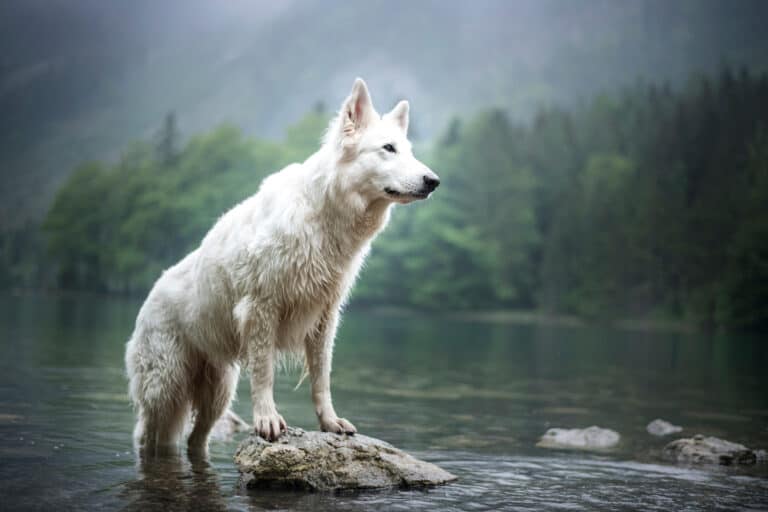
Loving, intelligent, and high-energy, this dog may look like a white wolf, but it is one of the most caring and well-balanced creatures you’ll ever meet.

3 Pros and Cons of Owning a Berger Blanc Suisse

ProsCons
Attractive and medium-sized
The beautiful coat of white fur is sure to draw attention and immediately allow you to pick out your pup at the dog park.
Shedding
Berger Blanc Suisse’s coats shed throughout the year and require regular brushing multiple times a week and sometimes daily; the hair can be a hassle to clean.
Extremely loyal and good with kids.
This breed is extremely devoted to its family and treats kids with patience and gentleness.
Loyalty can lead to protectiveness without training
Problems can arise when these dogs aren’t properly socialized and think they’re the leader of the pack.
Smart and easy to train
Highly intelligent, Berger Blanc Suisses can quickly learn tricks and love to please.
Exercise needed
If left alone without exercise, Berger Blanc Suisses can begin acting out and develop health issues. If you’re unable to provide ample exercise for Snowy Shepherds or yard space, you may want to consider alternative breeds.

The Best Dog Food for Berger Blanc Suisse

Most Berger Blanc Suisse adult dogs need about 2.5 cups of food per day due to their high energy levels and larger size. Each dog is different, so you should consult your veterinarian when determining a suitable feeding schedule for your Snowy Shepherd. A Berger Blanc Suisse’s weight, age, metabolism, health, and activity levels all play a role in the amount of food a dog needs each day, so be sure to keep all these factors in mind. Without exercise, too, Berger Blanc Suisse can gain weight, so give them less food if you have a less active lifestyle with your pet.

Since the Berger Blanc Suisse was explicitly bred for work, it requires a balanced diet that can keep up with its high energy. The Snowy Shepherd’s lustrous coat also would benefit from nutritious food high in omega fatty acids with plenty of protein to keep it shining and healthy. Choose a high-quality food designed for mid-to-large size dogs to feed your pup, and they’ll thank you for it.
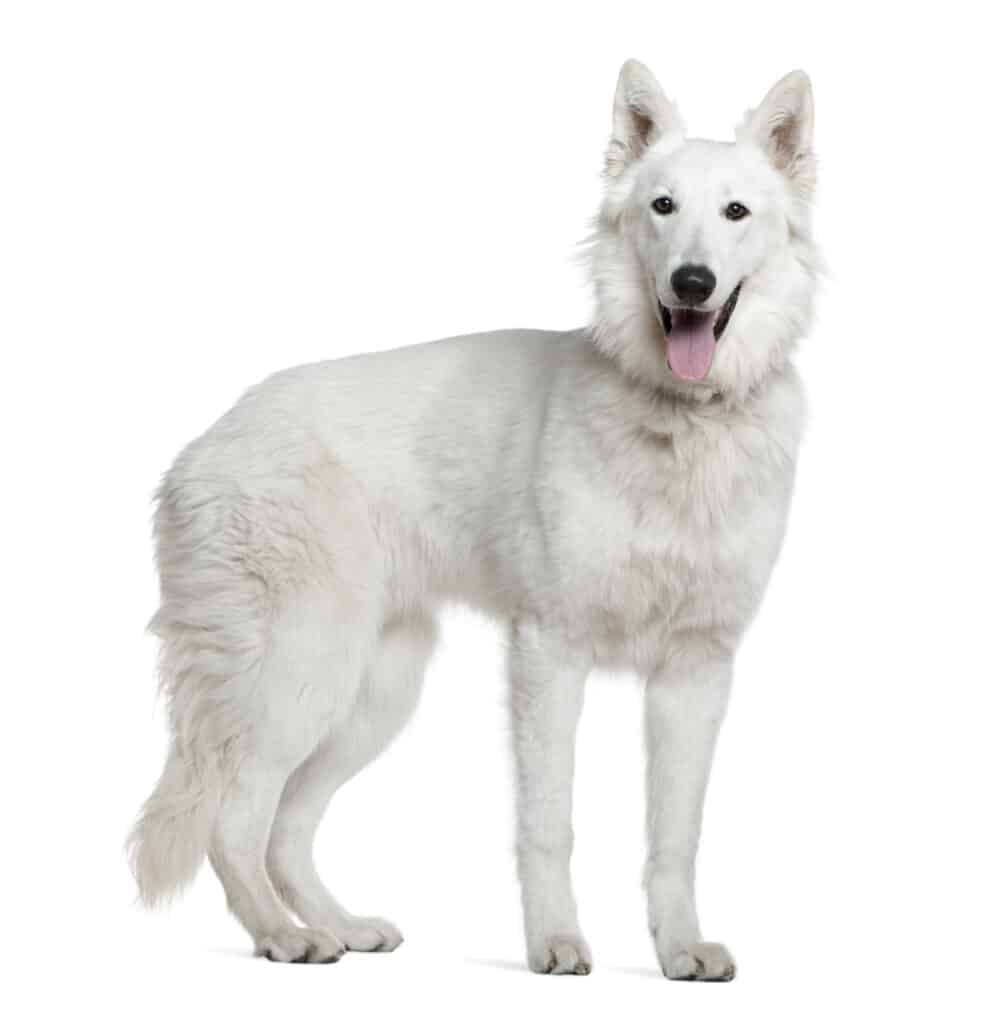
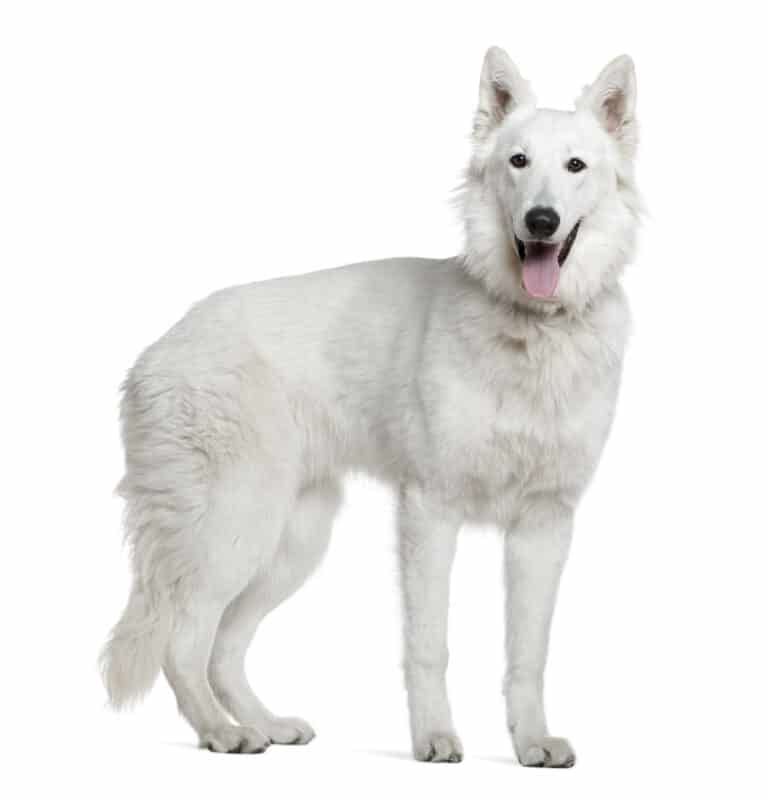
Berger Blanc Suisse standing isolated on white background

This breed has triangular ears and a bushy tail.

Size and Weight

Females’ average heights range between 22 and 24 inches, with males capable of growing up to two inches taller. Males can weigh up to 88 pounds when fully grown, and females weigh between 55-77 lbs.

Common Health Issues

In general, the Berger Blanc Suisse isn’t known to have any congenital severe health issues. Like all dogs, they can develop certain health problems with old age, such as hip dysplasia, primary lens luxation, or cancer.

Temperament

The Berger Blanc’s temperament is amiable and gentle, showing extreme loyalty to its family. The dog breed’s patience makes them an excellent choice for living with children, and while they’re protective of their family, they rarely show aggressive tendencies.

Berger Blanc Suisse are extremely smart and are working dogs who love having tasks to do. This makes them excellent candidates for canine sport or sheep herding. 

How to Take Care of Berger Blanc Suisse 

New dog owners looking for how to take care of a Berger Blanc Suisse should consider a range of factors before bringing one home. Regular grooming, training, exercise, and care provide a happy and healthy life for the Berger Blanc Suisse.

Maintenance And Grooming

This breed only needs a bath a few times a year to avoid drying out and potentially irritating your pup’s skin. To keep its coat a shining white, some owners opt for a blue shampoo to enhance the fur’s sparkle. Berger Blanc Suisse should be regularly brushed to help maintain cleanliness and control shedding, which this dog does quite a bit. A Furminator or any de-shedding dog brush will do the trick.

Training

The Berger Blanc Suisse is one of the smartest out there. It loves learning new tricks. These dogs aren’t strong-willed or stubborn, but you should start puppies with a few easy tricks early in their lives. 

Owners can train their dogs for agility, obedience, and many other dog sports and competitions. Socialization early in their lives is recommended to help prevent a Snowy Shepherd from becoming shy or cautious around strangers.

Exercise

As it descended from the same parent breed as the German Shepherd, the Berger Blanc Suisse has strong herding instincts. This means they need high levels of exercise, such as daily 30-minute walks and plenty of outdoor space to run and play. Training and teaching new tricks will also help mentally and physically stimulate your dog.

Puppies
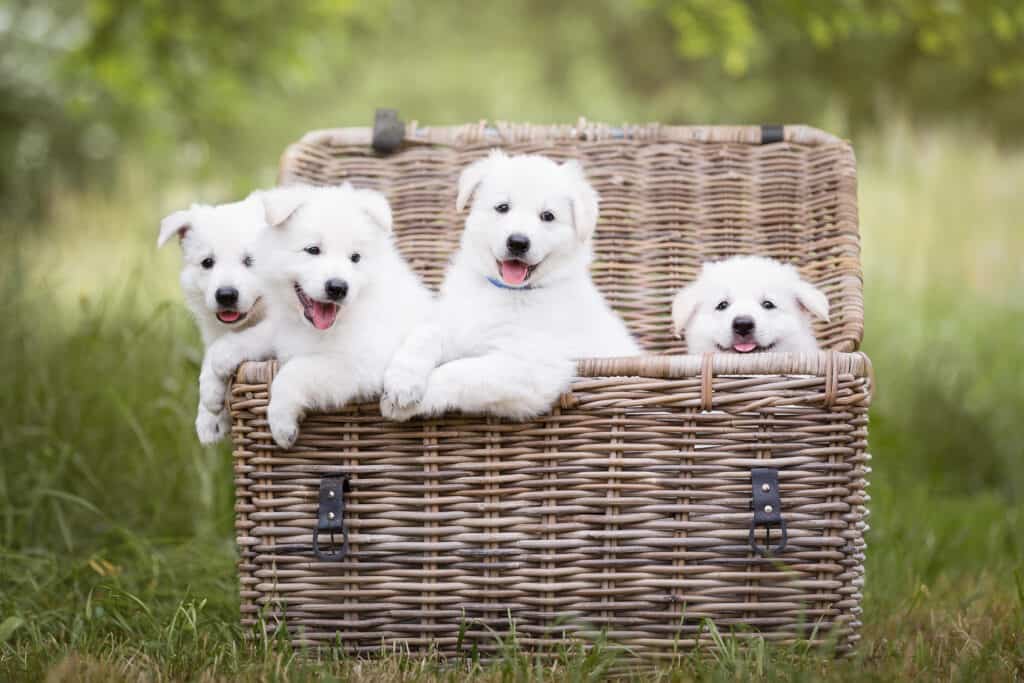
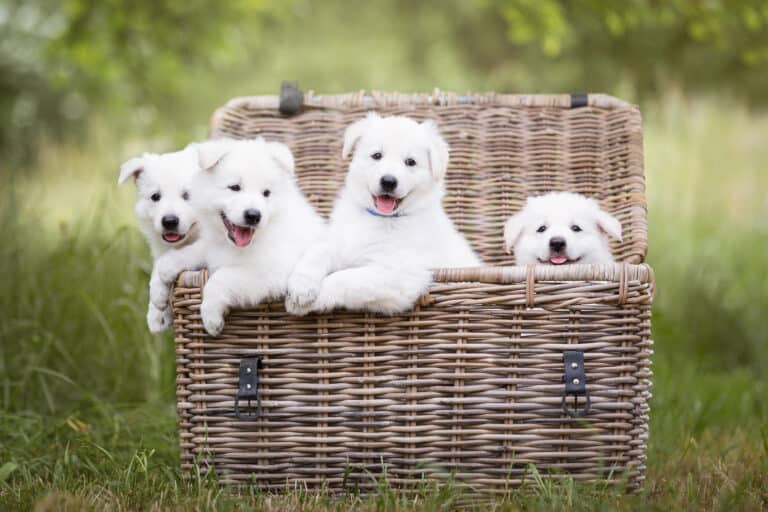
Four Berger Blanc Suisse puppies in a basket in a field

Berger Blanc Suisse are medium-sized, gentle dogs that are good with children.

On average, Berger Blanc Suisse mothers produce eight puppies per litter. These intelligent dogs can start their training as early as 8-10 weeks and benefit from the challenges to their minds. Early socializing will also familiarize puppies with strangers and help them become comfortable and friendly with people.

Berger Blanc Suisse and Children

Berger Blanc Suisse makes the perfect family dog due to its gentle, friendly, and loyal nature. They’re very calm and loving with children, and their fluffy white coats make for excellent hugs. However, be sure to socialize and train them early on, as an untrained dog may become wary of strangers and protective of their families.

Dogs Similar to Berger Blanc Suisse

The Berger Blanc Suisse is closely related to several shepherd breeds, including the German Shepherd, Collies, and Australian Shepherds.

  • German Shepherds: They are descended from the same original breed and feature many of the same traits besides the white fur coat.
  • Collies: Collies are roughly the same size, though they generally live longer.
  • Australian Shepherds: They are also meant for work and love completing tasks with great intelligence and loyalty.

View all 453 animals that start with B

Sources

  1. Federation Cynologique Internationale / Accessed September 23, 2022
  2. The Kennel Club / Accessed September 23, 2022
  3. Federation Cynologique Internationale / Accessed September 23, 2022
  4. Purina / Accessed September 23, 2022

Shanti Ryle

About the Author

Shanti Ryle

Shanti Ryle is a content marketer with nearly a decade's experience writing about science, real estate, business, and culture. Her work has been featured in Forbes, Wall Street Journal, Global Finance and Banking, Weedmaps News/Marijuana.com, and other publications. Her favorite animal (by far) is the Pembroke Welsh Corgi!

Thank you for reading! Have some feedback for us?


Berger Blanc Suisse FAQs (Frequently Asked Questions)

You should set aside anywhere from $6,200 or more to cover purchasing a Berger Blanc Suisse from a reputable breeder, though average costs are around $3,500. These beautiful and desirable pups annually can cost between $500-$1000 to feed and keep healthy with regular visits to the vet.