
Quick Take
- New York City harbors a bird population most residents walk past every day without realizing what they're actually looking at.
- One of these birds is a genuine apex predator quietly hunting through the city, though it is probably not the one most people would guess. Meet NYC's apex predator →
- Some of these birds have staked out the most unexpected urban real estate imaginable for their nests. See their surprising nesting spots →
- One species signals spring's return to NYC weeks before most people notice the season has changed. Spot the first spring migrants →
New York City is one of the largest and most popular cities in the world. From world-class museums to Broadway shows, the bright lights of Times Square, and the sight of Lady Liberty from the Staten Island Ferry, New York City has something for everyone. While the Big Apple may not be the first place you think of when it comes to birding, there are hundreds of species you can spot in the green spaces and nearby waters of the five boroughs. Take a look at some of the beautiful birds you can spot in New York City.
Rock Pigeons
Rock pigeons are among the most common birds of New York City. They can be seen in urban neighborhoods and parks throughout the year. Large flocks of pigeons frequently congregate in open spaces where they forage for seeds, fruits, and human food scraps.
They commonly nest in man-made structures, such as beneath the eaves of buildings, under bridges and overpasses, and even in stairwells. They have bluish-grey feathers with distinctive iridescent plumage around the throat, two black bands on their wings, and a black tail tip.
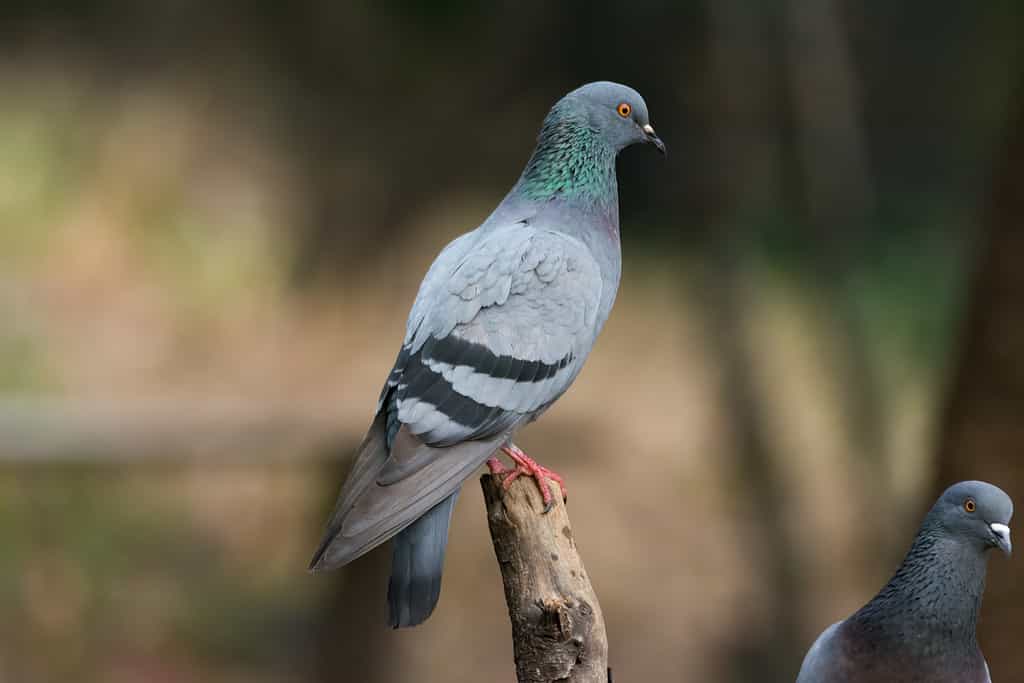
Rock pigeons are one of the most common birds in New York City.
©iStock.com/Malcolm
American Robin
American robins are also a common sight throughout the year, except in winter. Like pigeons, they are also typically seen in the city’s parks and neighborhood green spaces. They nest in treetops, as well as in man-made structures such as light fixtures, eaves, and gutters.
They typically feed on invertebrates such as earthworms, as well as a wide variety of fruit. American robins have greyish-brown upper parts, dark heads, and reddish-orange breasts and bellies. Females usually have lighter heads that are closer in color to their wings and backs.
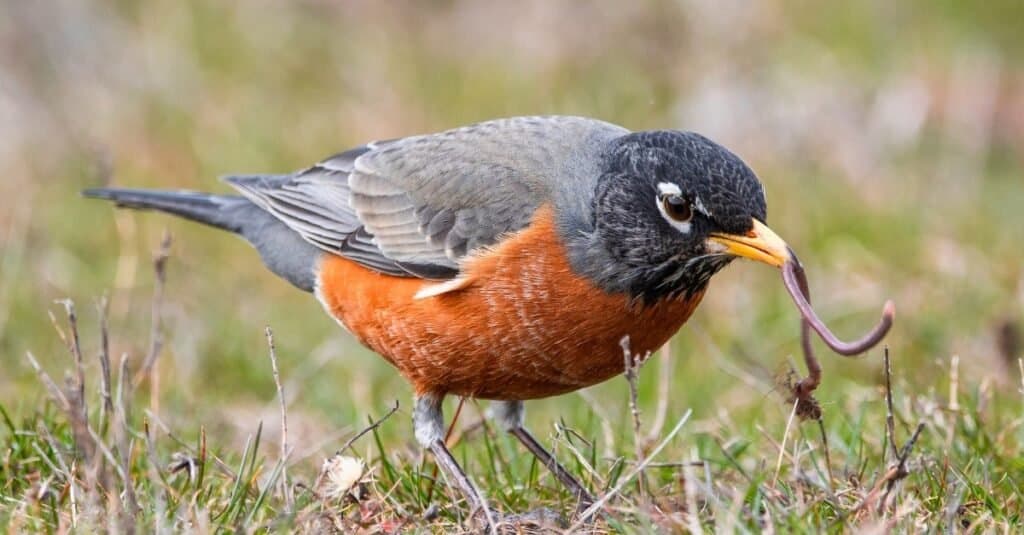
American robins typically feed on invertebrates such as earthworms.
©iStock.com/Mason Maron
Downy Woodpecker
The downy woodpecker can be seen in the city fairly often throughout the year. They favor open woodlands, but can also be found in man-made habitats like parks, suburban backyards, and orchards. They generally nest in dead trees within the city limits.
Downy woodpeckers feed on beetle larvae inside tree bark, ants, caterpillars, and other pest insects. They may also eat plant matter such as acorns, berries, and grains. These small woodpeckers have black and white checkered upperparts with a white stripe down the center of the back. The downy woodpecker also has a black-and-white striped head, but only the males have a small red patch on the back of it.
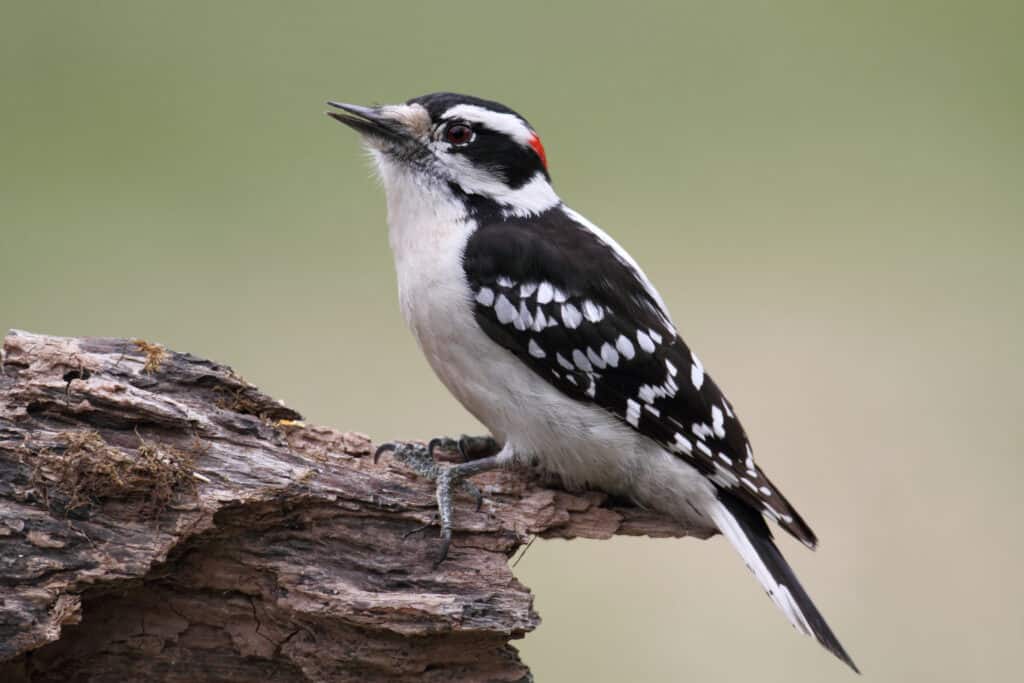
The downy woodpecker is fairly common in New York City throughout the year.
©Steve Byland/Shutterstock.com
Blue Jay
The blue jay is found in New York throughout the year. These birds are common along forest edges and in both urban and suburban areas, especially near oak trees. Blue jays make their nests in trees inside the city limits.
They feed on insects, as well as nuts, seeds, and grains from trees or on the ground. They have large blue crests, blue upper backs, and blue, black, and white patterned wings and tails. Their underparts are white or light grey.
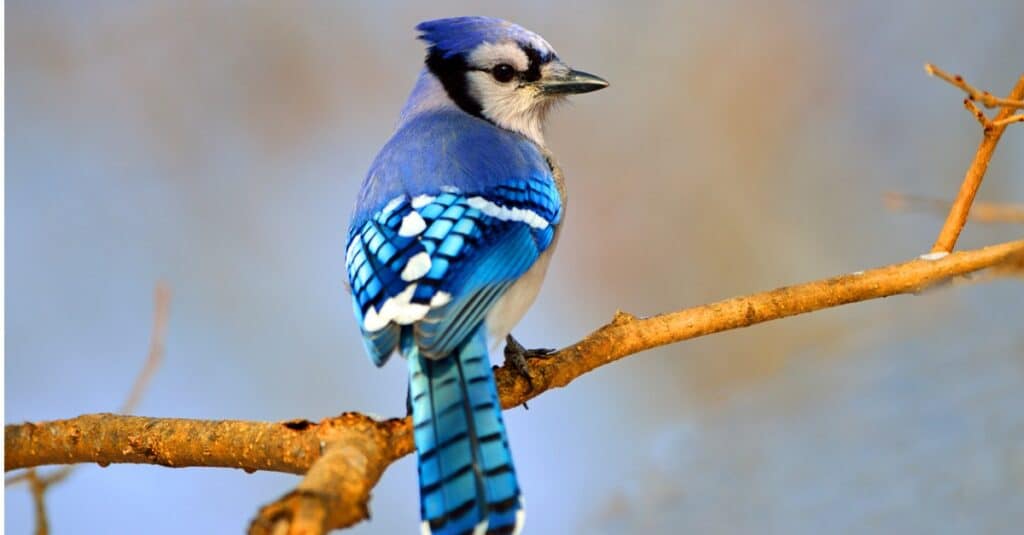
Blue jay birds are typically found along forest edges.
©iStock.com/BrianEKushner
Red-Winged Blackbird
You can find red-winged blackbirds in the city for most of the year, except for winter. They favor wetlands such as saltwater and freshwater marshes for breeding. A few places they may be seen are the Salt Marsh of Inwood Hill Park, plus Prospect Park, Marine Park, and Floyd Bennett Field in Brooklyn. They are one of the first migratory birds in the area, with males arriving in late February and early March.
Their nests are low to the ground in bushes, trees, and marsh vegetation. These birds typically feed on insects in the summer and seeds in the winter. Aside from a small patch of brilliant red and yellow on the shoulder of each wing, males have black plumage covering nearly their entire bodies. Females are a dark brownish color with paler breasts.
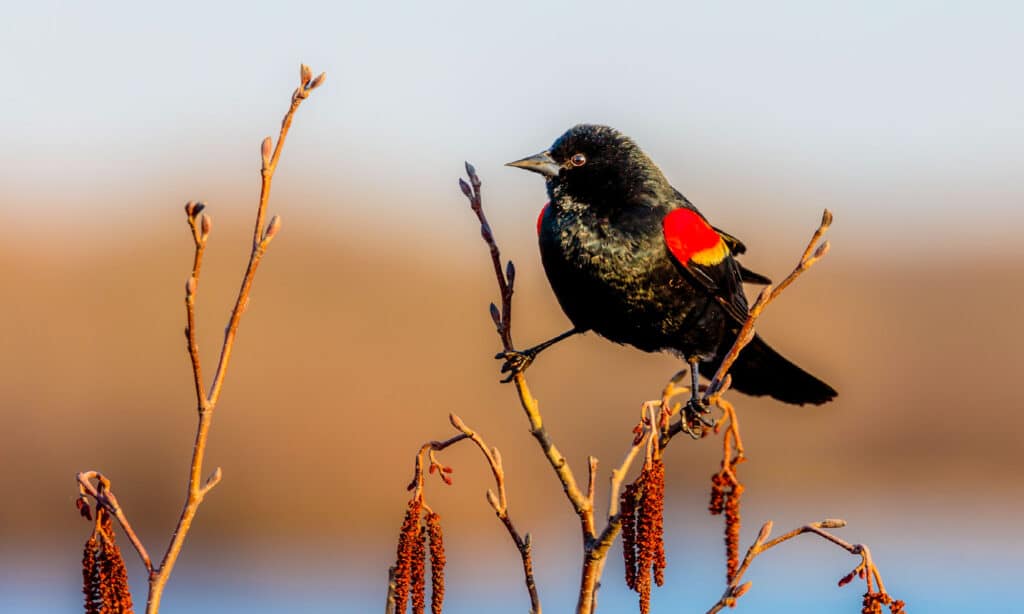
Red-winged blackbirds are one of the first migratory birds in the area each spring.
©iStock.com/Michael-Tatman
Common Grackle
Common grackles can be found in open woodlands and marshes, as well as parks, suburban backyards, and even cemeteries. In fact, they are frequently observed at Green-Wood Cemetery in Brooklyn. They typically nest high up in the trees, often near water. They can be seen throughout most of the year, except during the winter.
Common grackles gather in large flocks, foraging in fields or lawns. These birds have a voracious appetite and will eat almost anything they can find, including seeds, grains, fruits, insects, invertebrates, amphibians, crustaceans, and garbage. Common grackles can appear a uniform dark color from a distance, but their heads and throats are glossy, iridescent purple to blue and they have iridescent bronze bodies.
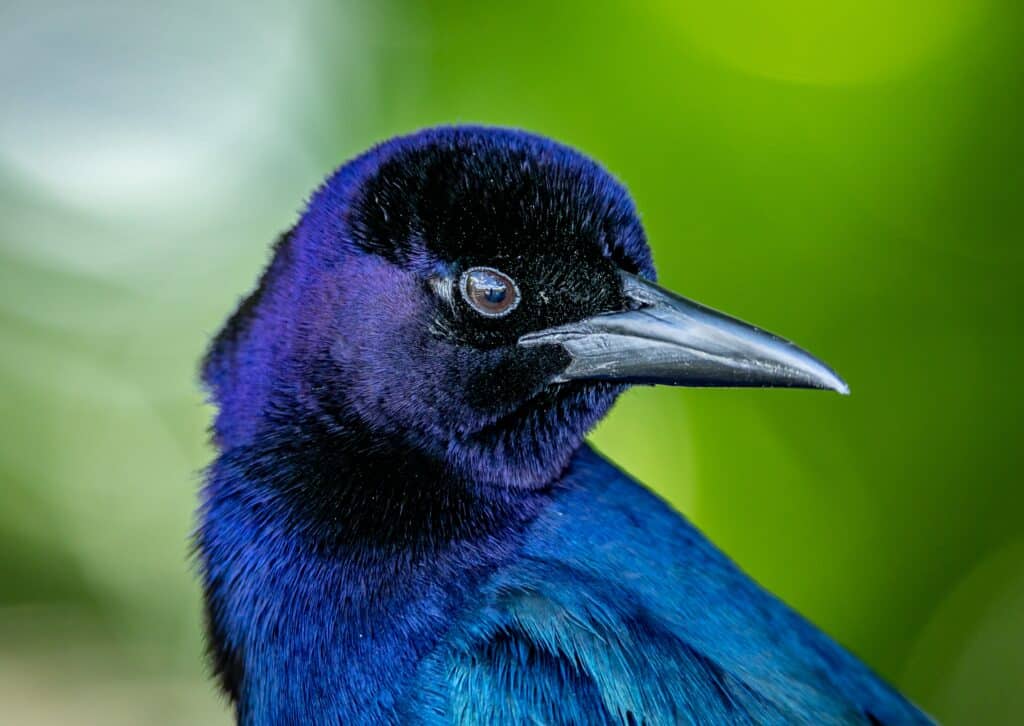
Common grackles often gather in large flocks in areas of the city with open ground.
©Holly S. Cannon/Shutterstock.com
Mourning Dove
Mourning doves can be seen throughout the city year-round. They favor open areas with scattered trees, but they commonly nest around humans in gutters and under eaves. They feed on the ground, pecking at leaf litter to find seeds. You can often see them perched on telephone wires.
Mourning doves resemble rock pigeons in shape, but these birds are smaller. They are brown to beige with black patches on their wings and have long, pointed tail feathers with black borders and white tips. Their undersides are peach and they have pinkish-colored legs.
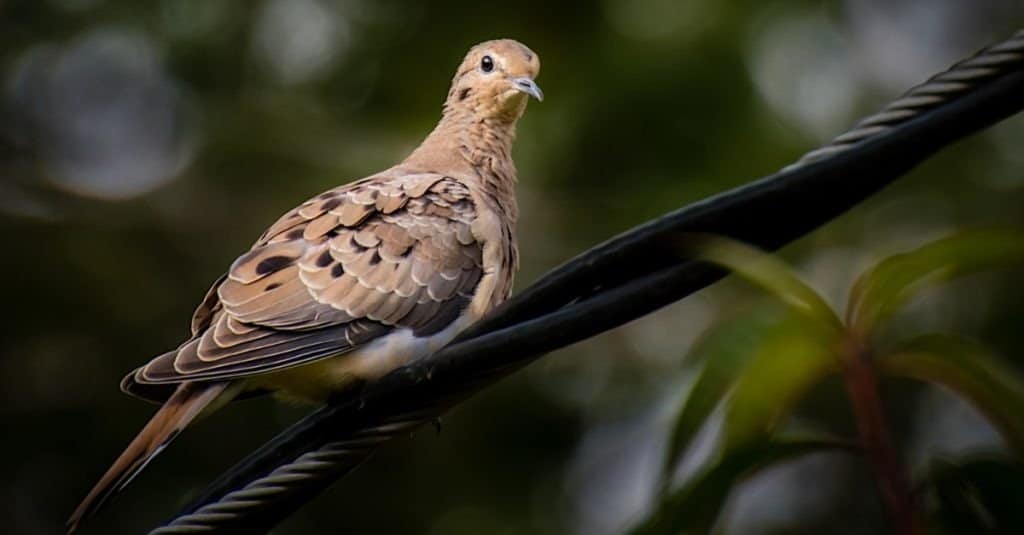
Mourning doves are often seen perched on telephone wires in New York City.
©Jay Gao/Shutterstock.com
Northern Cardinal
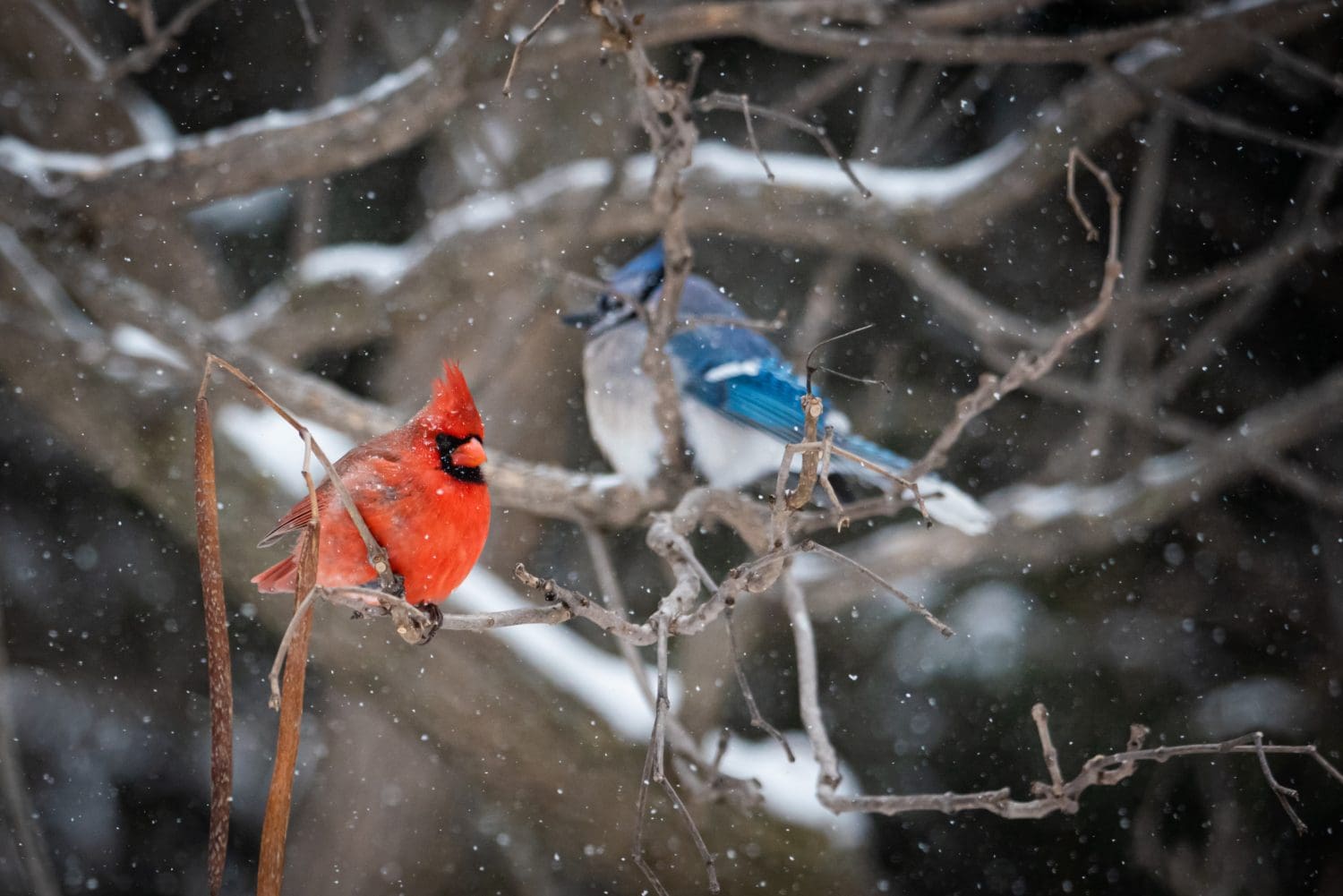
The Northern cardinal is a Central Park staple that is widespread throughout the city, as well as most of the state year-round. They favor dense, shrubby places such as forest edges, backyards, and even ornamental landscaping. Cardinals feed mainly on seeds and fruit, but they will also consume insects.
Northern cardinals are known for their fiery color and prominent crests. The male is red all over most of his body with a black face around his reddish-orange bill. The female is primarily light brown with orange-red feathering on her crest, tail, and wings.
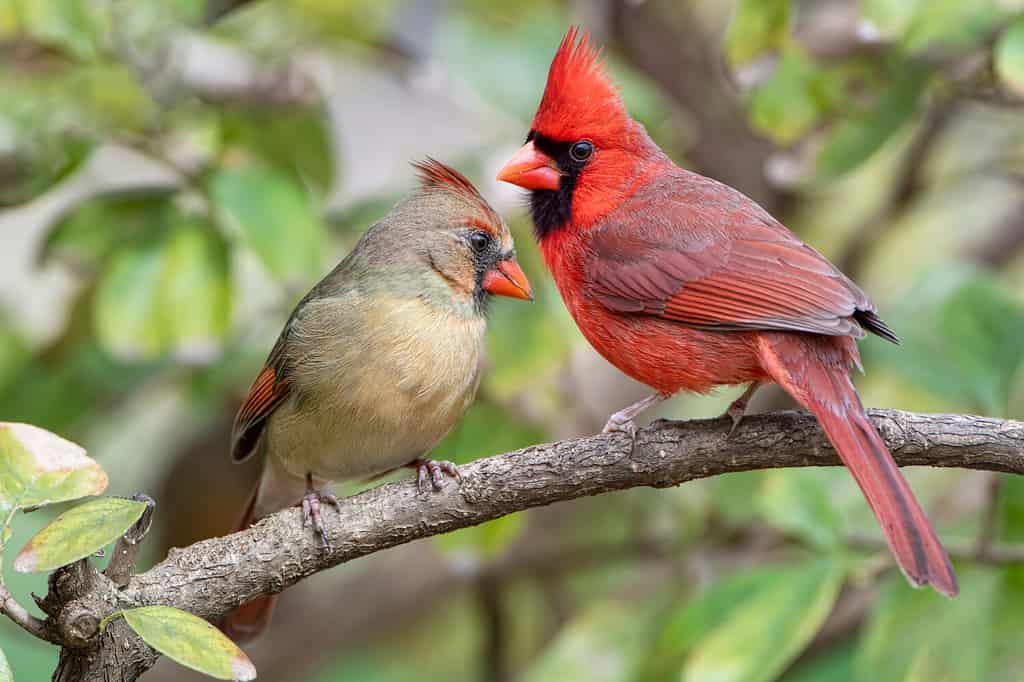
Only the male Northern cardinals have such vibrant red feathers.
©Bonnie Taylor Barry/Shutterstock.com
Black-Capped Chickadee
The black-capped chickadee is also among the most common birds in New York City. They can be seen in open woods and parks year-round. These birds nest in natural cavities, including abandoned downy woodpecker nests.
As the name implies, the bird’s head and bib are covered in a black cap, whereas the rest of its body is grey or white. The diminutive bird has a somewhat large head for its size and a thick, short bill. They are social birds that live in flocks, but they do not forage near one another.
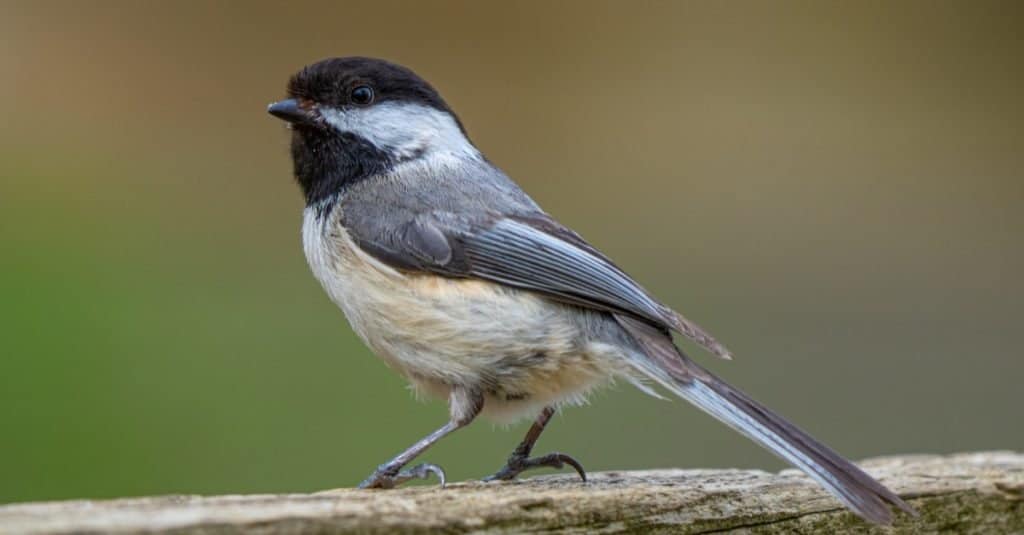
The black-capped chickadee is a year-round resident of New York City.
©J.A. Dunbar/Shutterstock.com
Red-Tailed Hawk
The red-tailed hawk can be seen in the city throughout most of the year, but it is uncommon in the summer. They prefer any type of open habitat, including grasslands, parks, and fields. These raptors build their nests in tall trees where they can view the surrounding landscape.
The red-tailed hawk usually has brown upper parts and pale underparts streaked with brown. Its tail is a cinnamon-red color on top and light underneath. They primarily consume small mammals like rodents, rabbits, and ground squirrels, but they may also consume reptiles, amphibians, and smaller birds.
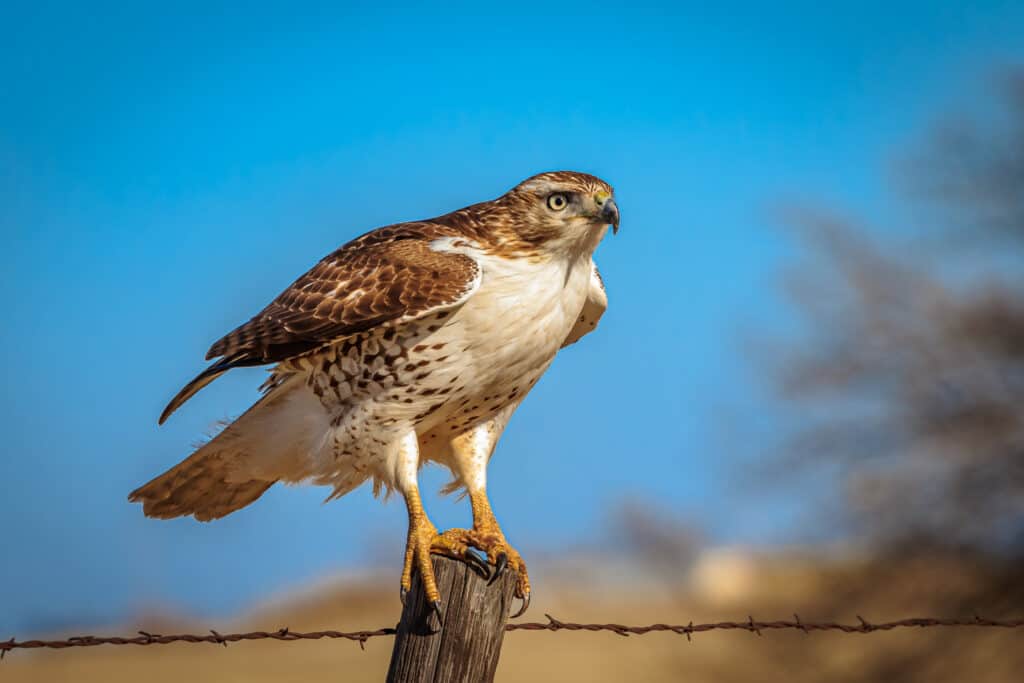
The red-tailed hawk is the biggest of all raptors in NYC.
©Richard G Smith/Shutterstock.com